
Pasadena, Texas: Figure Paintings Between the Strawberry Fields and the Ship Channel
Pasadena is the ship channel city east of Houston. It is the second largest city in Harris County, with about 152,000 people, and it runs along State Highway 225 between Houston and Deer Park. Two versions of Texas meet inside its limits. One is the farm town that grew strawberries by the trainload and called itself a strawberry capital. The other is the industrial city of refineries and chemical plants that rose along the Houston Ship Channel. This page is a guide to both, and to the wild bayou ground that still survives at the city’s southern edge.
I am Bartosz Beda, an abstract figurative artist. I paint the human figure under pressure: bodies foreshortened, worked over, and held against grounds that move. Pasadena is a city built by bodies at work, first in fields and then in plants. That is the ground on which I present my newest series here. The connection comes first, stated plainly. Then the strawberries, the channel, and the bayou.
Pasadena in my record
The honest version is short. I have no exhibition in Pasadena to report. No gallery here has shown my work, and no museum in the city holds one of my paintings. This page does not invent one.
My record in this part of Texas is a record of looking. Houston stands a short drive west, and its museum district is where I go to stand in front of paintings. The Houston page on this site holds that record: the museums, the exhibitions I return to, and what that looking feeds in my studio. Pasadena enters my working map as the region’s other pole. Houston collects and shows. Pasadena makes and moves.
So this page speaks to Pasadena directly, without a gallery in between. The paintings are on the series pages of this site and in my online store. What a reader here gets is the work itself, and a guide to the city written with the same plain dealing.
The strawberry era and the festival
Pasadena’s first fame grew in rows. The Galveston hurricane of 1900 flooded the cropland of the Gulf Coast and left its farmers with ruined fields. Clara Barton, of the American Red Cross, answered with plants. She purchased one and a half million strawberry plants for Gulf Coast farmers, and Pasadena took to them at once.
Pasadena quickly established itself as the strawberry capital of the region. By the 1920s all of southeast Harris County was known as Pasadena Acres. The same fields also sold cantaloupes, cucumbers, and cape jasmine flowers. By the 1930s the city was claiming a larger title for itself: Strawberry Capital of the World. At the height of the season, its growers shipped as many as 28 train carloads of strawberries in a single day.
The fields are long gone, but the city kept the fruit. The Pasadena Strawberry Festival began in 1974, first held to celebrate the opening of the Pasadena Historical Museum. It now fills the Pasadena Convention Center and Municipal Fairgrounds on Fairmont Parkway each May, and it draws tens of thousands of visitors across four days. Its centerpiece is a strawberry shortcake billed as the largest in the world, a cake of more than 2,000 square feet that is cut at the opening ceremony. Around it run a parade, a barbecue cook off, mud volleyball, and a livestock show and rodeo. The berries became a memory, and the city built a festival to keep the memory fed.
The farm story itself is kept at the Pasadena Heritage Park and Museum, at 204 South Main Street. Its saved houses and rooms cover the founding, the strawberry years, and the channel years. Among them stands the Strawberry House, a centerpiece of the park and a working reminder of what this city grew before it refined.
The ship channel ground
Burnett laid his town on the southern bank of Buffalo Bayou. That bayou became a channel. The Houston Ship Channel was dredged to a depth of twenty five feet and formally opened in November 1914, and the water at Pasadena’s northern edge turned into one of the busiest shipping lanes in the world.
Industry followed the deep water fast. Joseph S. Cullinan, the founder of Texaco, bought 200 acres in Pasadena in 1906 and ran an experimental farm there for twenty years, even while he promoted land along the channel. By 1920 the Sinclair, Texaco, and Crown oil companies had all built refineries in the area. A Texaco founder farming beside his own refineries is the whole Pasadena story in one man.
The full turn from farming to industry came in the late 1930s, when war in Europe drove a major expansion of the ship channel plants. The numbers show the speed. Pasadena held 3,436 people in 1940 and 22,483 in 1950. Today the corridor of refineries and chemical plants along State Highway 225 is the city’s northern face, and local work stays tied to the channel industries and the Bayport Industrial District. The Johnson Space Center stands in adjacent Clear Lake, at the city’s other edge.
Then the ground answers back. At Pasadena’s southern edge sits the Armand Bayou Nature Center, at 8500 Bay Area Boulevard, inside the city limits. It protects one of the largest urban wilderness preserves in the United States. The preserve began in 1974 with 2,500 acres and grew past 4,000 acres in 2024. Three Gulf Coast habitats meet there: coastal tallgrass prairie, bottomland forest, and marsh. The bayou, once called Middle Bayou, was renamed for Armand Yramategui, the Houston conservationist who fought to save this ground and died in 1970, four years before the center opened. More than 370 species of birds, mammals, reptiles, and amphibians live in the preserve. A city of tank farms holds, inside its own borders, the wild coast that stood here before the channel. That contrast is Pasadena whole: industry at one edge, marsh at the other, and a city of workers between them.
A short history of Pasadena
The town started on paper in Galveston. In 1892 Colonel John H. Burnett established an unnamed townsite just east of the Allen Ranch. In 1893 he founded the town in full. The Handbook of Texas gives the naming plainly: because of its lush vegetation, the site was named for Pasadena, California.
The La Porte, Houston and Northern Railroad was built through the townsite in 1894, and the area opened as a farming community. In 1899 the residents formed an independent school system, the first in Harris County. The storm of 1900 then rewrote the town. It flooded the fields, brought new settlers up from the coast, and brought the Red Cross strawberries that made Pasadena’s name.
City government came in fits. The citizens voted to incorporate on December 22, 1923, then voted to disincorporate on November 29, 1924, then voted to incorporate again in 1928. The young city held about half the land Burnett had first platted. Water, electricity, and gas had only recently reached it.
Growth after the war did the rest. Pasadena annexed its neighbors, including Deepwater and Middle Bayou, and spread from 1.7 square miles of townsite to 58.6 square miles by 1980. San Jacinto College and Texas Chiropractic College now stand in the city. The 2020 census counted 151,950 people, second in Harris County only to Houston. The farm town became a city without ever moving: the fields turned to streets, and the streets filled with the families of the channel.
Apogee: bodies at work under industrial scale
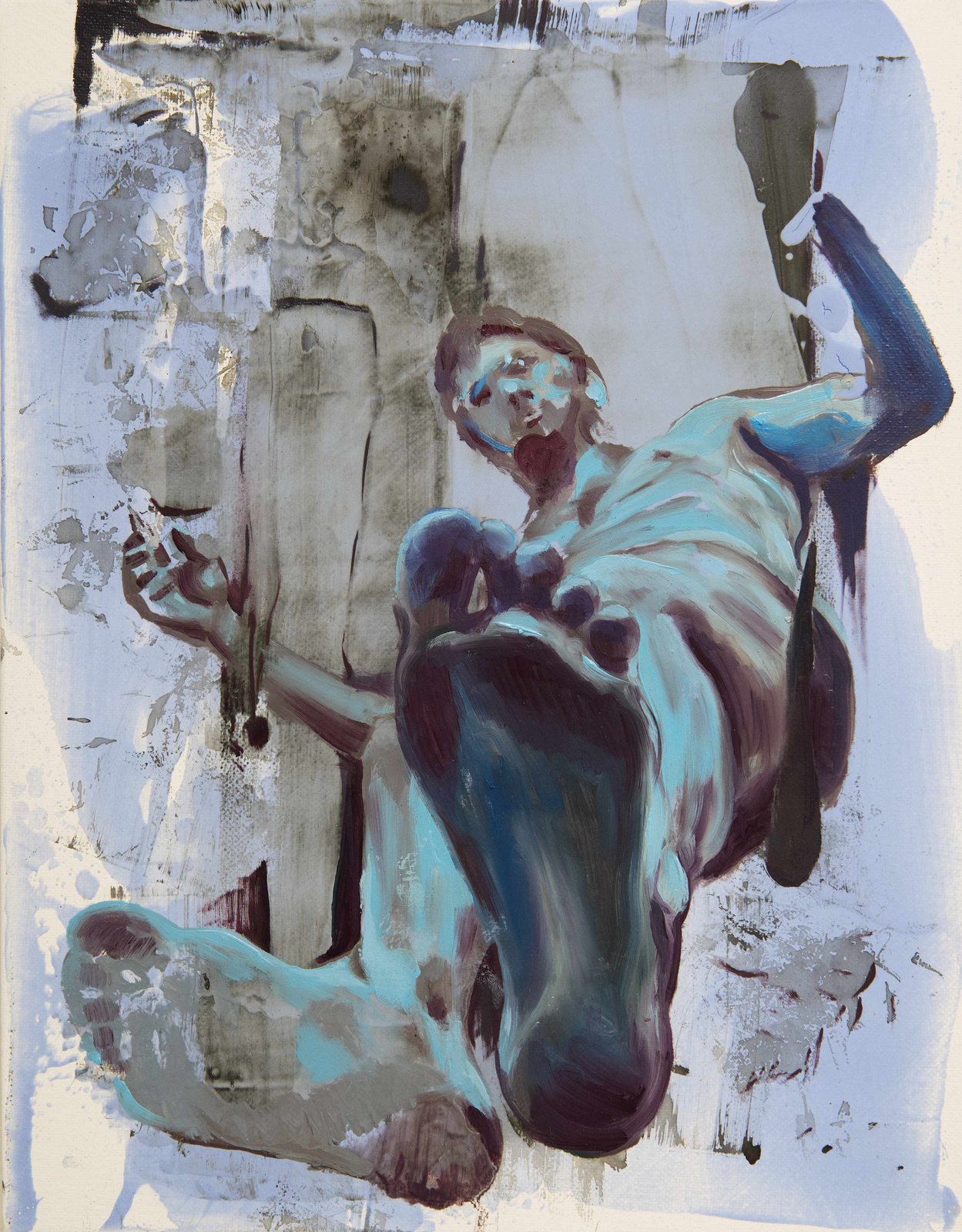
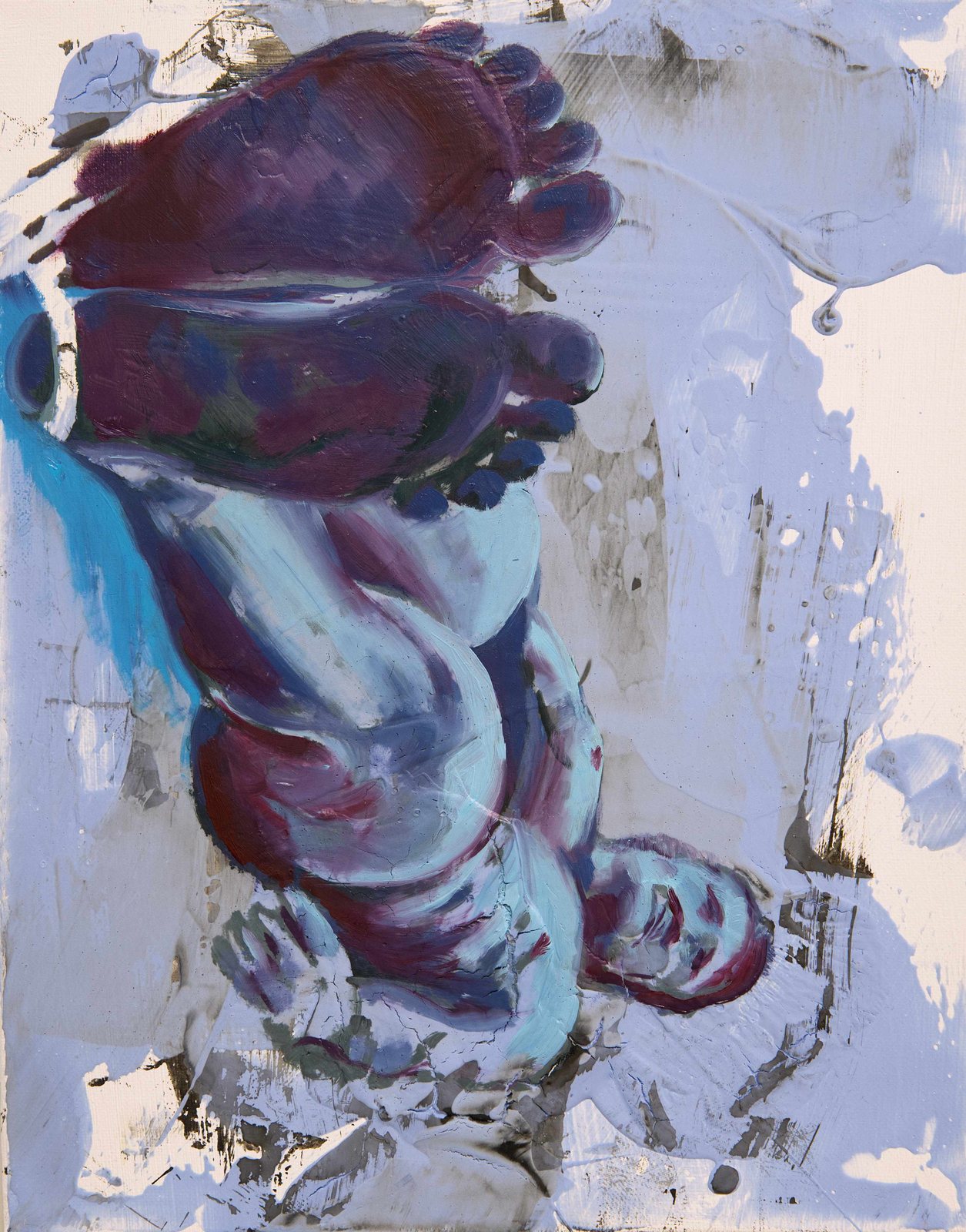
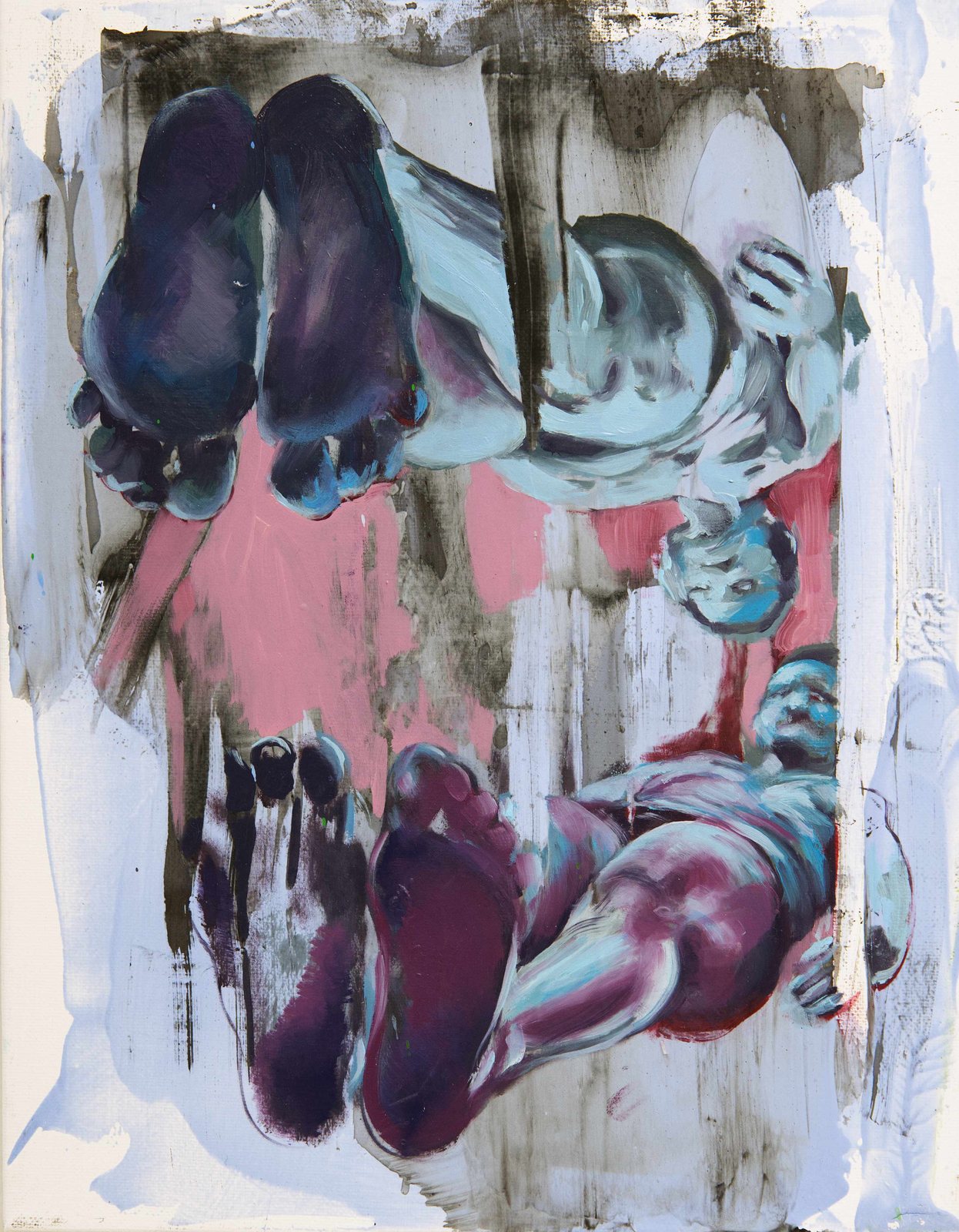
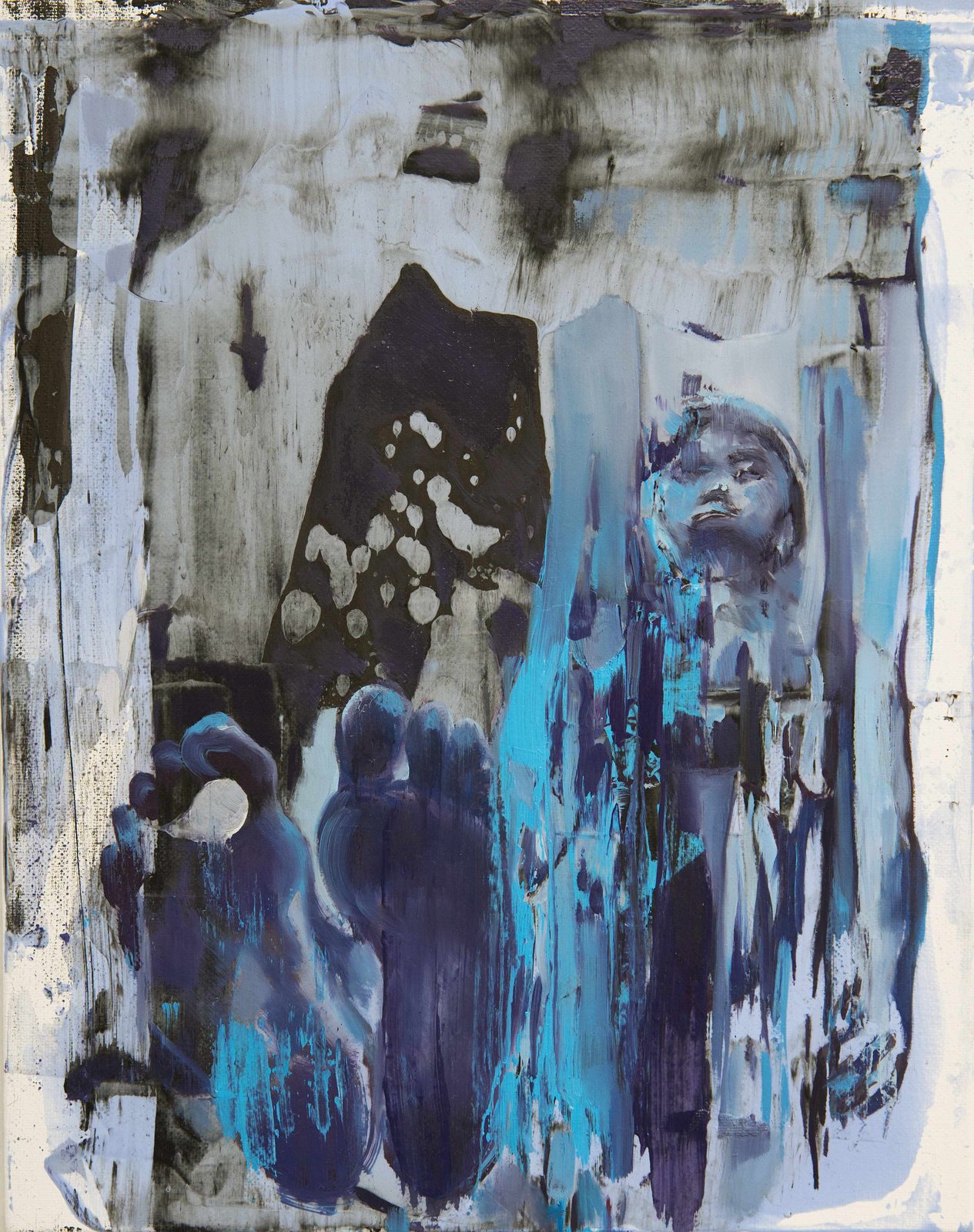
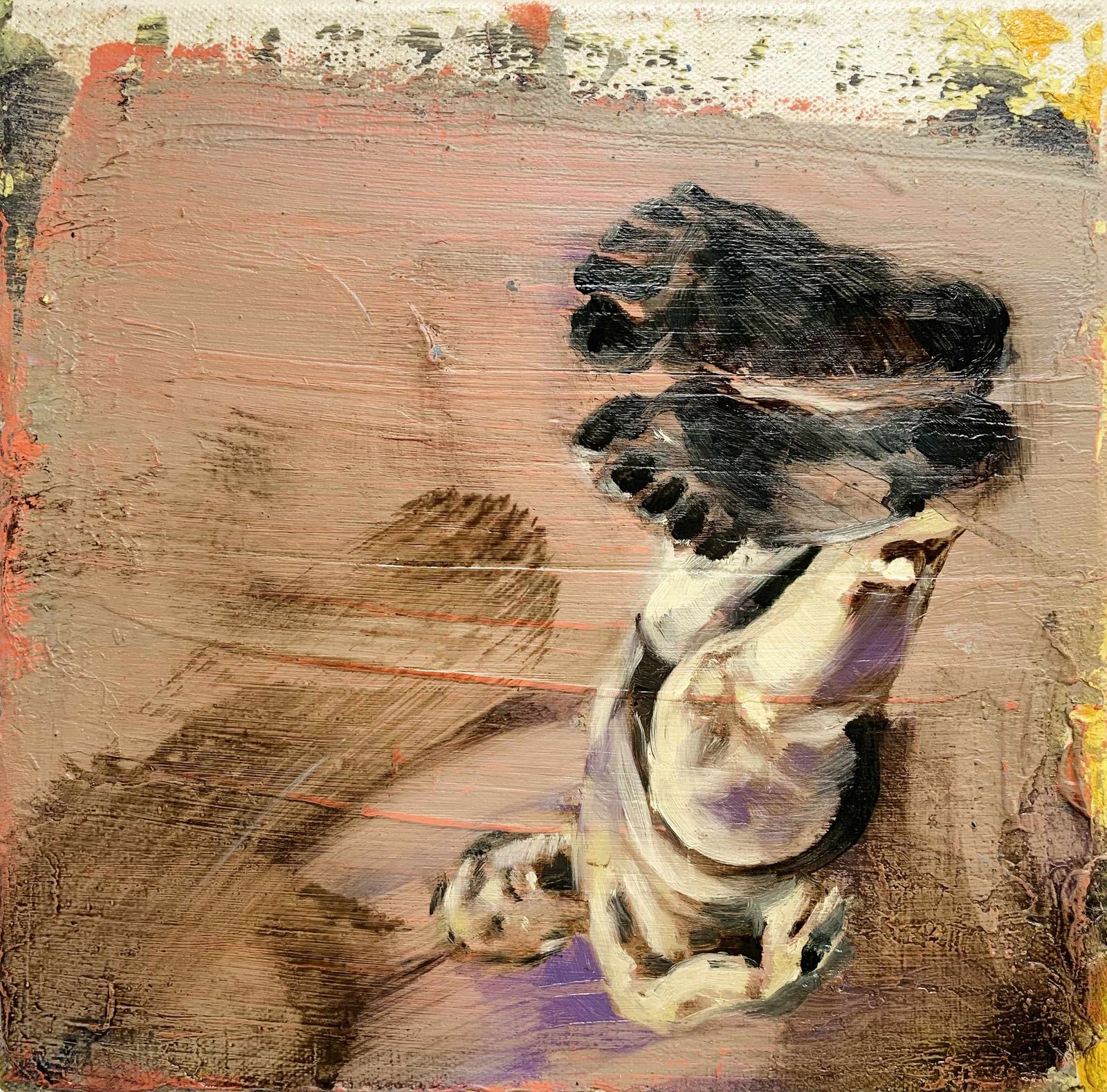
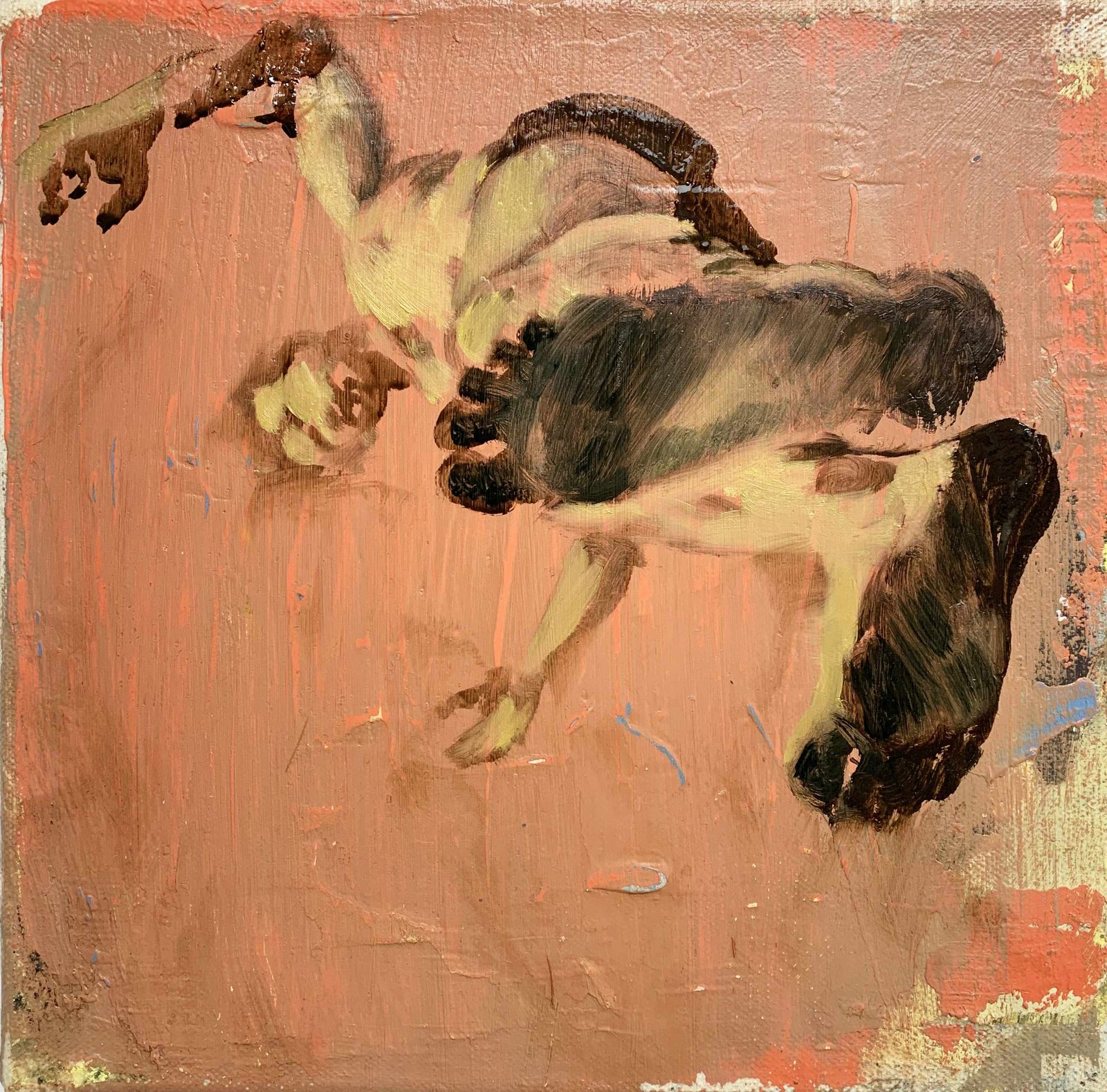
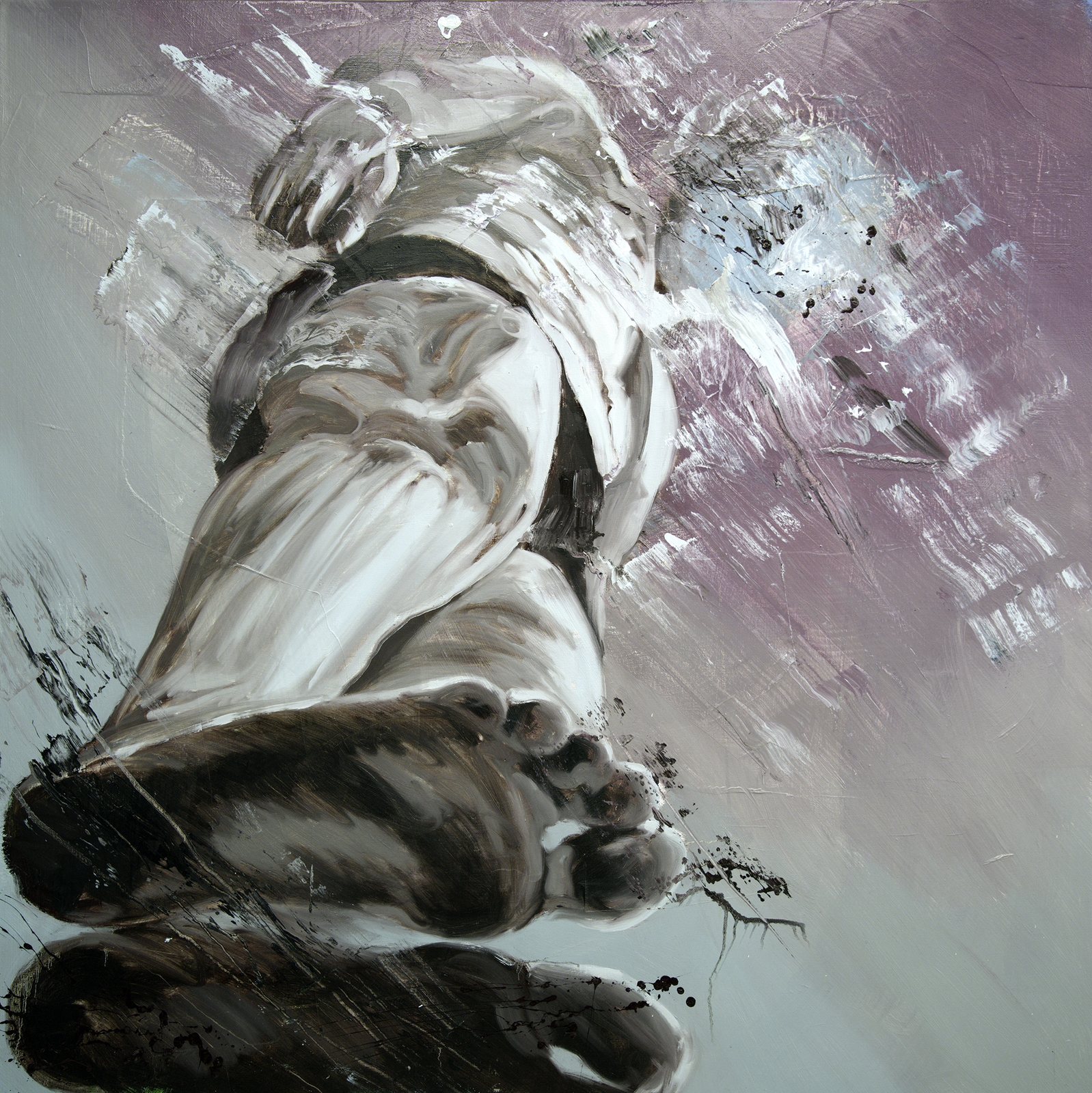
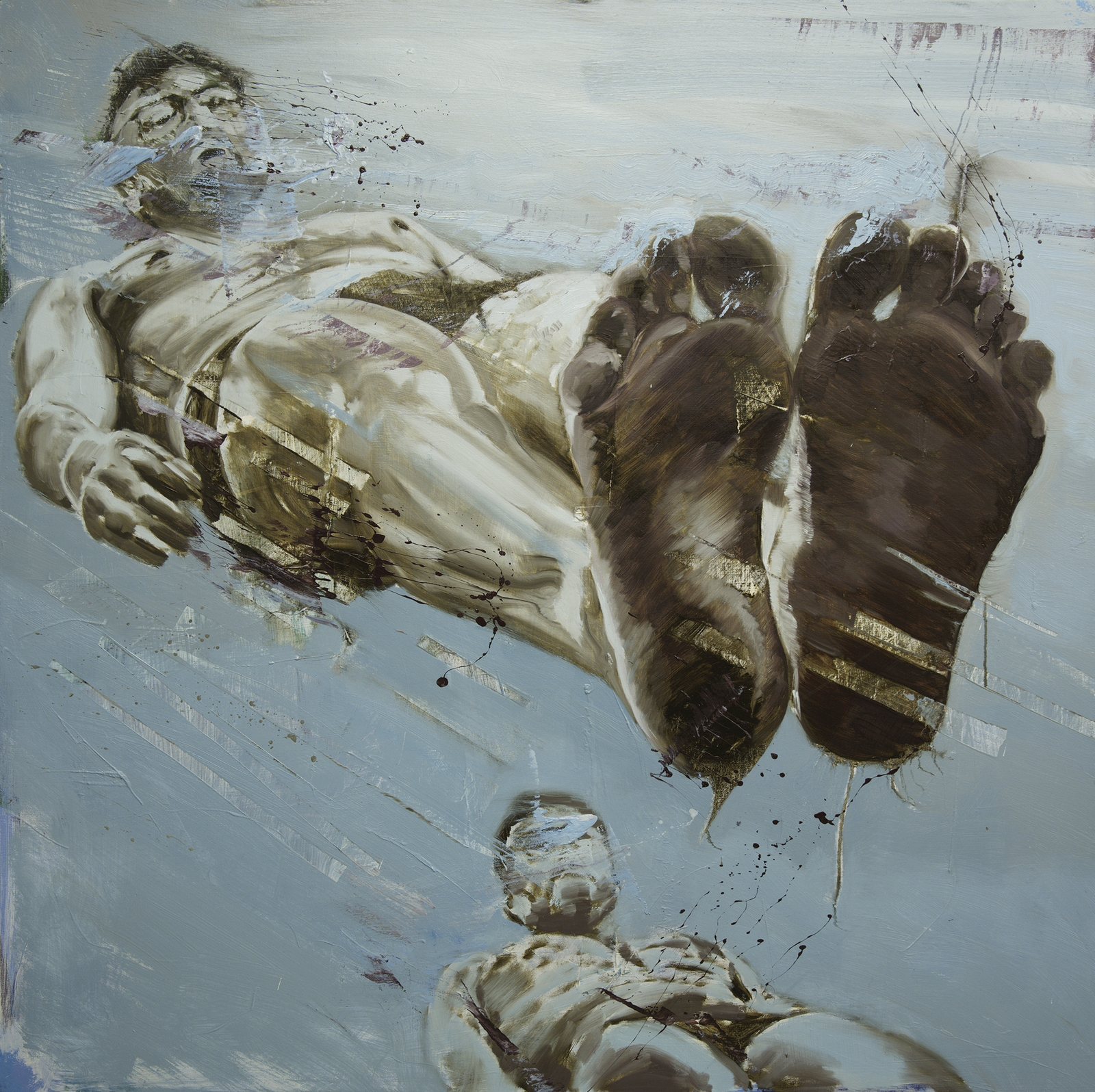
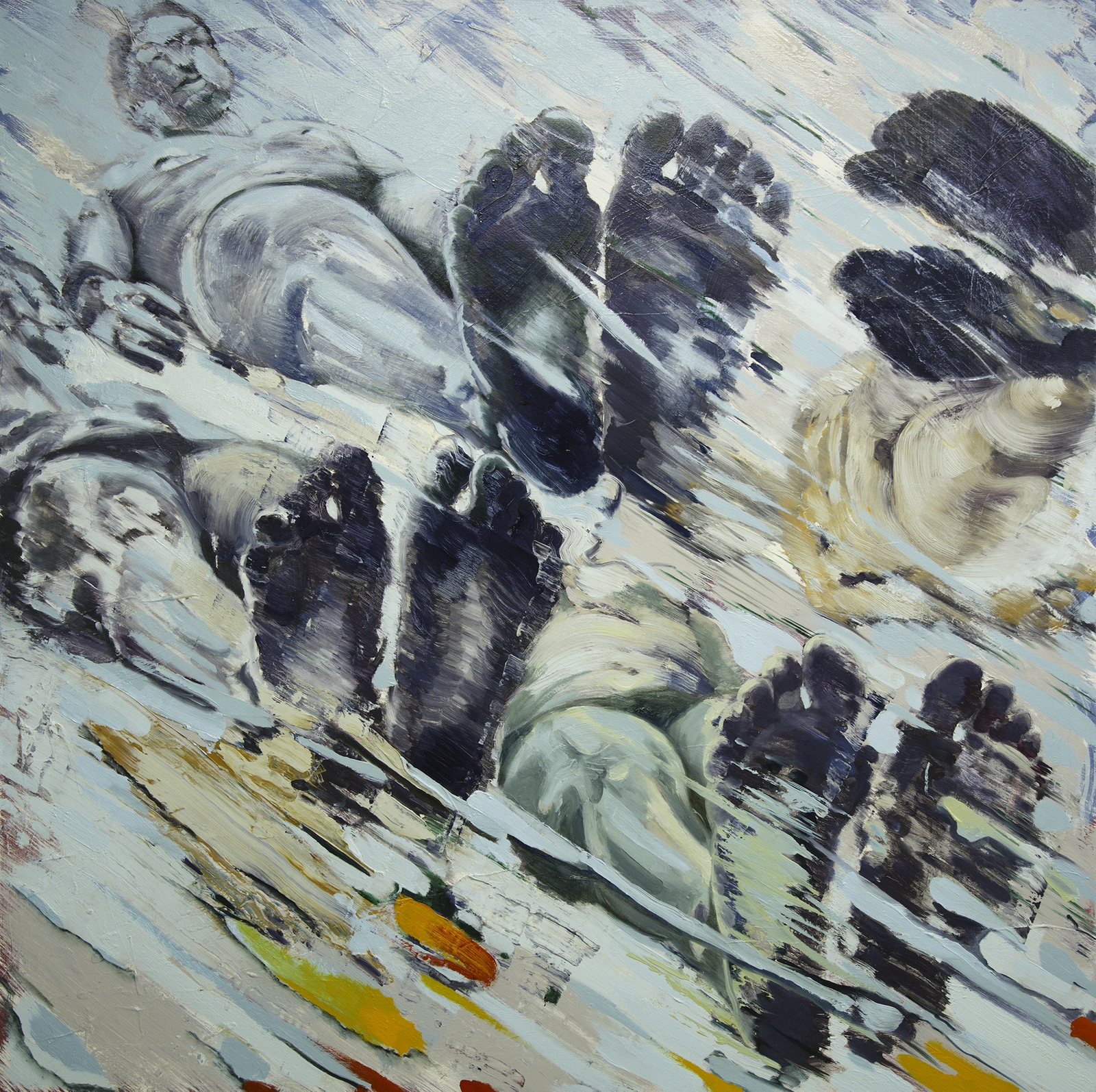
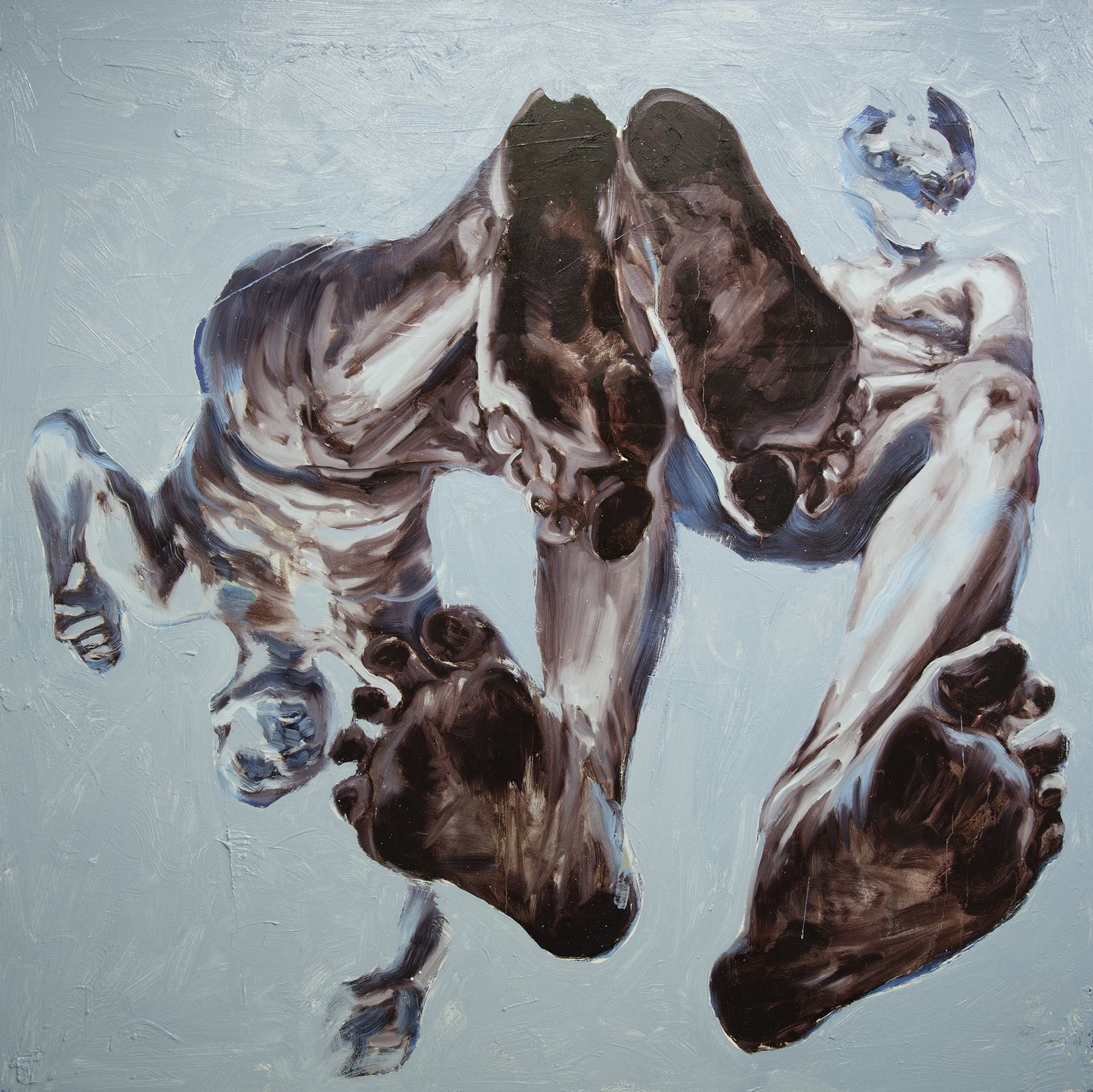
My newest series is called Apogee. It began in July 2026. Apogee is the highest point of a path, the moment a rising body reaches its farthest reach before the turn. I paint figures at that moment. Each painting shows a body seen from the feet, foreshortened, rising away from the viewer. The soles are nearest. The head is farthest and least.
The method is physical. The brushwork is aggressive and direct. Some of these figures were painted standing on the studio wall itself, in the manner of the Italian frescoes that gave me the viewpoint, where painted bodies stand high on walls and are read from below. The series is built as ten Fragments. The early ones are small, in ink, acrylic, and oil on canvas. Two small Fragments painted in oil on rabbit skin glue and canvas went to a group exhibition in Belgrade, Serbia, in the fall of 2026. The newest are large square canvases, 48 by 48 inches, where one rising body takes the whole field.
As an abstract figurative artist, I keep the body at the center and let the paint test it. That is what abstract figurative art means in my studio: a figure you can read, worked by forces you can feel. Pasadena is the right page for this series because Pasadena knows scale. Work here happens under structures no single body can match: distillation towers, tank farms, channel cranes. The figure in an Apogee painting is small against its ground and still the whole subject. It strains upward the way a worker does on a scaffold, seen from the ground, foreshortened by height and distance.
For readers looking for original paintings in Pasadena Texas, the route is direct. There is no gallery between this city and the work. The Apogee series page shows all ten Fragments, and the online store carries the current original paintings. Pasadena TX art, on this site, is one working painter’s current series, offered plainly to a working city.
Visiting, and where the record continues
A Pasadena visit reads the city in its own order. Start at the Heritage Park and Museum on South Main Street, where the farm town survives in saved houses. Drive State Highway 225 and read the industrial city from the road: the fence lines, the towers, the channel traffic. Finish at the Armand Bayou Nature Center, open Wednesday through Sunday, where the map on this page centers, and walk the boardwalks over the marsh. Strawberry field, refinery corridor, wild bayou. Pasadena holds all three in one drive.
City services and current hours sit with the City of Pasadena, linked below. My own record continues across this site. The Apogee series page holds the paintings in full. The Houston page holds my museum district record in this region, and the Texas page gathers my state story in one arc. The Dallas page carries my exhibition record in the city I work from. The formal lines are on my CV page, and all the town pages of this site meet on the Market page. Pasadena has no wall of mine yet. It has the fields in memory, the channel at work, and the bayou still wild. The paintings are ready when the city is.
Frequently Asked Questions
Has Bartosz Beda exhibited in Pasadena, Texas?
I have no exhibition in Pasadena to report. No gallery here has shown my work, and no museum in the city holds one of my paintings. My record in this part of Texas is a record of looking. Houston stands a short drive west, and its museum district is where I go to stand in front of paintings. Pasadena enters my working map as the region’s other pole. Houston collects and shows. Pasadena makes and moves. The paintings are on the series pages of this site and in my online store.
How did strawberries come to Pasadena?
The Galveston hurricane of 1900 flooded the cropland of the Gulf Coast and left its farmers with ruined fields. Clara Barton, of the American Red Cross, answered with plants. She purchased one and a half million strawberry plants for Gulf Coast farmers, and Pasadena took to them at once. Pasadena quickly established itself as the strawberry capital of the region, and by the 1930s the city was claiming a larger title: Strawberry Capital of the World.
How many strawberries did Pasadena ship at its peak?
At the height of the season, Pasadena growers shipped as many as 28 train carloads of strawberries in a single day. By the 1920s all of southeast Harris County was known as Pasadena Acres. The same fields also sold cantaloupes, cucumbers, and cape jasmine flowers. The fields are long gone, but the city kept the fruit.
When did the Pasadena Strawberry Festival begin?
The Pasadena Strawberry Festival began in 1974, first held to celebrate the opening of the Pasadena Historical Museum. It now fills the Pasadena Convention Center and Municipal Fairgrounds on Fairmont Parkway each May, and it draws tens of thousands of visitors across four days. Its centerpiece is a strawberry shortcake billed as the largest in the world, a cake of more than 2,000 square feet that is cut at the opening ceremony. Around it run a parade, a barbecue cook off, mud volleyball, and a livestock show and rodeo.
What is the Pasadena Heritage Park and Museum?
The farm story is kept at the Pasadena Heritage Park and Museum, at 204 South Main Street. Its saved houses and rooms cover the founding, the strawberry years, and the channel years. Among them stands the Strawberry House, a centerpiece of the park and a working reminder of what this city grew before it refined. A Pasadena visit starts there, then drives State Highway 225 to read the industrial city, and finishes at the bayou.
When did the Houston Ship Channel open at Pasadena?
The Houston Ship Channel was dredged to a depth of twenty five feet and formally opened in November 1914, and the water at Pasadena’s northern edge turned into one of the busiest shipping lanes in the world. Industry followed the deep water fast. Joseph S. Cullinan, the founder of Texaco, bought 200 acres in Pasadena in 1906 and ran an experimental farm there for twenty years. By 1920 the Sinclair, Texaco, and Crown oil companies had all built refineries in the area.
How fast did Pasadena grow in the 1940s?
The full turn from farming to industry came in the late 1930s, when war in Europe drove a major expansion of the ship channel plants. Pasadena held 3,436 people in 1940 and 22,483 in 1950. The city later spread from 1.7 square miles of townsite to 58.6 square miles by 1980. The 2020 census counted 151,950 people, second in Harris County only to Houston.
What is the Armand Bayou Nature Center?
At Pasadena’s southern edge sits the Armand Bayou Nature Center, at 8500 Bay Area Boulevard, inside the city limits. It protects one of the largest urban wilderness preserves in the United States. The preserve began in 1974 with 2,500 acres and grew past 4,000 acres in 2024. Three Gulf Coast habitats meet there: coastal tallgrass prairie, bottomland forest, and marsh. The bayou, once called Middle Bayou, was renamed for Armand Yramategui, the Houston conservationist who fought to save this ground and died in 1970. More than 370 species of birds, mammals, reptiles, and amphibians live in the preserve.
Why was Pasadena, Texas named for a California city?
The town started on paper in Galveston. In 1892 Colonel John H. Burnett established an unnamed townsite just east of the Allen Ranch, and in 1893 he founded the town in full. The Handbook of Texas gives the naming plainly: because of its lush vegetation, the site was named for Pasadena, California. The railroad was built through the townsite in 1894, and in 1899 the residents formed an independent school system, the first in Harris County.
What does the word Apogee mean in his newest series?
Apogee is the highest point of a path, the moment a rising body reaches its farthest reach before the turn. I paint figures at that moment. Each painting shows a body seen from the feet, foreshortened, rising away from the viewer. The soles are nearest. The head is farthest and least. Pasadena is the right page for this series because Pasadena knows scale. Work here happens under structures no single body can match: distillation towers, tank farms, channel cranes. The figure in an Apogee painting is small against its ground and still the whole subject.