
Highland Park, Texas: Painting in the Park Cities
Highland Park is a small town held inside a large city. It covers about 2.2 square miles, fully surrounded by Dallas, and together with University Park it forms the Park Cities. Few towns in Texas were planned as carefully as this one. Its founders set aside a fifth of the land for parks before the town had sold its first lots. Its shopping center later became a national landmark. This page is about that town, its green streets and its one famous square of shops, and about my paintings in the houses that stand along those streets.
I am Bartosz Beda, an abstract figurative artist. I paint figures that hold their ground while the paint around them moves, dissolves, and rebuilds them. Highland Park is not a town where my work has been exhibited. It is a town next door to one chapter of my record, and a town whose classic houses are the kind of rooms my paintings are made for.
Highland Park in my record
The honest version is short. I have no exhibition in Highland Park to report. No gallery here has shown my work, and this page does not invent one.
My Park Cities chapter sits next door, in University Park. In 2019 I taught as an adjunct at Southern Methodist University. The campus stands between the two towns, and the people of both towns move across it daily. The University Park page on this site holds that teaching record in full. Highland Park readers who want that story will find it there.
The rest of my Texas record stands a short drive away. Solo exhibitions in Dallas and Plano. A museum solo exhibition in Brownsville. A residency in San Angelo, where my Mirage series began. Highland Park enters this site the way it enters my working life: as a neighbor with beautiful rooms, a few minutes from the places where the work is shown, taught, and sold.
Highland Park Village
Highland Park never built a courthouse square. It built something else, and the something else became famous. In 1931 the town’s developers opened Highland Park Village at Preston Road and Mockingbird Lane. It is counted as the first self contained shopping center in America: one unified group of shops, designed as a whole, with room for cars planned in from the start.
The developers, Hugh Prather and Edgar Flippen, wanted the center to work as a town square. Before building, they traveled to Barcelona and Seville, and to Mexico and California, to study Spanish architecture at its source. The architects they hired, Marion Fooshee and James B. Cheek, designed the Village in the Spanish Colonial Revival style: stucco walls, red tile roofs, arched walkways, small towers, and shaded courtyards. The first shops opened in 1931, and the building continued by stages through the decade.
The country later agreed that the experiment mattered. The Village was listed in the National Register of Historic Places in 1997 and named a National Historic Landmark in 2000. It still works as the town’s front room. People shop there, eat there, and meet there under the same arches the first residents used. For a painter, the lesson is plain. A commercial building can be composed the way a painting is composed, with proportion, rhythm, and a clear idea of light.
The planned town: beauty set aside first
Highland Park was drawn before it was built. The landscape architect Wilbur David Cook, who had planned Beverly Hills, was hired in 1907 to design the town’s layout. George E. Kessler, who had planned Fair Park and much of downtown Dallas, helped with later sections. Cook did not lay a grid over the land. His streets bend with Turtle Creek and follow the shape of the ground. Highland Park was the first community in Texas planned as an enclave of its own, rather than as an extension of a city street pattern.
The boldest number in the plan is twenty percent. A fifth of the original land was set aside for parks. That decision still shapes every drive through the town. Armstrong Parkway and Beverly Drive run as green parkways, wide and tree lined, with the houses set back behind deep lawns. Turtle Creek winds through the middle of it all, and the parks follow the water.
Lakeside Park holds about fourteen acres along the creek, with walking paths, a small dam, lily pads on the water, and a wooden bridge. Near the bridge stands the town’s lightest piece of public art: a family of granite teddy bears, one large bear of about ten feet and three smaller cubs, carved by J. T. Williams and given to the town by the Harlan Crow family in 1995. Generations of children have been photographed with those bears. A town that plans a fifth of itself as parkland, and then puts teddy bears in the park, understands something about beauty. It is not decoration added at the end. It is room left open on purpose.
A short history of Highland Park
The land began as a horse farm. In 1889 a group of Philadelphia investors, the Philadelphia Place Land Association, bought the tract for an average of $377 an acre. Their agent, Henry Exall, bred horses here for years, and the grand development they imagined never came.
In 1906 John S. Armstrong bought about 1,326 acres of that land. Armstrong had made his money in meatpacking, and he had earlier helped to develop Oak Cliff with Thomas Marsalis. He named the new community Highland Park, for its high ground overlooking downtown Dallas. His sons in law, Edgar Flippen and Hugh Prather, worked with him on the plan. Armstrong died in 1908, two years after the purchase, and his family carried the project forward. The first lots were sold in 1909.
The young town soon had to decide what it was. In 1913 Highland Park asked Dallas to annex it, and Dallas refused. The town’s 500 residents voted to incorporate on November 29, 1913, and the incorporation took effect in 1915. The question did not stay settled. From 1919 to 1945 Dallas sought to annex Highland Park, and the town held to its independence. It won that long argument. Highland Park is still its own town today, with its own government, ringed on every side by Dallas.
Mirage: desert nights in classic rooms
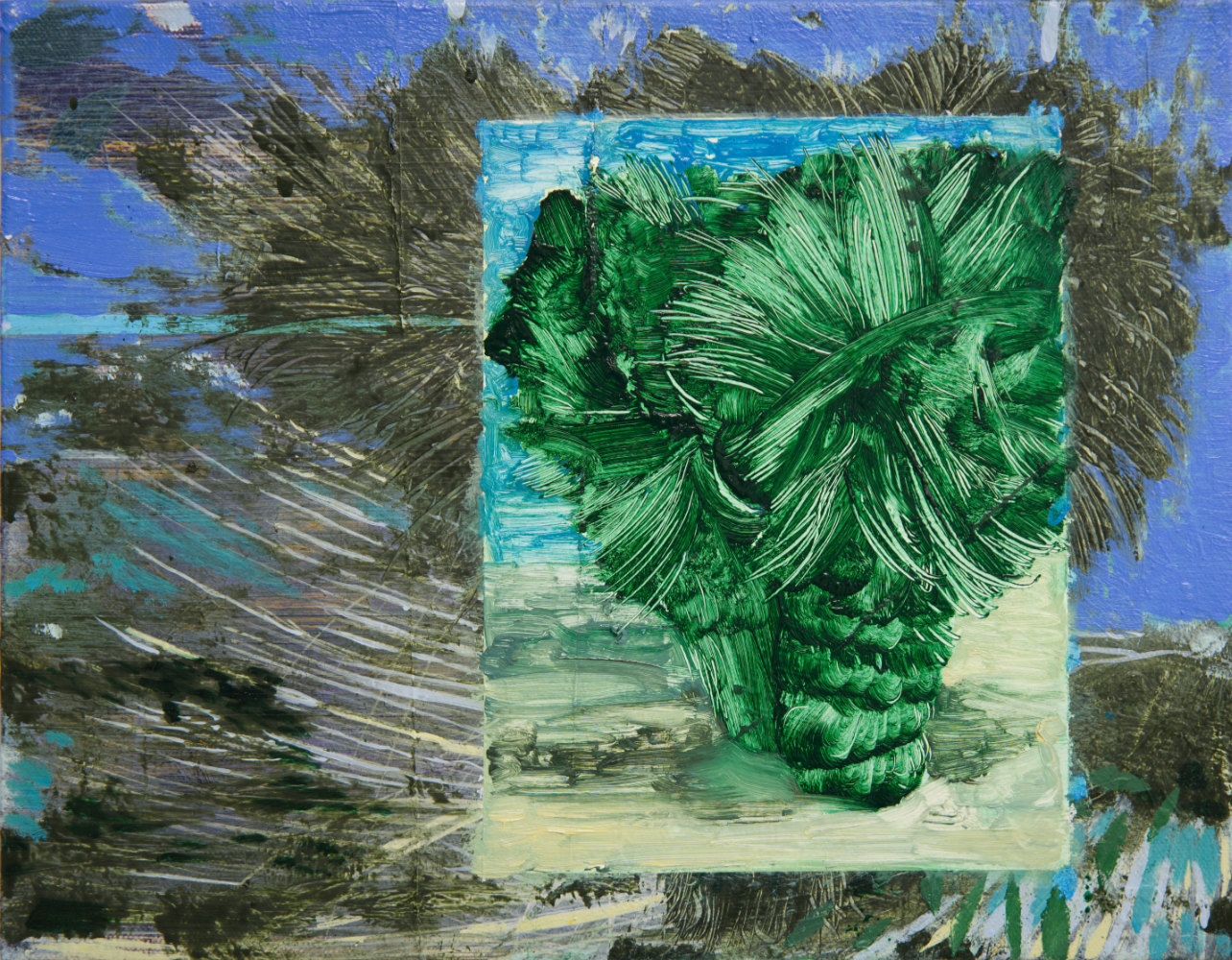
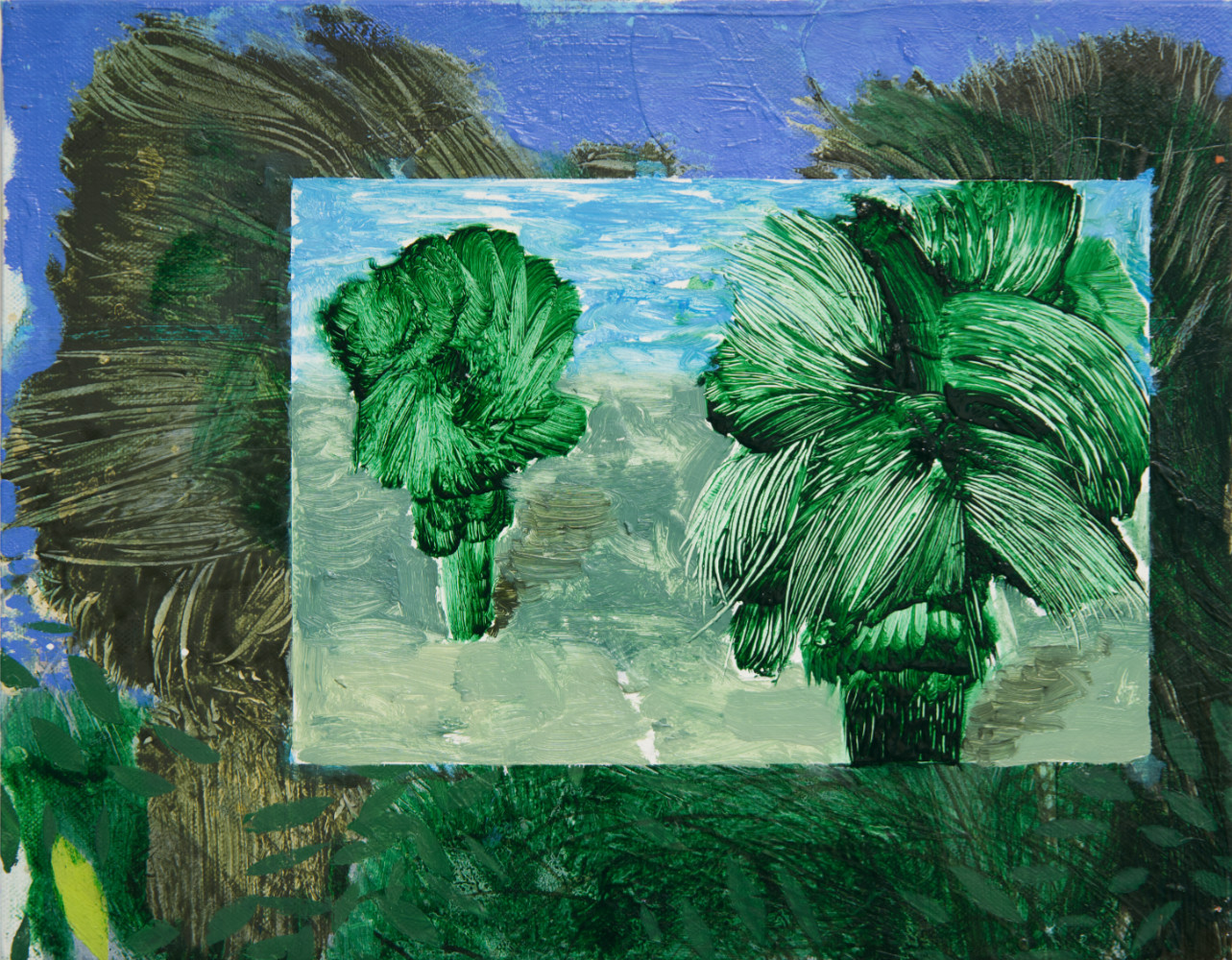
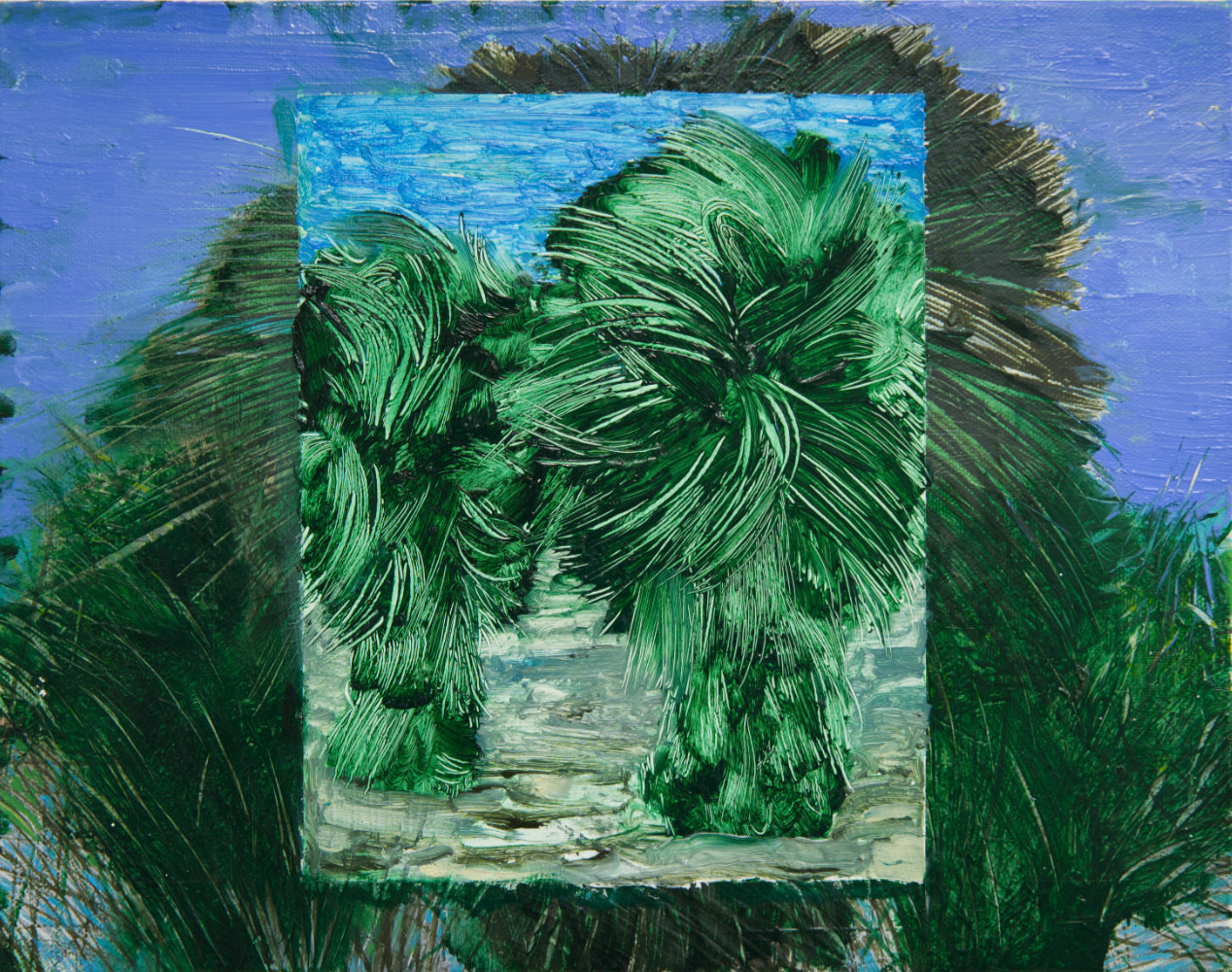
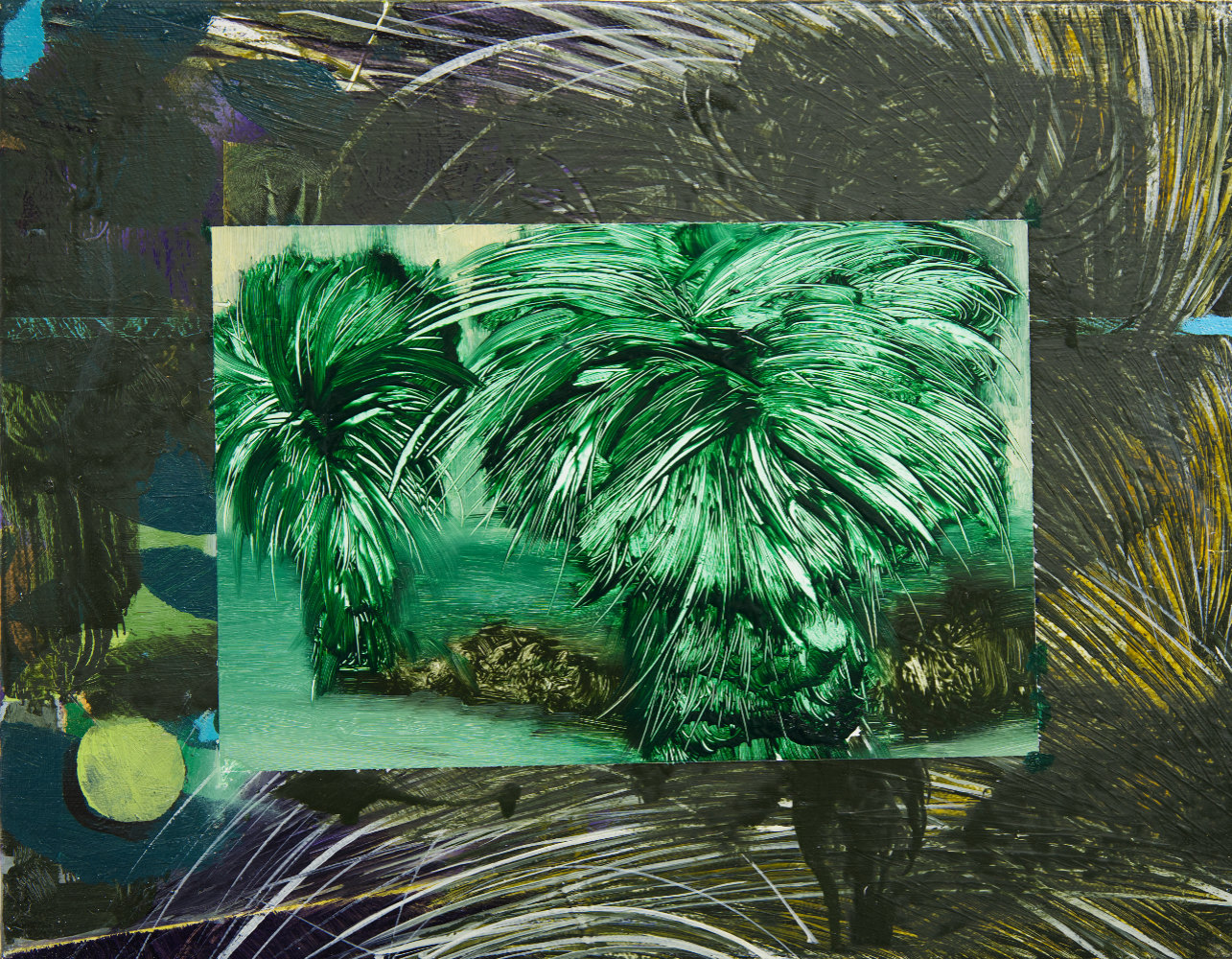
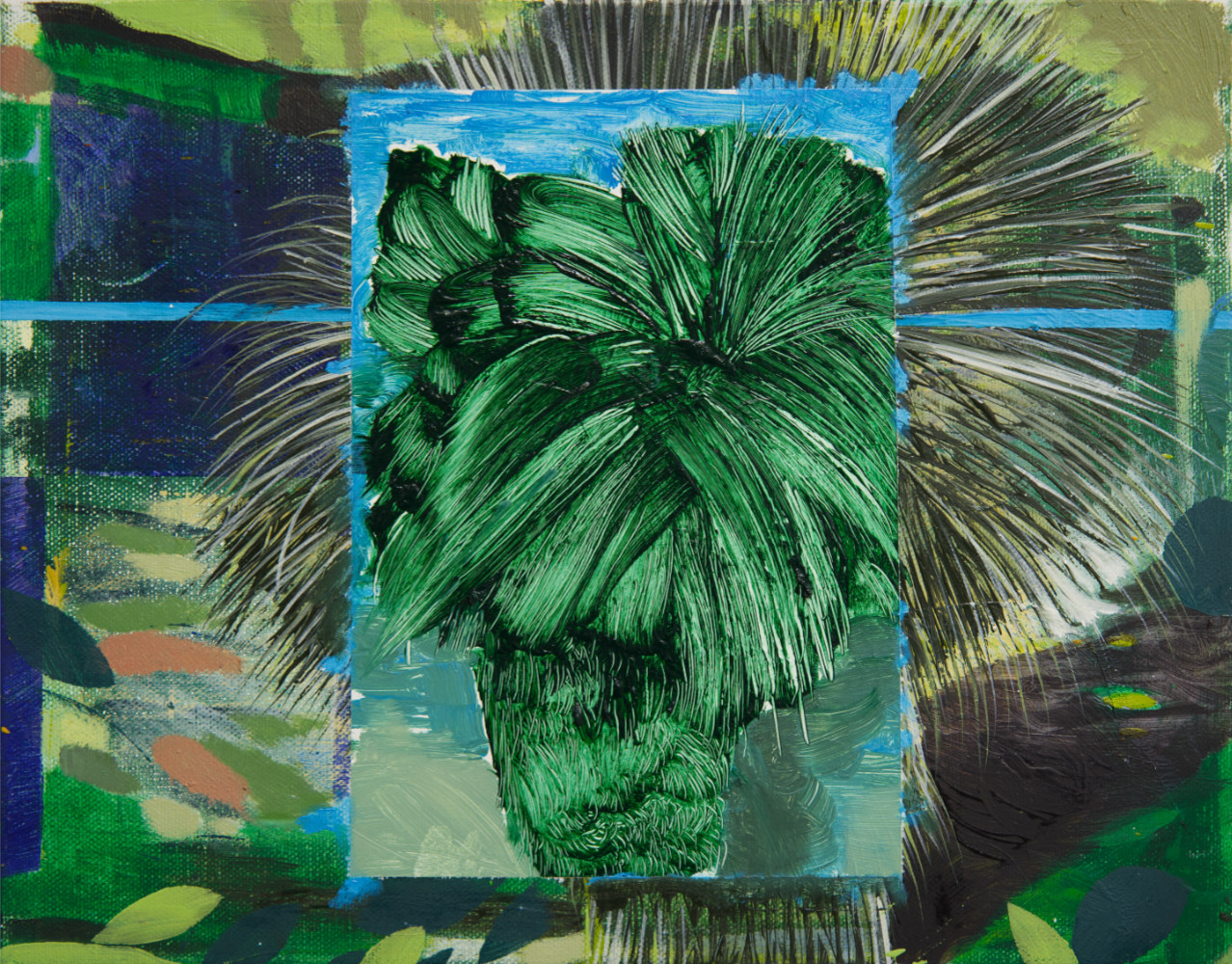
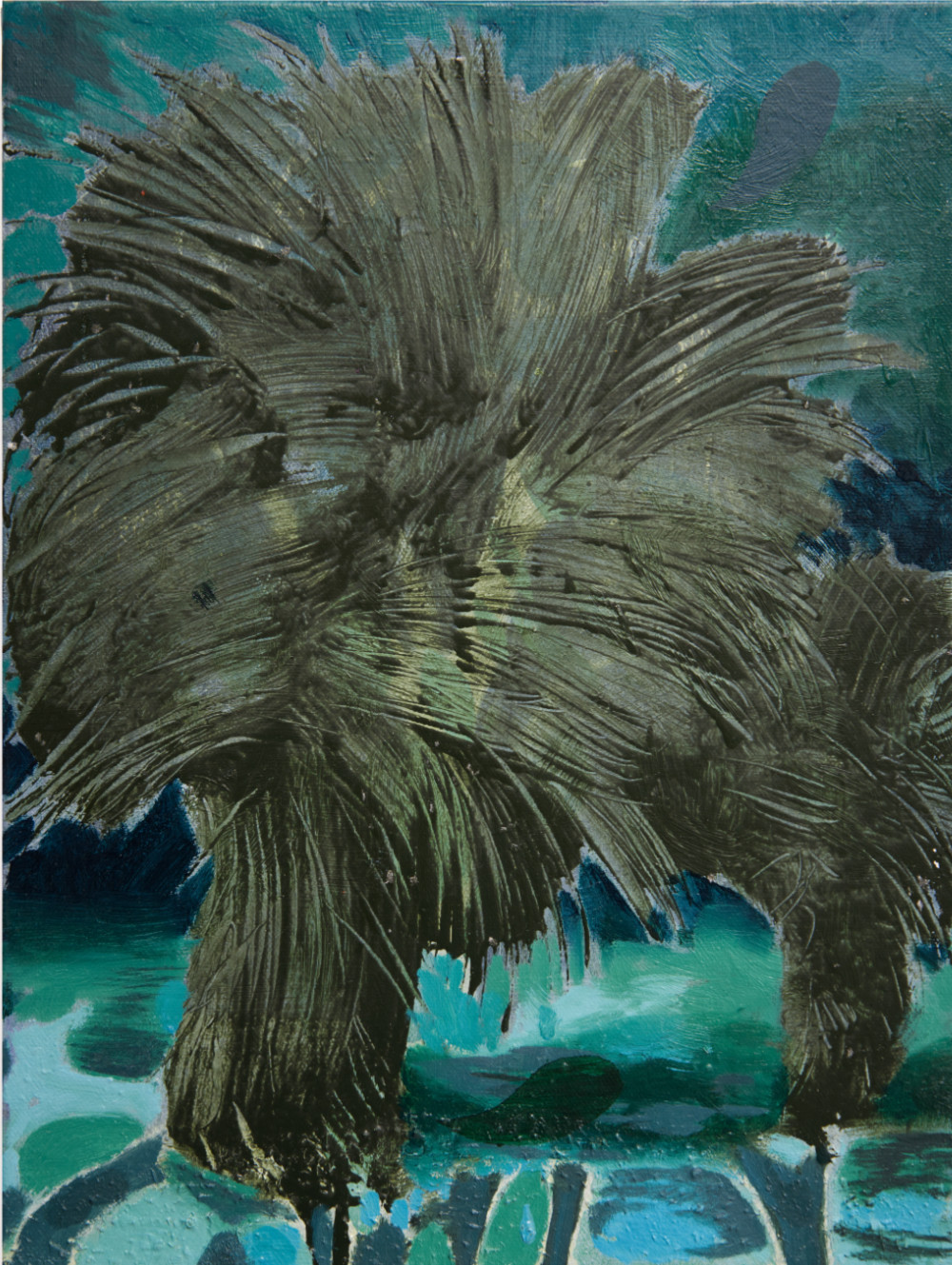
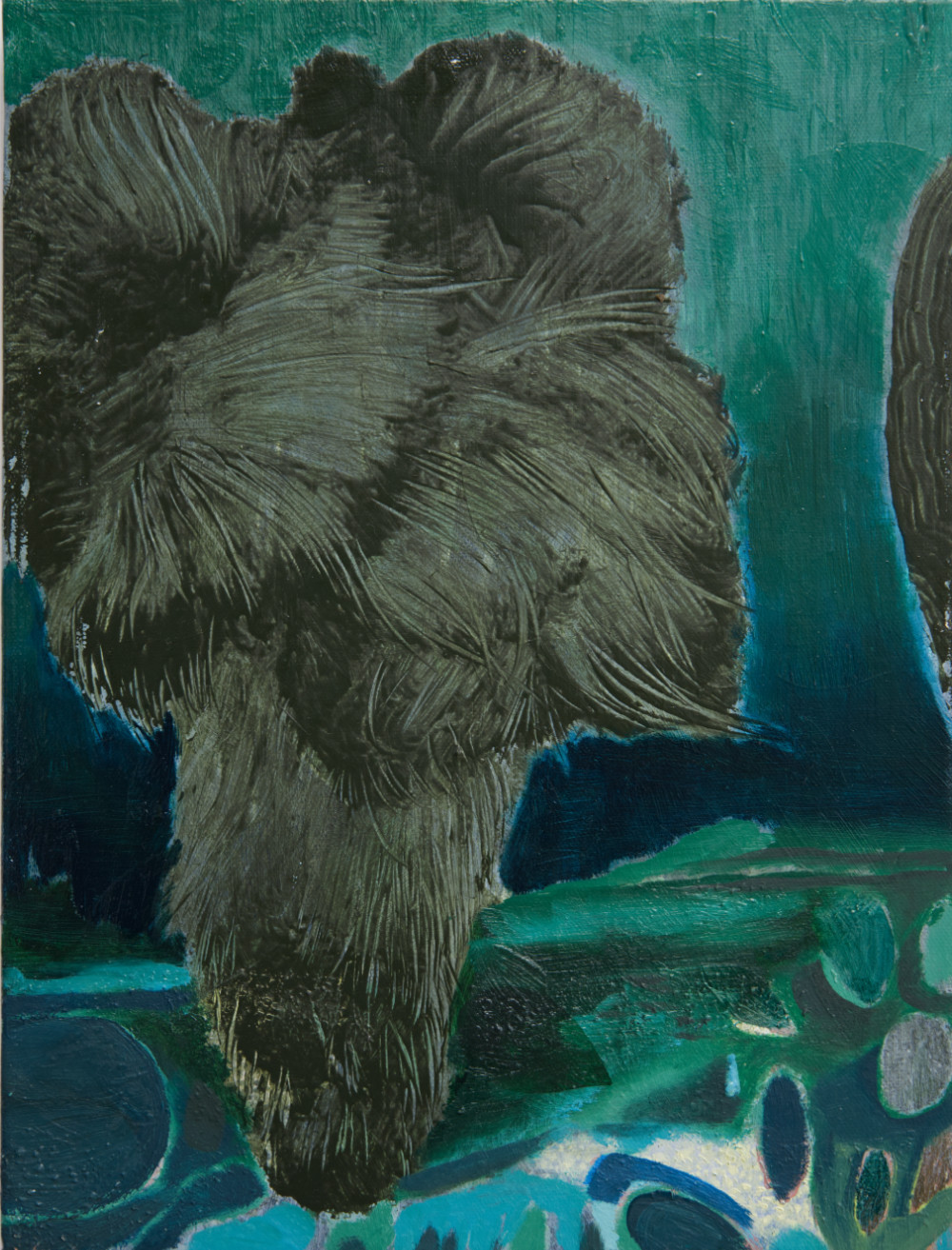
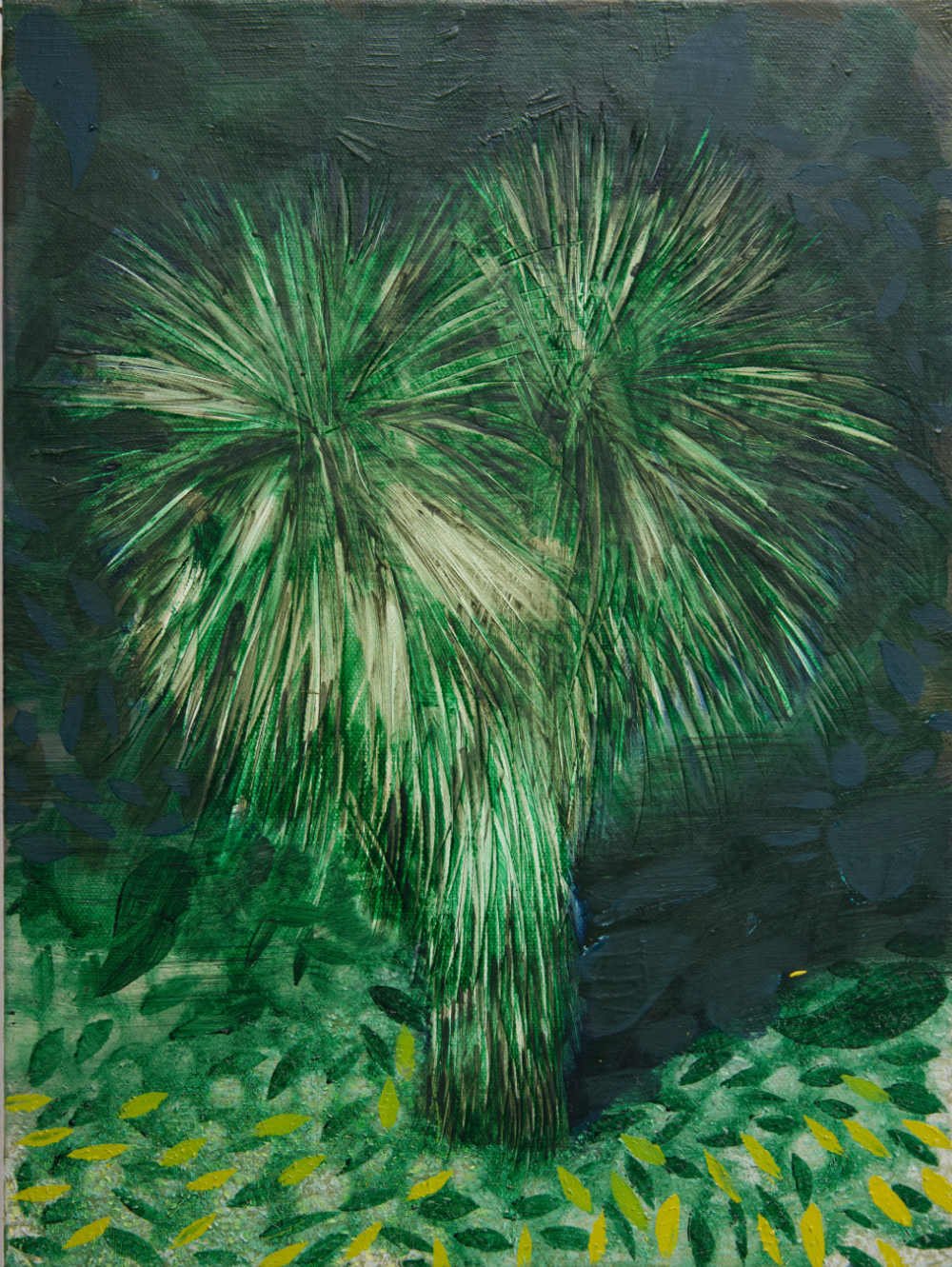
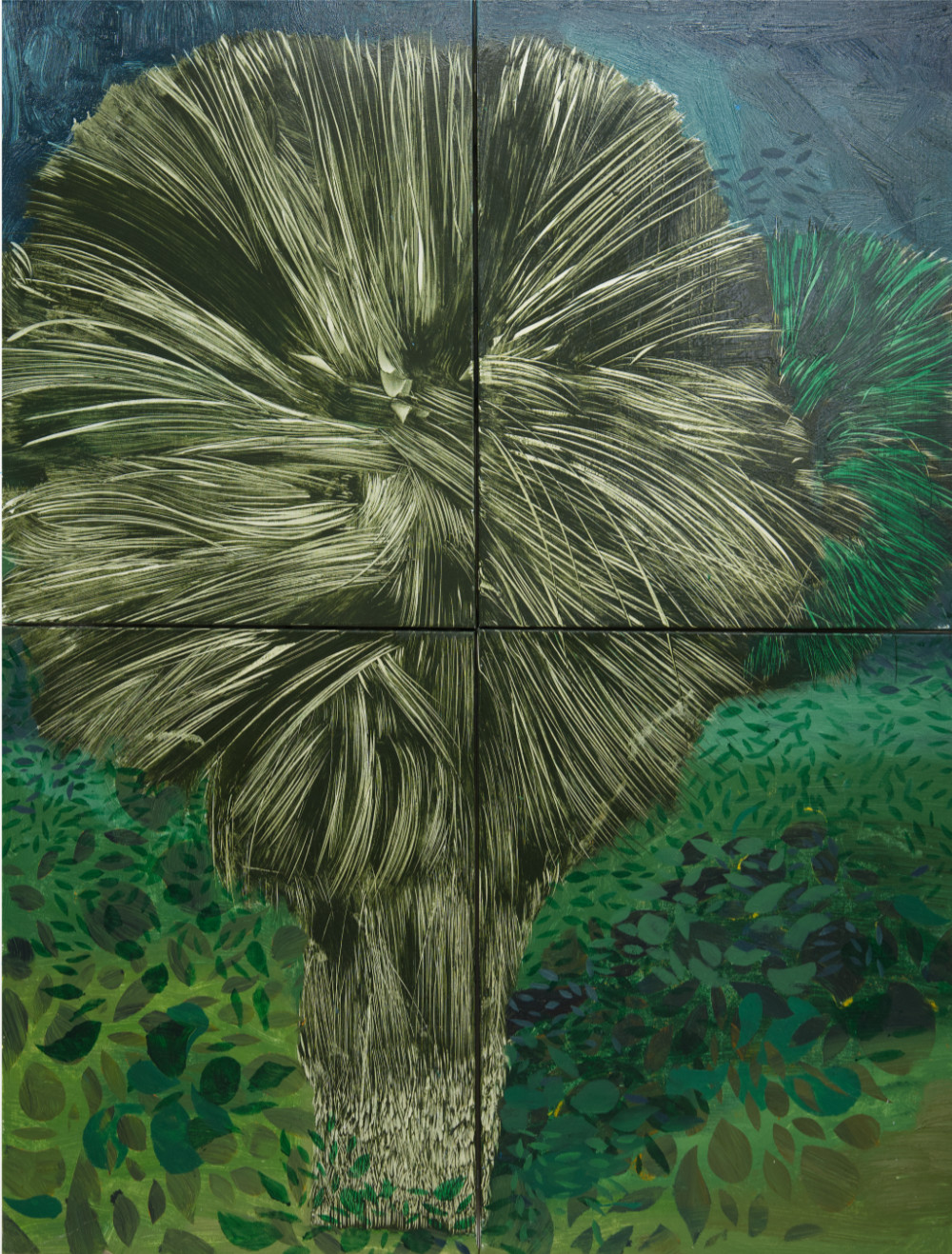
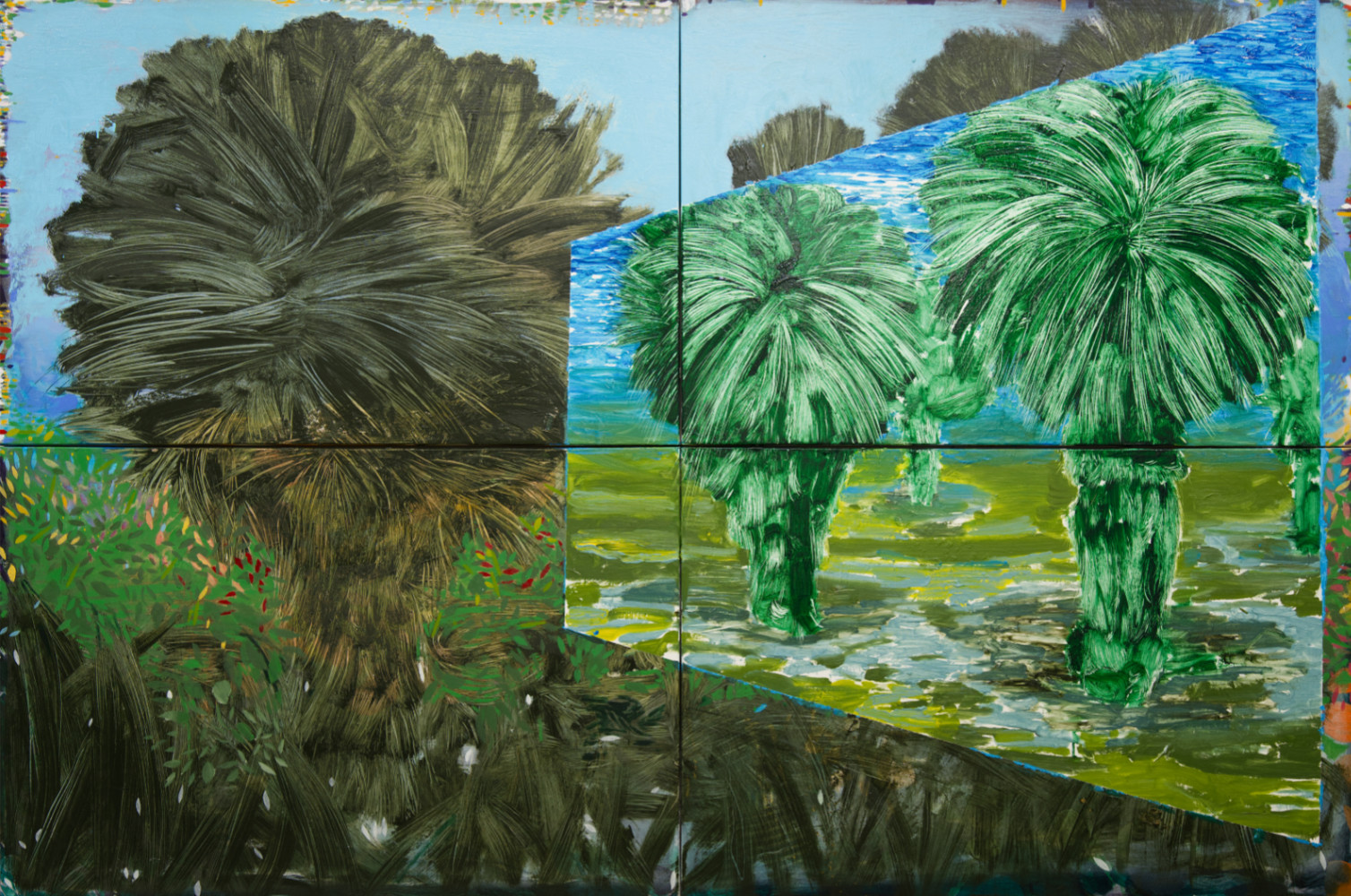
My Mirage paintings began far from the Park Cities, in West Texas. During a residency at Angelo State University in San Angelo, I walked the campus paths after dark. Beaked yuccas lined the paths, and under the streetlamps they changed. Their color washed out in the artificial light. The stiff blades went pale against the black, and the plants stopped reading as plants. They stood like figures keeping watch over the path.
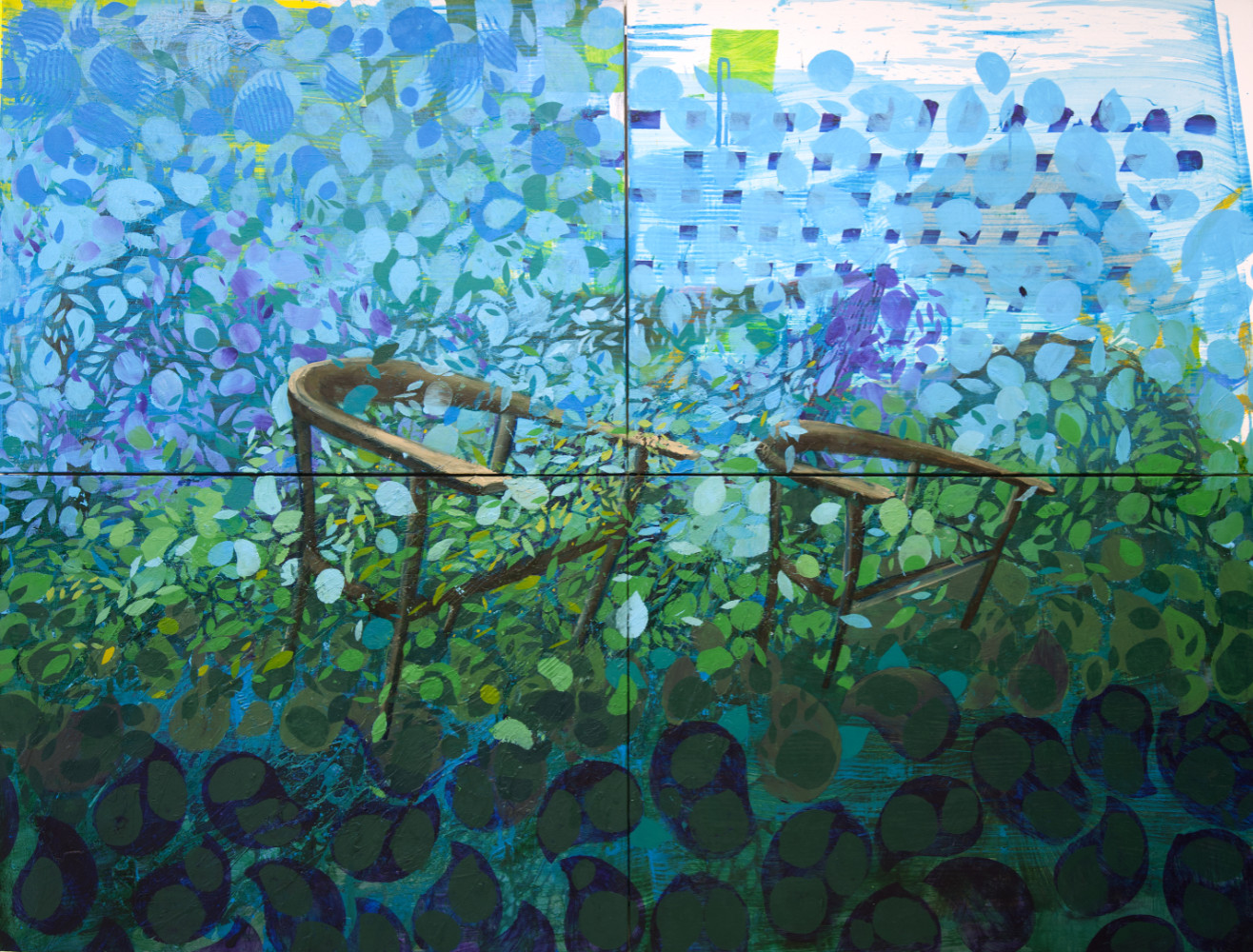
I photographed them and carried them into the studio. With handmade stencils I abstracted their shapes, opening the yucca into something that sits between a plant, a landscape, and a body. That in between state is where I work. I am an abstract figurative artist, and Mirage is abstract figurative art turned toward the land. The figure is not placed inside the landscape here. The landscape itself takes on the figure’s presence, solid one moment and dissolving the next, the way something seen at night is there and not there at once.
Highland Park houses are classic rooms. Spanish Revival, Tudor, and Colonial houses, many of them standing since the town’s first decades, hold high ceilings, arched doorways, carved wood, and walls that were built with art in mind. A Mirage canvas brings a different kind of light into such a room: night light, desert light, the pale glow of a shape seen across a dark field. Against old plaster and dark beams, that washed and watchful presence holds its own.
For readers looking for original paintings in Highland Park, the route is direct. There is no gallery between this town and the work. The Mirage series page shows the paintings in full, and the online store carries the current original paintings, which ship from Texas. Highland Park art, as this site records it, is the record of a working painter a few miles away, offered to the town that planned itself around beauty.
Visiting, and where the record continues
A Highland Park visit is simple. Start at the Village, at Preston Road and Mockingbird Lane. The map on this page centers there. Walk the courtyards and look at the arches. Then drive the parkways, Armstrong and Beverly, down to Lakeside Park and the bears on Turtle Creek. The town rewards slow looking, and slow looking is also how paintings ask to be seen.
The record continues across this site. The Mirage series page holds the paintings in full. The University Park page holds the 2019 teaching chapter next door. The Texas page gathers my state story in one arc, and the Dallas page carries my exhibition record in the city. The formal lines are on my CV page, and all the town pages of this site meet on the Market page. Highland Park has no wall of mine yet. It has the plan, the parks, and the rooms. The paintings are ready when the town is.
Frequently Asked Questions
Has Bartosz Beda exhibited in Highland Park?
No gallery in Highland Park has shown my work, and this page does not invent one. My Park Cities chapter sits next door, in University Park. In 2019 I taught as an adjunct at Southern Methodist University. The campus stands between the two towns, and the people of both towns move across it daily. The University Park page on this site holds that teaching record in full.
What are the Park Cities?
The Park Cities are Highland Park and University Park together. Highland Park covers about 2.2 square miles and is fully surrounded by Dallas. Few towns in Texas were planned as carefully as this one: its founders set aside a fifth of the land for parks before the town had sold its first lots.
What is Highland Park Village?
Highland Park Village stands at Preston Road and Mockingbird Lane, opened in 1931 by developers Hugh Prather and Edgar Flippen. It is counted as the first self contained shopping center in America: one unified group of shops, designed as a whole, with room for cars planned in from the start. It was listed in the National Register of Historic Places in 1997 and named a National Historic Landmark in 2000, and it still works as the town’s front room.
Why did the Village’s developers travel to Spain?
Prather and Flippen wanted the center to work as a town square. Before building, they traveled to Barcelona and Seville, and to Mexico and California, to study Spanish architecture at its source. The architects they hired, Marion Fooshee and James B. Cheek, designed the Village in the Spanish Colonial Revival style: stucco walls, red tile roofs, arched walkways, small towers, and shaded courtyards.
Who planned Highland Park’s layout?
The landscape architect Wilbur David Cook, who had planned Beverly Hills, was hired in 1907 to design the town’s layout. George E. Kessler, who had planned Fair Park and much of downtown Dallas, helped with later sections. Cook did not lay a grid over the land. His streets bend with Turtle Creek and follow the shape of the ground. Highland Park was the first community in Texas planned as an enclave of its own.
How much of Highland Park was set aside for parks?
Twenty percent. A fifth of the original land was set aside for parks, and that decision still shapes every drive through the town. Armstrong Parkway and Beverly Drive run as green parkways, wide and tree lined, with the houses set back behind deep lawns, and the parks follow Turtle Creek as it winds through the middle of it all.
What stands in Lakeside Park in Highland Park?
Lakeside Park holds about fourteen acres along Turtle Creek, with walking paths, a small dam, lily pads on the water, and a wooden bridge. Near the bridge stands the town’s lightest piece of public art: a family of granite teddy bears, one large bear of about ten feet and three smaller cubs, carved by J. T. Williams and given to the town by the Harlan Crow family in 1995. Generations of children have been photographed with those bears.
Who founded Highland Park?
The land began as a horse farm. In 1889 a group of Philadelphia investors bought the tract for an average of $377 an acre, and their agent, Henry Exall, bred horses here for years. In 1906 John S. Armstrong bought about 1,326 acres of that land. Armstrong had made his money in meatpacking. He named the new community Highland Park, for its high ground overlooking downtown Dallas. The first lots were sold in 1909.
Why is Highland Park not part of Dallas?
In 1913 Highland Park asked Dallas to annex it, and Dallas refused. The town’s 500 residents voted to incorporate on November 29, 1913, and the incorporation took effect in 1915. The question did not stay settled. From 1919 to 1945 Dallas sought to annex Highland Park, and the town held to its independence. It is still its own town today, with its own government, ringed on every side by Dallas.
Why do Mirage paintings suit Highland Park houses?
Highland Park houses are classic rooms. Spanish Revival, Tudor, and Colonial houses, many standing since the town’s first decades, hold high ceilings, arched doorways, carved wood, and walls that were built with art in mind. A Mirage canvas brings a different kind of light into such a room: night light, desert light, the pale glow of a shape seen across a dark field. Against old plaster and dark beams, that washed and watchful presence holds its own.