
Austin, Texas: Abstract Figurative Painting in the Capital
Austin is the capital of Texas and the state’s university city. My own Texas record was built further north, in Dallas and the towns around it, and this page does not pretend otherwise. I have not exhibited in Austin. What connects my work to this city is simpler, and I think more durable: Austin holds the state’s great university art museum, a young and fast growing population of collectors, and an audience that looks at painting seriously. This page is a guide to that art world, and an introduction to my abstract figurative painting for the Austin reader. The paintings themselves are in Dallas, and they reach Austin through the series pages and the online store linked below.
Austin in my record
If you collect art in Austin and you are looking for original paintings in Austin by a Texas painter, the honest route is direct. The series pages on this site show the work in full. The store carries the paintings that are available. Everything ships from Dallas, a few hours north on Interstate 35.
The Blanton Museum of Art
The Blanton Museum of Art is the art museum of the University of Texas at Austin, and the principal art museum of the city. It was founded in 1963 as the university art museum, and it now holds more than 22,000 works of art. Its strengths run deep in two directions at once: Italian Renaissance and Baroque painting on one side, and modern and contemporary American and Latin American art on the other. Between them sits an encyclopedic collection of prints and drawings, more than 18,000 works on paper, open to students and visitors in a dedicated study center. For a painter, that range matters. The figure in art is not one chapter in this museum. It is the thread that runs from the first gallery to the last.
On the museum grounds stands a building that is itself a work of art. Austin, by Ellsworth Kelly, opened in February 2018. It is the only building Kelly ever designed, and it was his final work. The building is a simple stone form of 2,715 square feet, with windows of colored glass, panels of black and white marble, and a tall sculpture in redwood inside. Kelly called it a place of calm and light. He was a painter of flat color and hard edges, and late in his life he built his painting into architecture. Visitors step inside a composition. In 2023 the museum opened its reimagined grounds, designed by the architecture firm Snøhetta, with shaded gathering space around the buildings.
Visiting: the Blanton stands at 200 East Martin Luther King Jr. Boulevard, at the south edge of the university campus, facing the Texas Capitol down Congress Avenue. It is open Tuesday to Friday and Sunday from 10 AM to 5 PM, and Saturday from 10 AM to 8 PM. It is closed on Mondays. Admission is free on Tuesdays. The museum website, linked below, carries current exhibitions and events.
The University of Texas at Austin
The university was founded in 1883, and it enrolls about 50,000 students. Its College of Fine Arts holds the Department of Art and Art History, one of the largest and most diverse art departments in the country, with three divisions: art history, studio art, and art education. Generations of Texas painters have passed through its studios, and its scholars work with the Blanton collection across the street as a teaching tool.
The department’s public face is the Visual Arts Center, in the Art Building. The center opened in 2010, in the space that had held the university art museum from 1963. It is a gallery of about 13,000 square feet showing established international artists next to current students and alumni, and it hosts the graduating student exhibitions each spring. Admission is always free. Across the campus, the Landmarks public art program has placed works by more than 40 artists in the open, so the university itself is a walking collection. A student in Austin learns art in classrooms, in a museum, and on the paths between them.
The Contemporary Austin
Austin’s museum of contemporary art works from two very different sites. Downtown, the Jones Center at 700 Congress Avenue holds rotating exhibitions across two floors, with a rooftop above them looking toward the Capitol. It is open Wednesday from noon to 9 PM and Thursday to Sunday from noon to 6 PM, and entry is free on Wednesday evenings and all day Thursday.
West of downtown, on the shore of Lake Austin, Laguna Gloria spreads across 14 acres at 3809 West 35th Street. It was built as the home of Clara Driscoll, and its villa and gardens now hold the Betty and Edward Marcus Sculpture Park, an art school, and exhibitions in the open air. It is open Wednesday from 9 AM to 3 PM, Thursday from 9 AM to 9 PM, and Friday to Sunday from 9 AM to 3 PM, and it is free on Thursdays. The two sites were joined under one name in 2013, when the museum became The Contemporary Austin. Between the Blanton’s depth and this museum’s present tense, Austin holds both ends of the art timeline.
A short history of Austin
Austin began as Waterloo, a small village founded in 1837 on the north bank of the Colorado River, near the mouth of Shoal Creek. In 1839 the young Republic of Texas chose the site for its permanent capital and renamed it for Stephen F. Austin, the founder of Anglo American Texas. The government arrived by oxcart that October, and the town was planned on a grid below the hill where the Capitol now stands. When Texas joined the United States, Austin became the state capital, formally on February 19, 1846, and it kept the title through later challenges and a statewide vote in 1872.
The university, founded a few years later, gave the government town a second identity. In the twentieth century a third identity arrived: music. Austin named itself the Live Music Capital of the World, a title the city trademarked in 1991, and the clubs on Sixth Street and Red River still argue the case nightly. Since 2010 the city has also been one of the fastest growing large cities in the United States, as technology companies and new residents arrived in force. That growth is why this page exists. A city adding people at that speed is a city forming new collections, new walls, and new tastes, all at once.
Abstract figurative painting: my answer to the figure
Abstract figurative art keeps the human figure and puts it under pressure. The body stays in the painting, but it is stretched, layered, cut by the brush, and partly taken away, so the viewer finishes the person that the paint only starts. I am an abstract figurative artist, and this is the ground all of my series stand on. Austin art, taught by the Blanton’s five centuries of figures, understands this ground well. In that museum you can walk from a Renaissance panel, where the figure carries a whole theology, to a contemporary canvas where the figure carries memory, politics, or loss. The subject never changed. The pressure on it did.
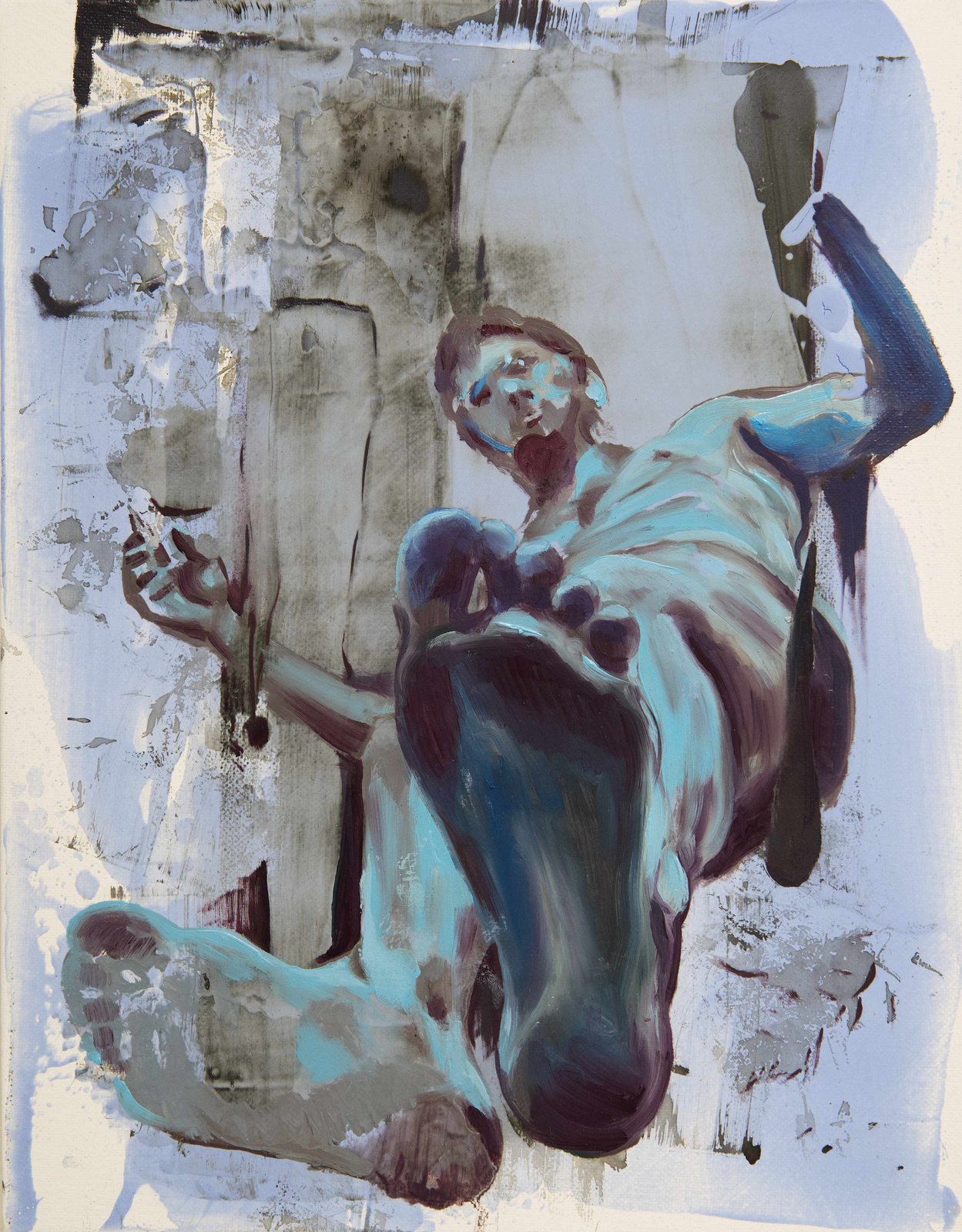
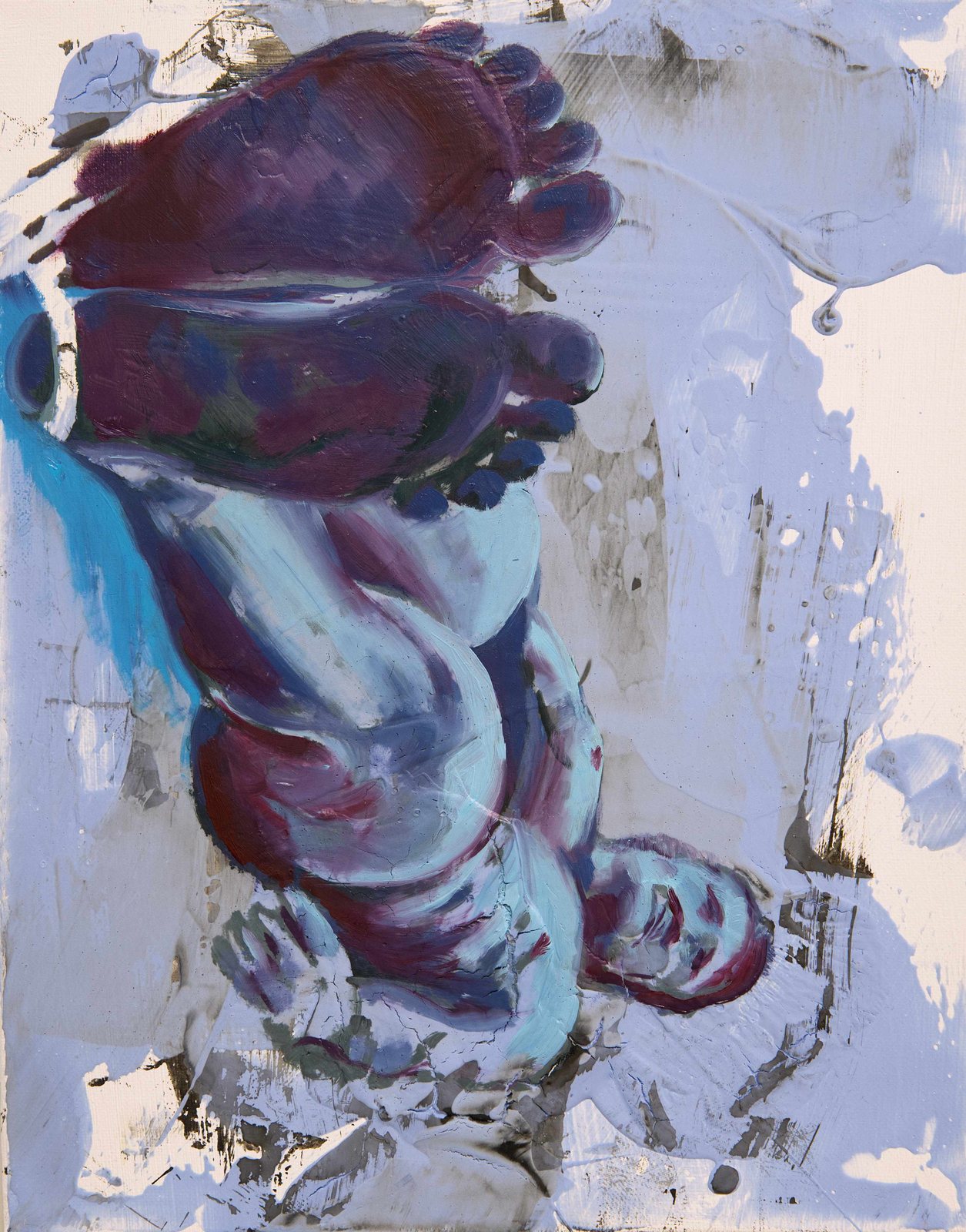
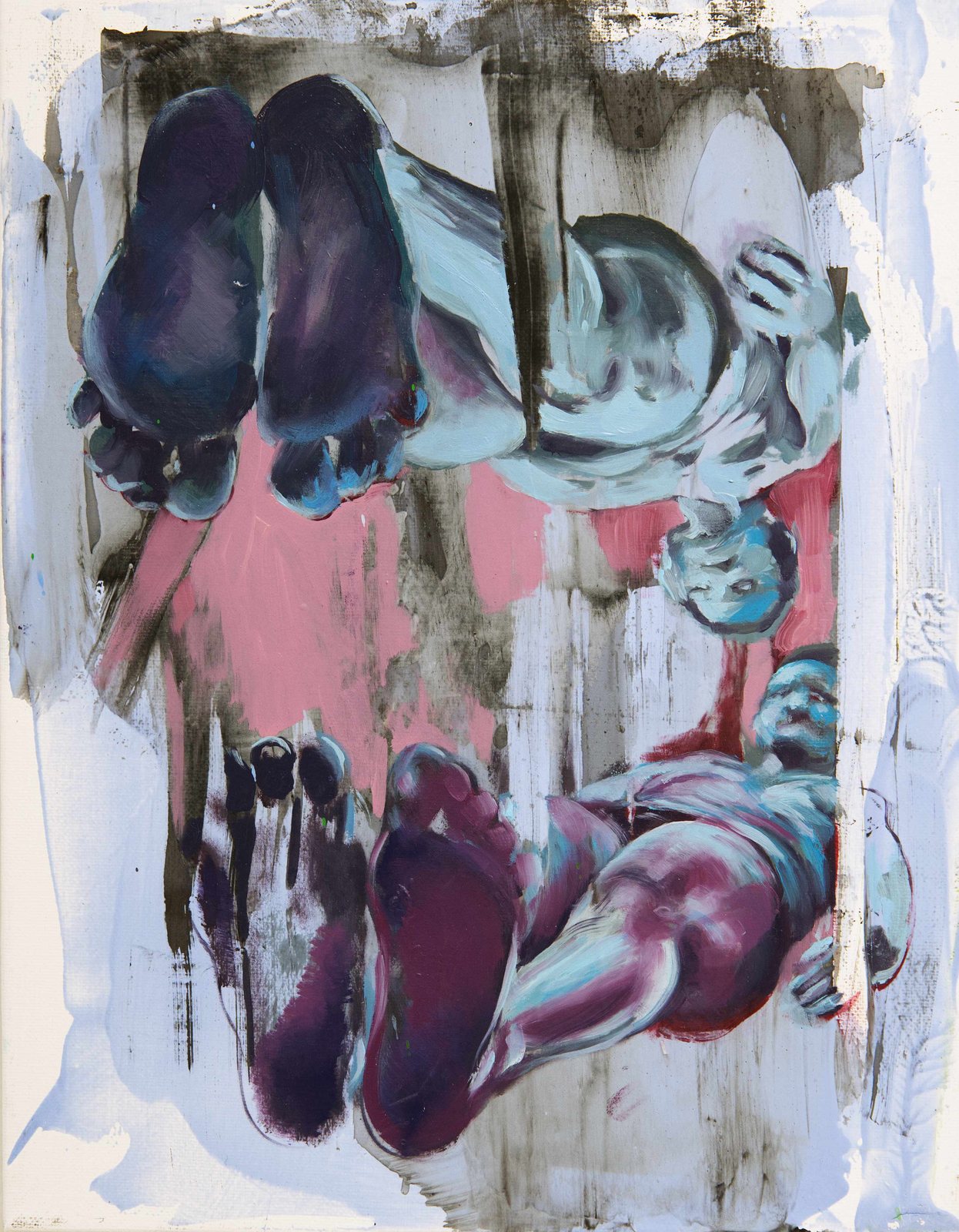
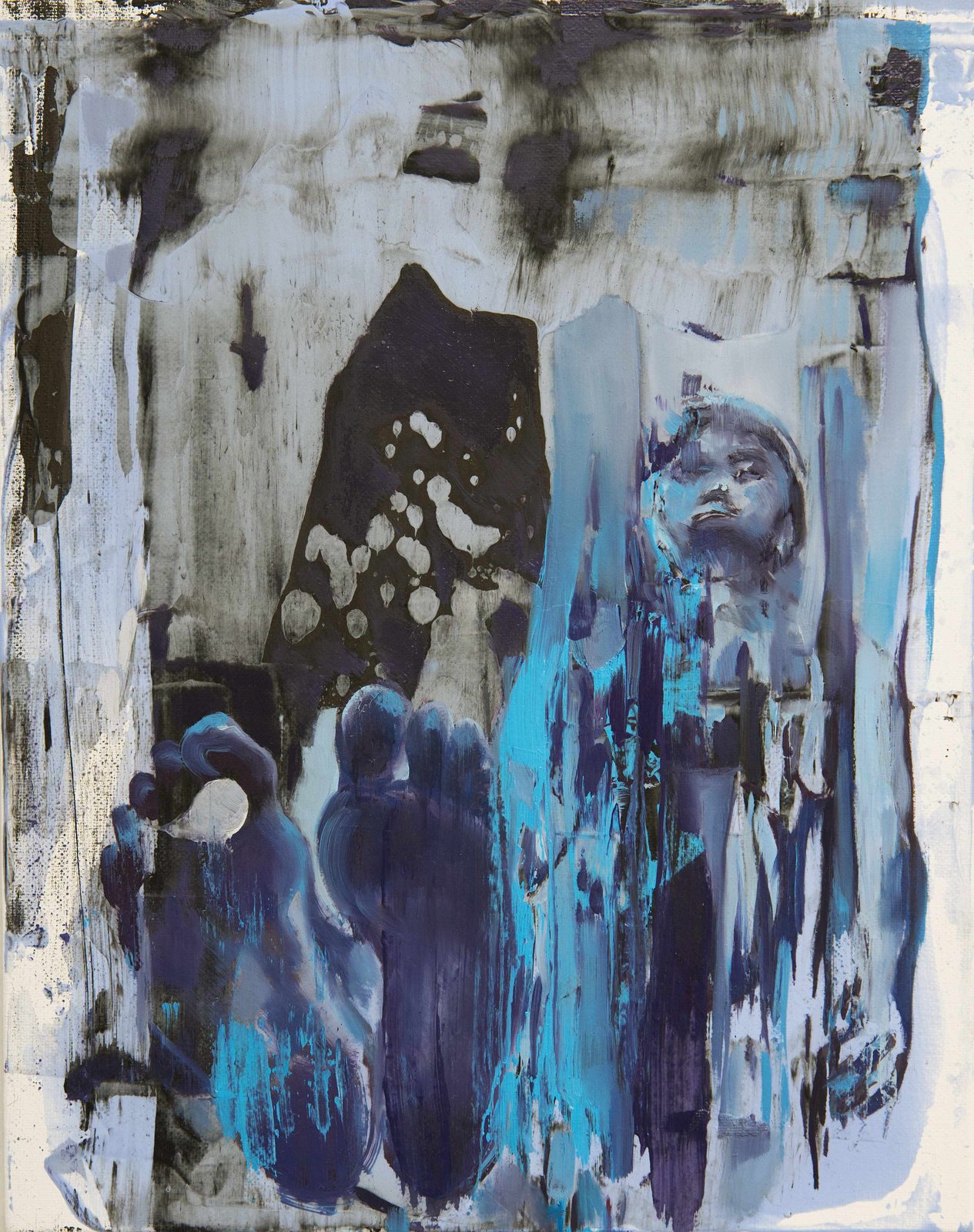
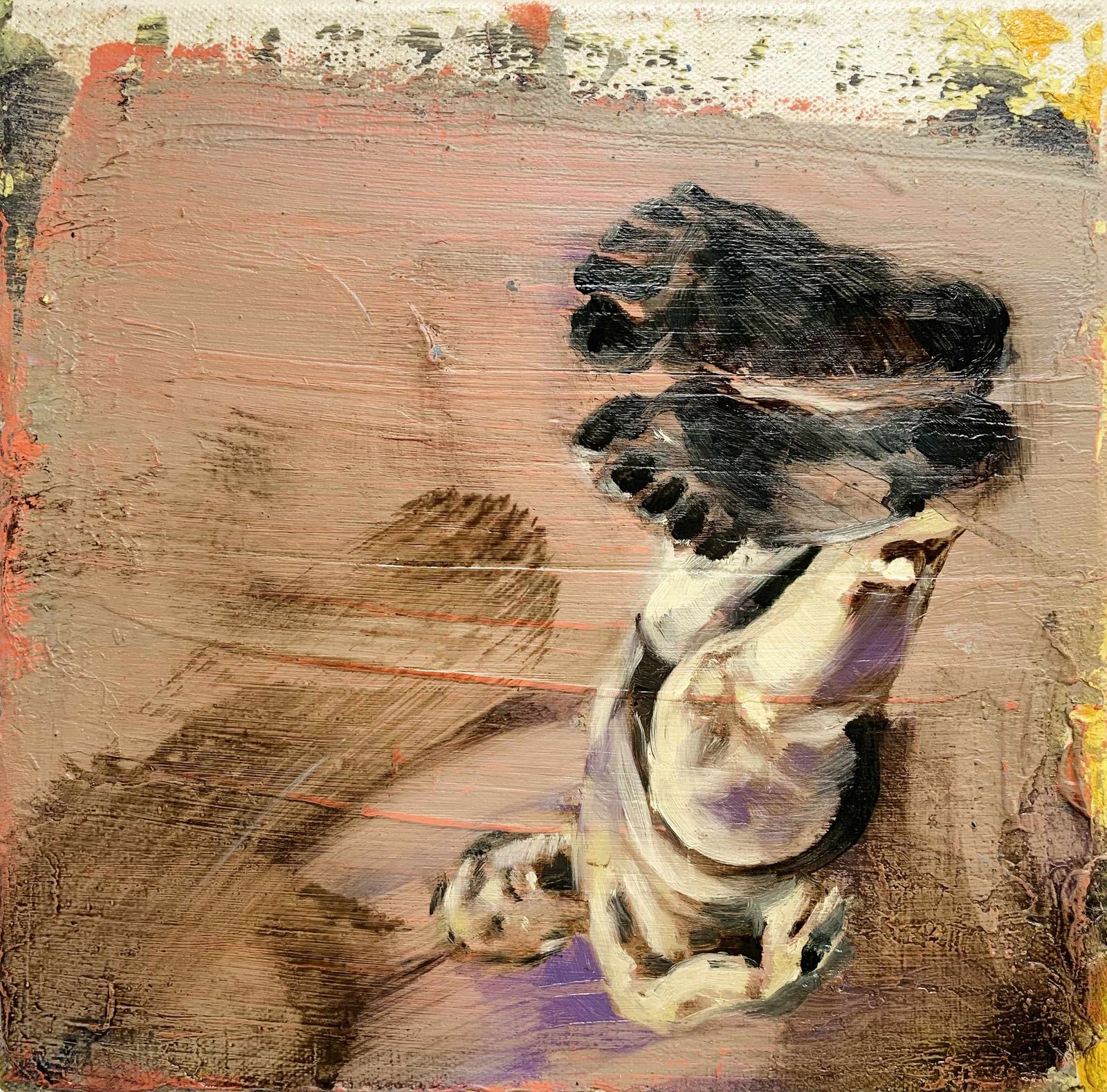
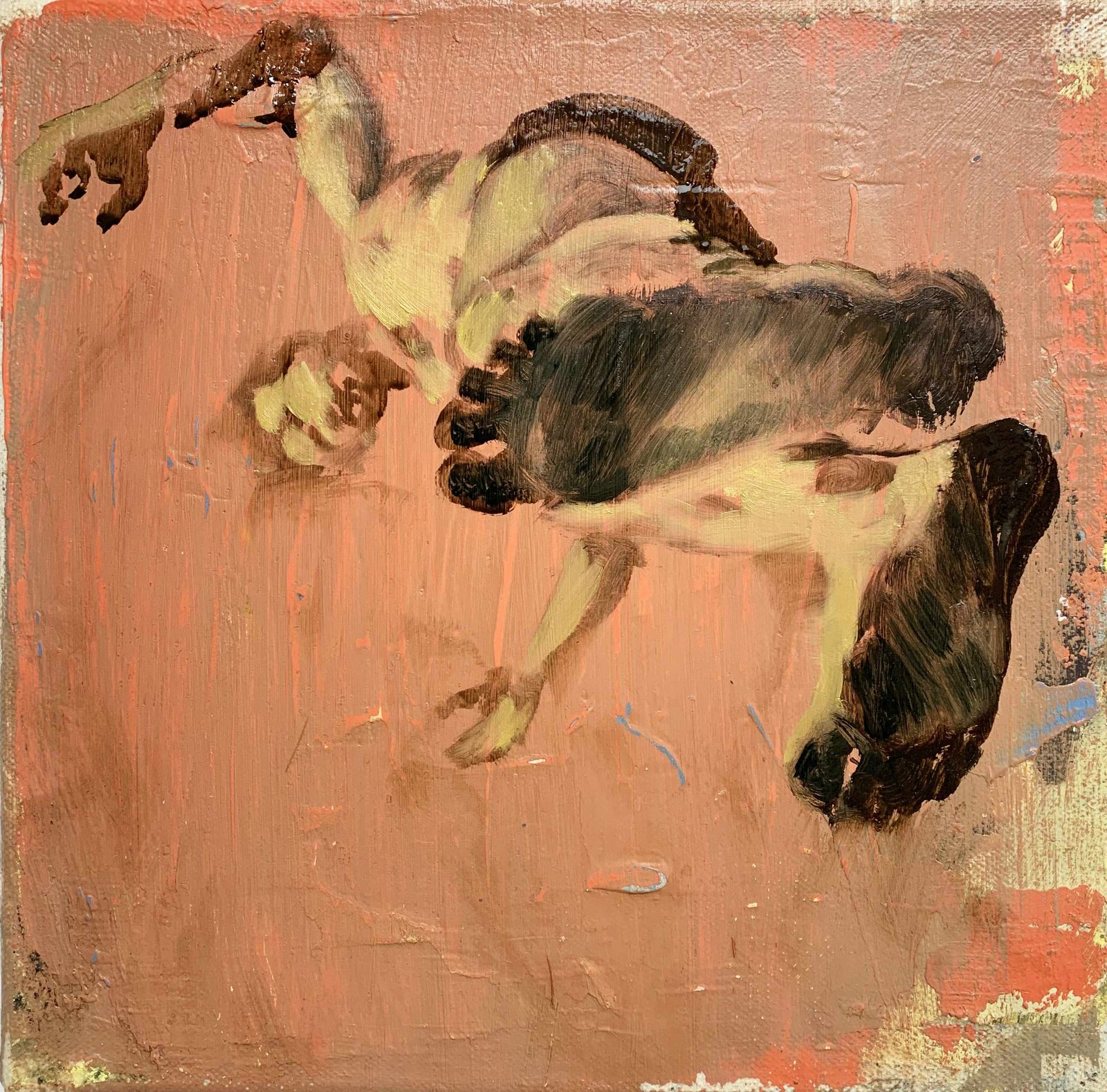
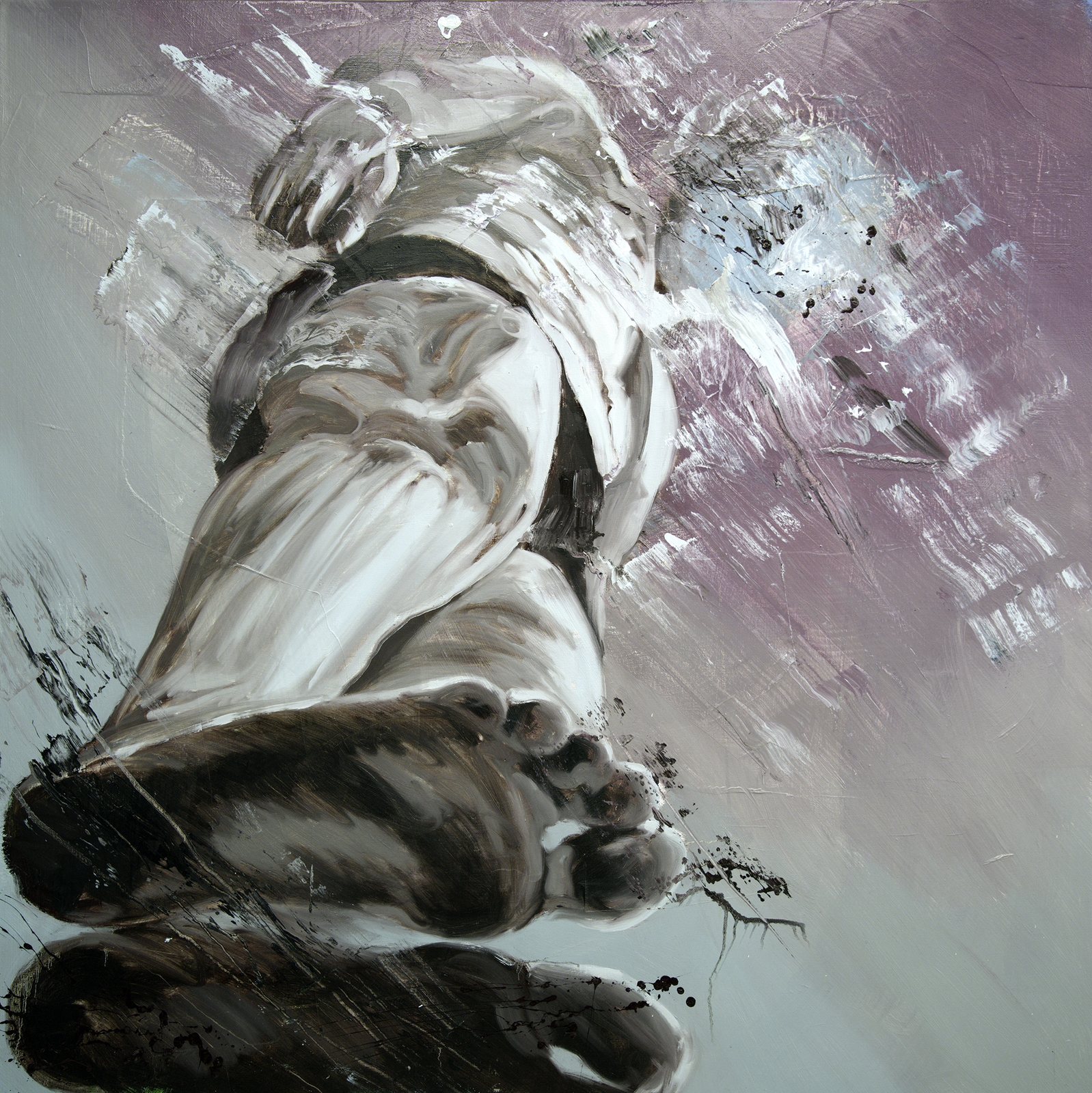
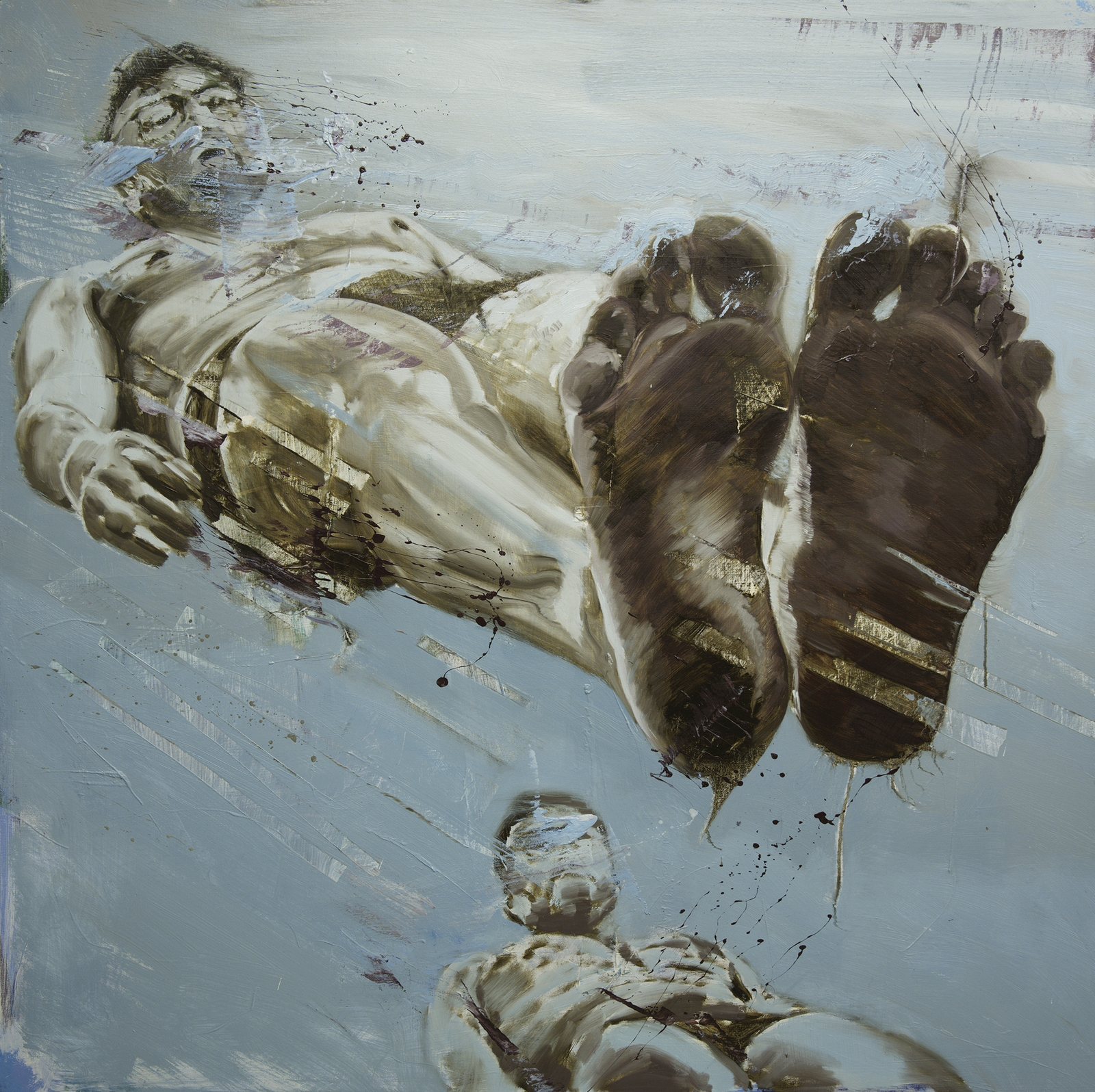
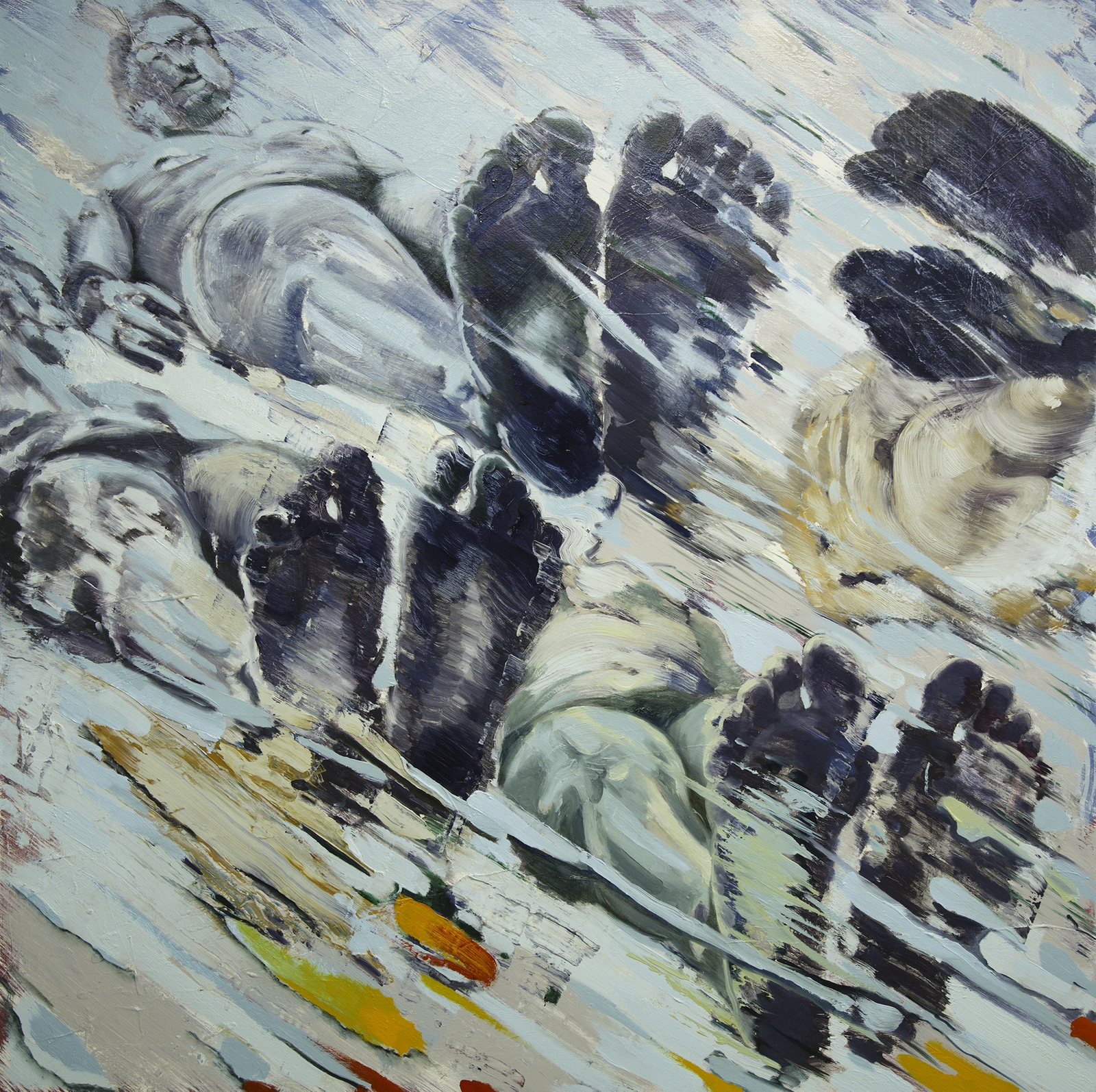
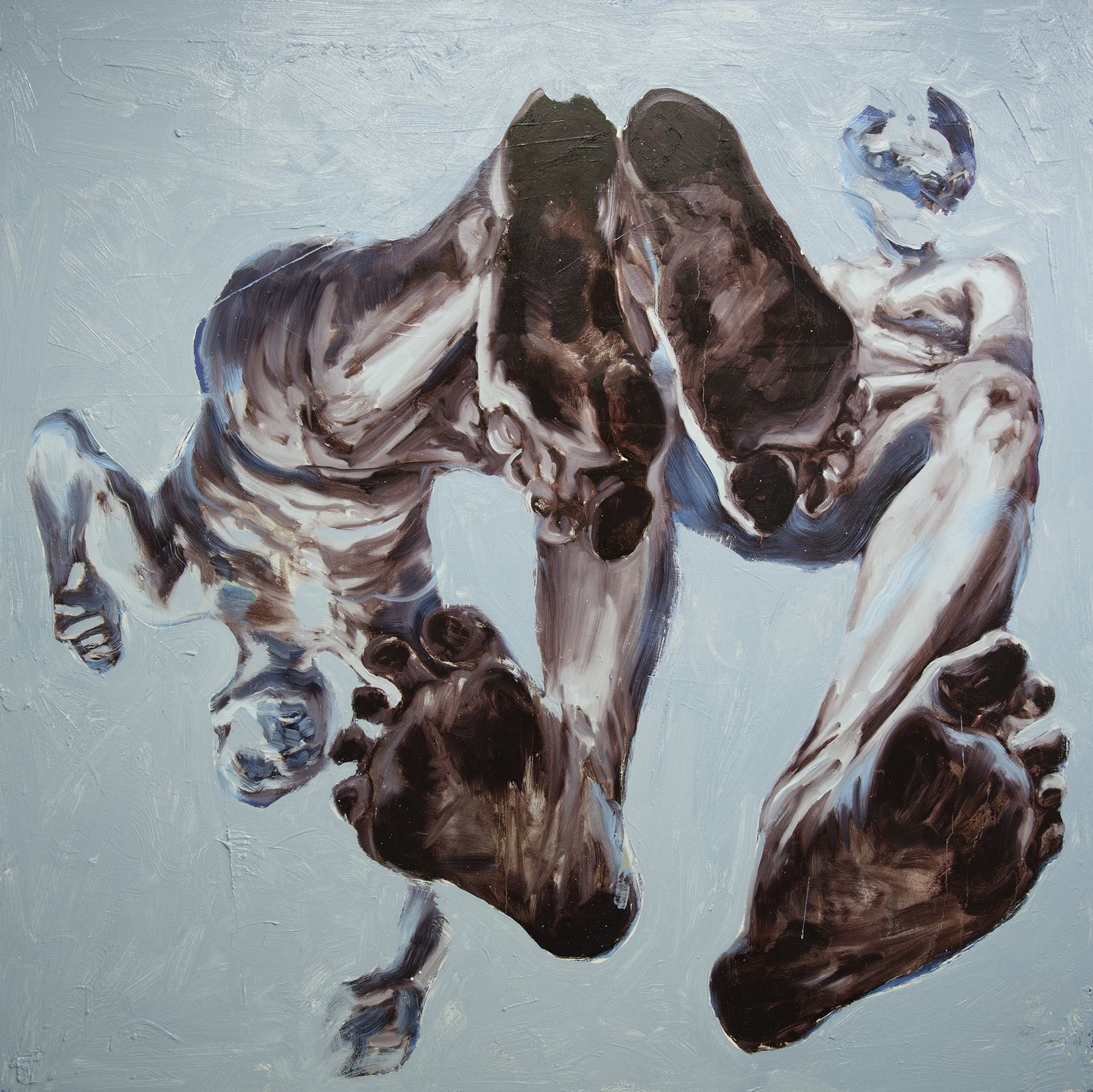
My current series is called Apogee. It began in July 2026, after a trip to Italy, where I stood under frescoes and looked up at bodies painted high on walls and ceilings. Apogee paints the figure from its lowest point: seen from the feet, foreshortened, so the body rises over the viewer the way a frescoed saint rises over a chapel floor. The viewpoint is strange on purpose. From the feet, a person becomes monumental and unfamiliar at the same time, and the painting has to rebuild him from soles, legs, and falling cloth before it can reach a face. The brushwork is direct and aggressive, because hesitation would turn the strangeness into decoration.
The series is built as Fragments, ten so far. The first works are small, in ink, acrylic, and oil on canvas, studies of the rising figure at close range. Two small Fragments painted in oil on rabbit skin glue and canvas carried the series into a group exhibition in Belgrade, Serbia, in the fall of 2026. The newest Fragments are large canvases, 48 by 48 inches, where the foreshortened body fills the whole field. The full series is gathered on the Apogee series page, and the paintings are in the store gallery, both linked below.
For a collector in Austin, the offer is plain. These are original paintings, made by hand in a Dallas studio, by a painter with solo exhibitions in a Texas museum and a Texas college behind him. There is no Austin gallery wall between you and the work. The series pages show every painting. The store states what is available. That directness suits this city, which has never waited for permission from older art capitals.
An Austin art day, and where to find my work
A visitor can read Austin’s art in one day. Begin at the Blanton in the morning, and step into Kelly’s Austin while the colored glass is working. Cross to the Visual Arts Center for whatever the students and visiting artists are showing. Take the Jones Center downtown in the afternoon, and end at Laguna Gloria, where the sculpture park takes the evening light off the lake.
My own record hangs together on this site. The Texas hub page gathers my Texas exhibitions and residencies in one place. The Dallas page tells the home base story. My CV page holds the formal list, and the other town pages of this site sit together on the Market page. Austin is the capital, and capitals are where a state keeps its memory and its ambitions in the same few blocks. My painting belongs in that conversation, and this page is its introduction.
Frequently Asked Questions
Has Bartosz Beda exhibited in Austin, Texas?
I have not exhibited in Austin. My American exhibition record runs through Dallas, where I have lived since 2018, and through solo exhibitions and residencies in San Angelo, Plano, Mesquite, and Brownsville. Austin is not on that list yet. Austin is a city my painting is moving toward. The series pages on this site show the work in full, the store carries the paintings that are available, and everything ships from Dallas, a few hours north on Interstate 35.
What is the Blanton Museum of Art?
The Blanton Museum of Art is the art museum of the University of Texas at Austin, and the principal art museum of the city. It was founded in 1963 as the university art museum, and it now holds more than 22,000 works of art. Its strengths run in two directions at once: Italian Renaissance and Baroque painting on one side, and modern and contemporary American and Latin American art on the other. Between them sits a collection of prints and drawings of more than 18,000 works on paper. The museum stands at 200 East Martin Luther King Jr. Boulevard and is free on Tuesdays.
What is the building called Austin by Ellsworth Kelly?
On the Blanton grounds stands a building that is itself a work of art. Austin, by Ellsworth Kelly, opened in February 2018. It is the only building Kelly ever designed, and it was his final work. The building is a simple stone form of 2,715 square feet, with windows of colored glass, panels of black and white marble, and a tall sculpture in redwood inside. Kelly called it a place of calm and light. Visitors step inside a composition.
What is the Visual Arts Center at UT Austin?
The Visual Arts Center is the public face of the university’s art department, in the Art Building. It opened in 2010, in the space that had held the university art museum from 1963. It is a gallery of about 13,000 square feet showing established international artists next to current students and alumni, and it hosts the graduating student exhibitions each spring. Admission is always free. Across the campus, the Landmarks public art program has placed works by more than 40 artists in the open, so the university itself is a walking collection.
What are the two sites of The Contemporary Austin?
Austin’s museum of contemporary art works from two very different sites. Downtown, the Jones Center at 700 Congress Avenue holds rotating exhibitions across two floors, with a rooftop above them looking toward the Capitol. West of downtown, on the shore of Lake Austin, Laguna Gloria spreads across 14 acres at 3809 West 35th Street. It was built as the home of Clara Driscoll, and its villa and gardens now hold the Betty and Edward Marcus Sculpture Park, an art school, and exhibitions in the open air. The two sites were joined under one name in 2013.
When did Austin become the capital of Texas?
Austin began as Waterloo, a small village founded in 1837 on the north bank of the Colorado River, near the mouth of Shoal Creek. In 1839 the young Republic of Texas chose the site for its permanent capital and renamed it for Stephen F. Austin, the founder of Anglo American Texas. The government arrived by oxcart that October. When Texas joined the United States, Austin became the state capital, formally on February 19, 1846, and it kept the title through later challenges and a statewide vote in 1872.
When was the University of Texas at Austin founded?
The university was founded in 1883, and it enrolls about 50,000 students. Its College of Fine Arts holds the Department of Art and Art History, one of the largest and most diverse art departments in the country, with three divisions: art history, studio art, and art education. Generations of Texas painters have passed through its studios, and its scholars work with the Blanton collection across the street as a teaching tool.
When did Austin take the name Live Music Capital of the World?
In the twentieth century a third identity arrived in Austin: music. Austin named itself the Live Music Capital of the World, a title the city trademarked in 1991, and the clubs on Sixth Street and Red River still argue the case nightly. Since 2010 the city has also been one of the fastest growing large cities in the United States, as technology companies and new residents arrived in force. A city adding people at that speed is a city forming new collections, new walls, and new tastes, all at once.
What are the Apogee Fragments?
My current series, Apogee, is built as Fragments, ten so far. The first works are small, in ink, acrylic, and oil on canvas, studies of the rising figure at close range. Two small Fragments painted in oil on rabbit skin glue and canvas carried the series into a group exhibition in Belgrade, Serbia, in the fall of 2026. The newest Fragments are large canvases, 48 by 48 inches, where the foreshortened body fills the whole field. Apogee paints the figure from its lowest point: seen from the feet, so the body rises over the viewer the way a frescoed saint rises over a chapel floor.
When did the Blanton reopen its museum grounds?
In 2023 the Blanton opened its reimagined grounds, designed by the architecture firm Snøhetta, with shaded gathering space around the buildings. The museum stands at the south edge of the university campus, facing the Texas Capitol down Congress Avenue. It is open Tuesday to Friday and Sunday from 10 AM to 5 PM, and Saturday from 10 AM to 8 PM. It is closed on Mondays.