
Frisco, Texas: Original Paintings for a New City
Frisco is the newest large city in my working metroplex. A generation ago it was a farm town of about six thousand people. Today it holds more than two hundred thousand residents, corporate headquarters, and mile after mile of new houses. A new city means new walls, and new walls are where paintings go to live. I am an abstract figurative artist based in Richardson, south of here, and this page is my introduction to Frisco: its art out in the open, its galleries, its short and fast history, and my Mirage paintings, made for rooms that were built last year and finished last month.
The page is honest about the connection. I have no Frisco exhibition on record, and it does not invent one. My Texas exhibitions sit in Dallas, Plano, Mesquite, and Brownsville, all inside the same metropolitan field. What Frisco gets from me is the same thing every town on this site gets: the true record, a guide to the art already here, and a direct route to the paintings themselves.
Frisco in my record
My record near Frisco is real, and it is close. In 2023 I showed Echoes of Seasons as a solo exhibition at the art gallery of Collin College in Plano, the city directly south of Frisco. In Dallas I have had solo exhibitions at Ro2 Art and a residency in that gallery through the winter of 2022 to 2023. Earlier, in 2020, the Mesquite Arts Center showed my work in a two person exhibition, and in 2019 the Brownsville Museum of Fine Art presented my solo exhibition Paramount of Eternity. None of those rooms is in Frisco. All of them stand within the Dallas to Fort Worth metroplex that Frisco belongs to.
Frisco collectors and Frisco offices reach the work the direct way: through the series pages on this site and through the online store, where the current original paintings are listed. The paintings ship from my studio, or travel the tollway in my car. There is no gallery between Frisco and the work, and this page does not pretend there is one. What I can offer the city is what I offer every reader here: paintings made by hand in this metroplex, and the record to prove where they have been.
The Texas Sculpture Garden at Hall Park
Frisco’s serious art starts outdoors, inside an office park. At Hall Park, the business campus developed by Craig Hall on Gaylord Parkway, the front four acres hold the Texas Sculpture Garden: more than forty large contemporary sculptures by prominent Texas artists, set along paths beside lakes and fountains. It is recognized as the largest private collection of contemporary Texas sculpture ever assembled and made available to the public. That last part is the point. The collection is open to everyone, free, every day of the year, from dawn to dusk.
The garden is only the front door. More than two hundred works of art stand across the Hall Park grounds and inside its buildings, where the lobby collection is open to the public on weekdays from 9 AM to 5 PM. A free audio tour in the OTOCast app lets visitors hear many of the artists describe their own pieces. The campus has since added Kaleidoscope Park, with Janet Echelman’s Butterfly Rest Stop floating above it, and in 2025 the Texas Sculpture Garden won a Texas Travel Award for public art. A painter respects the logic of the place. A developer who believed office workers should walk past sculpture every day built a museum with no walls and no ticket desk, and the city treats it as its own front yard.
The Frisco Discovery Center and gallery life
The city’s own cultural center stands on Dallas Parkway, next to the public library. The Frisco Discovery Center holds two art galleries, the Community Gallery and the Grand Gallery, run through the city’s Play Frisco cultural affairs program. The galleries show rotating exhibitions by local, regional, and national artists, and admission is free. The Visual Arts Guild of Frisco exhibits there through the year, including its juried Crème de la Crème exhibition, which fills both galleries.
Gallery life in Frisco is wider than one building. The guild also shows work at thegallery8680, a gallery on Main Street in the old downtown. The city spreads art through its own buildings with Art in the Atrium, which turns the George A. Purefoy Municipal Center into a five story gallery, and it runs a public art program that places artists’ work in civic spaces across town. Under the same Discovery Center roof as the galleries sit the National Videogame Museum, the Sci-Tech Discovery Center, the TrainTopia model railroad, and a small black box theater. It is a young city’s version of a museum district: everything under one roof, built for families, with painting on the walls of the main hall.
A short history of Frisco
Before Frisco there was a trail. The Shawnee Trail, the cattle road that later became Preston Road, crossed this prairie on its way north, and the settlement of Lebanon grew up along it, with a post office from 1860. Lebanon stood on high ground along Preston Ridge. That height decided its fate.
In 1902 the St. Louis, San Francisco and Texas Railway built its line through western Collin County. Steam locomotives needed water, and the watering stop had to sit on lower ground, about four miles west of Lebanon. A new town gathered around the stop, and Lebanon families moved toward the railroad, some of them rolling their houses to the new site on logs. The town was first named Emerson, for Francis Emerson, the farmer who owned the townsite land. The post office refused the name because it sounded too much like Emberson, a town in Lamar County. In 1904 the residents chose a new name, Frisco City, in honor of the railway everyone simply called the Frisco. The name was later shortened to Frisco, and the town incorporated in 1908. The 1910 census counted 332 people.
Then came the long farming century. Frisco stayed a small cotton and grain town for decade after decade: 618 people in 1930, 1,184 in 1960. What changed it was not the railroad that named it but the growth of Dallas rolling north. The count tells the story. In 1990 the census found 6,141 people. In 2000 it found 33,714. In 2020 it found 200,509, spread across the line between Collin County and Denton County, and the city has kept growing since. For stretches of the 2000s and 2010s Frisco was counted the fastest growing city in the United States. The farm town inside it is still visible in the old downtown along Main Street, a few blocks of brick storefronts under the water tower, now surrounded by the city that replaced the fields.
A sports city, briefly
Frisco also calls itself Sports City USA, and the claim has buildings behind it. The Star, the 91 acre world headquarters of the Dallas Cowboys, opened in 2016, and its Ford Center is a 12,000 seat indoor stadium shared with the Frisco school district. Toyota Stadium, home of FC Dallas since 2005, holds the National Soccer Hall of Fame. The PGA of America moved its headquarters here from Florida: its office building opened in 2022 and its golf courses followed in 2023. This is an art page, so the sports get one paragraph. They matter here for one reason. The same building energy that raised stadiums and headquarters also raised the houses and offices that hold this page’s real subject, new walls.
Mirage, and paintings for new walls
Mirage, my current series of oil paintings, began in West Texas. During a 2025 residency at Angelo State University in San Angelo, I walked the campus paths every day past beaked yuccas, desert plants that hold their leaves in stiff rosettes of blue green blades. In daylight they are shrubs. At night, under the lamps along the paths, they change character. The blades go pale and silver, the rosette lifts, and the plant stops reading as a plant. It reads as a presence: upright, alert, gathered around a center it will not show you.
The paintings follow that change past the plant itself. In Mirage, the land takes on the habits of a body. A ridge carries the line of a shoulder. Open ground gathers and waits the way a figure waits. Distance does to a horizon what distance does to a person seen across a field: it simplifies him, and the simplification is not a loss. It is where the meaning gathers. A mirage, after all, is an image the light builds out of something real and something absent at once. These paintings keep that double nature open. I am an abstract figurative artist, and here the figure is not placed inside the landscape. The landscape performs as the figure.
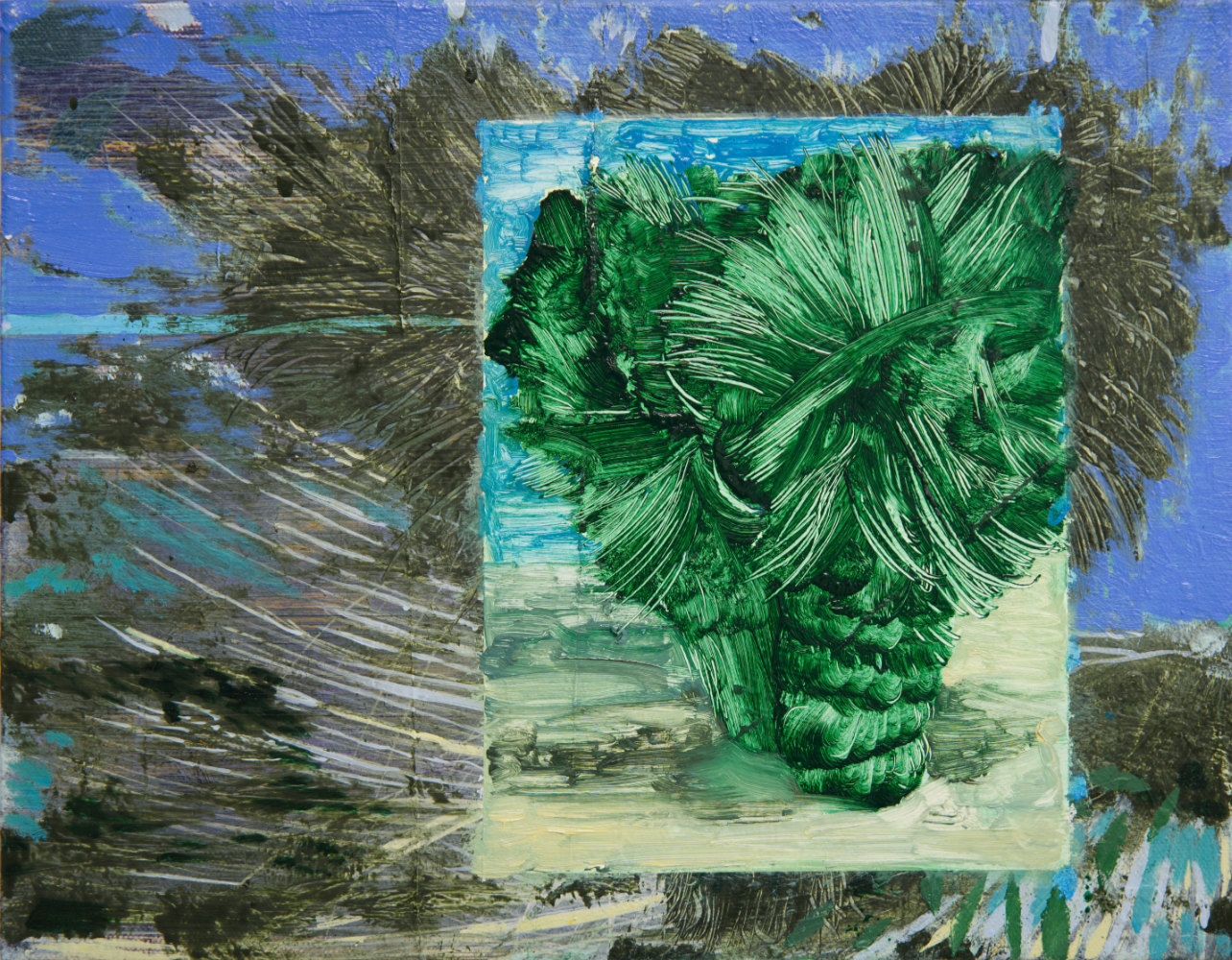
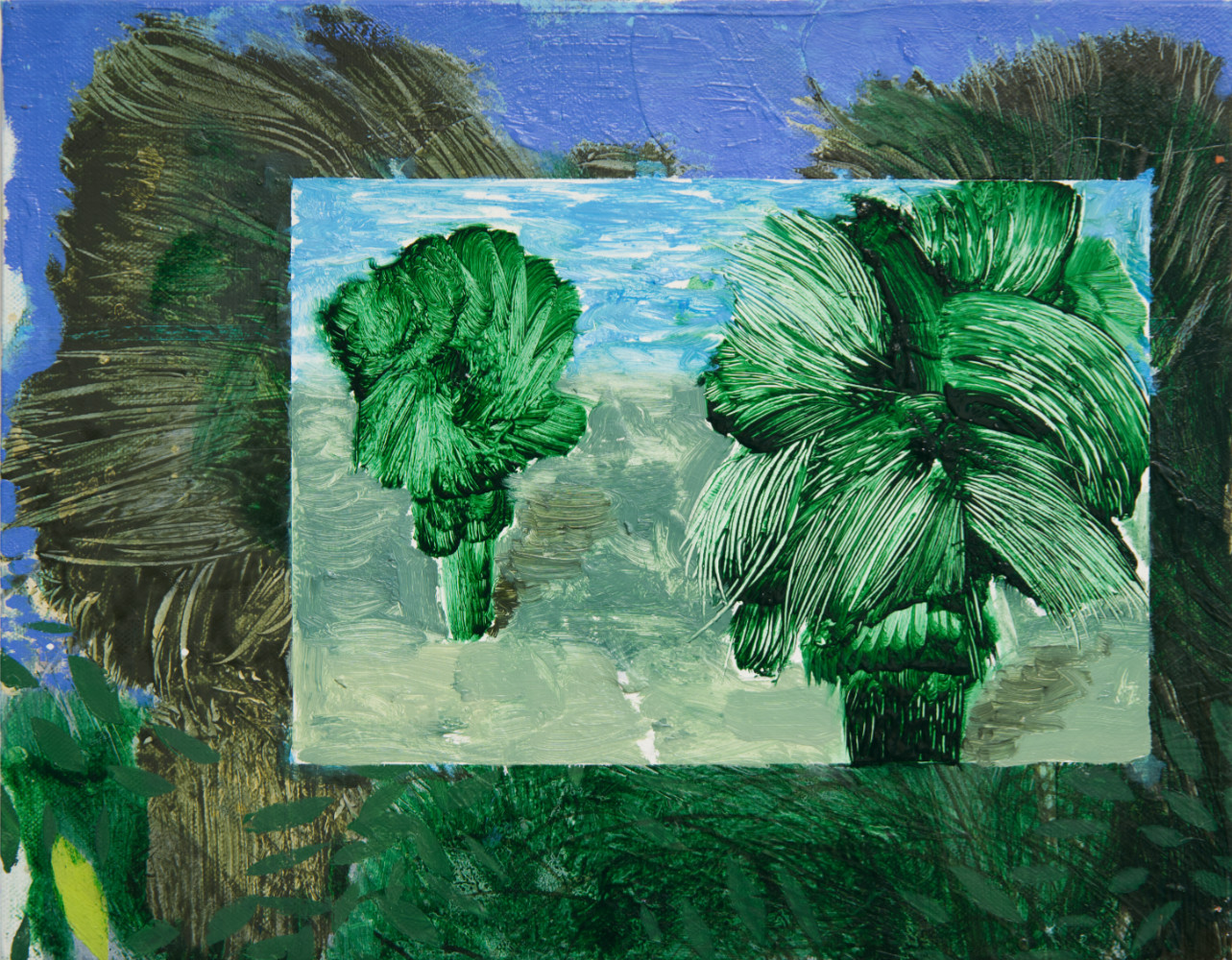
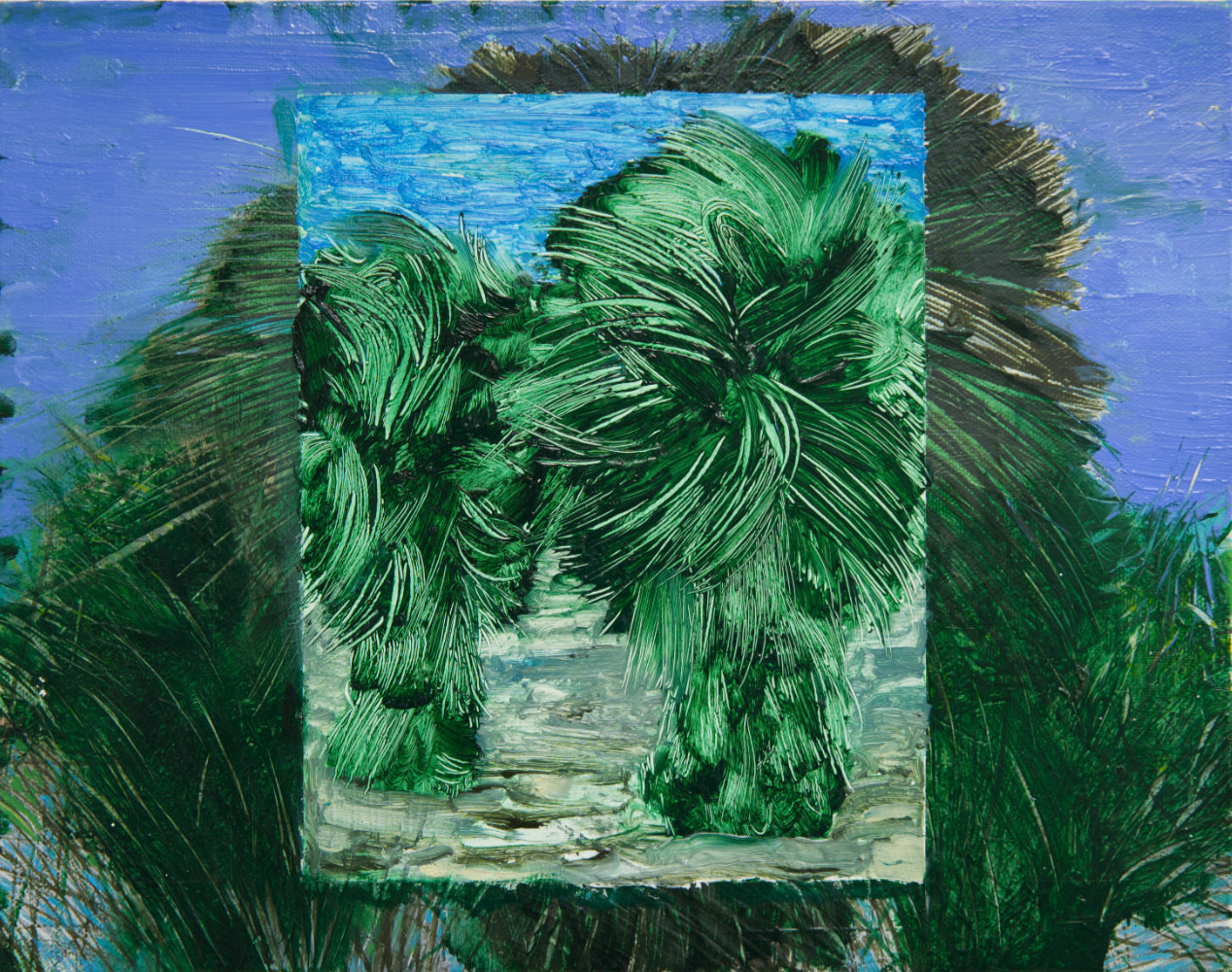
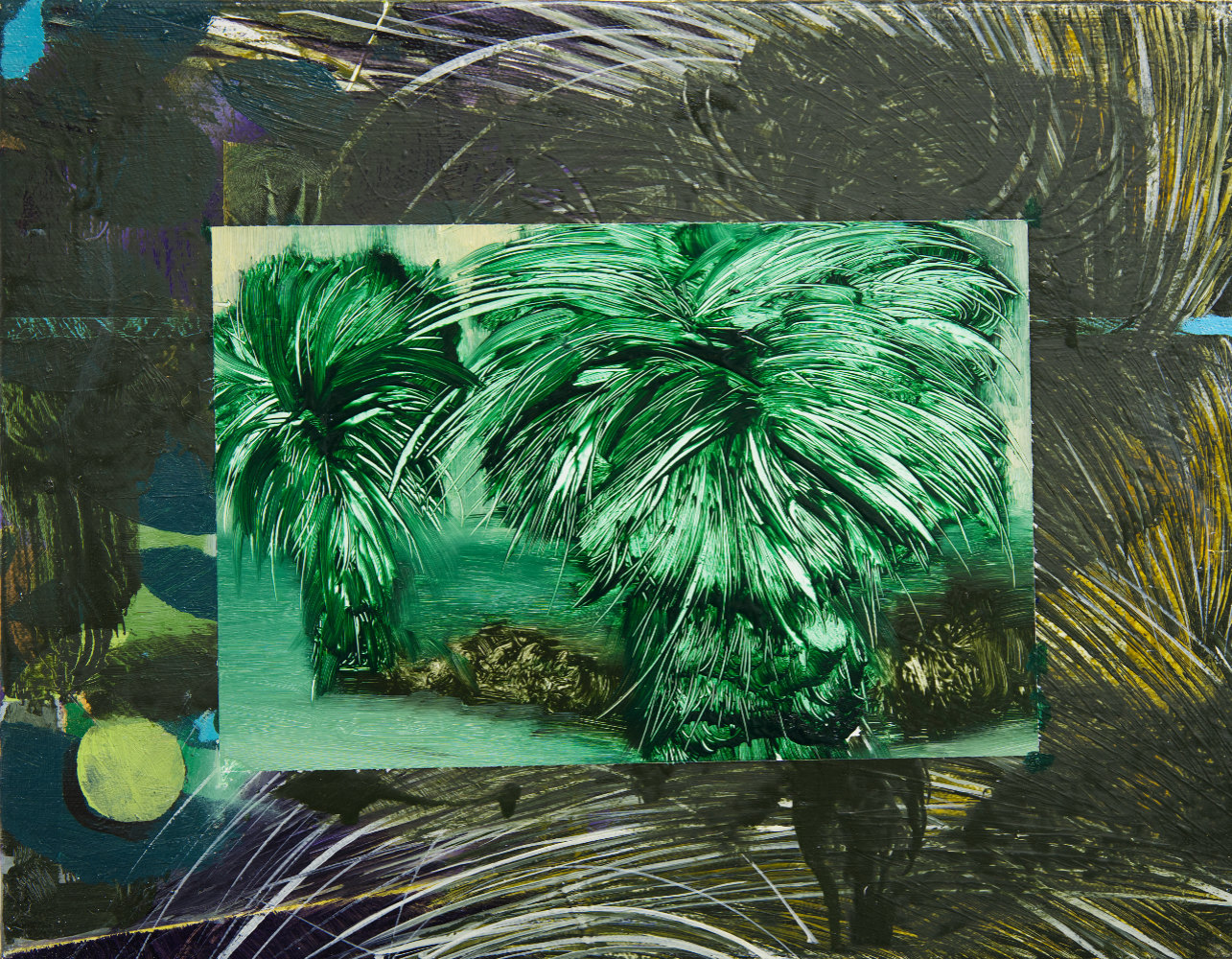
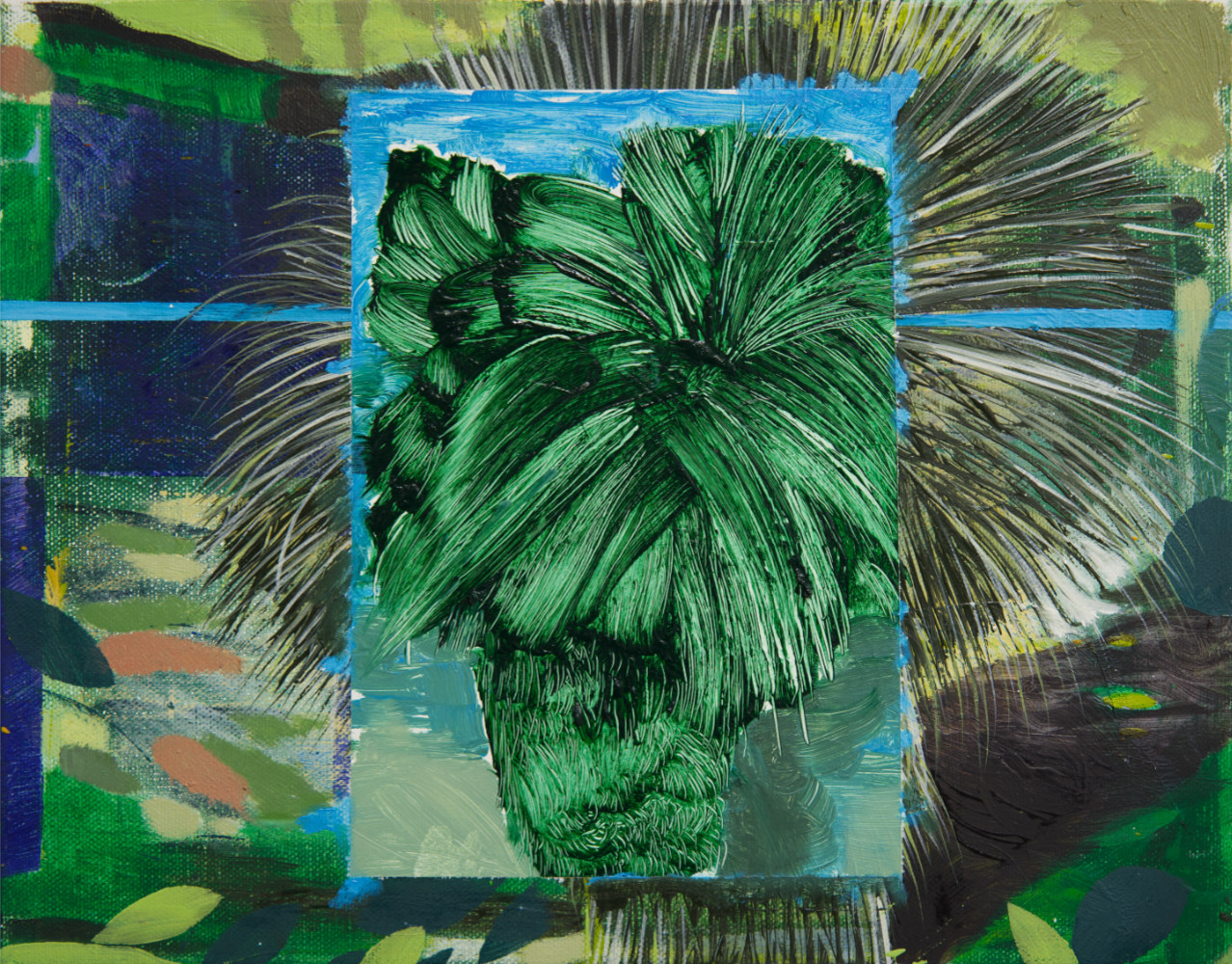
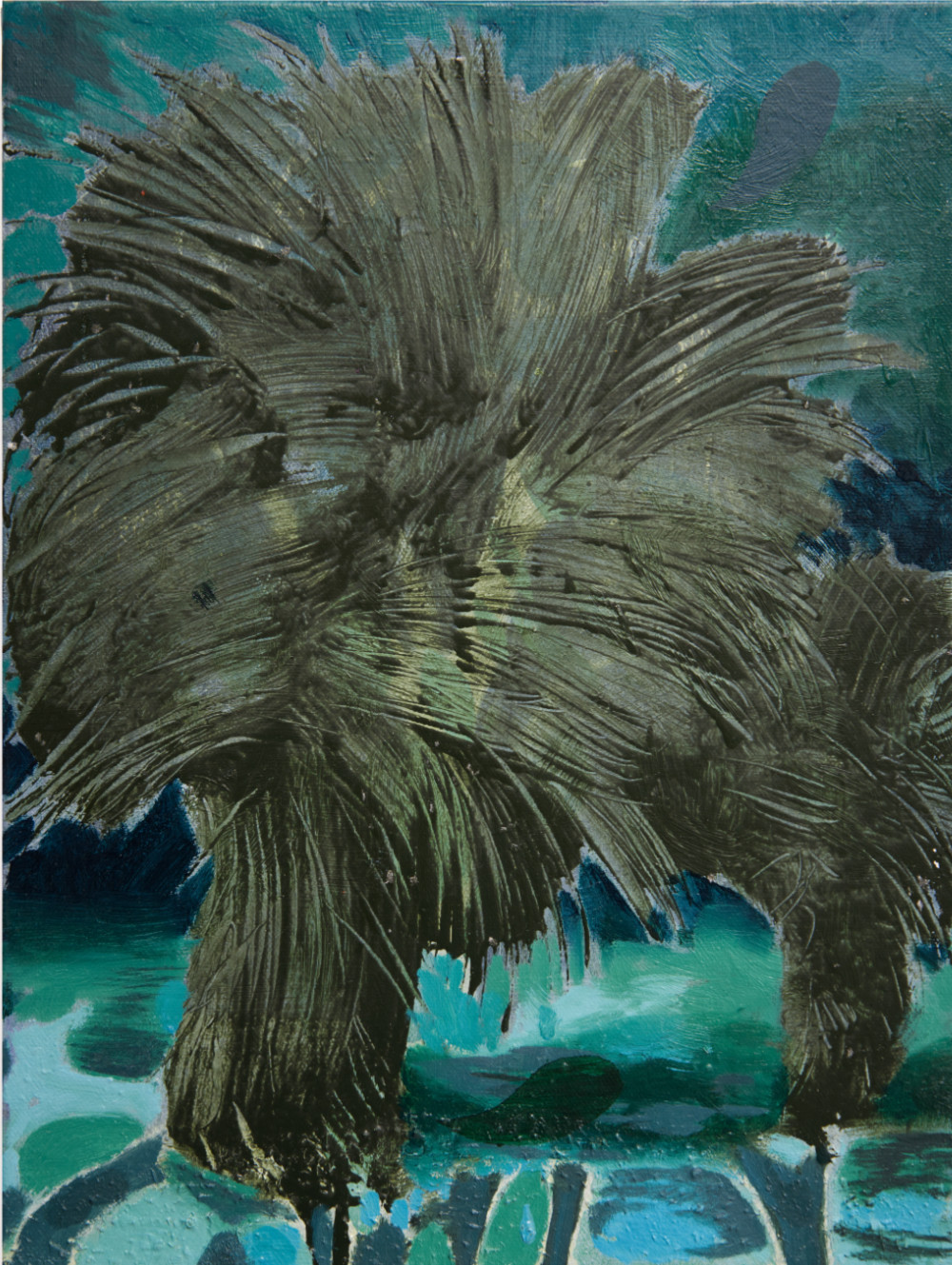
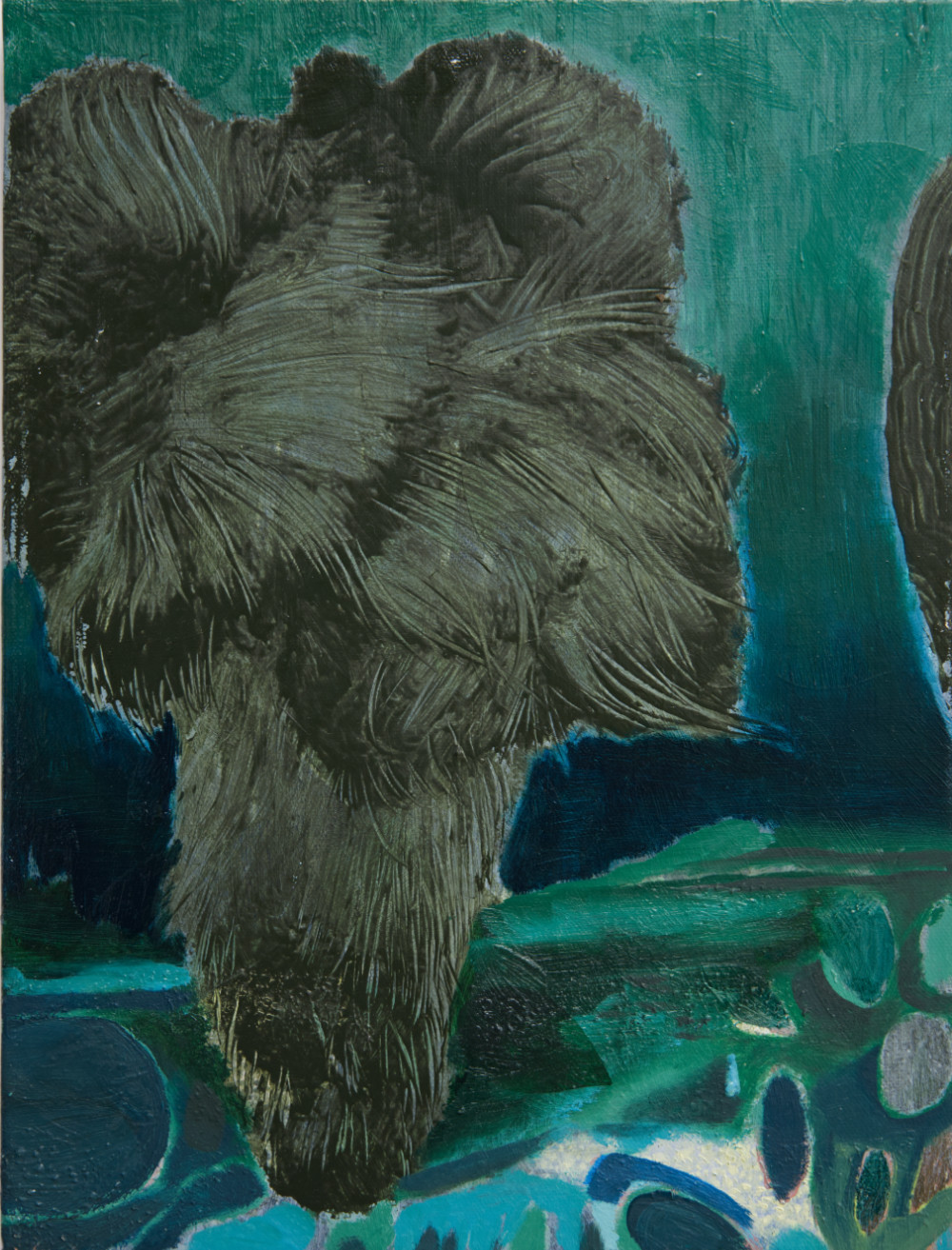
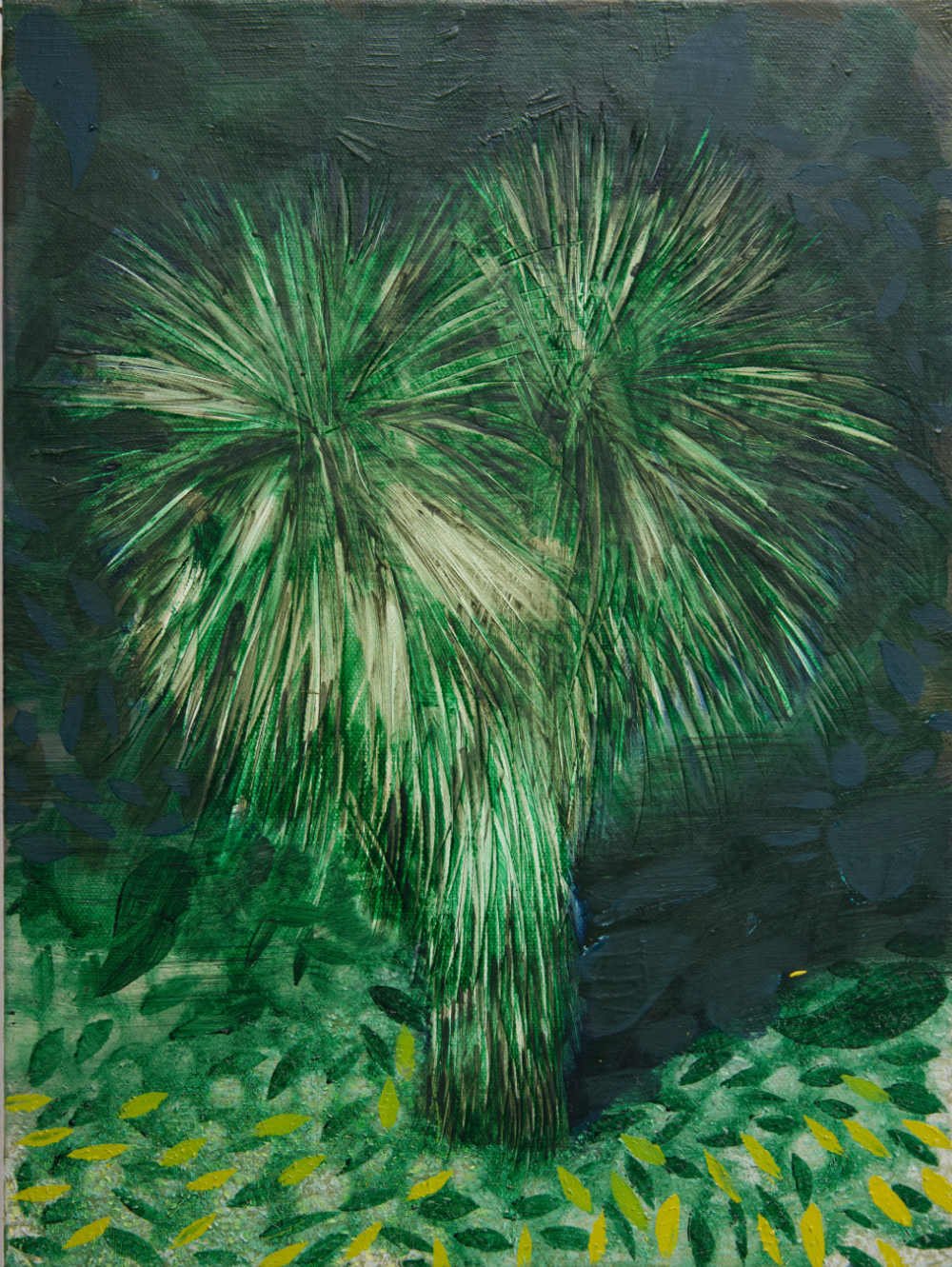
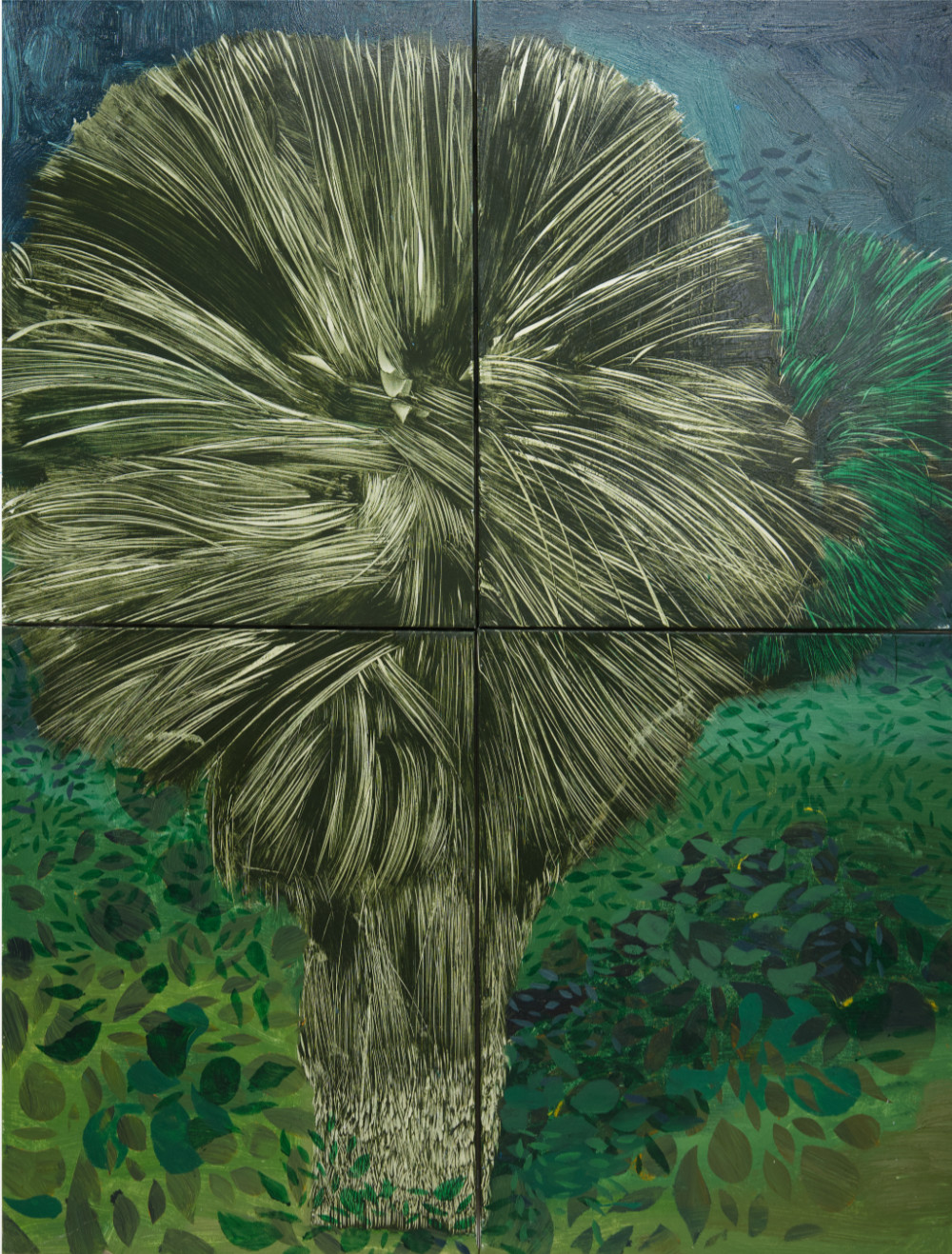
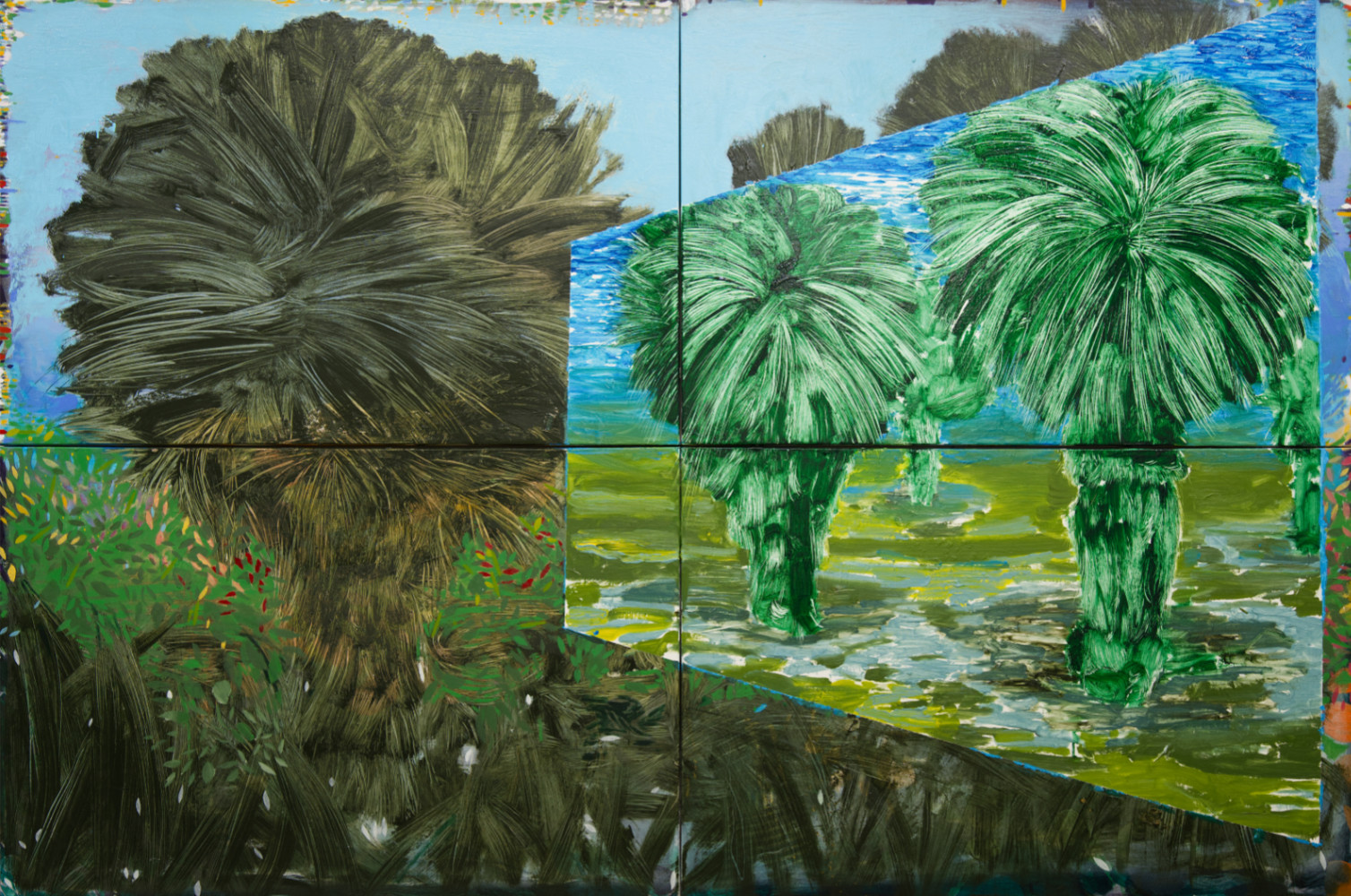
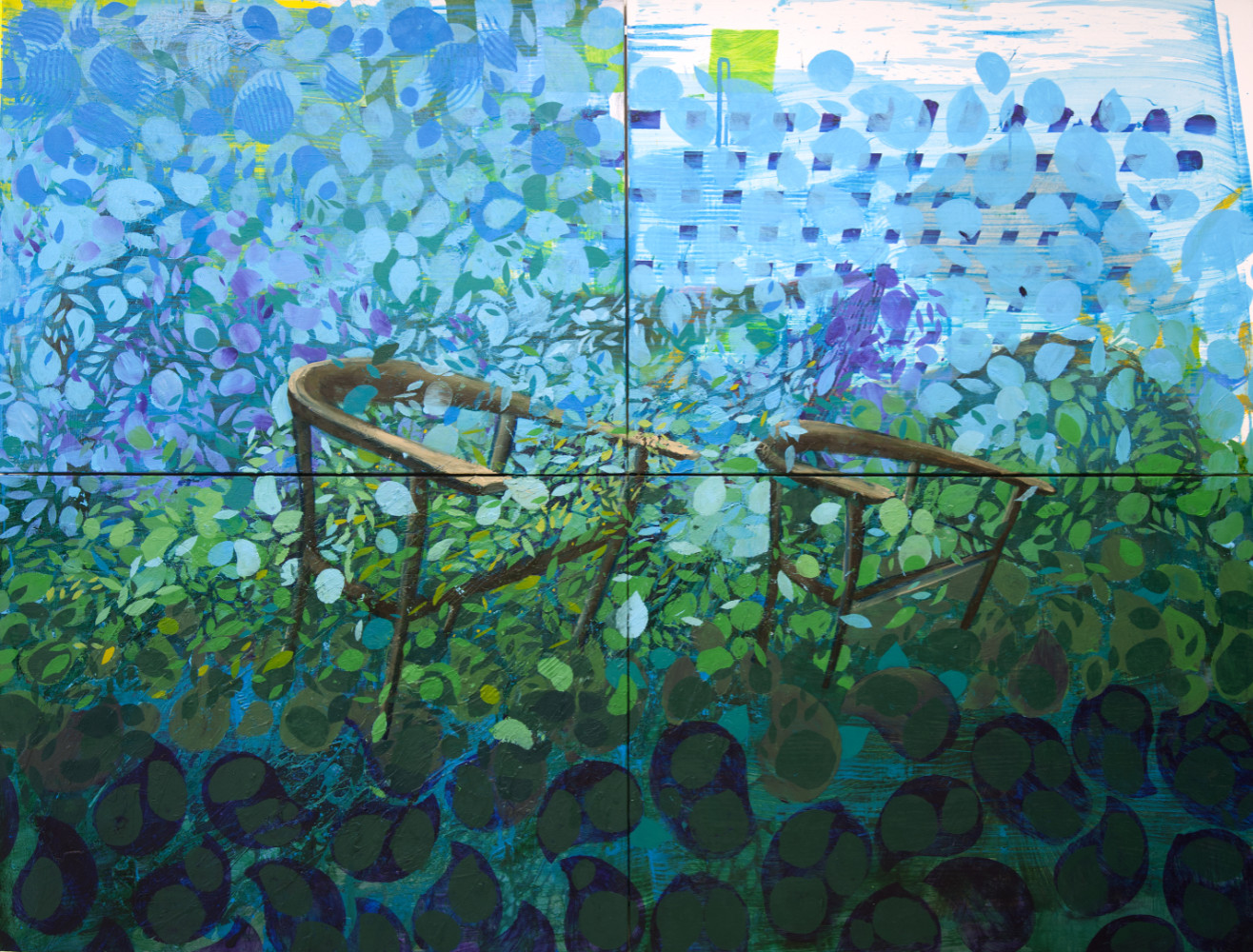
That is why this series belongs on a page about a new city. Mirage runs to eleven paintings, from small canvases of 11 by 14 inches to a single large painting, Mirage 11, at 60 by 80 inches. Frisco builds at both of those scales. The new houses here have tall entry walls, open rooms, and glass that pours Texas light across the floor. The headquarters buildings have long bare walls that were finished by contractors and wait for someone to decide what they mean. An original painting answers that at the right size. For readers looking for original paintings in Frisco, or for Frisco art that comes from a working painter in the same metroplex, the Mirage series page shows every canvas, and the online store carries the paintings themselves.
Visiting, and where the record continues
Visiting: the Texas Sculpture Garden stands at 6801 Gaylord Parkway, open daily from dawn to dusk and free; the map on this page shows Hall Park. The Frisco Discovery Center galleries stand at 8004 North Dallas Parkway and are free to enter. Between the two, a visitor can see what this young city has already decided art is for: outdoors, on a workday path, and indoors, where its own artists take turns on the walls.
My own record continues across this site. The Texas page tells the state story in one arc. The Plano page carries the Collin College solo exhibition, one city south. The Dallas page holds the home base record in detail. My CV page holds the formal list, and all the town pages of this site hang together on the Market page. Frisco has no exhibition of mine to point to yet. It has the sculpture garden, the galleries, and the fastest building pace in Texas. A painter whose work is about figures appearing out of light and distance can wait for his invitation, and work in the meantime. The paintings are ready before the walls are.
Frequently Asked Questions
Has Bartosz Beda exhibited in Frisco?
No Frisco exhibition is on my record, and this page does not invent one. The nearest chapter is one city south: in 2023 I showed Echoes of Seasons as a solo exhibition at the art gallery of Collin College in Plano. Frisco collectors reach the work the direct way, through the series pages on this site and the online store.
What is the Texas Sculpture Garden in Frisco?
At Hall Park, on Gaylord Parkway, the front four acres hold the Texas Sculpture Garden: more than forty large contemporary sculptures by prominent Texas artists, set along paths beside lakes and fountains. It is recognized as the largest private collection of contemporary Texas sculpture ever assembled and made available to the public. It is open to everyone, free, every day of the year, from dawn to dusk.
What is Kaleidoscope Park in Frisco?
Kaleidoscope Park is a later addition to the Hall Park grounds, with Janet Echelman’s Butterfly Rest Stop floating above it. More than two hundred works of art stand across the Hall Park grounds and inside its buildings, where the lobby collection is open to the public on weekdays. In 2025 the Texas Sculpture Garden won a Texas Travel Award for public art.
What galleries does the Frisco Discovery Center hold?
The Frisco Discovery Center, on Dallas Parkway next to the public library, holds two art galleries, the Community Gallery and the Grand Gallery, run through the city’s Play Frisco cultural affairs program. The galleries show rotating exhibitions by local, regional, and national artists, and admission is free. The Visual Arts Guild of Frisco exhibits there through the year.
What else is under the Frisco Discovery Center roof?
Under the same roof as the galleries sit the National Videogame Museum, the Sci-Tech Discovery Center, the TrainTopia model railroad, and a small black box theater. It is a young city’s version of a museum district: everything under one roof, built for families, with painting on the walls of the main hall.
What is Art in the Atrium in Frisco?
Art in the Atrium is a city program that turns the George A. Purefoy Municipal Center into a five story gallery. The city also runs a public art program that places artists’ work in civic spaces across town, and the Visual Arts Guild of Frisco shows work at thegallery8680, a gallery on Main Street in the old downtown.
How did Frisco get its name?
The town was first named Emerson, for the farmer who owned the townsite land. The post office refused the name because it sounded too much like Emberson, a town in Lamar County. In 1904 the residents chose a new name, Frisco City, in honor of the St. Louis, San Francisco and Texas Railway, which everyone simply called the Frisco. The name was later shortened to Frisco.
What happened to the town of Lebanon, Texas?
Lebanon grew up along the Shawnee Trail, the cattle road that later became Preston Road, with a post office from 1860. When the railroad built its line in 1902, the watering stop for steam locomotives had to sit on lower ground, about four miles west of Lebanon. A new town gathered around the stop, and Lebanon families moved toward the railroad, some of them rolling their houses to the new site on logs.
How fast did Frisco grow?
The 1910 census counted 332 people. The count was 6,141 in 1990, then 33,714 in 2000, then 200,509 in 2020, and the city has kept growing since. For stretches of the 2000s and 2010s Frisco was counted the fastest growing city in the United States. A generation ago it was a farm town of about six thousand people.
Why is Frisco called Sports City USA?
The buildings stand behind the claim. The Star, the 91 acre world headquarters of the Dallas Cowboys, opened in 2016. Toyota Stadium, home of FC Dallas since 2005, holds the National Soccer Hall of Fame. The PGA of America moved its headquarters here from Florida, opening its office building in 2022 and its golf courses in 2023. The same building energy also raised the new houses and offices whose walls are this page’s real subject.