
Lower Greenville, Dallas: New Figure Painting on an Old Avenue
Lower Greenville is a neighborhood district in East Dallas. It takes its name from Greenville Avenue, the old road that runs through it. The avenue holds the theaters, bars, and restaurants. The side streets hold the houses: Tudor cottages and Craftsman bungalows on quiet blocks. I am Bartosz Beda, a Dallas painter. This page is a guide to the avenue and the neighborhood around it. It also presents my newest paintings, the Apogee series, to the people who live and gather here.
The connection is stated plainly at the start. I have no exhibition in Lower Greenville to report. My East Dallas record sits a short drive east, at White Rock Lake. What this neighborhood and my work share is a subject: the human figure, seen in public, at night, among other people. Greenville Avenue has spent a century staging that subject. My paintings study it. That is the honest ground of this page.
Lower Greenville in my record
My work has not hung on Greenville Avenue. No gallery here has shown my paintings, and this page does not invent one. My Texas exhibitions stand in Dallas rooms and further out: solo shows and a residency at Ro2 Art in Dallas, a solo exhibition in Plano, a museum exhibition in Brownsville, and a residency in San Angelo.
The East Dallas chapter of that record is real, and it is close. In 2023 my drawings from Owing to the Absence hung in Self Unfixed at the Bath House Cultural Center, on the shore of White Rock Lake. Lower Greenville stands on the same East Dallas ground, a few miles west of the lake, and the Lakewood page of this site tells that exhibition story in full. The avenue and the lake belong to one world: the same streets feed both, and the same residents walk both.
So this page does what the other neighborhood pages on this site do. It tells the place’s own story first: the avenue, the theater, the parade, the houses. Then it presents the paintings that belong in that conversation, and gives the direct route to them through the series pages and the online store.
The Granada Theater
The Granada Theater stands at 3524 Greenville Avenue, and it is the avenue’s landmark. Phil Isley Enterprises opened it on January 16, 1946, with a screening of Mildred Pierce. It was the company’s first theater in the Dallas market. The building was designed by Raymond F. Smith. It held 950 seats, and its tower carried changing neon lights above the marquee. From the start it worked as a neighborhood picture palace: benefit screenings, church services, and children’s matinees with yo-yo contests.
The Granada stayed a movie house for decades, through changes of operator and fashion. In the 1970s it passed through a brief adult theater period. In 1977 it was converted into a concert hall, with an extended stage and new sound and light systems. That first music chapter was short, and the building went back to films. New operators later brought concerts back, with names like Bob Dylan on the bill.
In 2004 owners Mike Schoder and Julia Garton reopened the Granada as a full time live music venue. Under them it became one of the most loved mid size rooms in Dallas, hosting more than 3,000 concerts and events across two decades. The Art Deco front and the old murals stayed. The room kept its scale: large enough for a real crowd, small enough that the faces on stage stay human in the memory.
That chapter now has an end date. In October 2026 the owners announced the sale of the theater. Concerts continue through April 17, 2027. After that the building is planned to reopen as a wellness spa. A painter notes the fact without dressing it up. For eighty years this room gathered the neighborhood in the dark to look at figures larger than life: first on a screen, then on a stage. Rooms like that are where a city learns to look at people. Its last season is worth seeing.
Greenville Avenue and its parade
Greenville Avenue was a main road before it was a nightlife strip. In the early twentieth century it was one of the most important routes in Dallas, the road from downtown to Richardson, Plano, and McKinney, and on toward Oklahoma and Arkansas. Shops and restaurants grew along it because the traffic was already there. The avenue kept that role until the North Central Expressway opened in the 1950s and took the through traffic away.
Since 1979 it has hosted the Dallas St. Patrick’s Day Parade. The first parade was a small local event: a few vehicles and a short roll down Lower Greenville. It grew into the largest St. Patrick’s Day parade in the Southwest. The modern parade runs about two miles along Greenville Avenue, from Blackwell Street south to SMU Boulevard. It draws well over 100,000 people, with more than ninety floats.
The parade is run by the Greenville Avenue Area Business Association. It raises money for a scholarship fund for Dallas Independent School District students. That detail matters to the neighborhood’s account of itself. The loudest day of its year also pays for students. For a painter, the parade is the avenue’s other theater: a river of faces in green, moving slowly past the old storefronts, everyone a figure in the same long composition.
A short history of Lower Greenville
The neighborhood grew with the road. In the 1910s the additions of Belmont and Vickery Place filled the blocks east of the avenue. In the 1920s Greenland Hills was platted north of Vickery Place, near the end of the trolley line at Mockingbird Lane, with the interurban streetcar line tying the area to downtown. Its Tudor cottages gave the M Streets their lasting look. Craftsman bungalows filled other blocks. These were streetcar suburbs: houses built for people who rode into the city and walked home from the stop.
The commercial strip matured between the wars. The Arcadia Theater opened in 1927 on the southern stretch, the part now called Lowest Greenville. Grocery stores, a Woolworths, and neighborhood shops served the houses around them. Then the postwar decades turned. Young families left for newer suburbs in the 1960s, and prices fell. In the 1970s a wave of young buyers came back for the old Tudor and Craftsman houses and began restoring them. Around 1979 the name Lower Greenville itself came into use.
The avenue’s own character turned rougher. The Arcadia screened adult films, then became a concert room where the Ramones played, then a nightclub. Bars multiplied along the strip through the 1980s and 1990s, and the entertainment district drew crowds that the residential streets did not always welcome. The Arcadia burned for the last time in 2006. What followed was a planned rebuild. A planned development district required late night businesses to hold a specific use permit. The street was narrowed, sidewalks were widened, and trees were planted. Restaurants replaced many of the bars. By 2013 the strip had a grocery store again and a reputation as a dining street. The houses behind it had kept their porches through every version.
Apogee: a figure for the avenue's nights
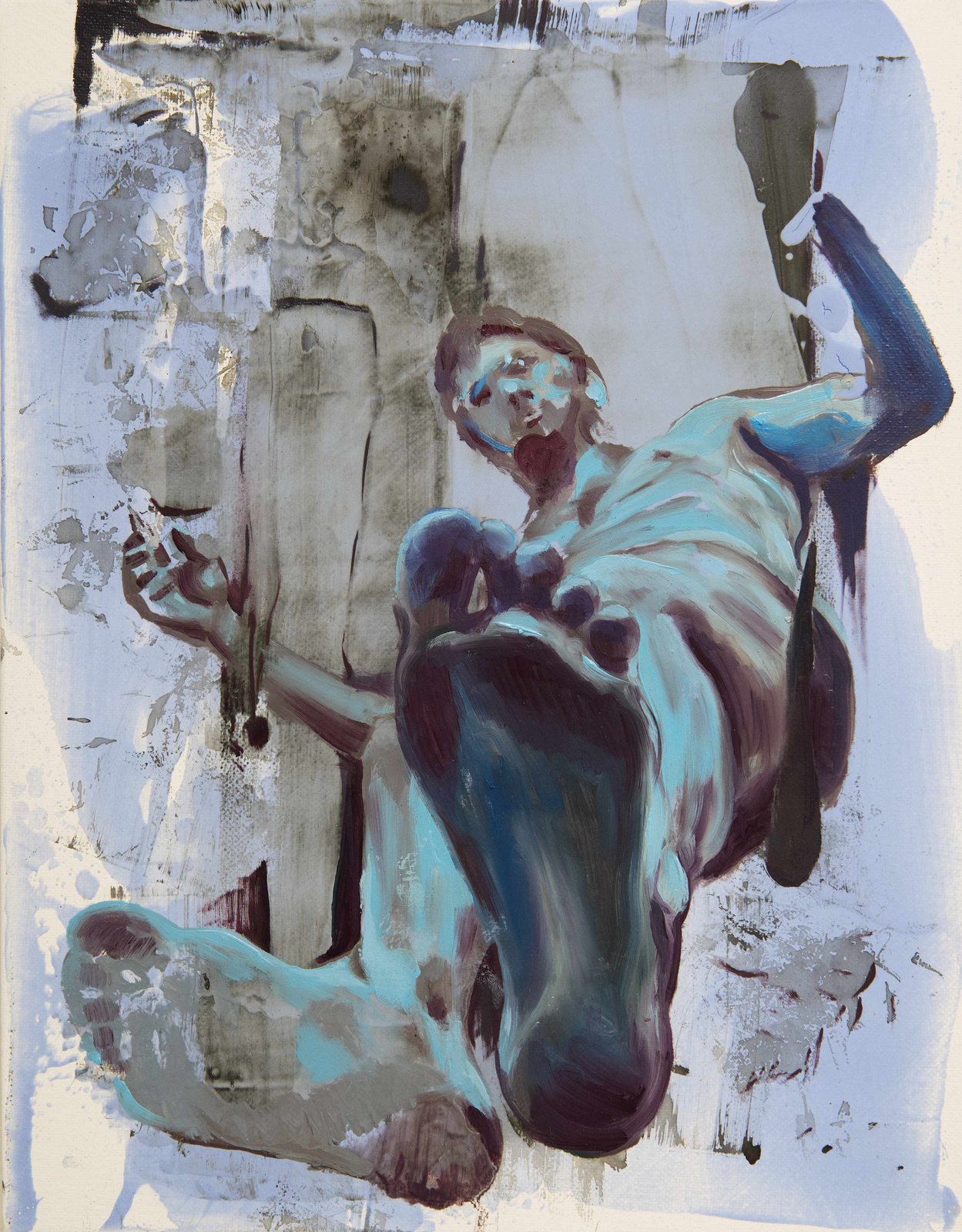
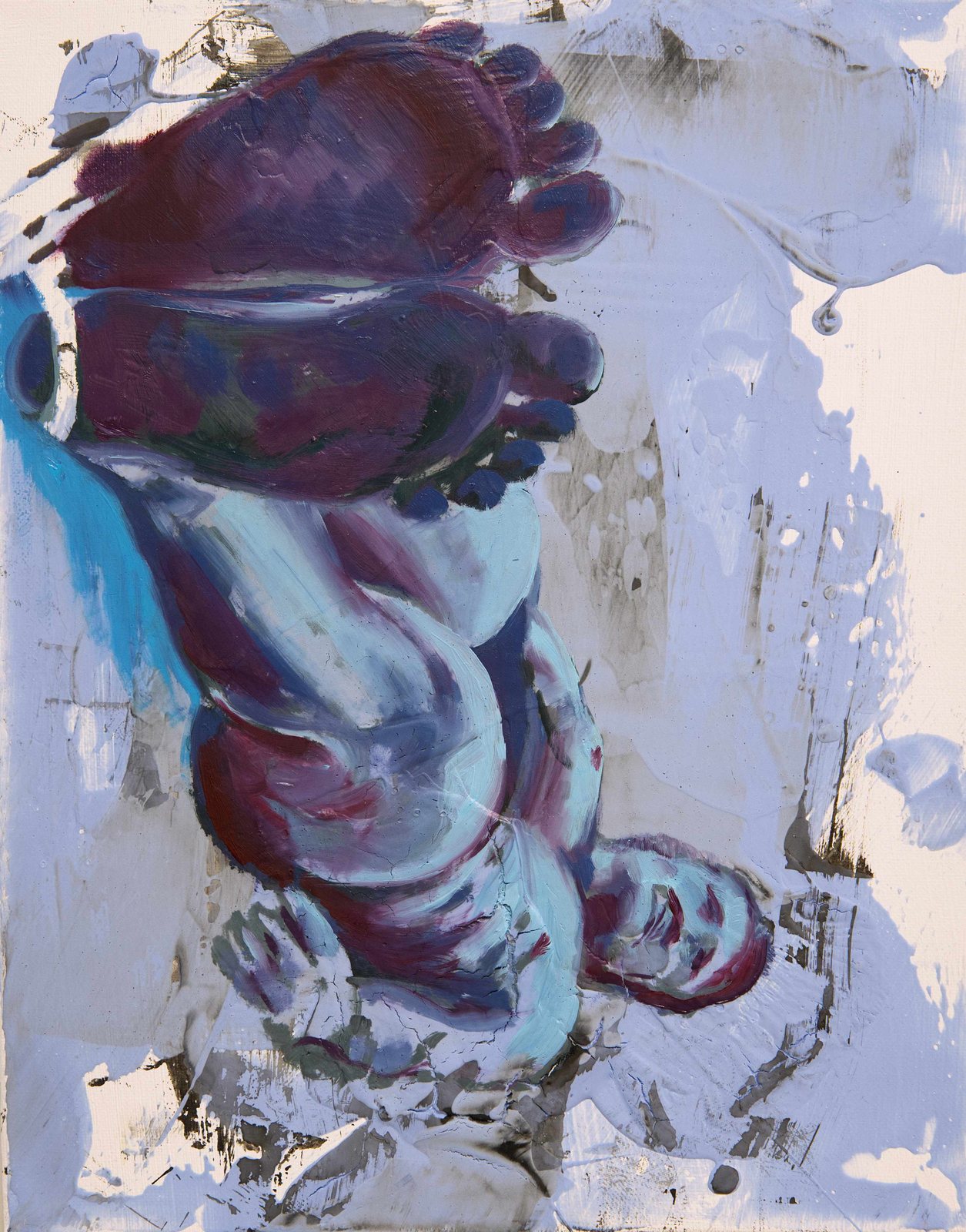
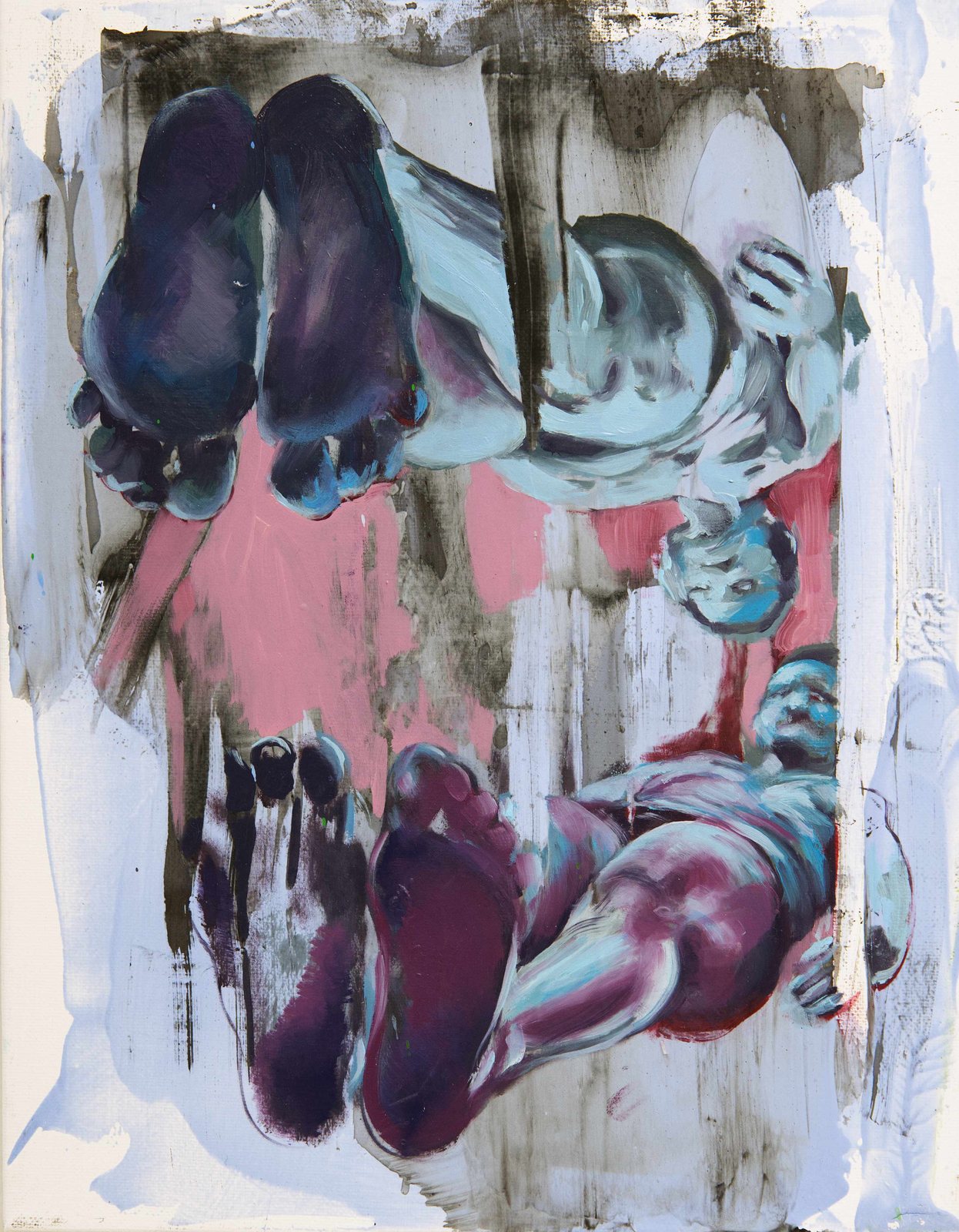
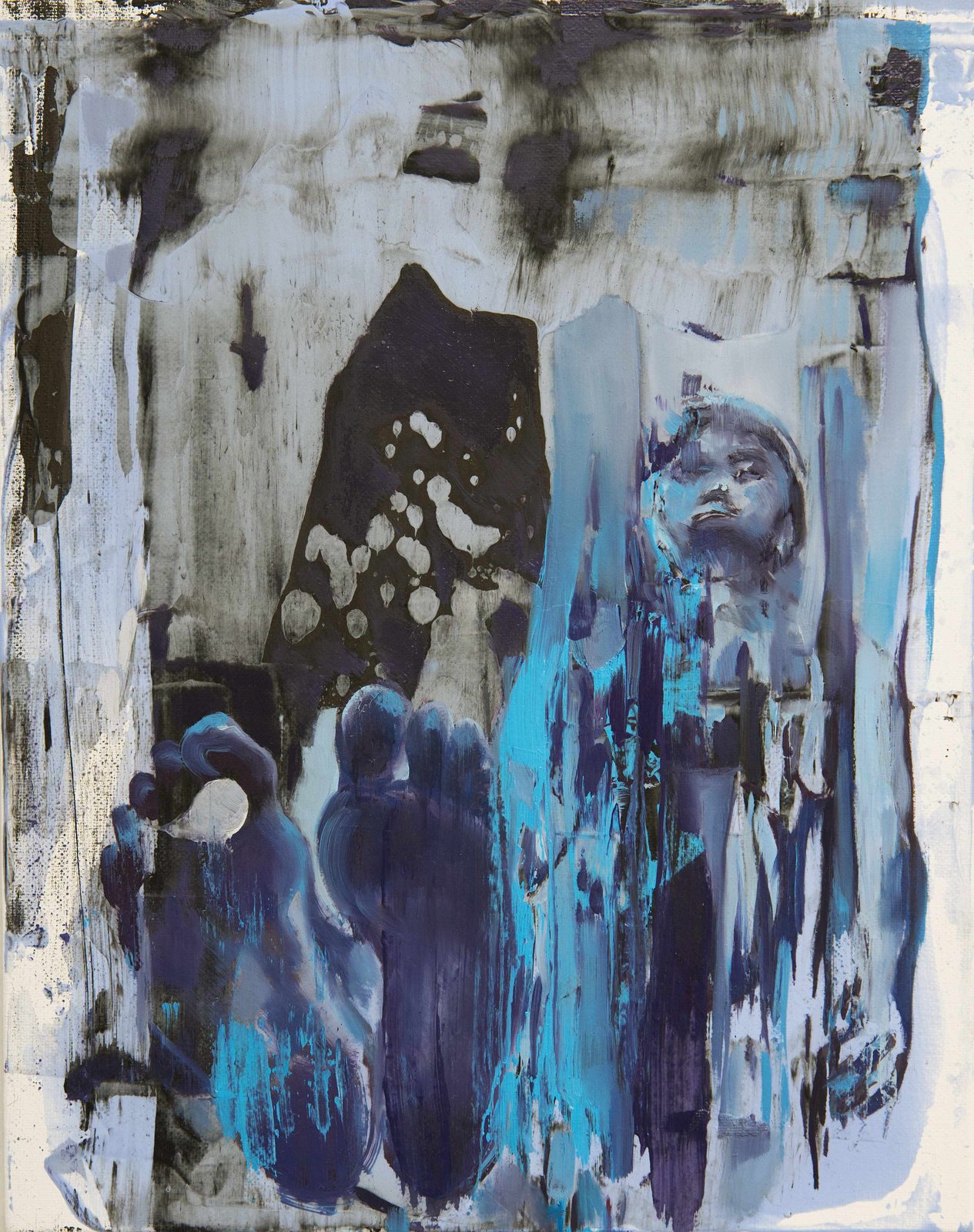
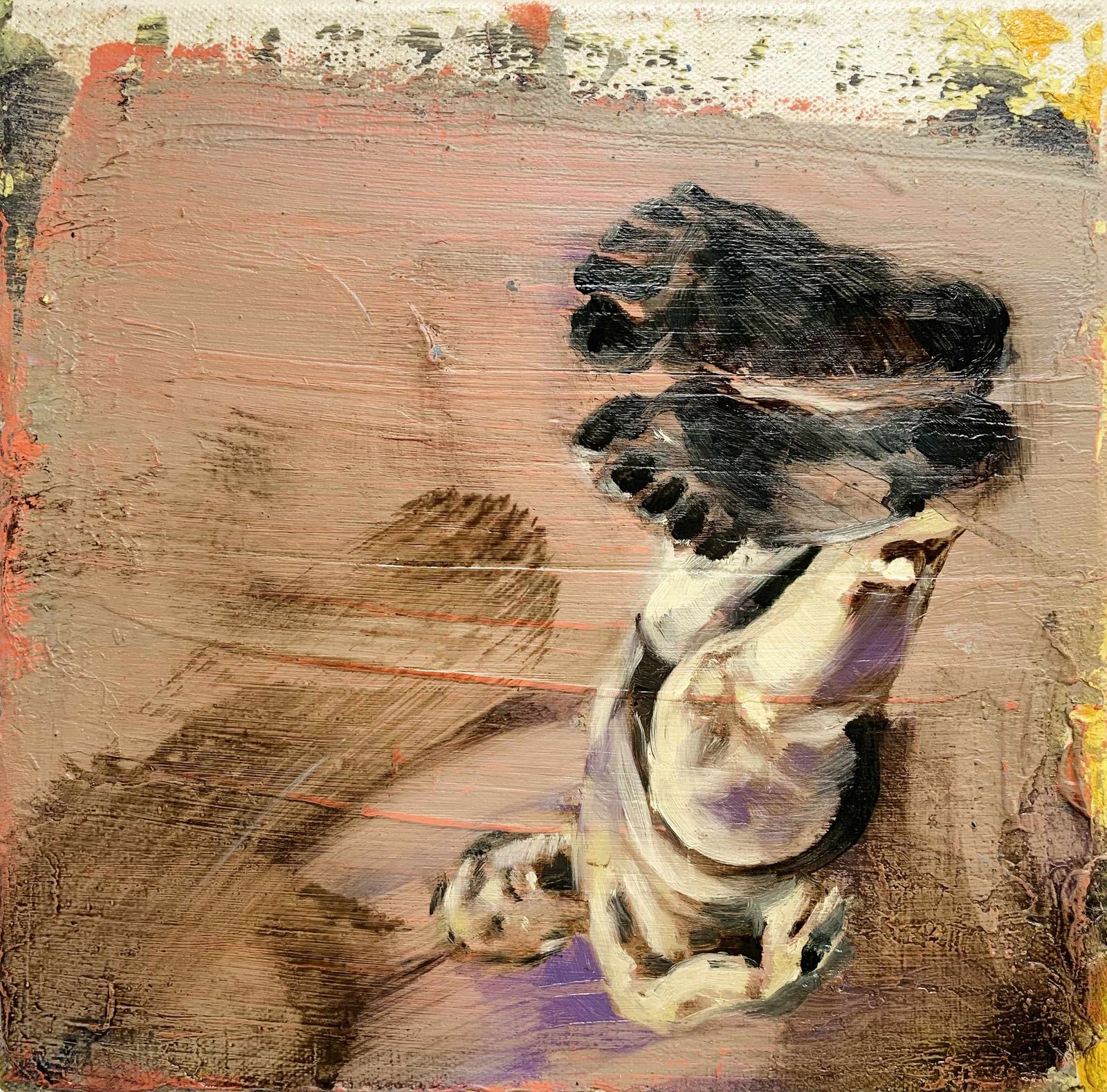
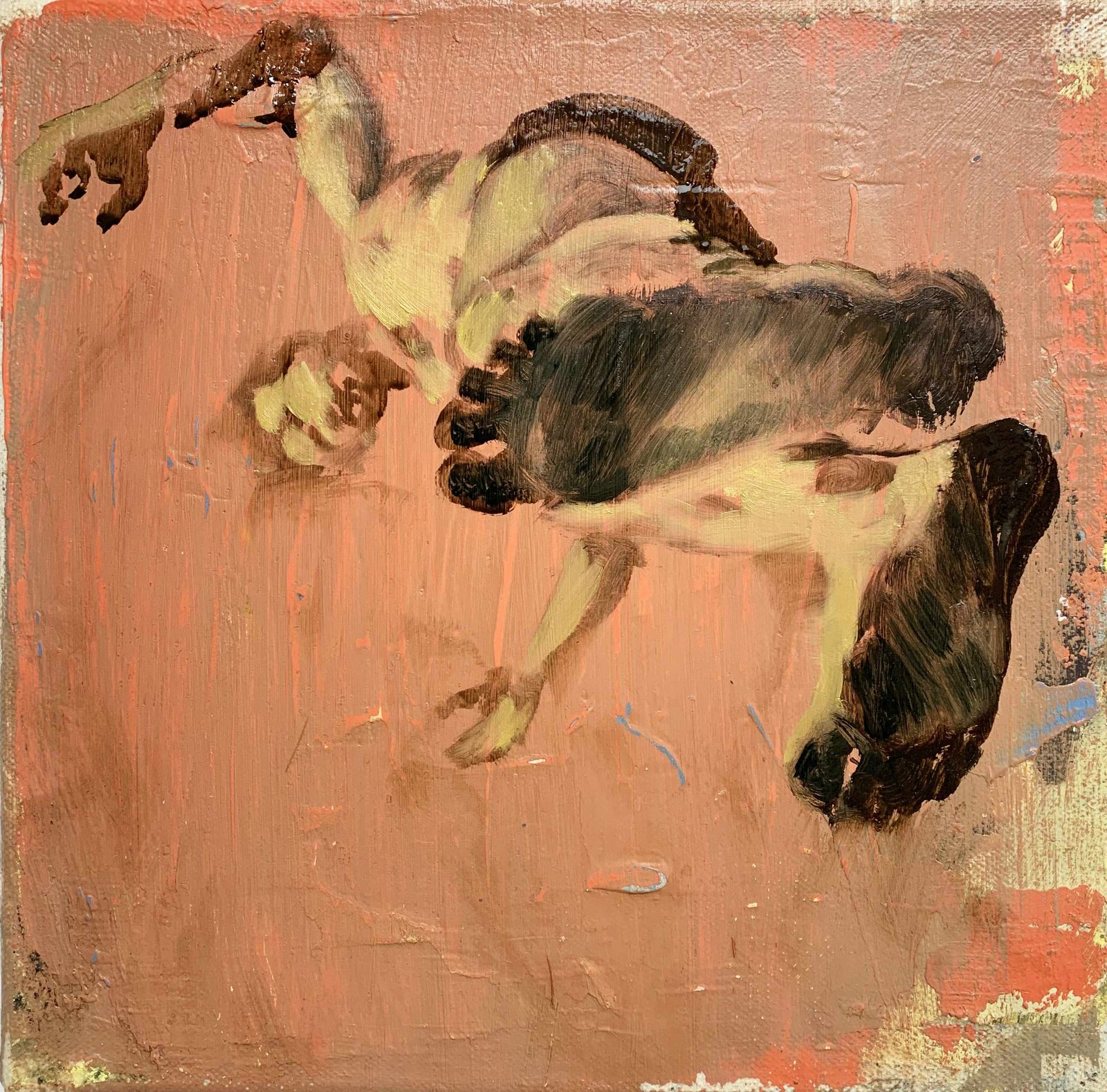
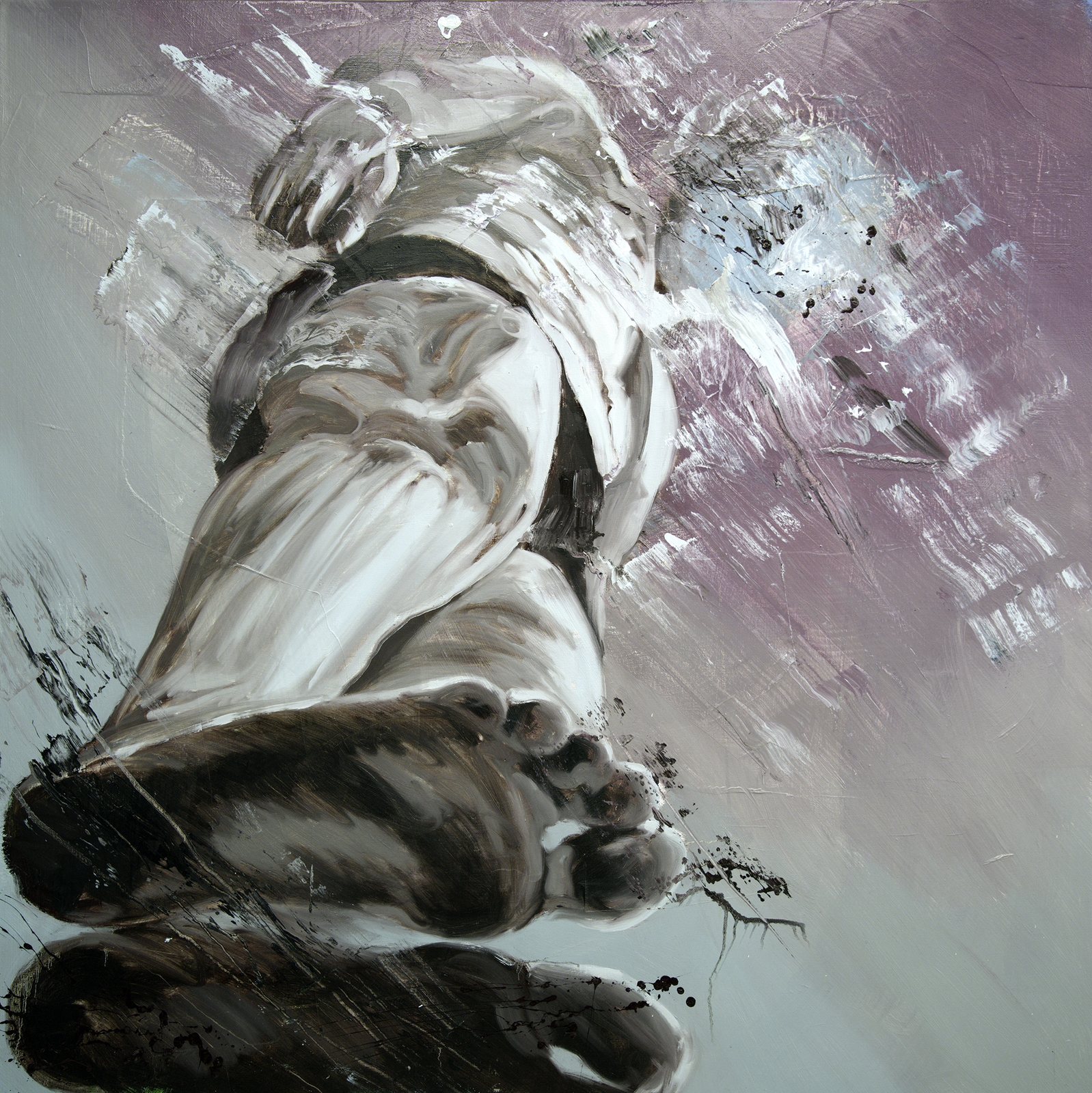
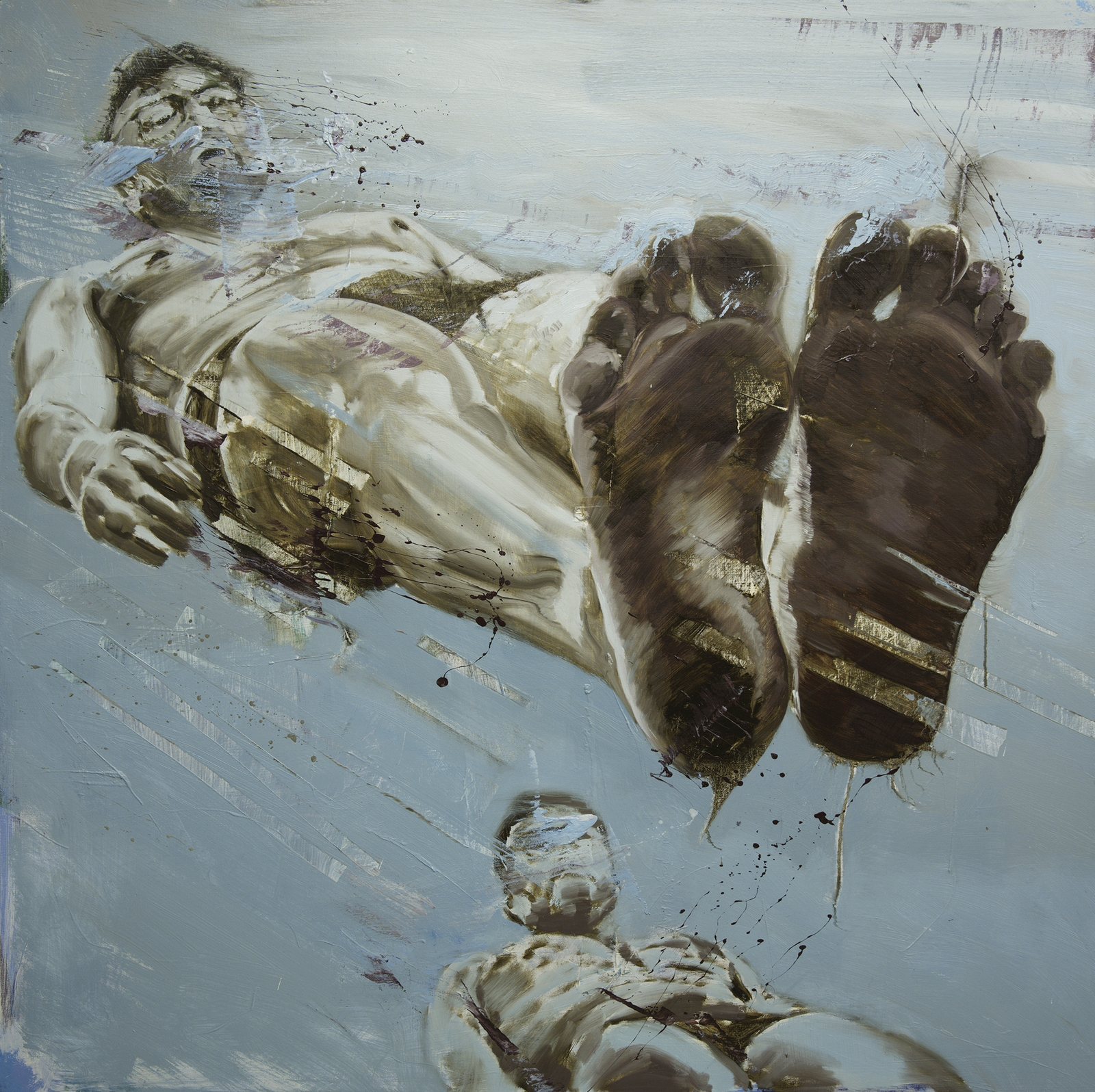
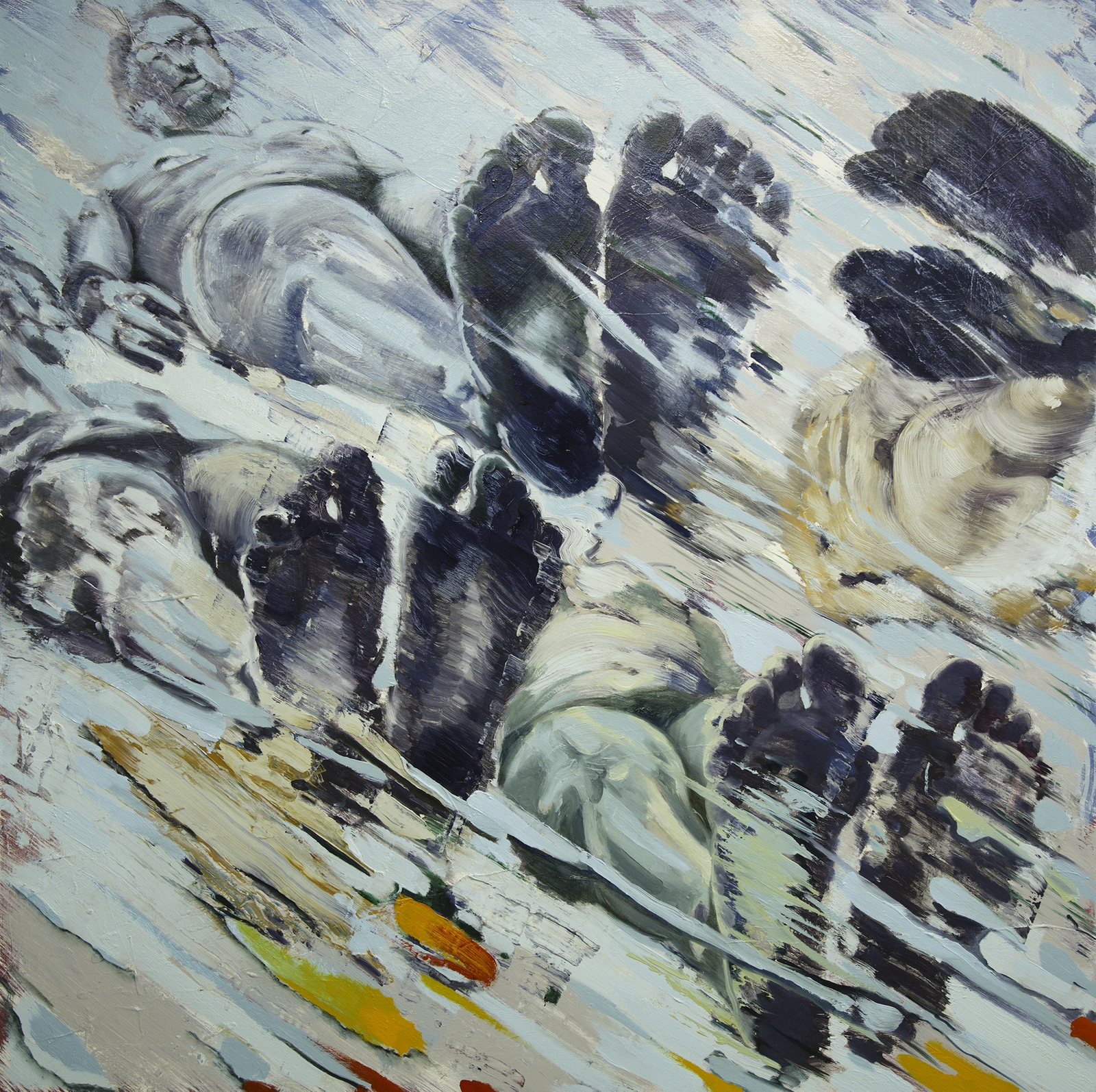
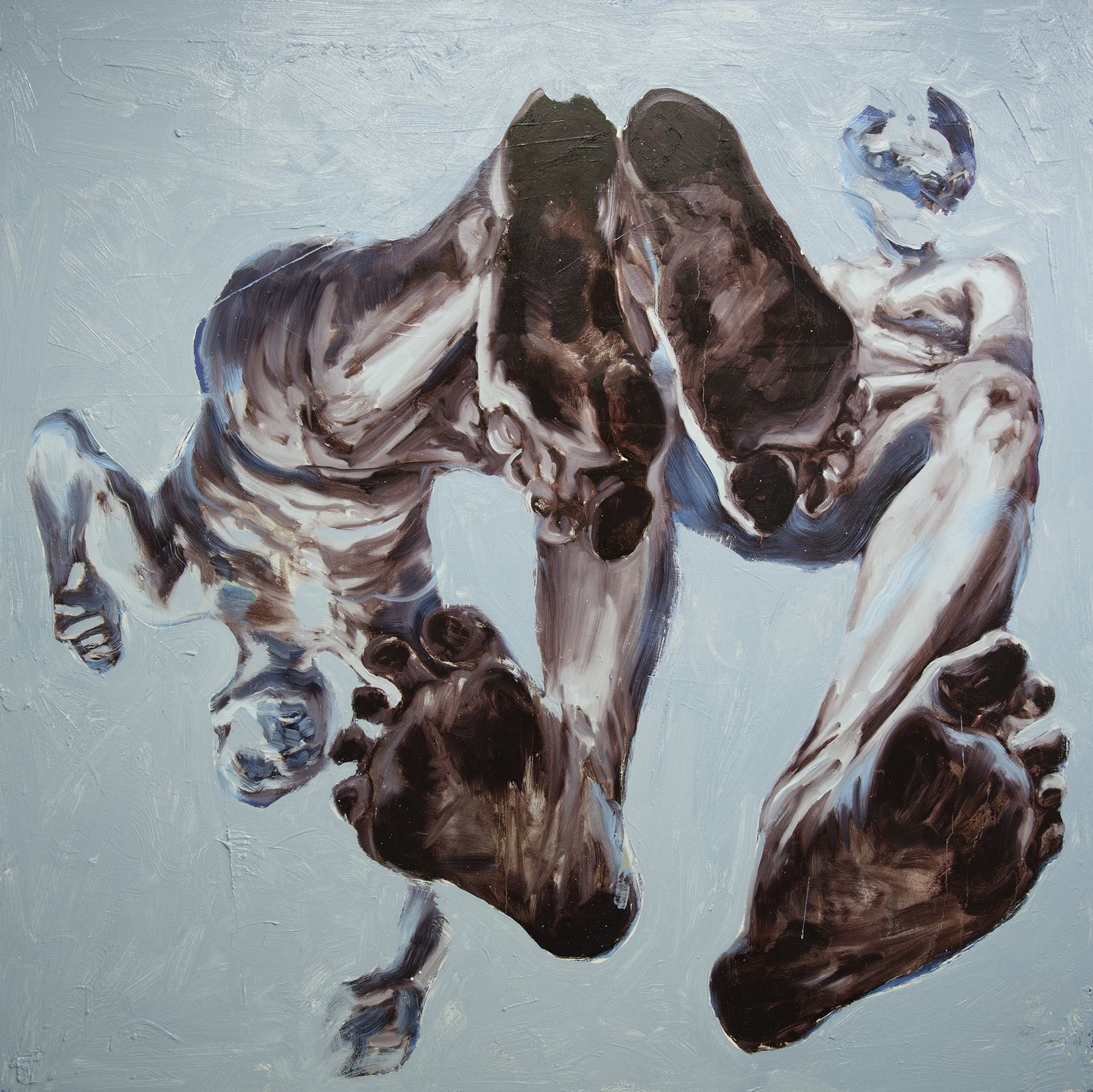
My newest series is called Apogee, and it began in July 2026. I am an abstract figurative artist, and my work has always kept the human figure at its center while the paint works against description. Apogee turns the figure around. Each painting shows a body seen from the feet: foreshortened, rising away from the viewer, the soles nearest and the head farthest and least. I took the viewpoint from the frescoes of Italy, where painted bodies stand high on walls and ceilings and are read from far below.
The making matches the viewpoint. The brushwork is aggressive and unblended. Some figures were painted directly on the studio wall, the way a fresco is made on plaster. The series is built as ten Fragments. The early works are small, in ink, acrylic, and oil on canvas. Two small Fragments painted in oil on rabbit skin glue and canvas went to a group exhibition in Belgrade, Serbia, in the fall of 2026. The newest are large canvases, 48 by 48 inches, where one rising body takes the entire square of canvas. This is abstract figurative art at its most physical: the body held in view, and the floor pulled out from under it.
The series belongs on this page because Greenville Avenue understands the viewpoint. For eighty years the Granada’s audiences sat in the dark and looked up at faces forty feet tall. The parade puts the crowd itself on the avenue, thousands of figures seen from inside the movement. Apogee paints the same human fact from the other end: one body, seen from below, at the moment it rises past you. For readers looking for original paintings in Lower Greenville, or for Lower Greenville Dallas art that comes from a working painter in the same city, the Apogee series page shows every Fragment, and the online store carries the current original paintings.
Visiting, and where the record continues
A Lower Greenville evening is simple to build. Walk the avenue from the Granada south: the old storefronts, the restaurants of the rebuilt strip, the marquee lit at night. In March, come back in daylight for the parade. The side streets repay a slow walk too. The Tudor cottages and bungalows are the neighborhood’s quiet gallery, one house at a time. The map on this page centers on the Granada Theater.
My own record continues across this site. The Apogee series page shows the newest paintings. The Lakewood page tells the Bath House exhibition story from the lake side of East Dallas. The Texas hub page gathers my state story in one arc, and the Dallas page carries my exhibition record in detail. My CV page holds the formal list, and all the town and neighborhood pages of this site meet on the Market page. Lower Greenville has no exhibition of mine to point to yet. It has the avenue, the theater, and the parade: a neighborhood that has been looking at figures in public for a hundred years. That is the company these paintings keep.