
Missouri City, Texas: The Freedom Tree and Mirage Paintings
Missouri City is a city in Fort Bend County, in the southwest of the Houston metro area. A smaller part of it reaches into Harris County. It stands about twenty miles from downtown Houston, along US Highway 90A and State Highway 6. Few Texas cities carry their origin in their name as openly as this one. Missouri City was named in a newspaper campaign. It was sold to readers in St. Louis who had never seen the land.
I am Bartosz Beda, an abstract figurative artist. I live and work in Texas, and my studio is in Dallas. This page is a guide to Missouri City: its railroad ground, its plantation past, and the live oak under which enslaved people heard that they were free. It also presents my Mirage paintings to the city. The connection is simple. Missouri City began as a place seen from far away. Mirage is a series about exactly that kind of seeing.
Missouri City in my record
The honest version comes first. I have no exhibition in Missouri City to report. No gallery here has shown my work, and no museum in Fort Bend County holds my paintings. This page does not invent a show.
My Houston record is a record of looking. Houston holds the museum district, and I go there to stand in front of paintings. The Museum of Fine Arts, Houston, the Menil Collection, and the Rothko Chapel set a standard that any painter in Texas measures himself against. My Houston page on this site holds that metro record in full.
The rest of my Texas record stands further north and further south. I held a residency in San Angelo, where Mirage began. I held a museum solo exhibition in Brownsville. My exhibitions in Dallas and Fort Worth are listed on my CV page. Missouri City enters this site as part of the Houston ground, and its own history deserves a page of its own.
The Freedom Tree and Freedom Tree Park
The most important ground in Missouri City is a single tree. The Freedom Tree is a live oak in Freedom Tree Park, at 4303 Freedom Tree Drive, along Misty Hollow Drive in the Lake Olympia area. The tree is believed to be more than 200 years old. A Texas historical marker stands near it, and the city keeps the ground as a small park with an overlook deck.
The land was once the Palmer Plantation. In January 1860, Edward Palmer bought 640 acres from David Bright, one of the Old Three Hundred of Stephen F. Austin, and built his plantation there. Palmer became a judge of the Seventh Judicial District of Texas. He died in 1862. His wife died three years later, and the plantation passed to their daughter Bettie, who was fourteen years old.
The Civil War ended slavery in law before the news reached every field in Texas. On June 19, 1865, General Gordon Granger arrived in Galveston and proclaimed the end of slavery in the state. That date is now kept as Juneteenth. On an early summer day that year, the white overseer of the Palmer Plantation and Ed Gibbs gathered the enslaved workers under the branches of the great oak. Ed Gibbs had been Judge Palmer’s personal driver and the leader of the enslaved people on the plantation. Under the tree, the workers were told that they were free.
The announcement came with terms, and this page states them plainly. Planting and cultivation would continue. The freed people were welcome to stay on the Palmer land and work it. Their only wages would be a share of the crop. Freedom arrived under that tree as a fact and as a hard bargain at the same time. The city marker closes with the plain truth of it: slavery ended on the Palmer land beneath the spreading boughs of the Freedom Tree.
The park around the tree has grown in recent years. Missouri City voters approved bond money in 2021 to renovate and expand Freedom Tree Park. The expanded park held its grand opening on July 25, 2026. It now holds a pergola, playgrounds, and a performance stage, and it carries a work of art by the Houston artist Anthony Suber, made in memory of the Underground Railroad. Every year, people gather under the oak in recognition of what happened there. Some places hold a picture that no canvas can hold. This tree is one of them.
The railroad town: the first line in Texas
Before Missouri City had a name, it had a railroad. In August 1853, the Buffalo Bayou, Brazos and Colorado Railway opened its first twenty miles of track, from Harrisburg, now part of Houston, to Stafford’s Point, now Stafford. It was the first railroad to begin operating in Texas. It was also the first standard gauge railroad west of the Mississippi River.
The line ran through what is now the northern part of Missouri City. The Texas State Historical Association records that plainly. In 1883 the same line linked westward and eastward to complete the Sunset Route, the southern railroad from Los Angeles to New Orleans. The route is still in heavy use today under Union Pacific.
A depot followed in 1902, and the young settlement took shape as a railroad town along Main Street and Blue Ridge Road, now US Highway 90A and Texas Parkway. Farmers and ranchers shipped cotton, corn, cattle, and sugarcane through it. The town later became the railroad shipping point for the Blue Ridge oil field and its salt mine. A second line, the Sugar Land Railroad, ran beside State Highway 6 and served the sugar country.
So the ground here holds a first in Texas history. The state learned to move by rail on this corridor, and a town grew up beside the track half a century later. The railroad came first. The town was drawn to it, the way later suburbs were drawn to the freeway.
A short history of Missouri City
The city’s deep past is plantation ground. The Palmer Plantation stood where the Freedom Tree stands. Further east, on Oyster Creek, Thomas Walters DeWalt came from South Carolina in 1845 and built a sugar plantation in the 1850s. His land held thousands of acres of prairie.
DeWalt left two marks that survive. The first is a cemetery. In 1850 he set aside about an acre of land as a family burial ground. The DeWalt Cemetery still exists inside the Lake Olympia subdivision. It is private and gated, it is still in use, and it received a Texas historical marker in 1993. The second mark is a house. The Dew Plantation House stood on the DeWalt ground along Highway 6 until 2006, when Fort Bend County moved it to Kitty Hollow Park, where it serves as a museum.
After the Civil War, the DeWalt plantation was divided. A Black community grew on part of it, on low ground near the Brazos River that local memory calls the Bottoms. The community lasted into the late twentieth century. The town of DeWalt itself was absorbed by Missouri City through annexations in 1965 and 1980.
The modern city began as a sales campaign. In 1890, two Houston real estate men, R. M. Cash and L. E. Luckel, bought four square miles of land on the route of the old Buffalo Bayou, Brazos and Colorado line, about a mile and a half from the first stop at Stafford’s Point. They advertised the land in St. Louis, Missouri, and in the towns around it. They called it a land of sunshine and eternal summer.
In 1893, W. R. McElroy bought eighty acres in the same area and joined the promotion. To tie his land to the St. Louis advertising, he named the new town Missouri City. The settlement was registered in Texas in 1894. The first settlers did not come from Missouri at all. They came from Arlington, Texas, between Dallas and Fort Worth.
On February 14, 1895, weeks after the first settlers arrived, a blizzard hit the settlement. It survived. In 1926 Missouri City became the first town in Fort Bend County to use natural gas. On March 13, 1956, the community incorporated as a city.
Growth after that was suburban and fast. The farmland filled with subdivisions, lakes, and golf courses, and the city became one of the most diverse suburbs in Texas. The 2020 census counted 74,259 residents. The city calls itself the Show Me City, a name carried over from Missouri, the Show Me State. The old agricultural hub now keeps its history in two quiet places: a cemetery inside a subdivision, and an oak tree in a small park.
Mirage: a promised land seen from far away
Mirage is the series I bring to Missouri City, because this city understands the series before I explain it. Missouri City was a picture before it was a place. Readers in St. Louis saw advertisements for a land of sunshine and eternal summer. They bought ground they had never walked, in a town named for the state they were leaving. The place existed first as an image, seen from far away.
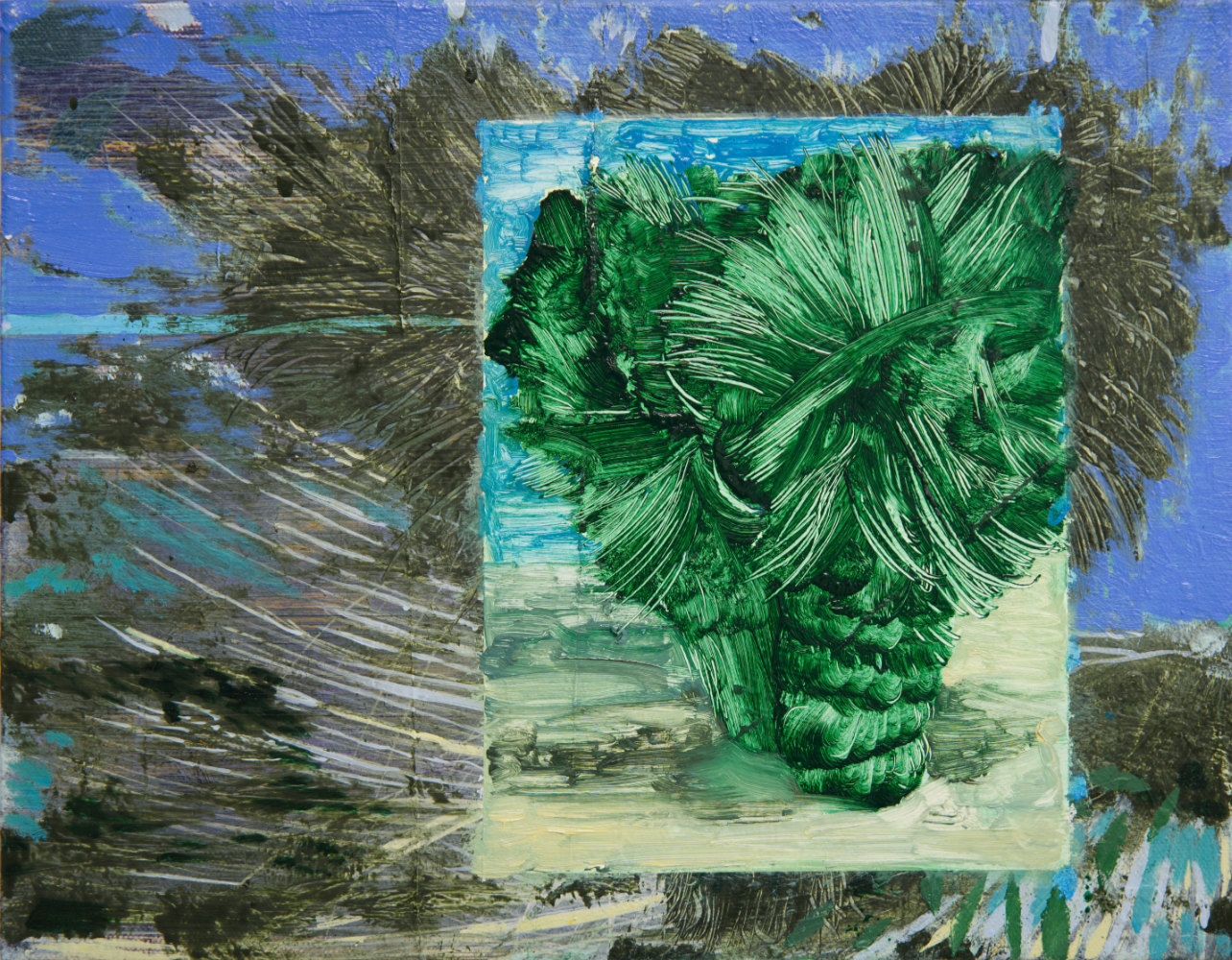
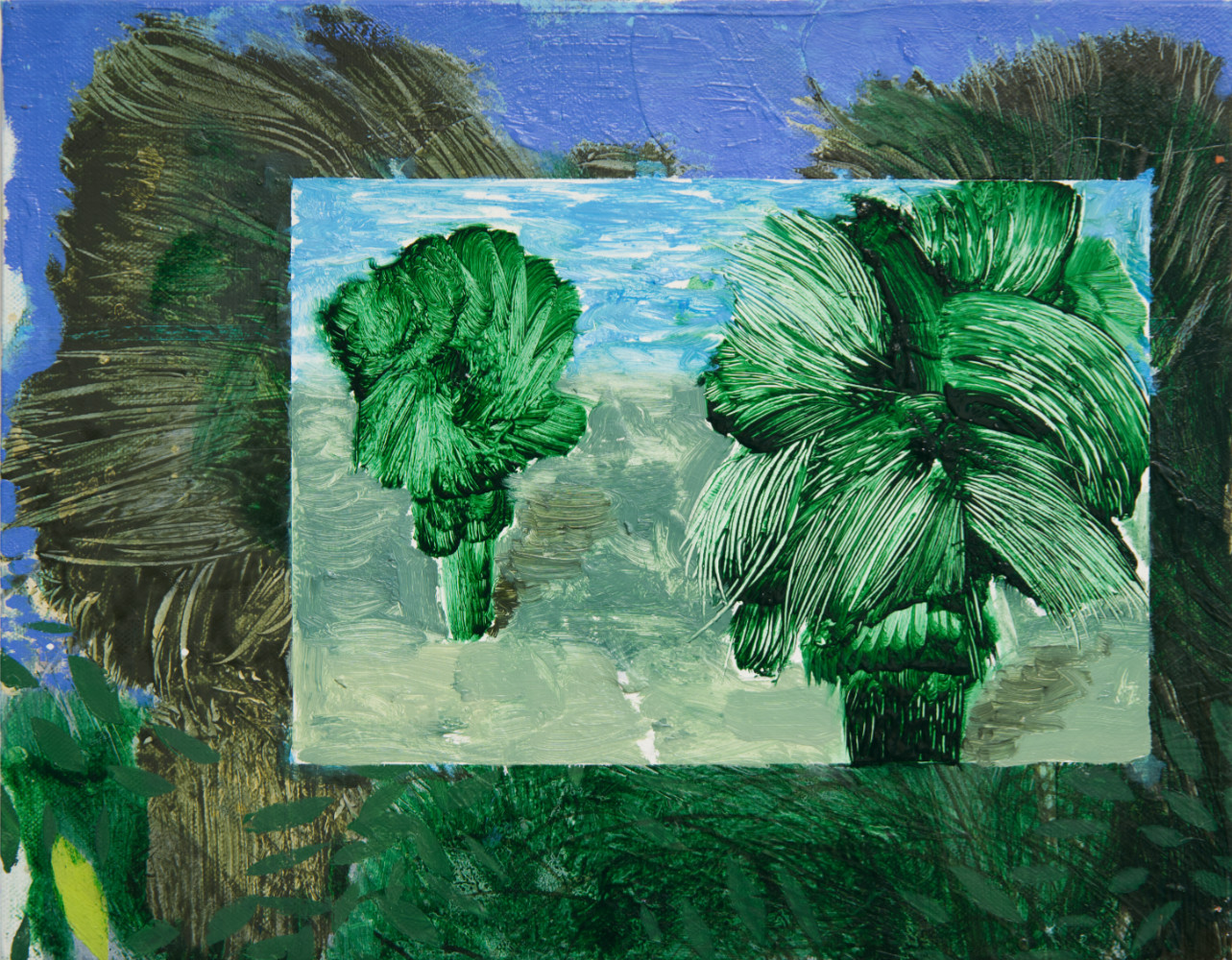
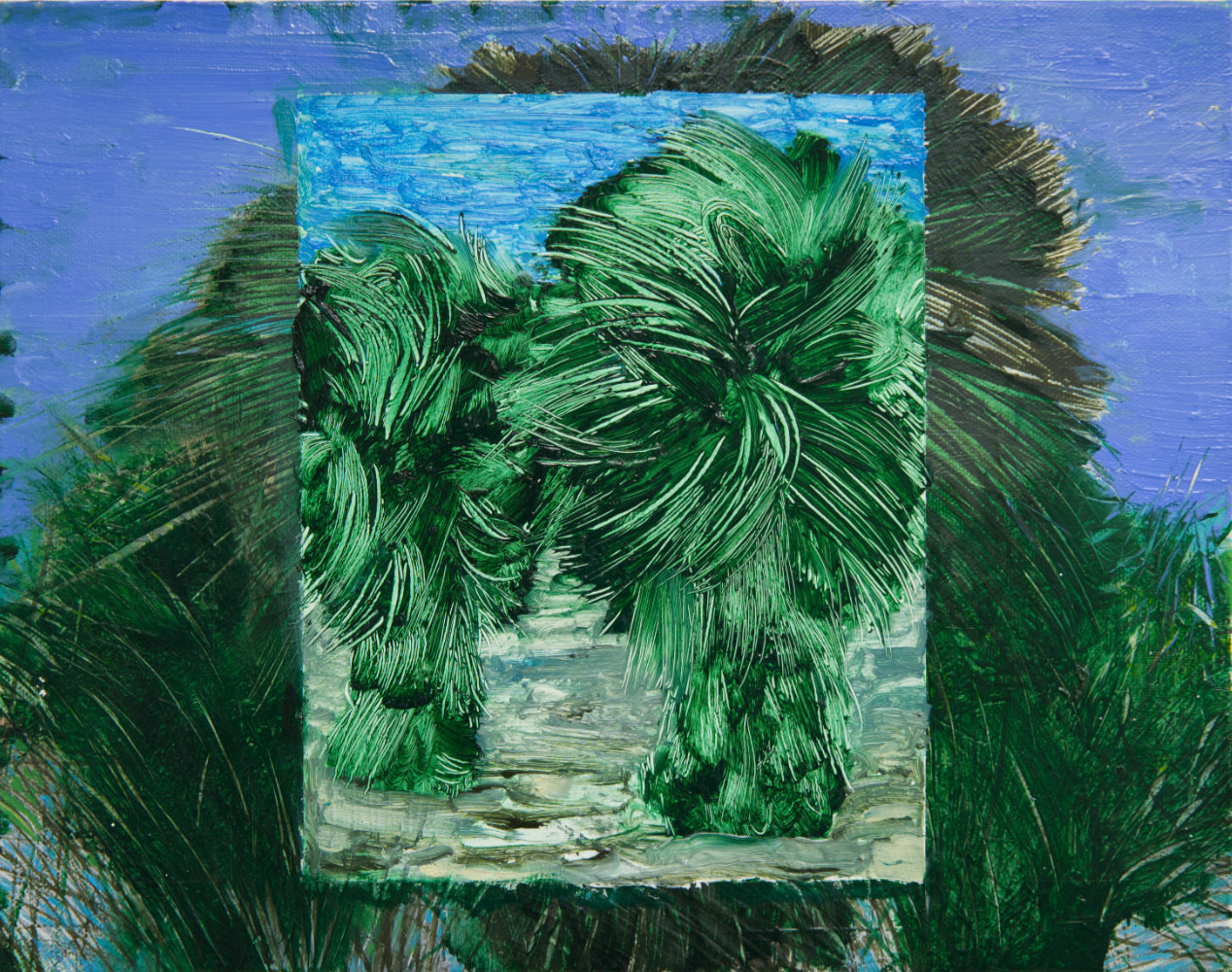
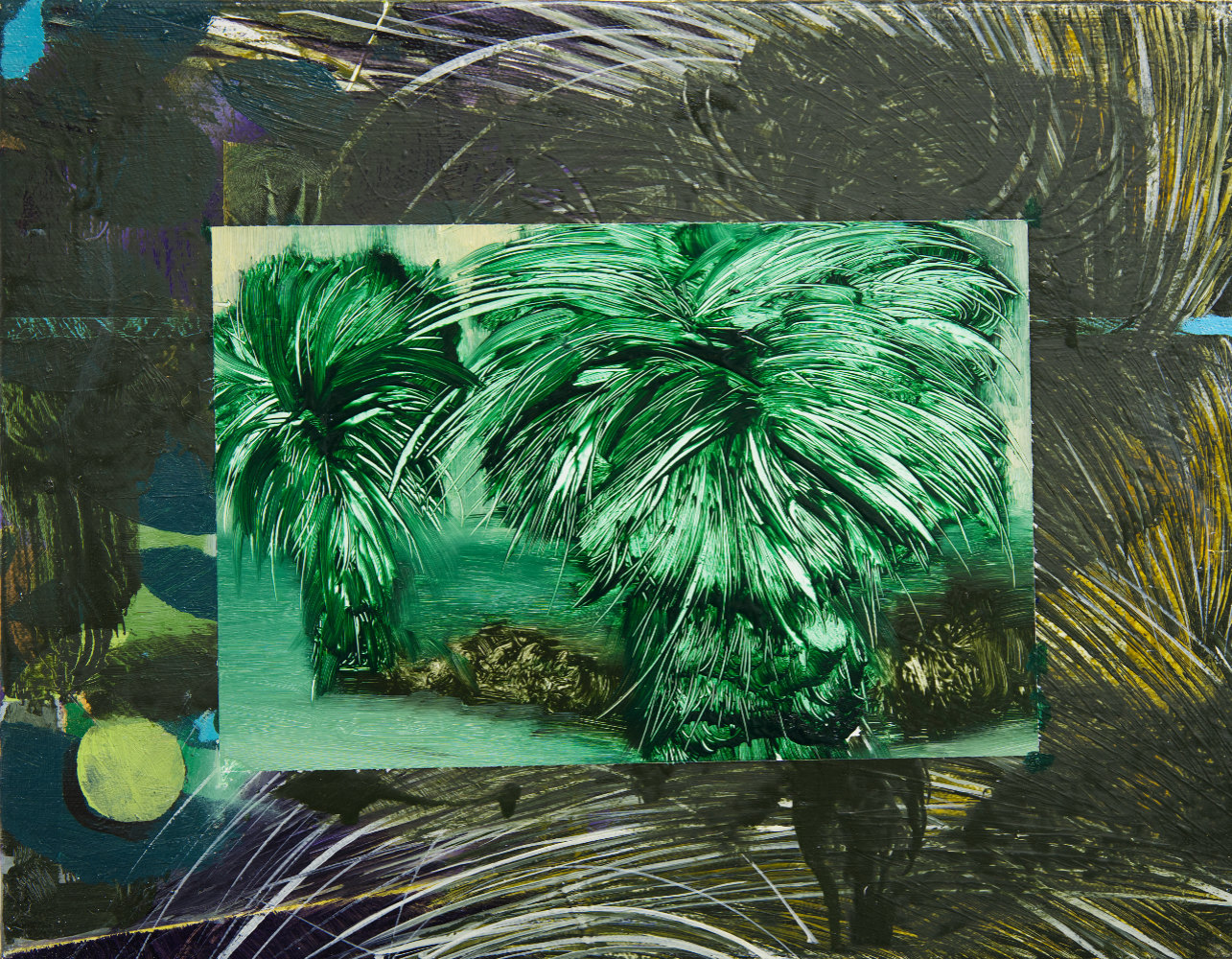
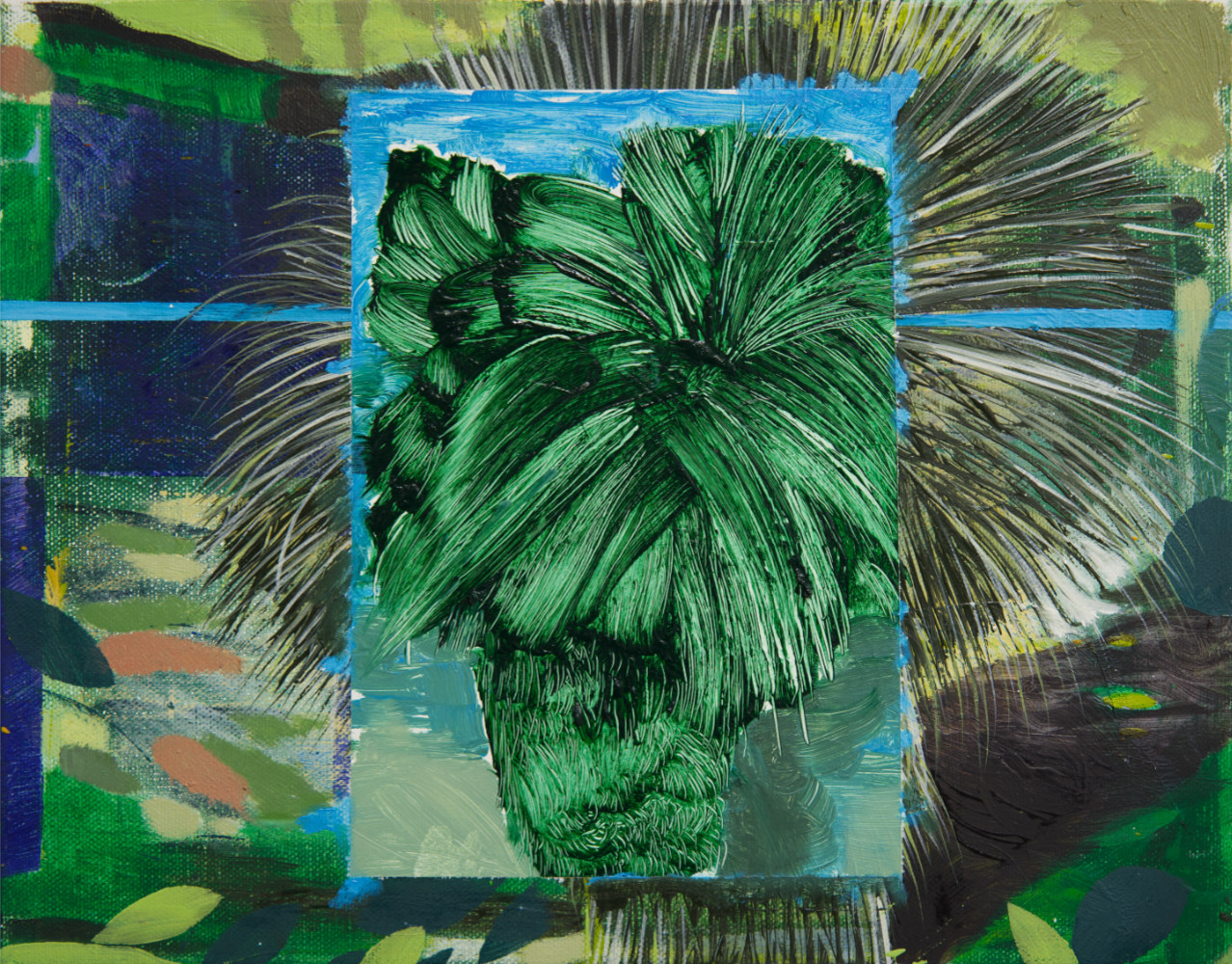
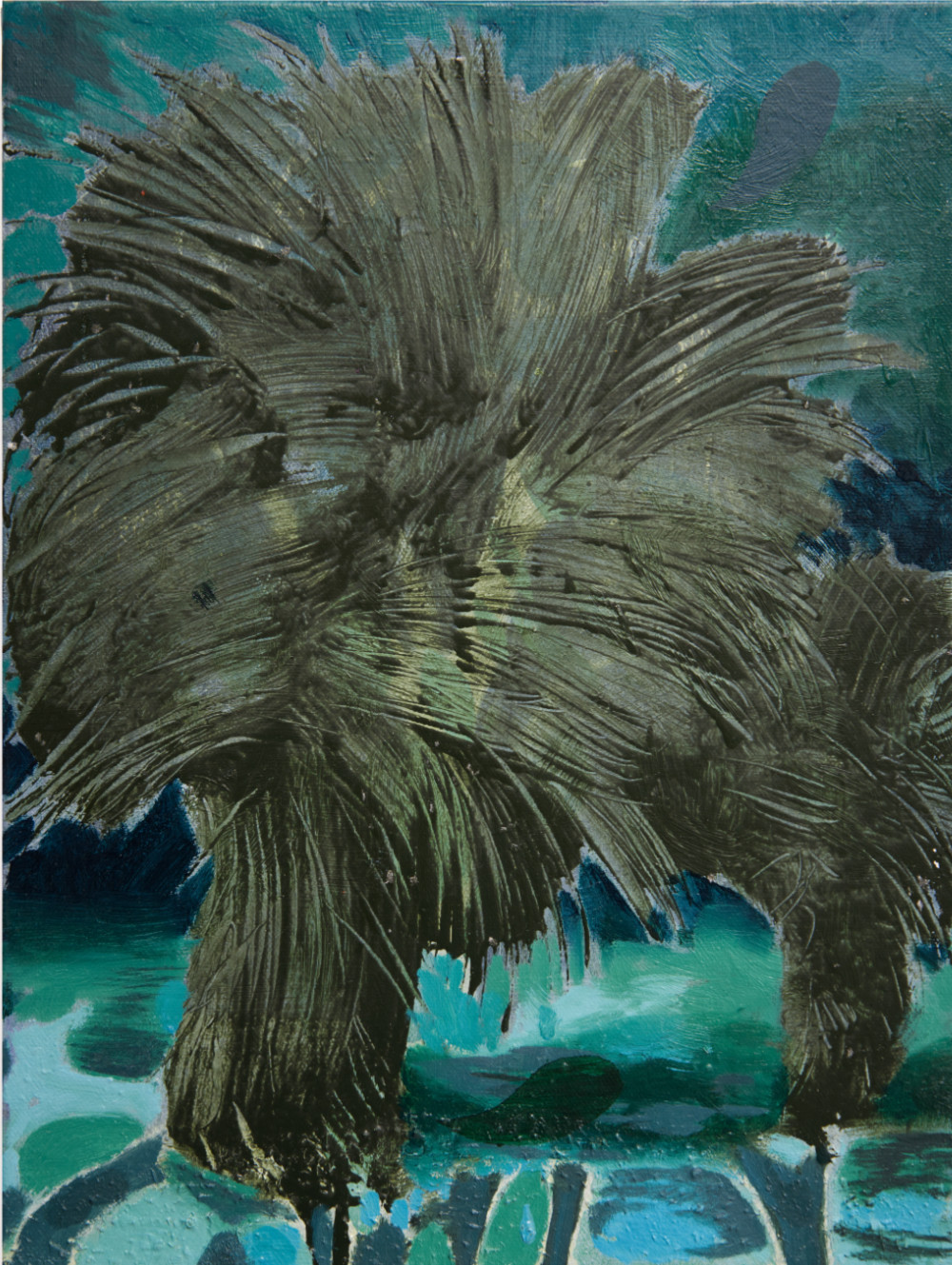
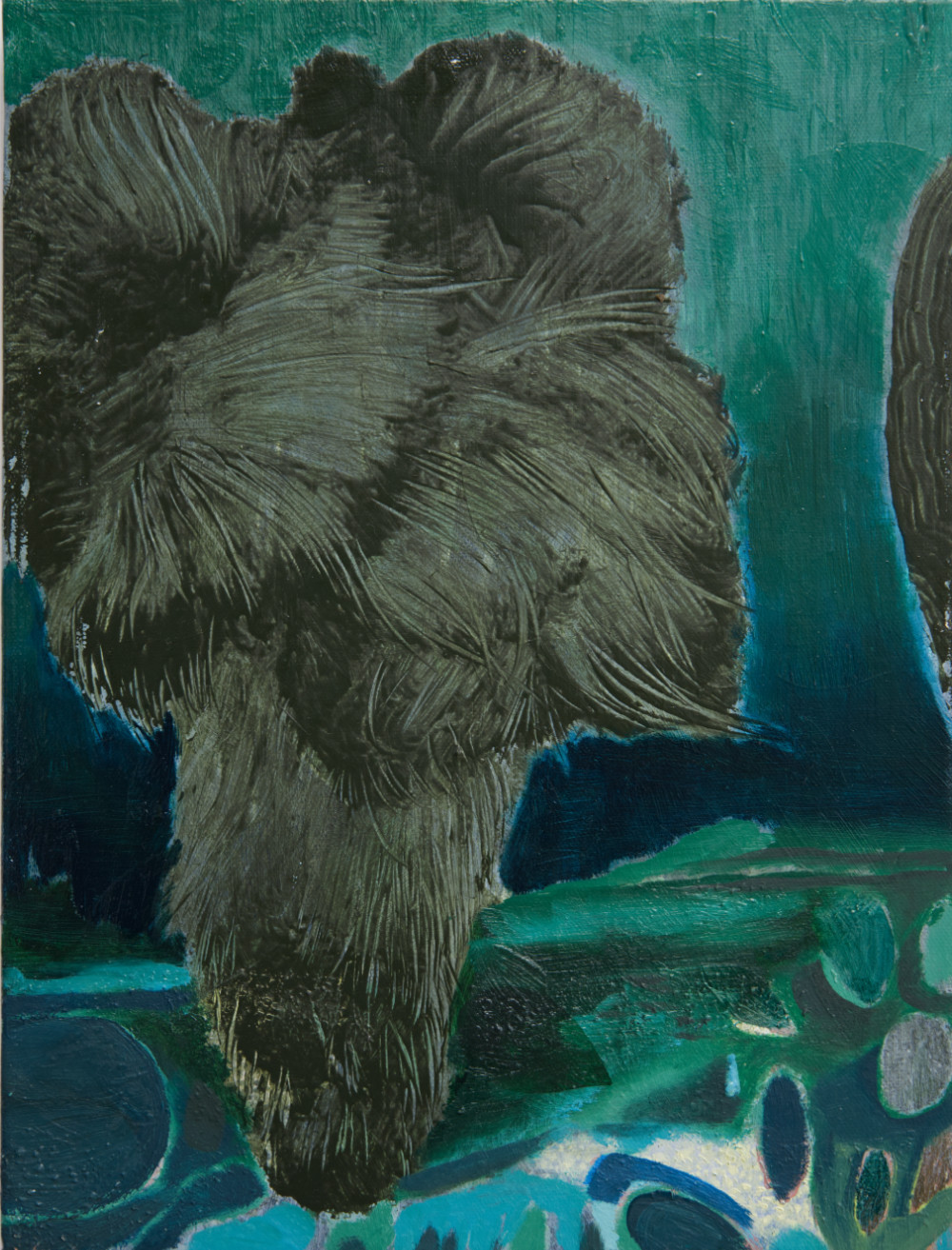
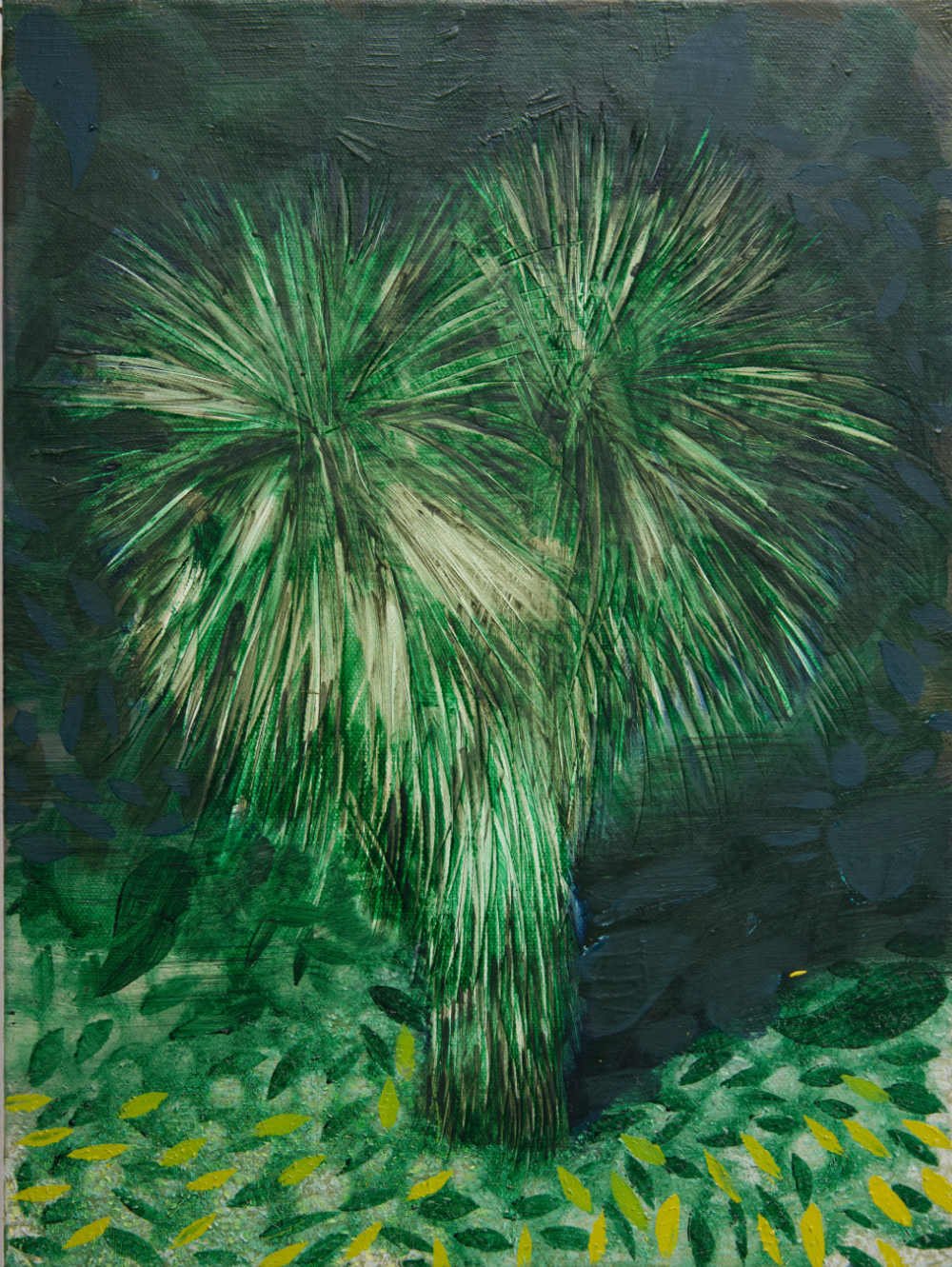
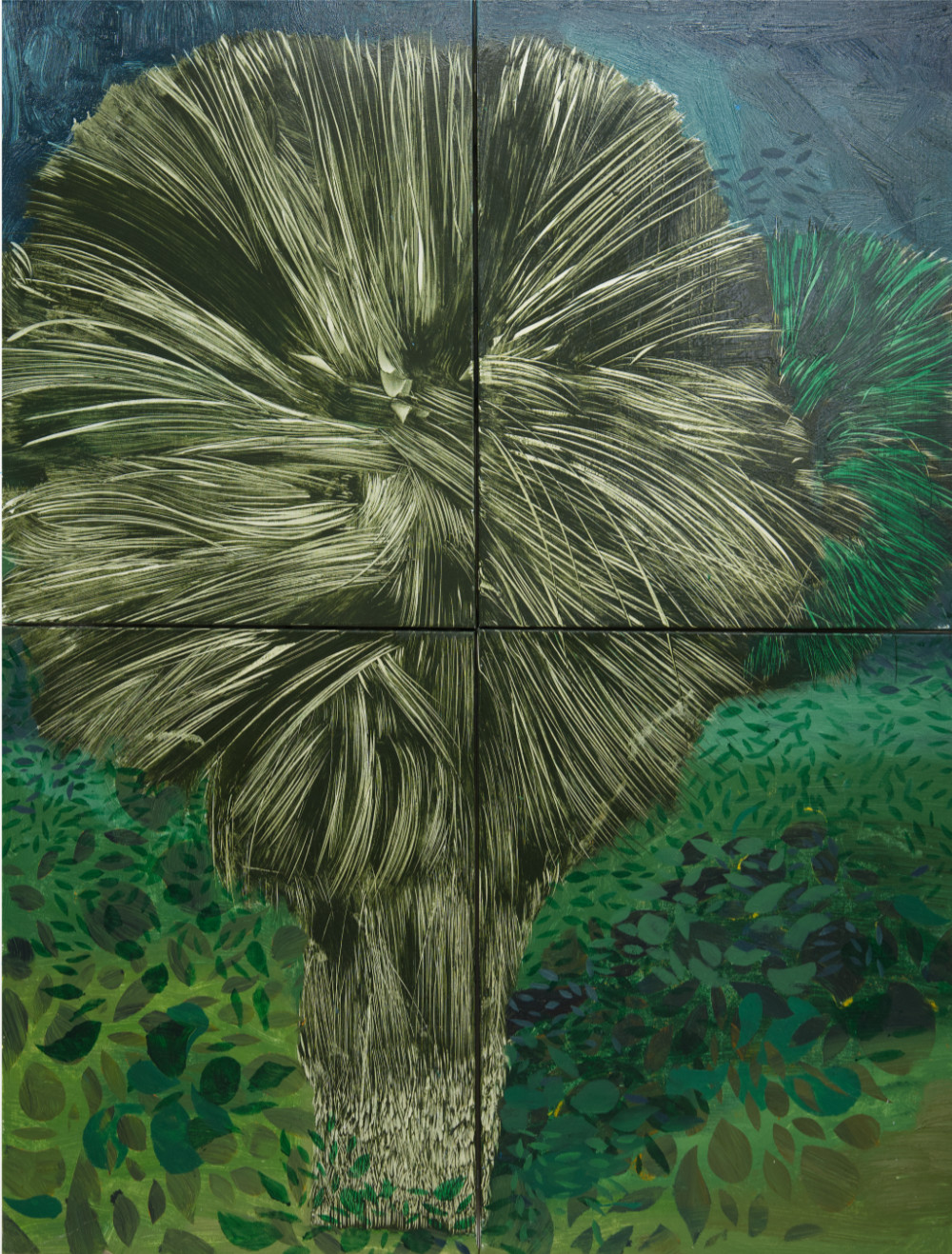
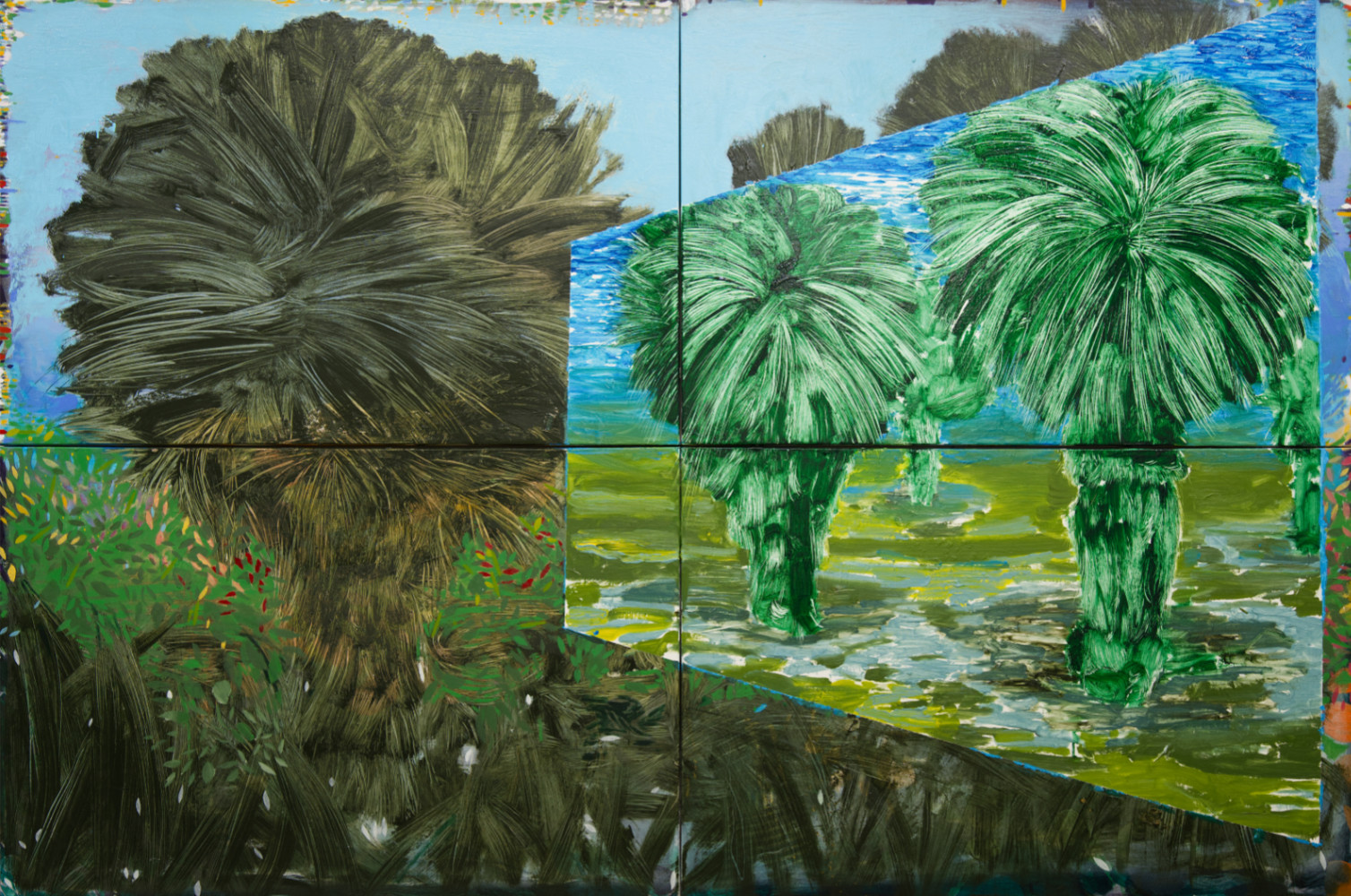
Mirage began the same way, at a distance. The series started during my residency in San Angelo, in West Texas. On night walks I passed beaked yuccas along the paths. Under the lamps their color drained away. The blades stiffened into pale fans, and the plants read less like planting and more like figures standing at the edge of the path. In the studio I worked from photographs, cut handmade stencils from those shapes, and let the yucca open into a form that hovers between plant, land, and body.
That hovering is my ground as an abstract figurative artist. Mirage is abstract figurative art where the figure is carried by a landscape form instead of a human body. A mirage is an image made of light and distance. It shows a shape that is real as an image and not there as a thing. These paintings hold that tension on purpose. A form rises out of a dark ground, holds for a moment, and thins again, the way a promised place looks from far off, and the way it changes when you finally stand in it.
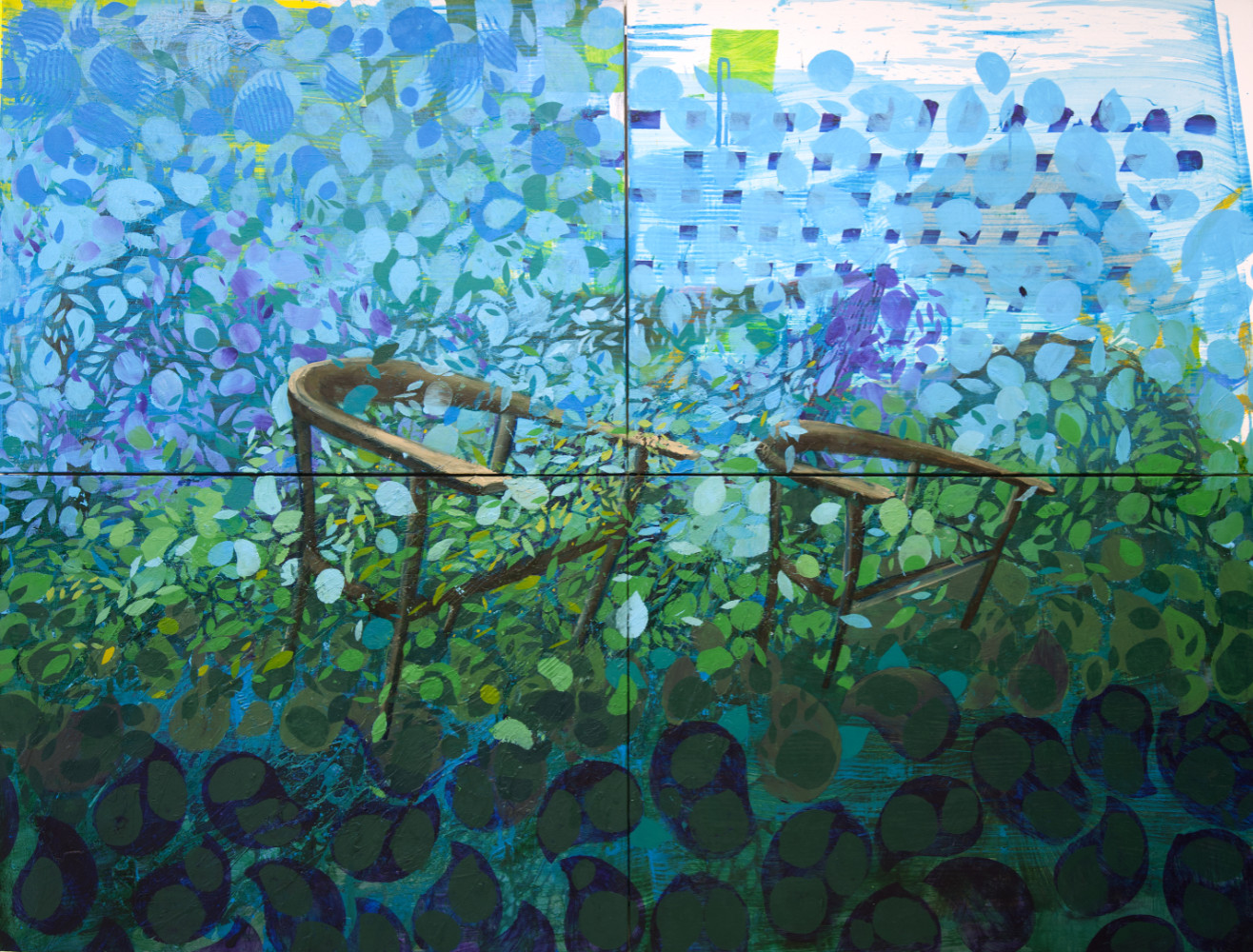
The canvases run from small works of 11 by 14 inches to a large painting of 60 by 80 inches. For readers looking for original paintings in Missouri City, the full series stands on the Mirage series page, and the current originals are listed in my online store. Missouri City TX art, on this site, means one working painter in Texas offering his current series to a city that was itself first imagined from a distance.
Visiting, and where the record continues
A Missouri City visit is short and worth making whole. Start at Freedom Tree Park, at 4303 Freedom Tree Drive. Stand under the oak and read the marker. The map on this page centers there. Then drive to Kitty Hollow Park and walk through the Dew Plantation House, the plantation home that Fort Bend County saved by moving it. Between those two stops you hold the whole early story of this ground: freedom announced under a tree, and a planter’s house carried across the county to survive.
The record continues across this site. The Mirage series page holds the paintings in full. The online store carries the current original paintings. The Houston page tells my metro story in that city, and the Texas page gathers my statewide record in one arc. The Dallas page carries my exhibition record at home, the formal lines are on my CV page, and all the town pages of this site meet on the Market page. Missouri City has no wall of mine yet. It has the tree, the railroad, and a name that crossed half the country to get here. This page is my introduction.
Frequently Asked Questions
Has Bartosz Beda exhibited in Missouri City, Texas?
I have no exhibition in Missouri City to report. No gallery here has shown my work, and no museum in Fort Bend County holds my paintings. My Houston record is a record of looking. Houston holds the museum district, and I go there to stand in front of paintings. The rest of my Texas record stands further north and further south. I held a residency in San Angelo, where Mirage began. I held a museum solo exhibition in Brownsville. Missouri City enters this site as part of the Houston ground, and its own history deserves a page of its own.
What is the Freedom Tree in Missouri City?
The most important ground in Missouri City is a single tree. The Freedom Tree is a live oak in Freedom Tree Park, at 4303 Freedom Tree Drive, along Misty Hollow Drive in the Lake Olympia area. The tree is believed to be more than 200 years old. A Texas historical marker stands near it, and the city keeps the ground as a small park with an overlook deck. The land was once the Palmer Plantation.
What happened under the Freedom Tree in 1865?
On June 19, 1865, General Gordon Granger arrived in Galveston and proclaimed the end of slavery in Texas. That date is now kept as Juneteenth. On an early summer day that year, the white overseer of the Palmer Plantation and Ed Gibbs gathered the enslaved workers under the branches of the great oak. Ed Gibbs had been Judge Palmer’s personal driver and the leader of the enslaved people on the plantation. Under the tree, the workers were told that they were free. The announcement came with terms. Planting and cultivation would continue. The freed people were welcome to stay on the Palmer land and work it. Their only wages would be a share of the crop.
Who was Edward Palmer of the Palmer Plantation?
In January 1860, Edward Palmer bought 640 acres from David Bright, one of the Old Three Hundred of Stephen F. Austin, and built his plantation there. Palmer became a judge of the Seventh Judicial District of Texas. He died in 1862. His wife died three years later, and the plantation passed to their daughter Bettie, who was fourteen years old.
When was Freedom Tree Park expanded?
Missouri City voters approved bond money in 2021 to renovate and expand Freedom Tree Park. The expanded park held its grand opening on July 25, 2026. It now holds a pergola, playgrounds, and a performance stage, and it carries a work of art by the Houston artist Anthony Suber, made in memory of the Underground Railroad. Every year, people gather under the oak in recognition of what happened there.
What Texas railroad first ran through Missouri City?
In August 1853, the Buffalo Bayou, Brazos and Colorado Railway opened its first twenty miles of track, from Harrisburg, now part of Houston, to Stafford’s Point, now Stafford. It was the first railroad to begin operating in Texas. It was also the first standard gauge railroad west of the Mississippi River. The line ran through what is now the northern part of Missouri City. In 1883 the same line linked westward and eastward to complete the Sunset Route, the southern railroad from Los Angeles to New Orleans. The route is still in heavy use today under Union Pacific.
How did Missouri City get its name?
The modern city began as a sales campaign. In 1890, two Houston real estate men, R. M. Cash and L. E. Luckel, bought four square miles of land on the route of the old railroad line. They advertised the land in St. Louis, Missouri, and in the towns around it. They called it a land of sunshine and eternal summer. In 1893, W. R. McElroy bought eighty acres in the same area and joined the promotion. To tie his land to the St. Louis advertising, he named the new town Missouri City. The settlement was registered in Texas in 1894. The first settlers did not come from Missouri at all. They came from Arlington, Texas, between Dallas and Fort Worth.
What happened in Missouri City on February 14, 1895?
On February 14, 1895, weeks after the first settlers arrived, a blizzard hit the settlement. It survived. In 1926 Missouri City became the first town in Fort Bend County to use natural gas. On March 13, 1956, the community incorporated as a city. A depot had followed the railroad in 1902, and the young settlement took shape as a railroad town along Main Street and Blue Ridge Road, now US Highway 90A and Texas Parkway.
What is the DeWalt Cemetery in Missouri City?
Thomas Walters DeWalt came from South Carolina in 1845 and built a sugar plantation on Oyster Creek in the 1850s. In 1850 he set aside about an acre of land as a family burial ground. The DeWalt Cemetery still exists inside the Lake Olympia subdivision. It is private and gated, it is still in use, and it received a Texas historical marker in 1993. The Dew Plantation House stood on the DeWalt ground along Highway 6 until 2006, when Fort Bend County moved it to Kitty Hollow Park, where it serves as a museum.
How many people live in Missouri City, Texas today?
Growth after incorporation was suburban and fast. The farmland filled with subdivisions, lakes, and golf courses, and the city became one of the most diverse suburbs in Texas. The 2020 census counted 74,259 residents. The city calls itself the Show Me City, a name carried over from Missouri, the Show Me State. The old agricultural hub now keeps its history in two quiet places: a cemetery inside a subdivision, and an oak tree in a small park.