
Spring, Texas: A Railroad Town and Mirage Paintings
Spring is a town in north Harris County, Texas, about twenty miles north of downtown Houston on Interstate 45. It is a place, not a season, and it was built by a railroad. In the 1870s two rail lines crossed here, and a working town grew around the crossing: yards, a roundhouse, hotels, saloons, and a main street of wooden storefronts. The railroad left in 1923, and the town shrank almost to nothing. What saved the old core was a second life. Its Victorian era buildings were restored, and today Old Town Spring holds more than a hundred shops, restaurants, and galleries on the same few streets the railroad laid out.
I am Bartosz Beda, an abstract figurative artist. I paint in Texas, and this page brings my Mirage series to Spring. First it gives the town its own guide and its own history, because Spring has a real story and does not need mine on top of it. Then it presents the paintings.
Spring in my record
The plain fact first: I have no exhibition in Spring to report. No gallery here has shown my work, and no room in Old Town Spring has hung my paintings. This page does not invent one.
My Houston area record is one of looking. I have crossed the city to stand in the Museum District, at the Museum of Fine Arts, Houston, at the Menil Collection, and at the Rothko Chapel, because that district sets the standard any painter in this region has to measure himself against. The Houston page on this site holds that record in full, including the honest note that Houston is not in my exhibition record yet either.
The connection to this side of the metro area began in the fall of 2026, when my Mirage catalog went out to interior designers. Spring sits on the north corridor of the Houston metro area, on Interstate 45 between Houston and The Woodlands. Collectors in Spring can reach the work directly: the series pages carry the paintings with their sizes, and the online store carries the current originals, which ship from my Dallas studio.
Old Town Spring: the railroad core that stayed
Old Town Spring is the town the railroad built, kept at walking scale. Its streets are Main Street, Gentry Street, Midway Street, and the lanes around them, a few blocks of Victorian era houses and storefronts with covered porches and wooden fronts. Trains still pass on the tracks beside the town, close enough to hear from the porches. More than a hundred independent shops, restaurants, and galleries now work out of those buildings: antique stores, boutiques, cafes, wine rooms, and gift shops, most of them family owned. The Spring Preservation League looks after the district and its calendar.
Start at the Spring Historical Museum, at 403 Main Street. The museum opened in 1995 to keep the town’s photographs, documents, and household objects, and the state historical marker for Spring stands outside it. A short walk south, at 103 Midway Street, stands Wunsche Bros. Cafe and Saloon, the building most tied to the old town’s working years. Brothers Charlie and Dell Wunsche built it in 1902 as a saloon and hotel for railroad workers, with lumber from the family mill. The state marker on the building calls it Spring’s oldest existing commercial building on its original site. It was named a Recorded Texas Historic Landmark in 1984 and entered the National Register of Historic Places the same year.
The cafe inside the Wunsche building carries the story forward. It traded for decades as the Spring Cafe, and it is known in its current life for hand formed burgers, chicken fried steak, and whiskey cake. A fire in 2015 damaged the building, but the original 1902 saloon survived, and the Kosh family bought it in 2018 and restored it. Eating there is the easiest way to sit inside the railroad town rather than look at it from the sidewalk. Nearby, the restaurant Puffabelly’s works out of the old train depot, so a meal in Old Town Spring can come with the town’s own buildings as the room.
The old town also keeps a working year. Its best known gathering is the Texas Crawfish and Music Festival, and from early November to Christmas the streets dress up for Home for the Holidays, with lights, train rides, and a tree lighting. Art walks run through the year, with galleries and wine rooms open late. Most shops keep their own hours, and many close on Mondays, so a visit lands best from Tuesday to Sunday.
A short history of Spring, Texas
People were here long before the railroad. The Orcoquisac Indians hunted and fished this ground, along Spring Creek and the pine woods north of the bayous. In 1838 a trading post stood on Spring Creek. In the 1840s German families began settling the area, farming sugar cane and cotton. Carl Wunsche, who came from Germany in 1846, was one of the settlers who shaped the town that followed, and his family stayed prominent in Spring for generations.
The town itself began as a work camp. Railroad crews laying track toward Houston reached this ground at the end of a hard winter, and in their relief they called the camp Camp Spring. The word camp was dropped in 1873, when the railroad platted the town of Spring and made it a base for its workers. Callahan Pickette became the first postmaster that year. A settlement of rails, tents, and new wooden buildings had a name, and the name was the season the workers were glad to see.
The boom came when the second line arrived. Between 1901 and 1903 the railroad completed its line through Spring to Fort Worth, and Spring became a crossing of two railways and a major switchyard. A roundhouse went up, fourteen track yards spread beside the lines, and about 200 rail workers worked the yard. Developer R. L. Robinson subdivided land south of the original town in 1902, and the commercial center shifted toward the junction, where Main Street filled with hotels, saloons, lumber mills, an opera house, a hospital, and a bank. By 1910 the population had risen to 1,200.
The bank wrote the town’s favorite story. The Spring State Bank opened in 1912 and was robbed several times in the 1930s. Local rumor long credited one of those robberies to Bonnie and Clyde. The Handbook of Texas is clear that the rumor is wrong, and that is worth printing: the legend is part of the town’s folklore, not its record. In 1935 the bank consolidated with the bank in Tomball, the next town up the line.
The fall came first, and it came by decision. In 1923 the railroad moved its roundhouse and its base of operations to Houston. Prohibition closed the saloons, and the businesses that lived on rail traffic closed with them. By 1931 the population had fallen to 300. For decades Spring stayed a small, quiet settlement on the road north, while Houston grew toward it. Specialty shops began opening in the old buildings in the early 1970s, and restoration gathered pace from there. The town the railroad abandoned became the town its own buildings saved.
Today the name Spring covers far more than the old town. The census designated place counted 62,559 people in 2020, spread through the subdivisions, schools, and shopping centers of north Harris County, inside Houston’s orbit and along the Interstate 45 corridor toward The Woodlands. Old Town Spring is the small historic core inside that large modern community, a few blocks where the crossing town survives at its original size.
Mirage: desert light for a town of porches
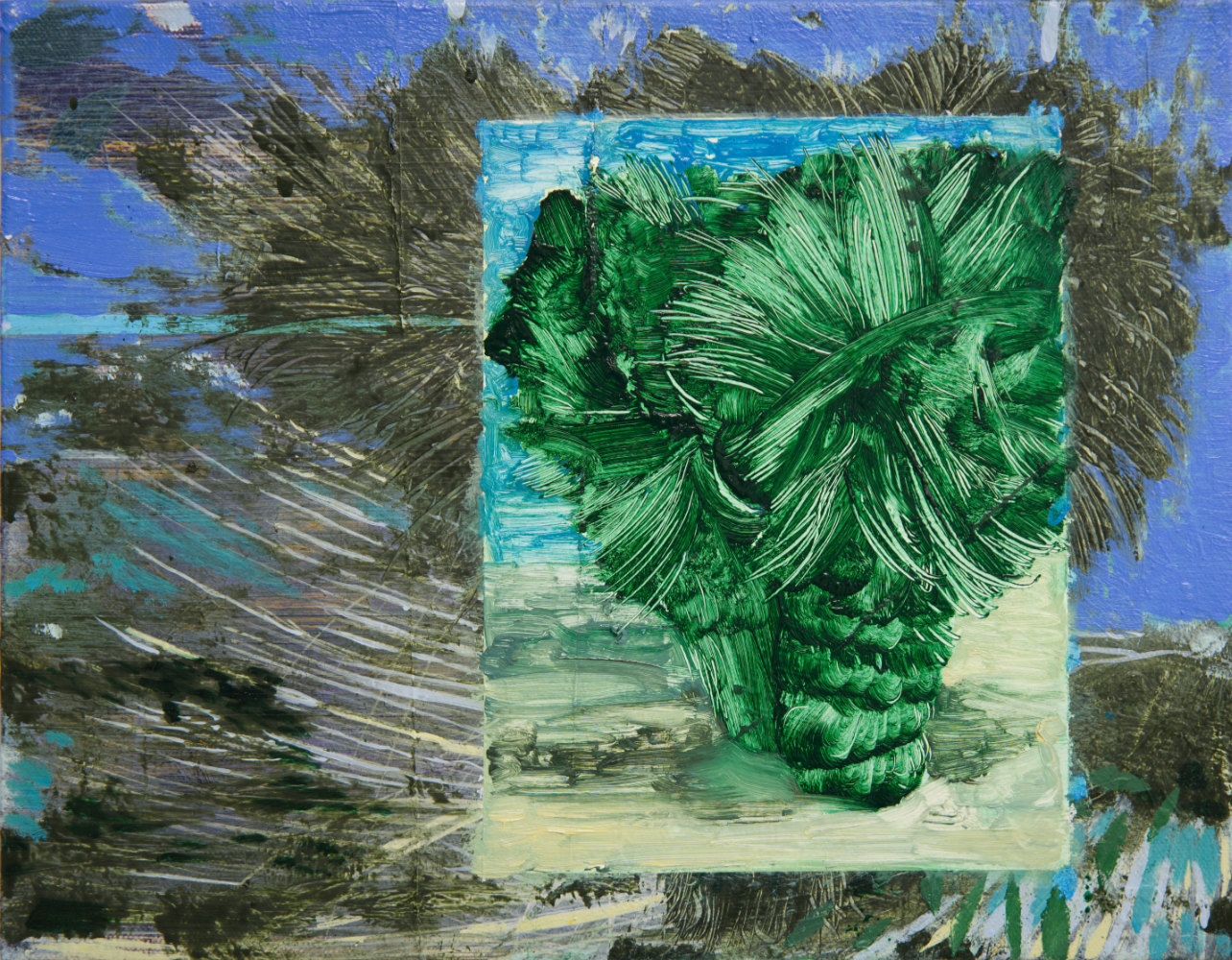
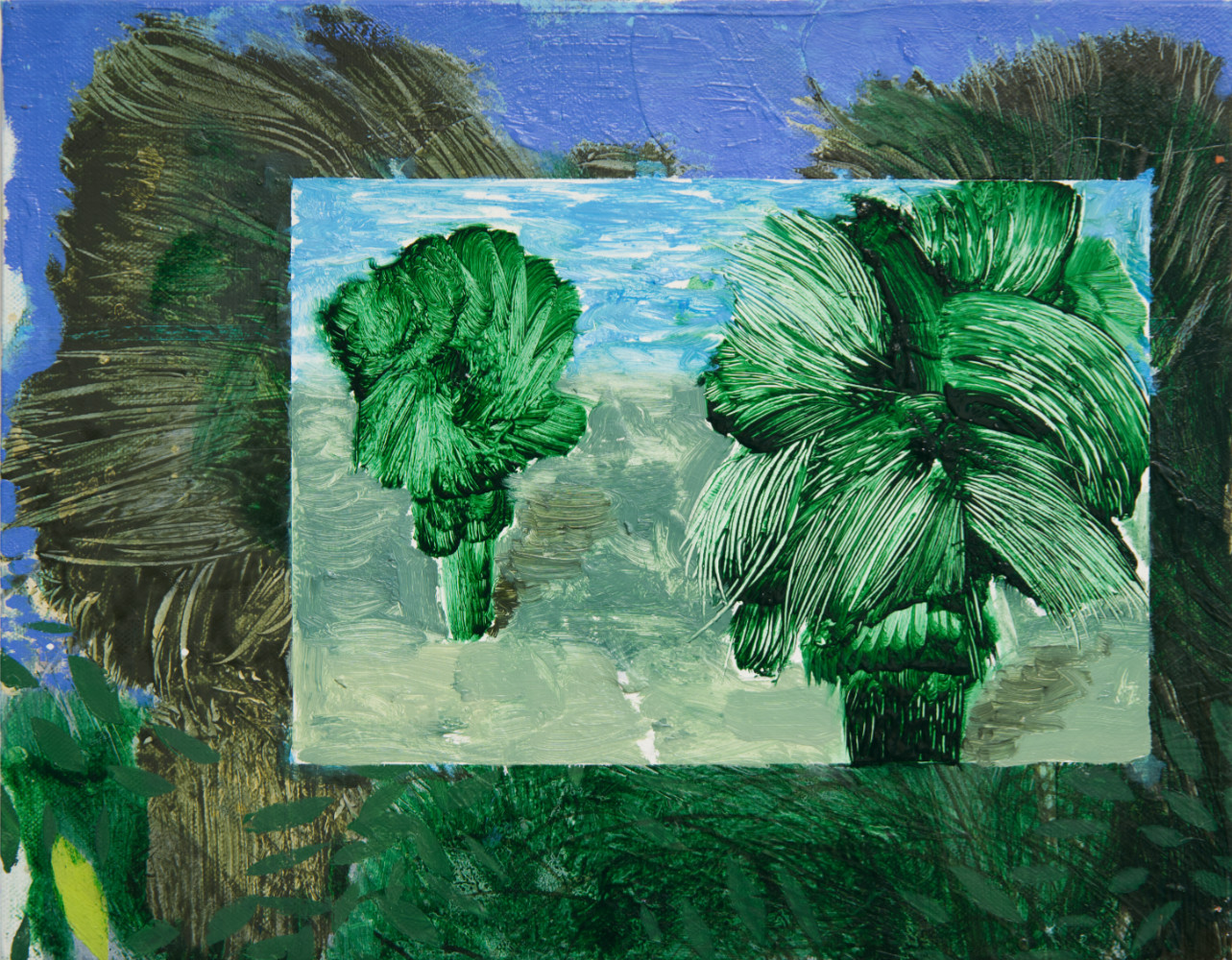
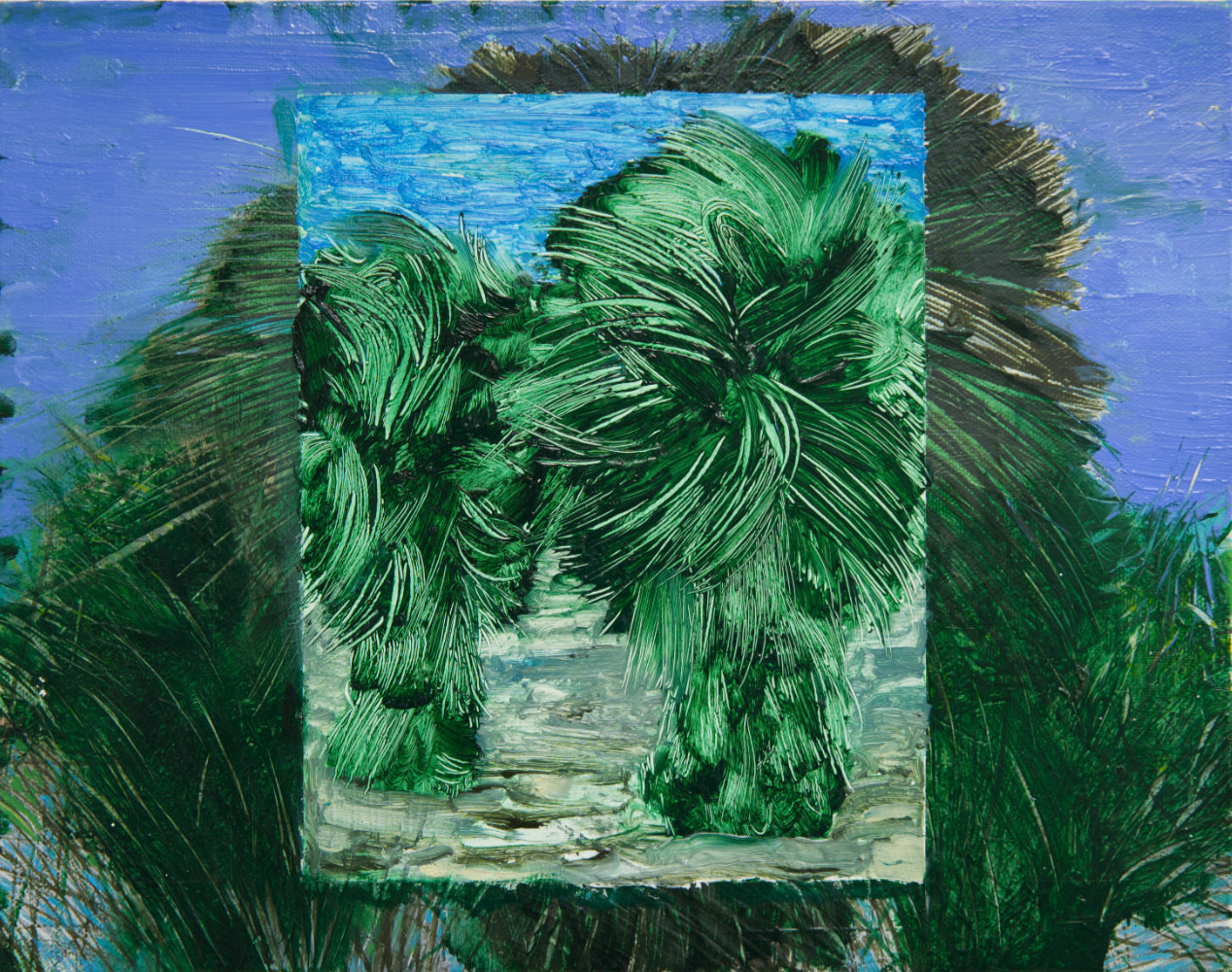
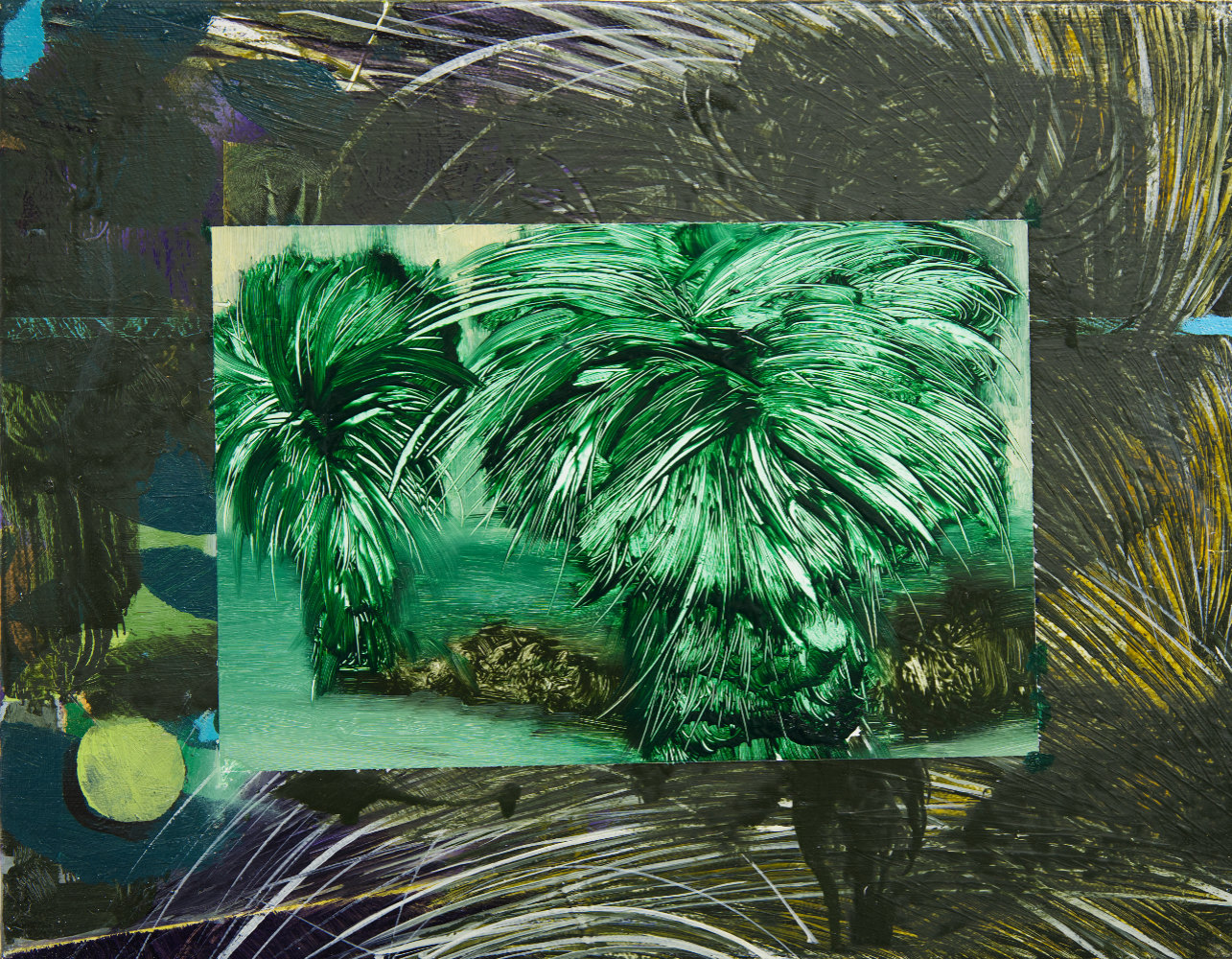
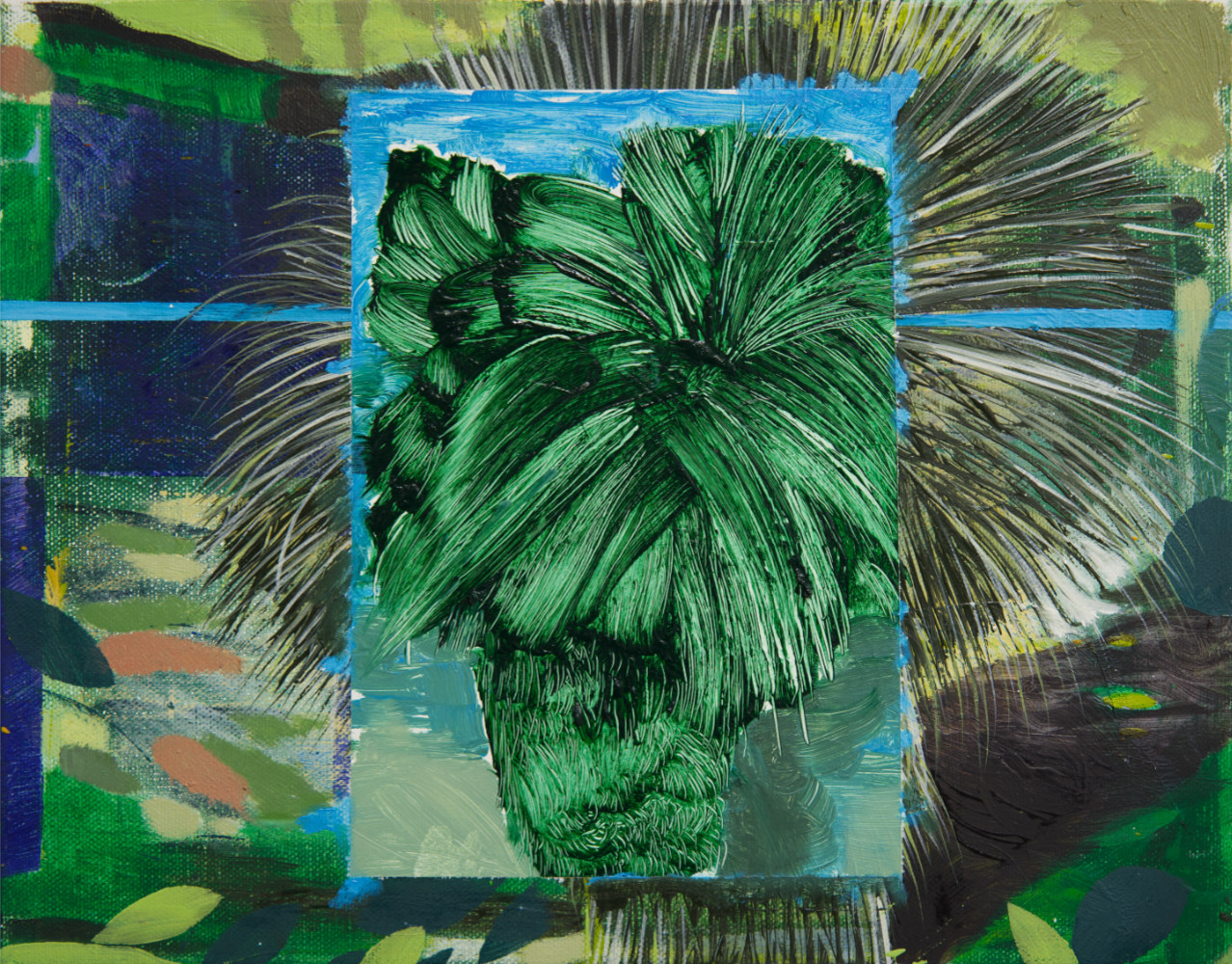
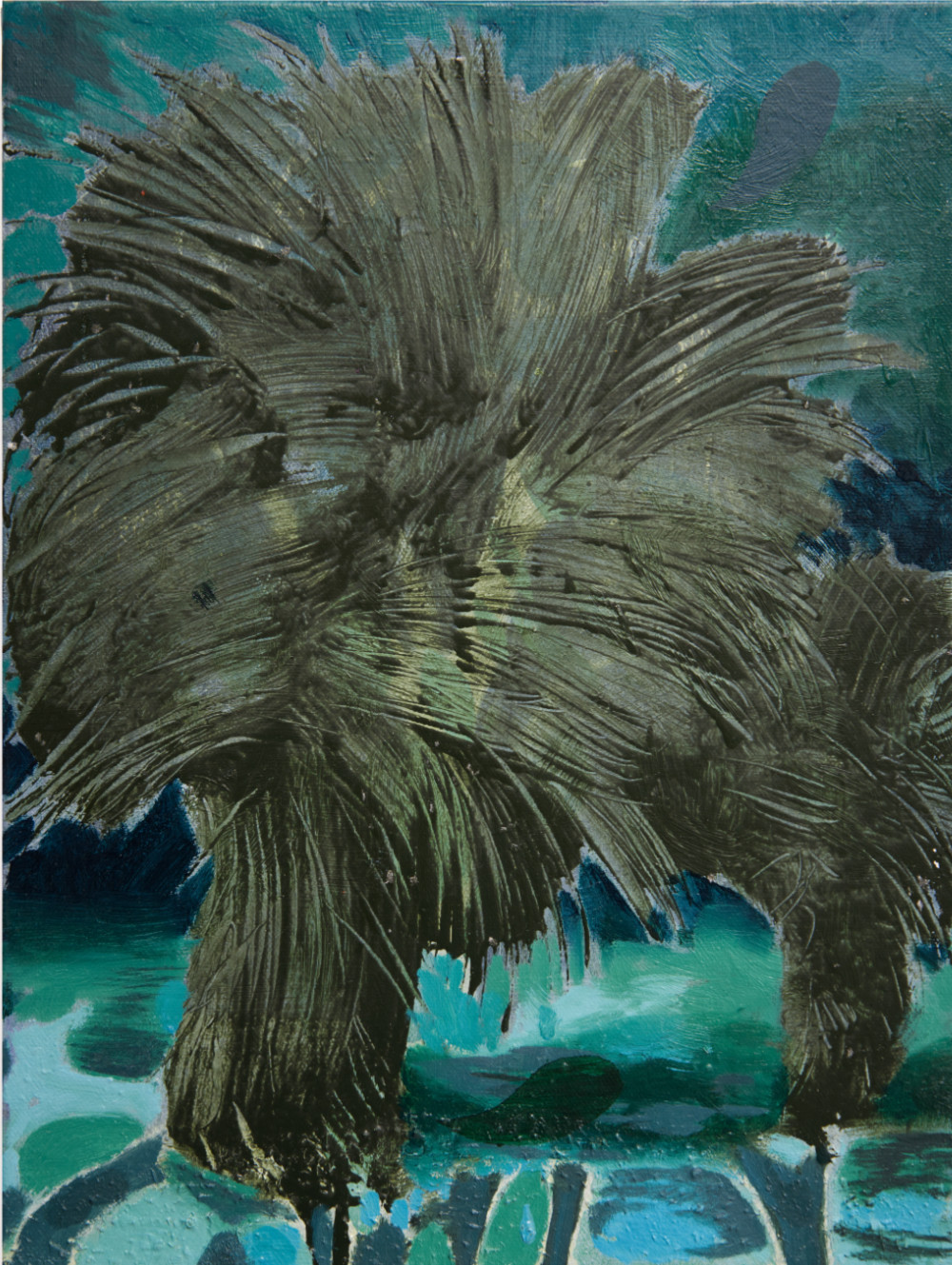
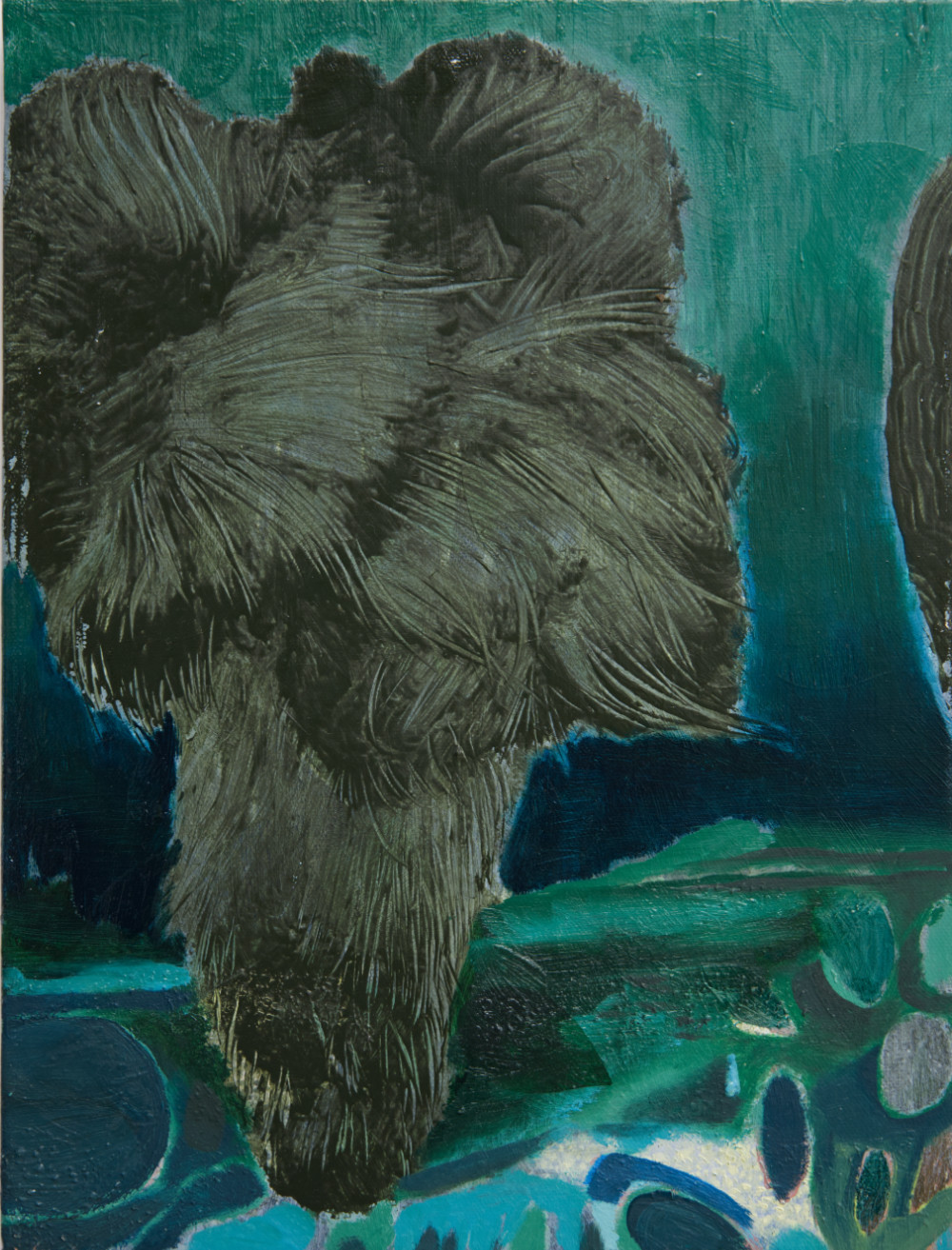
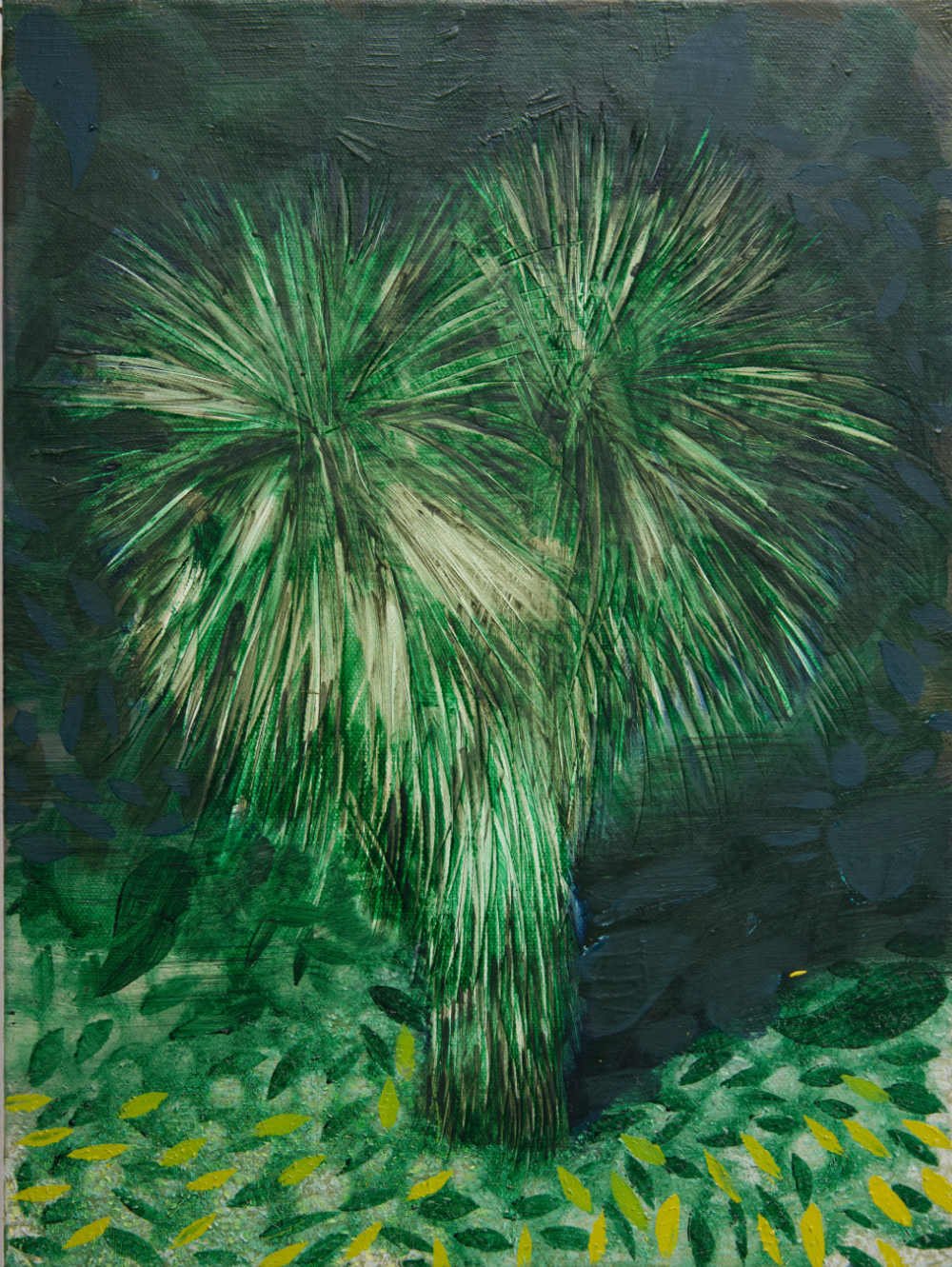
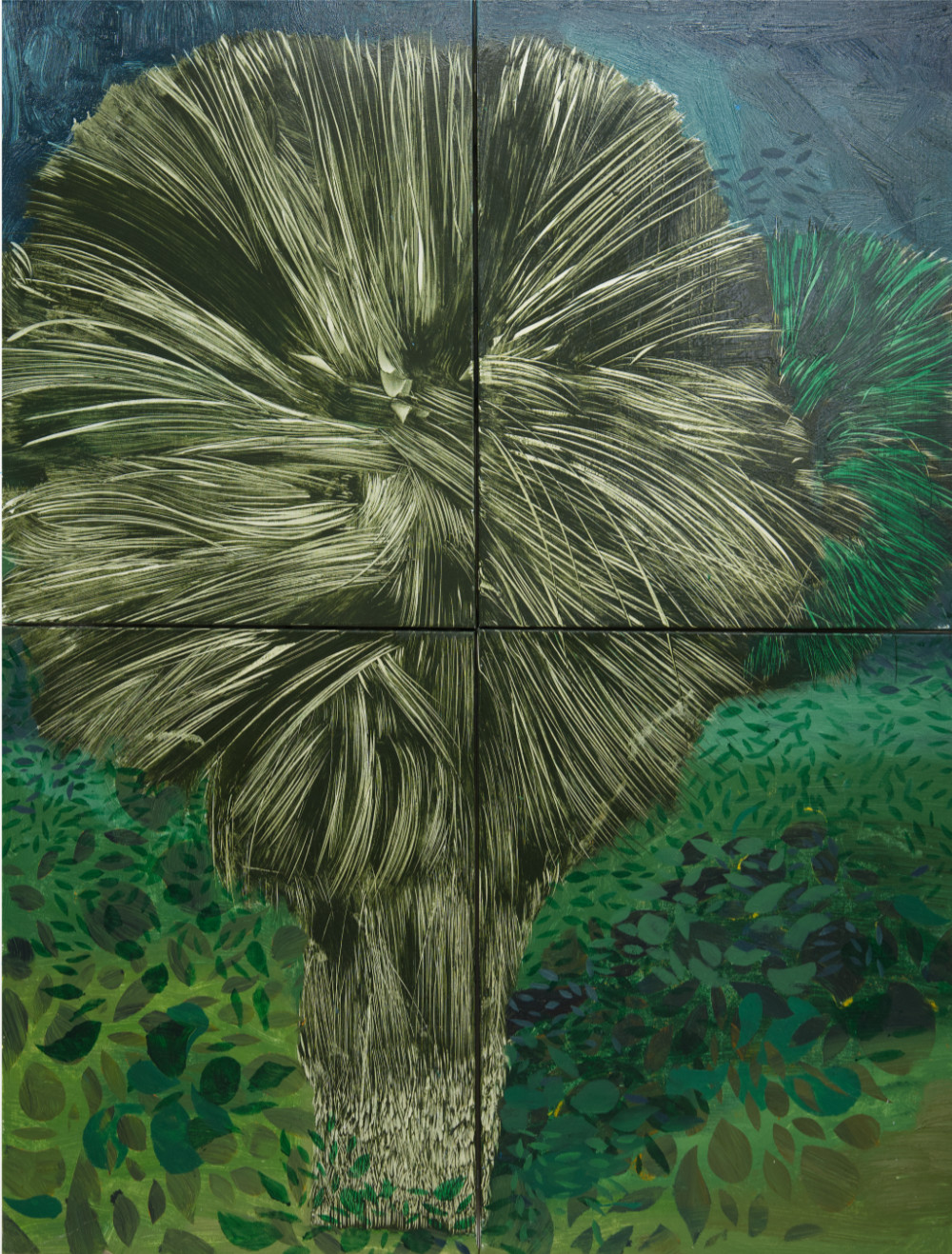
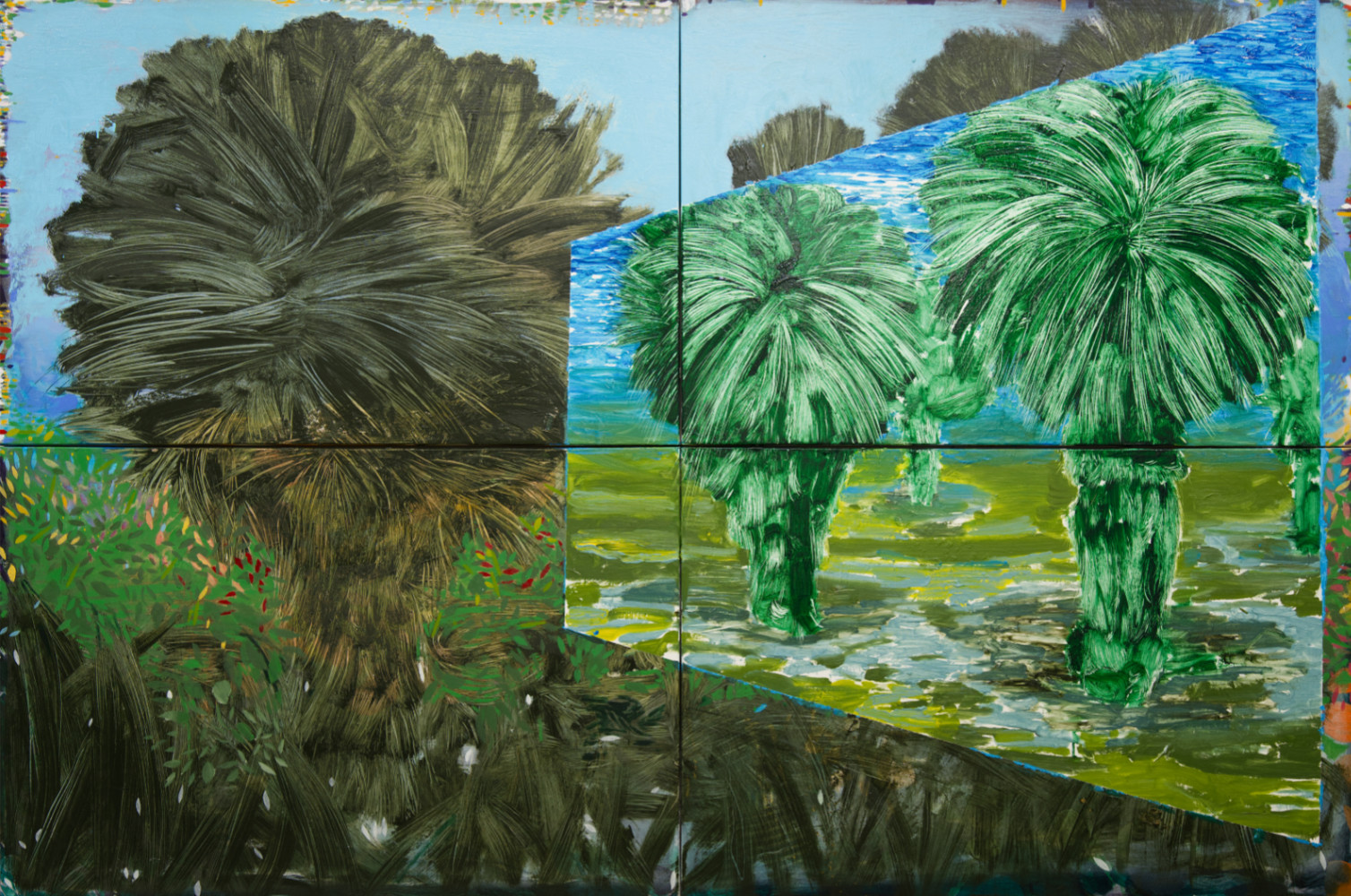
Mirage began far from Harris County, in West Texas. In 2025 I held a residency at Angelo State University in San Angelo, awarded through the Edwards Trust family fellowship, and on night walks across the campus I kept meeting the beaked yuccas that line the paths. Under the streetlamps their color washed out. The stiff leaves stood pale against the dark, and the plants stopped reading as plants. They read as figures, standing watch. I photographed them, and back in the studio I abstracted their shapes through handmade stencils, until the plant became an apparition you can stand in front of.
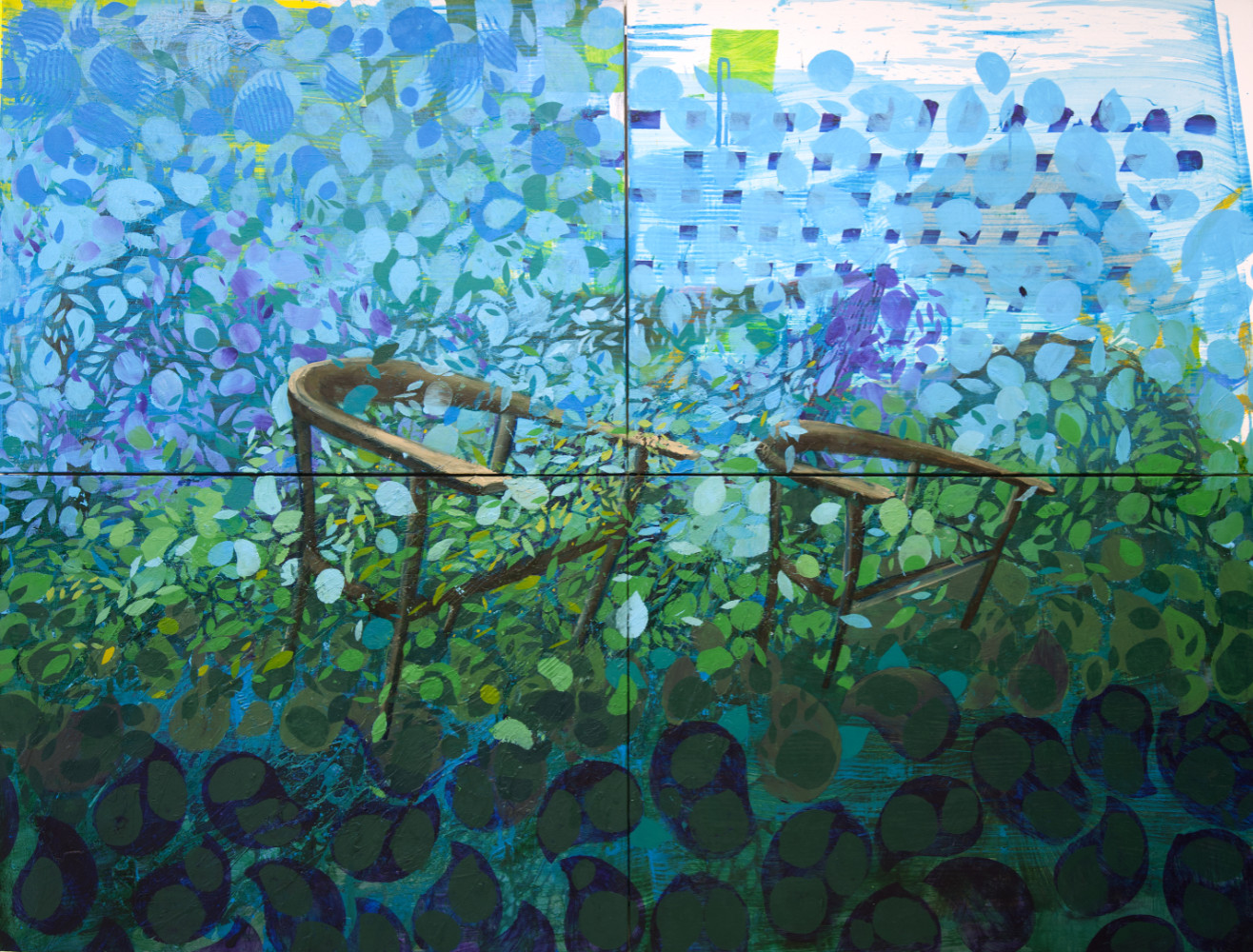
That is the ground of the series. A mirage is a longing given shape, something seen because it is wanted, there and not there at once. As an abstract figurative artist I work inside that tension. The figure stays at the center of the painting, but it is built from something else: a desert plant, a wash of color, a stencil edge. Mirage is abstract figurative art where the landscape does the standing in. The paintings hold a shape the way lamplight held those yuccas, clear from one step and dissolving from the next.
The series runs to real scale. Mirage 11, the largest, measures 60 by 80 inches. Mirage 10 measures 48 by 72 inches. Smaller canvases carry the same night light at room size. For original paintings in Spring Texas, the fit is the town itself. Old Town Spring kept its porches, its wooden fronts, and its low rooflines while the suburbs rose around it. A Mirage canvas does the same work on a wall: it holds one strong, quiet shape in a room, the way the old saloon holds its corner on Midway Street. Spring TX art, on this page, means paintings made by hand in a Texas studio, offered to the houses of a town that knows the value of keeping old things standing.
Visiting, and where the record continues
A Spring art day is a walking day. Park near Main Street and walk the old town slowly: the museum first, then the shops, then lunch inside the 1902 saloon or the old depot. The map on this page centers on Old Town Spring. For hours, festival dates, and the shop directory, the Old Town Spring site keeps the current word. Come on a festival weekend if you want the town at full noise, or on a quiet weekday morning if you want the porches to yourself.
The record continues across this site. The Mirage series page holds the paintings in full, with their sizes and their story, and the online store carries the current originals. The Houston page holds my museum district record for this metro area. The Texas hub page gathers my Texas towns in one place. My Dallas page carries the record of the city where I live and work, and my CV page holds the formal exhibition list. All the town pages, this one included, hang together on the Market page. Spring has no wall of mine yet. It has a crossing, a saloon, and a main street that outlasted the railroad. The paintings are ready when the town is.
Frequently Asked Questions
Has Bartosz Beda exhibited in Spring, Texas?
I have no exhibition in Spring to report. No gallery here has shown my work, and no room in Old Town Spring has hung my paintings. My Houston area record is one of looking. I have crossed the city to stand in the Museum District, at the Museum of Fine Arts, Houston, at the Menil Collection, and at the Rothko Chapel. The connection to this side of the metro area began in the fall of 2026, when my Mirage catalog went out to Houston interior designers. Spring sits on the same north corridor those designers drive, on Interstate 45 between Houston and The Woodlands.
What is Old Town Spring, Texas?
Old Town Spring is the town the railroad built, kept at walking scale. Its streets are Main Street, Gentry Street, Midway Street, and the lanes around them, a few blocks of Victorian era houses and storefronts with covered porches and wooden fronts. More than a hundred independent shops, restaurants, and galleries now work out of those buildings, most of them family owned. The Spring Preservation League looks after the district and its calendar. Many shops close on Mondays, so a visit lands best from Tuesday to Sunday.
What is the Wunsche Bros. building in Spring?
At 103 Midway Street stands Wunsche Bros. Cafe and Saloon, the building most tied to the old town’s working years. Brothers Charlie and Dell Wunsche built it in 1902 as a saloon and hotel for railroad workers, with lumber from the family mill. The state marker on the building calls it Spring’s oldest existing commercial building on its original site. It was named a Recorded Texas Historic Landmark in 1984 and entered the National Register of Historic Places the same year. A fire in 2015 damaged the building, but the original 1902 saloon survived, and the Kosh family bought it in 2018 and restored it.
What is the Spring Historical Museum?
The Spring Historical Museum stands at 403 Main Street. It opened in 1995 to keep the town’s photographs, documents, and household objects, and the state historical marker for Spring stands outside it. A short walk south stands the Wunsche building. Nearby, the restaurant Puffabelly’s works out of the old train depot, so a meal in Old Town Spring can come with the town’s own buildings as the room.
How did Spring, Texas get its name?
The town itself began as a work camp. Railroad crews laying track toward Houston reached this ground at the end of a hard winter, and in their relief they called the camp Camp Spring. The word camp was dropped in 1873, when the railroad platted the town of Spring and made it a base for its workers. Callahan Pickette became the first postmaster that year. A settlement of rails, tents, and new wooden buildings had a name, and the name was the season the workers were glad to see.
When did Spring become a railroad crossing town?
The boom came when the second line arrived. Between 1901 and 1903 the railroad completed its line through Spring to Fort Worth, and Spring became a crossing of two railways and a major switchyard. A roundhouse went up, fourteen track yards spread beside the lines, and about 200 rail workers worked the yard. Developer R. L. Robinson subdivided land south of the original town in 1902, and Main Street filled with hotels, saloons, lumber mills, an opera house, a hospital, and a bank. By 1910 the population had risen to 1,200.
Did Bonnie and Clyde rob the Spring State Bank?
No. The Spring State Bank opened in 1912 and was robbed several times in the 1930s. Local rumor long credited one of those robberies to Bonnie and Clyde. The Handbook of Texas is clear that the rumor is wrong, and that is worth printing: the legend is part of the town’s folklore, not its record. In 1935 the bank consolidated with the bank in Tomball, the next town up the line.
Why did Spring shrink after 1923?
In 1923 the railroad moved its roundhouse and its base of operations to Houston. Prohibition closed the saloons, and the businesses that lived on rail traffic closed with them. By 1931 the population had fallen to 300. For decades Spring stayed a small, quiet settlement on the road north, while Houston grew toward it. Specialty shops began opening in the old buildings in the early 1970s, and restoration gathered pace from there. The town the railroad abandoned became the town its own buildings saved.
Who settled the Spring area before the railroad?
People were here long before the railroad. The Orcoquisac Indians hunted and fished this ground, along Spring Creek and the pine woods north of the bayous. In 1838 a trading post stood on Spring Creek. In the 1840s German families began settling the area, farming sugar cane and cotton. Carl Wunsche, who came from Germany in 1846, was one of the settlers who shaped the town that followed, and his family stayed prominent in Spring for generations.
How many people live in Spring, Texas today?
Today the name Spring covers far more than the old town. The census designated place counted 62,559 people in 2020, spread through the subdivisions, schools, and shopping centers of north Harris County, along the Interstate 45 corridor toward The Woodlands. Old Town Spring is the small historic core inside that large modern community. Its best known gathering is the Texas Crawfish and Music Festival, and from early November to Christmas the streets dress up for Home for the Holidays.