
Belgrade, Serbia: Two Apogee Paintings at the House of King Peter I
In October 2026 my work was shown in Belgrade, the capital of Serbia, in The Eight Art Encounters, a group exhibition at the House of King Peter I Cultural Center. Two paintings from my Apogee series, Fragments 05 and 06, made the trip from my Texas studio to a villa on a Belgrade hill. The exhibition ran from October 21 to 31, 2026, and was extended, coming down the following week. It was my first exhibition in Serbia, and it put the newest series I am working on in front of a European audience in the year the series began. This page is the record of that exhibition, and a guide to the art of the city around it.
The paintings
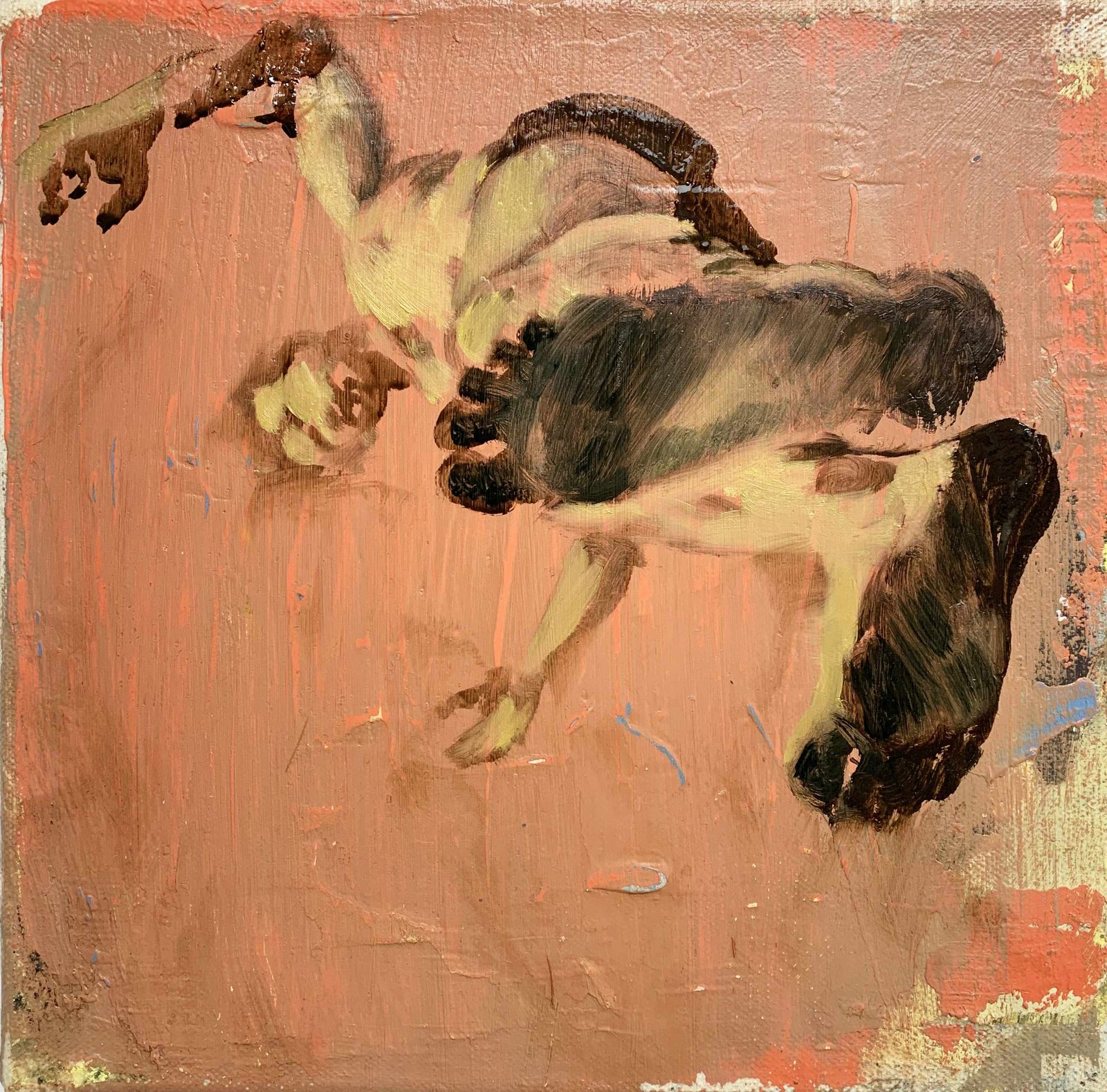
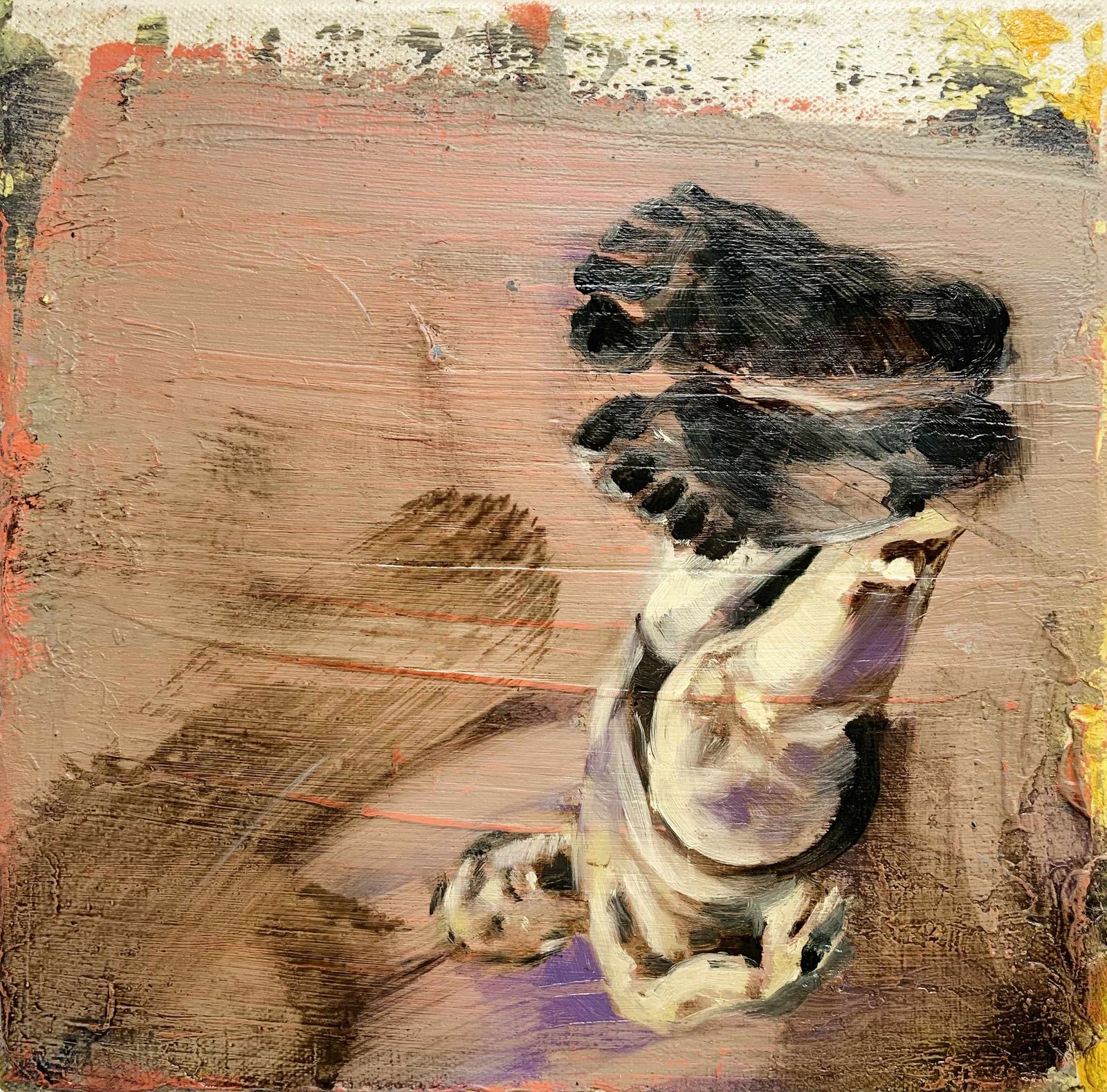
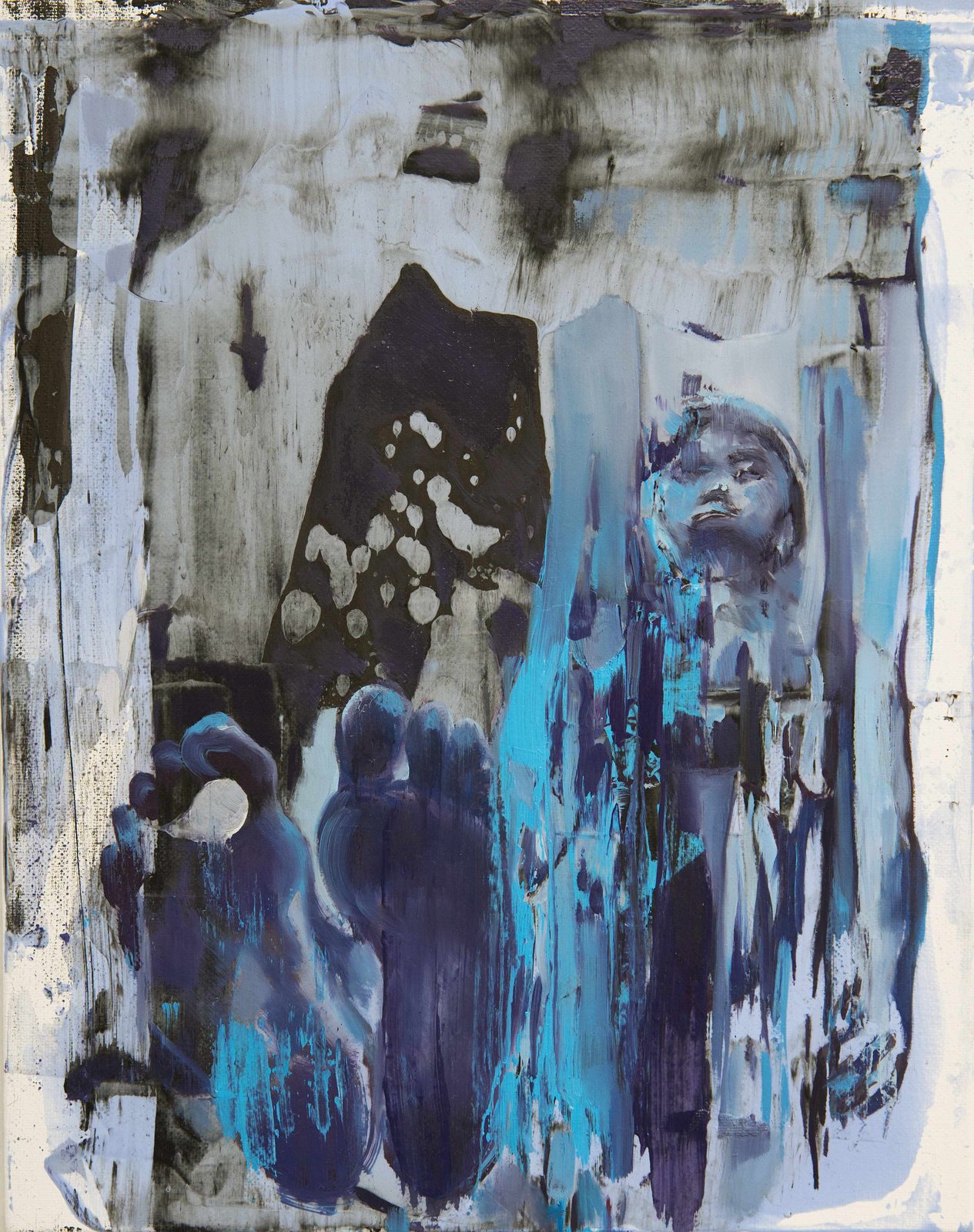
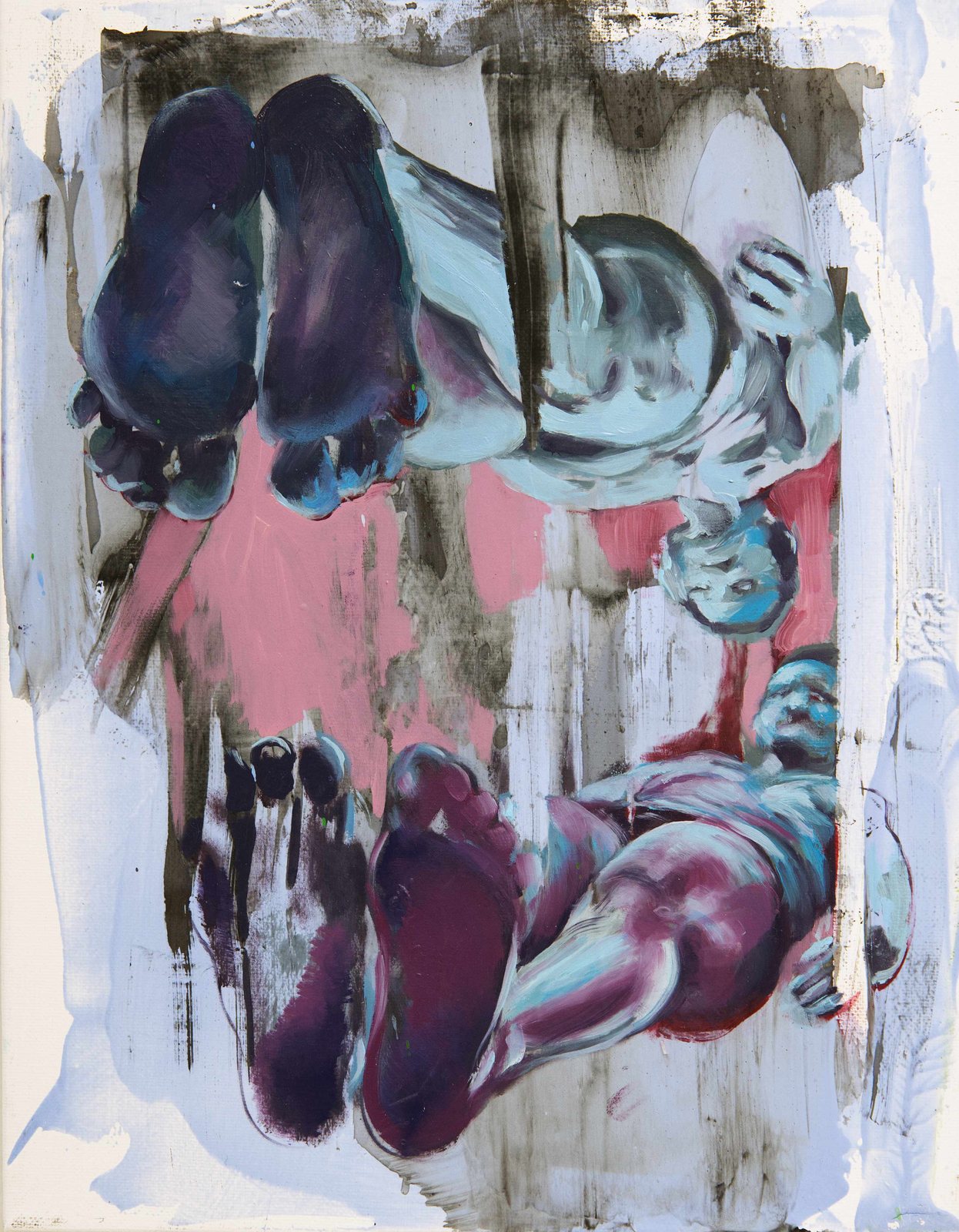
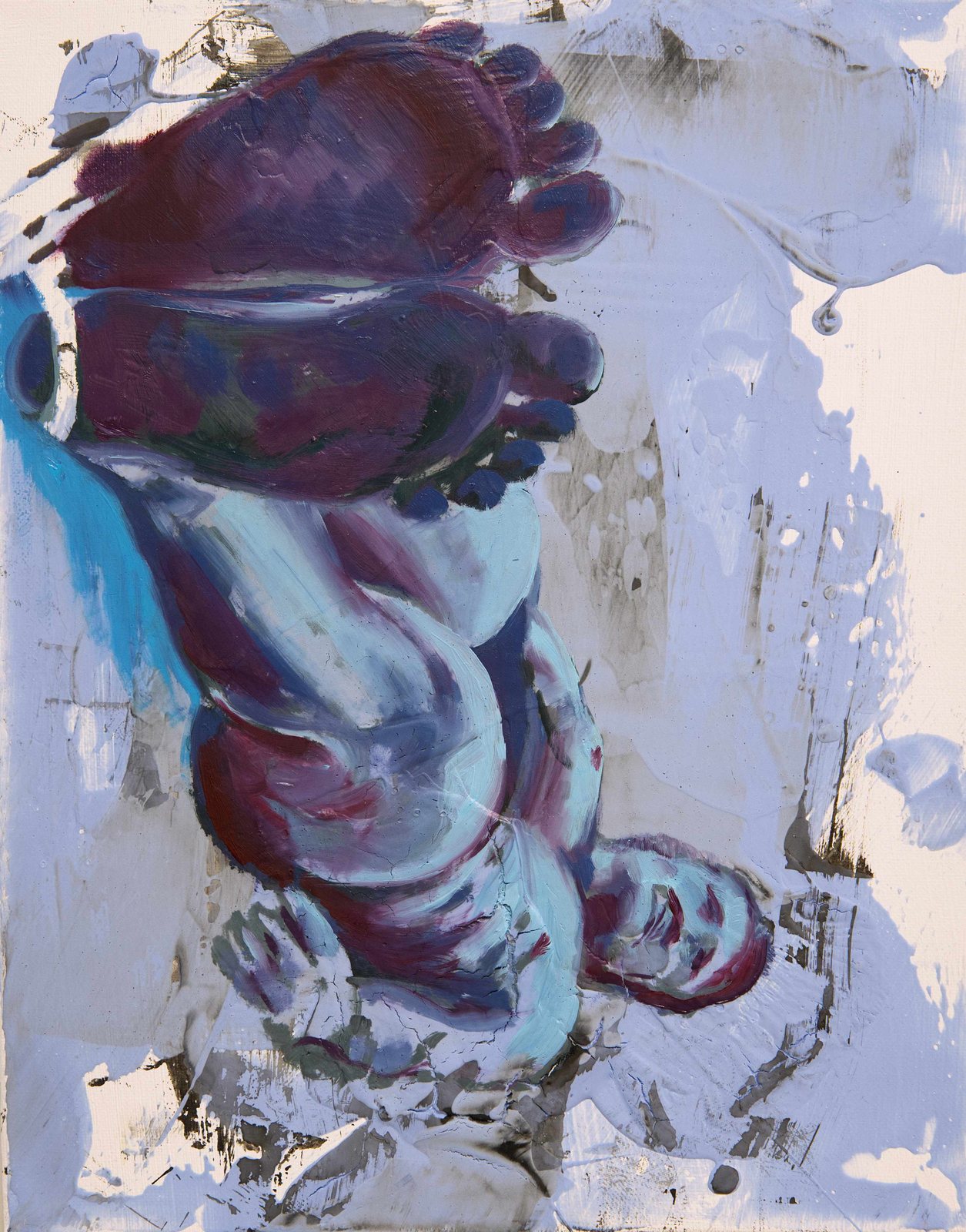
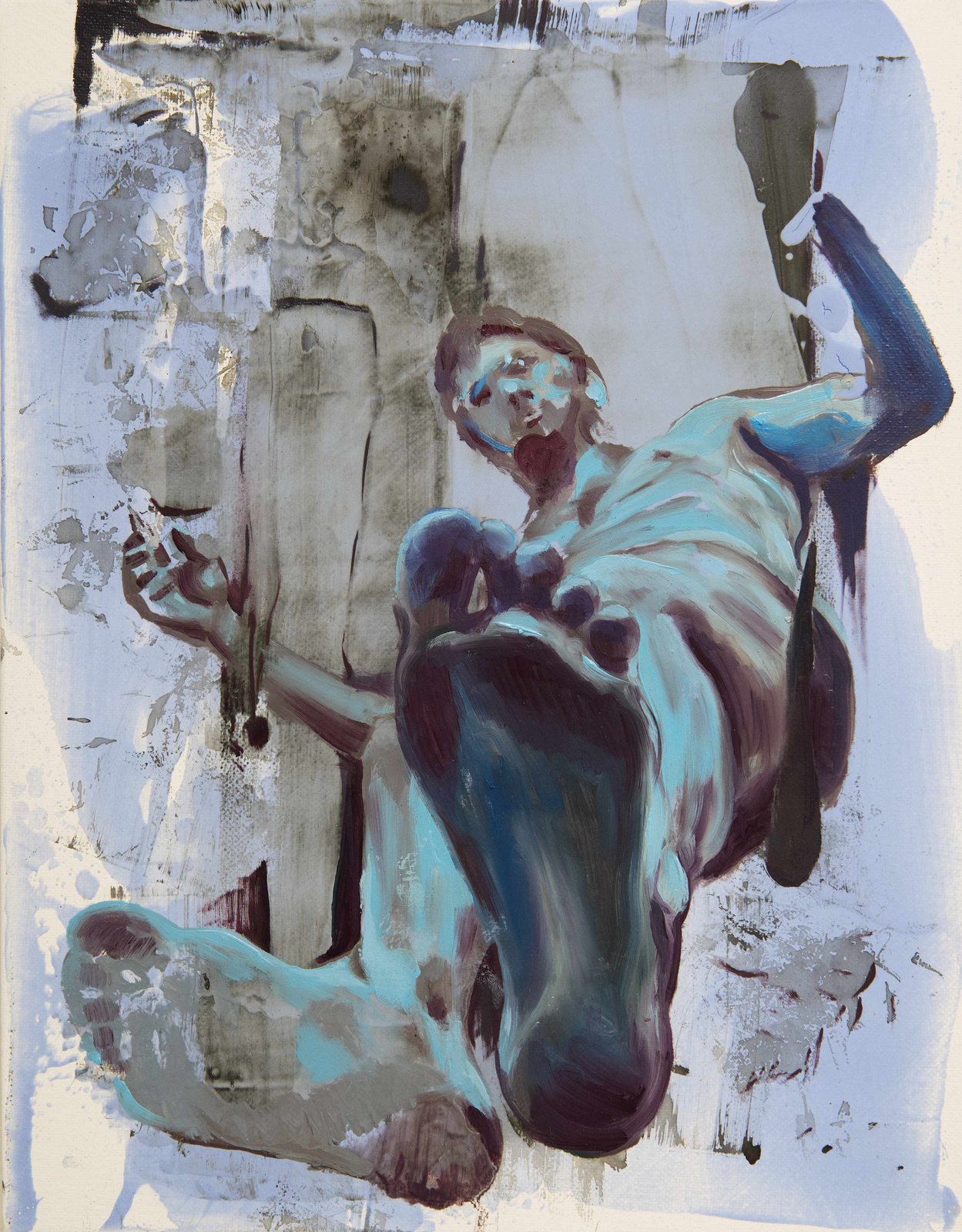
Apogee is a series of abstract figurative paintings of foreshortened figures seen from the feet, painted with aggressive brushwork and inspired by Italian frescoes. The title means the climax, the highest point of development. I started the series in July 2026, after a five week trip to Italy, where the fresco ceilings put the foreshortened figure back in front of me. Fragments 05 and 06 are the small, concentrated works of the series: oil on rabbit skin glue and canvas, each 8 by 8 inches. Small paintings travel well and argue hard. In a group exhibition, hung among artists from another country and another tradition, they had to hold their wall without size to help them. That is the test I wanted for them. A gallery of the Apogee paintings sits on this page.
The house
The venue is not a white cube. The House of King Peter I is a villa built in 1896 on Topcider Hill, in the Senjak district of Belgrade. King Peter I Karadjordjevic lived in the house from September 1919 until his death in August 1921, the last two years of his reign. The building is a protected cultural monument, and since 2005 the municipality has run it as a cultural center: a permanent exhibition about the king’s life and reign, and a changing program of exhibitions and cultural events in the rooms around it. Showing contemporary painting in a king former residence makes the work part of a longer story than the art world own season, and the audience that walks up that hill comes for the house as much as for the art.
Visiting: the house stands at 40 Vase Pelagica Street, in Senjak, on the slope of Topcider Hill. Published hours are Monday to Friday from 10 in the morning to 6 in the evening, and Saturday from 10 to 2. The house has its own website, linked below, with its current program. A map of the house and the Senjak district sits on this page.
The same hillside holds an older royal house, and it is worth the short walk down into Topcider Park. The Residence of Prince Milos Obrenovic was built from 1831 to 1834, when Serbia was still an autonomous province of the Ottoman Empire, and the prince died in the house in 1860. It is now the Museum of the First Serbian Uprising, part of the Historical Museum of Serbia, and one of the oldest plane trees in Europe stands in front of it. Two royal houses, two centuries of Serbian history, and one hill: the district explains the city in miniature.
A short history of Belgrade
Belgrade, the White City, stands where the Sava river meets the Danube, and it is one of the oldest cities in Europe. Armies have fought over this hill for two thousand years, and the city has been destroyed and rebuilt so many times that rebuilding is part of its character. The Belgrade Fortress at Kalemegdan, above the meeting of the rivers, is the old core: Roman, Byzantine, Ottoman, and Austrian walls inside one park, and the widest view in the city at the end of it.
The old town below the fortress holds Skadarlija, the bohemian street of cobblestones and kafana restaurants, and Knez Mihailova, the pedestrian street that runs from the fortress to Republic Square. Across the Sava stands New Belgrade, the district of wide boulevards and modernist blocks raised after the Second World War, when Belgrade was the capital of Yugoslavia. The Museum of Contemporary Art stands on that bank, facing the fortress across the water.
Start any walk at the fortress. At its far point stands the Victor, the bronze figure by Ivan Mestrovic on a high column, a sword in one hand and a falcon in the other, war and peace together. The statue was cast in 1913 and raised in 1928, to honor the Serbian victories in the Balkan Wars and the First World War, and it is the most recognized symbol of the city. From that point the whole geography of Belgrade explains itself: the two rivers below, the old town behind, and New Belgrade across the water. Cross the Danube, or look across it, and there is Zemun, for centuries a Habsburg border town facing Ottoman Belgrade, and a Belgrade district only since 1934. Its old center keeps low houses and narrow lanes, and above them stands the Gardos Tower of 1896, built on the ruins of a medieval fortress to mark a thousand years of Hungarian settlement in the plain. The tower now holds a small gallery, and its balcony gives the second great view of the city: red roofs below, the Danube wide open, and Belgrade on the horizon.
Art in Belgrade
Belgrade is a serious art capital with a difficult twentieth century behind it. A painter showing here for the first time should know the rooms that matter. These are the museums and galleries worth a visit, starting with the two great national collections.
The Museum of Contemporary Art
The Museum of Contemporary Art was founded in 1958, among the first museums of its kind in Europe, and its building at Usce, where the Sava meets the Danube, opened in 1965. The building itself is a work of art: a modernist crystal of glass cubes by the architects Ivan Antic and Ivanka Raspopovic, standing in a park of large sculpture on the New Belgrade bank. The museum holds one of the major collections of Serbian and Yugoslav art since 1900, and it reopened in October 2017 after a renovation that kept it closed for ten years. A city that waits a decade for its museum and then queues to get back in is a city that takes art personally. To show here, even in a small villa exhibition across the river hills, is to join a conversation that has been running for a long time. The museum stands at Usce 10, in New Belgrade, and its own site, linked below, carries its current exhibitions and hours.
The Salon of the Museum of Contemporary Art
The museum also runs a smaller room in the old town: the Salon of the Museum of Contemporary Art, at 14 Pariska Street, below the fortress. It opened in the spring of 1961, four years before the big building, as the Modern Gallery, the first gallery in Belgrade with a permanent exhibition program. It still does what it was built for: solo exhibitions of current Serbian and foreign artists, in one room, at street level. Admission is free, and the Salon is open from 12 to 8, closed on Tuesdays.
The National Museum of Serbia
On Republic Square stands the National Museum of Serbia, the oldest and largest museum in the country, founded on May 10, 1844. Its collection holds more than 400,000 objects: archaeology, coins and medals, medieval Serbian art with its celebrated frescoes, and Serbian and European painting. The museum spent fifteen years closed for reconstruction and reopened in 2018, so the building and the hang are both fresh. Visiting: the museum stands at 1a Republic Square, in the center of the city. It is open Tuesday, Wednesday, Friday, and Sunday from 10 to 6, and Thursday and Saturday from 12 to 8. It is closed on Mondays, and admission to the permanent exhibition is free on Sundays.
The Zepter Museum
On Knez Mihailova Street, at number 42, the Zepter Museum is the private counterpart to the national collections. Founded by Madlena Zepter, it opened on July 1, 2010, and it is registered as the first private art museum in Serbia. The building is a former bank from 1922, and the collection follows Serbian art from the second half of the twentieth century to today: more than 600 works by more than 200 artists. When it opened, both great national museums were closed for renovation, and this private museum carried the city’s art life in the center. It is open Tuesday to Friday from 12 to 8, and Saturday and Sunday from 10 to 8. It is closed on Mondays.
The Museum of Yugoslavia and the House of Flowers
In Dedinje, the residential hill district south of the center, the Museum of Yugoslavia covers the country that no longer exists. The complex joins three buildings in a park: the 25 May Museum, the Old Museum, and the House of Flowers. The House of Flowers was built in 1975 as a winter garden beside the residence of Josip Broz Tito, and after his death in 1980 it became his resting place. The museum collection holds more than 200,000 objects from the history of Yugoslavia and the life of its president. Visiting: the museum stands at 6 Mihaila Mike Jankovica Street in Dedinje, a short ride from the center and not far from Senjak, where my exhibition hung. It is open Tuesday to Sunday from 10 to 6, and closed on Mondays.
The Belgrade exhibition is recorded in full on this site, in the post linked below, and the Apogee series page and the Apogee post tell the story of the series itself. The series continues in the studio. For visitor information, the City of Belgrade site is linked below, and Belgrade on Wikipedia gives the long version of the city history.
Frequently Asked Questions
What did Bartosz Beda show in Belgrade, Serbia?
In October 2026 my work was shown in Belgrade, the capital of Serbia, in The Eight Art Encounters, a group exhibition at the House of King Peter I Cultural Center. Two paintings from my Apogee series, Fragments 05 and 06, made the trip from my Texas studio to a villa on a Belgrade hill. The exhibition ran from October 21 to 31, 2026, and was extended, coming down the following week. It was my first exhibition in Serbia.
What are Apogee Fragments 05 and 06?
Apogee is a series of abstract figurative paintings of foreshortened figures seen from the feet, painted with aggressive brushwork and inspired by Italian frescoes. The title means the climax, the highest point of development. I started the series in July 2026, after a five week trip to Italy, where the fresco ceilings put the foreshortened figure back in front of me. Fragments 05 and 06 are the small, concentrated works of the series: oil on rabbit skin glue and canvas, each 8 by 8 inches. Small paintings travel well and argue hard.
What is the House of King Peter I in Belgrade?
The House of King Peter I is a villa built in 1896 on Topcider Hill, in the Senjak district of Belgrade, at 40 Vase Pelagica Street. King Peter I Karadjordjevic lived in the house from September 1919 until his death in August 1921, the last two years of his reign. The building is a protected cultural monument, and since 2005 the municipality has run it as a cultural center, with a permanent exhibition about the king’s life and reign and a changing program of exhibitions. Published hours are Monday to Friday from 10 in the morning to 6 in the evening, and Saturday from 10 to 2.
What is the Museum of Contemporary Art in Belgrade?
The Museum of Contemporary Art was founded in 1958, among the first museums of its kind in Europe, and its building at Usce, where the Sava meets the Danube, opened in 1965. The building itself is a work of art: a modernist crystal of glass cubes by the architects Ivan Antic and Ivanka Raspopovic, standing in a park of large sculpture on the New Belgrade bank. The museum holds one of the major collections of Serbian and Yugoslav art since 1900, and it reopened in October 2017 after a renovation that kept it closed for ten years.
What is the Salon of the Museum of Contemporary Art?
The museum also runs a smaller room in the old town: the Salon of the Museum of Contemporary Art, at 14 Pariska Street, below the fortress. It opened in the spring of 1961, four years before the big building, as the Modern Gallery, the first gallery in Belgrade with a permanent exhibition program. It still does what it was built for: solo exhibitions of current Serbian and foreign artists, in one room, at street level. Admission is free, and the Salon is open from 12 to 8, closed on Tuesdays.
What is the National Museum of Serbia?
On Republic Square stands the National Museum of Serbia, the oldest and largest museum in the country, founded on May 10, 1844. Its collection holds more than 400,000 objects: archaeology, coins and medals, medieval Serbian art with its celebrated frescoes, and Serbian and European painting. The museum spent fifteen years closed for reconstruction and reopened in 2018. It is open Tuesday, Wednesday, Friday, and Sunday from 10 to 6, and Thursday and Saturday from 12 to 8. It is closed on Mondays, and admission to the permanent exhibition is free on Sundays.
What is the Zepter Museum in Belgrade?
On Knez Mihailova Street, at number 42, the Zepter Museum is the private counterpart to the national collections. Founded by Madlena Zepter, it opened on July 1, 2010, and it is registered as the first private art museum in Serbia. The building is a former bank from 1922, and the collection follows Serbian art from the second half of the twentieth century to today: more than 600 works by more than 200 artists. It is open Tuesday to Friday from 12 to 8, and Saturday and Sunday from 10 to 8. It is closed on Mondays.
What is the House of Flowers in Belgrade?
In Dedinje, the residential hill district south of the center, the Museum of Yugoslavia covers the country that no longer exists. The House of Flowers was built in 1975 as a winter garden beside the residence of Josip Broz Tito, and after his death in 1980 it became his resting place. The museum complex, at 6 Mihaila Mike Jankovica Street, holds more than 200,000 objects from the history of Yugoslavia and the life of its president. It is open Tuesday to Sunday from 10 to 6, and closed on Mondays.
What is the Victor monument in Belgrade?
At the far point of the Belgrade Fortress stands the Victor, the bronze figure by Ivan Mestrovic on a high column, a sword in one hand and a falcon in the other, war and peace together. The statue was cast in 1913 and raised in 1928, to honor the Serbian victories in the Balkan Wars and the First World War, and it is the most recognized symbol of the city. From that point the whole geography of Belgrade explains itself: the two rivers below, the old town behind, and New Belgrade across the water.
What is Zemun in Belgrade?
Across the Danube, or seen across it, lies Zemun, for centuries a Habsburg border town facing Ottoman Belgrade, and a Belgrade district only since 1934. Its old center keeps low houses and narrow lanes, and above them stands the Gardos Tower of 1896, built on the ruins of a medieval fortress to mark a thousand years of Hungarian settlement in the plain. The tower now holds a small gallery, and its balcony gives the second great view of the city: red roofs below, the Danube wide open, and Belgrade on the horizon.