
Edinburg, Texas: The County Seat, the University, and New Painting
Edinburg stands in the middle of the Rio Grande Valley, and two institutions give it its shape. It is the county seat of Hidalgo County, so the courthouse square holds the county courts and offices. It is also home to the main campus of the University of Texas Rio Grande Valley, so thousands of students cross the city every term. Records on one side. Beginnings on the other. My name is Bartosz Beda. I am a painter based in Dallas, Texas. This page is my guide to Edinburg, and to the new paintings I connect with a city built on both.
The city itself is young. It was founded in 1908, which makes it a newcomer among Valley towns. Yet the two anchors it holds are the oldest kind of anchors there are: a county’s memory and a region’s school. A painter reads a place through what it keeps and what it teaches. Edinburg keeps its history in a museum that began in a jail. It teaches in a university that was built new in this century. Both facts matter to the painting on this page.
Edinburg in My Record
I will state my connection plainly. I have no exhibition in Edinburg. No museum or gallery in this city has shown my work. This page does not claim a show that never happened.
My Rio Grande Valley record is real, and it sits down the road in Brownsville. In 2019 the Brownsville Museum of Fine Art presented Paramount of Eternity, my solo exhibition of more than thirty paintings. Works from that exhibition entered the museum permanent collection. That is the strongest museum record I hold in the Valley, and the Brownsville page on this site tells it in full.
One fact about that record needs care. The Brownsville Museum of Fine Art closed in December 2024. The building is being remade, and the museum is expected to reopen as The Mitte in late 2026. It is not open today. When it reopens, my paintings in its collection will be part of the Valley story again. Until then, the record stands in the collection itself, not on a gallery wall.
What Edinburg holds for me is the other half of the Valley map. Brownsville is the port city where my Valley story began. Edinburg is the county seat and the university city, the place where the Valley keeps its records and educates its young. A painter with a museum record in one Valley city owes the other cities an honest page, not silence. This is that page.
The Museum of South Texas History
The Museum of South Texas History stands at 200 North Closner Boulevard, on the Hidalgo County Courthouse square in downtown Edinburg. It is accredited by the American Alliance of Museums. Its subject is the borderland heritage of South Texas and northeastern Mexico, told as one connected story across the river.
The museum began in 1967 as the Hidalgo County Historical Museum. Its first home was the old Hidalgo County Jail, built in 1910, and the restored jail still anchors the museum today. From that small start the museum grew through a series of expansions until it filled a full city block. In 2003, after a 22,500 square foot expansion added a new wing, a museum store, and a grand lobby, it took its present name to match the regional scope of its work.
Inside, the exhibits run from prehistory through the twentieth century. Fossils and first peoples come first. Then Spanish colonization, the ranching era, steamboats on the Rio Grande, and the border century follow in order. The Margaret H. McAllen Memorial Archives holds maps, newspapers, books, and photographs, including the largest collection of historical photographs in the lower Rio Grande Valley. For a painter, that archive is the point. A region that keeps its photographs keeps its faces.
The museum is open Tuesday to Saturday from 10 AM to 5 PM, and Sunday from 1 PM to 5 PM. It is the natural first stop in Edinburg. A city that built its history museum inside its old jail is a city that does not hide its past. It puts the past on the courthouse square, where everyone can walk into it.
The University City
Higher education in Edinburg began in 1927, with a junior college that grew into Edinburg College and then Pan American College. It became Pan American University, and then the University of Texas Pan American. Generations of Valley students passed through that one campus on West University Drive.
The change came in this century. In December 2012 the University of Texas System regents approved a plan to merge the university in Edinburg with the University of Texas at Brownsville and to add a new medical school. The Texas Legislature created the combined university in 2013. On August 31, 2015, the University of Texas Rio Grande Valley opened its doors. Its main campus is the Edinburg campus, at 1201 West University Drive, and its School of Medicine stands in Edinburg as well.
The result is a young university in an old county seat. Students arrive from every Valley town, and many are the first in their families to attend a university. Its teams carry the name Vaqueros. The campus keeps growing, building by building, on the west side of the city. A place like this changes the air of a town. Questions get asked out loud. New work gets looked at early, before it is safe.
That is why this page pairs Edinburg with new painting. A courthouse square holds what a county has settled. A university holds what it has not settled yet. My own work changed each time it stood in front of students, because students look without permission. Edinburg has both institutions within a short drive of each other, and this page is written in the space between them.
A Short History of Edinburg
Hidalgo County was created in 1852 from part of Cameron County. It was named for Miguel Hidalgo y Costilla, the priest whose call for independence began Mexico’s break from Spain. The first county seat stood on the Rio Grande, in the town that is now called Hidalgo.
The river made that seat hard to keep. Floods threatened the town, and it sat at the county’s edge rather than its center. In 1908 five developers, John Closner, William Briggs, Argyle McAllen, Plutarco de la Viña, and Dennis B. Chapin, laid out a new town on brush land known as Rancho Edinburgo. They named the town Chapin, after the county judge among them.
On October 10, 1908, the county voted on the move. The count was 422 to 90 in favor. County officers then carried the records north to Chapin under armed guard, and the new seat opened for business within days. The Valley still tells the story as a midnight raid on the old courthouse. The record shows an election first and a fast, guarded move after it. The Texas Legislature retold the whole episode in a resolution marking the 95th anniversary of the transfer. Either way, Edinburg has been the county seat since 1908, and it has never given the seat back.
The town kept the name Chapin for less than three years. In 1911, after Dennis Chapin shot a man in a San Antonio saloon, the town renamed itself Edinburg. The new name honored John Young, a businessman born in Edinburgh, Scotland. The town incorporated in 1919. The county jail, built in 1910, is the same building that later became the first home of the county museum. For its first decades the town served ranches, then farms, and it grew steadily as the courthouse and trading center of the county’s middle ground.
The name carries a personal note for me. As a young man I lived in Edinburgh, Scotland, for about six months. It was my first trip abroad, and I traveled there alone. It was my first real exposure to Europe. I was learning English in earnest for the first time. I loved the culture there. I loved the long walks, and the wind that never seemed to stop. From the top of the hill in Edinburgh you can see water on all sides, and that always amazed me. I brought my whole portfolio with me, everything I had made in my fine art high school, and I meant to apply to a university there. I was young and inexperienced, and I did not know how to go about it. So I worked in a food factory near the city, and I lived the simple life of a worker getting by. Scotland has stayed with me ever since. That first trip taught me resilience. It taught me to stay open to history, to culture, and to people. I am glad my first country was that one. It was only the first step. Other countries and other cities came after it.
Apogee: New Paintings for a Young University City
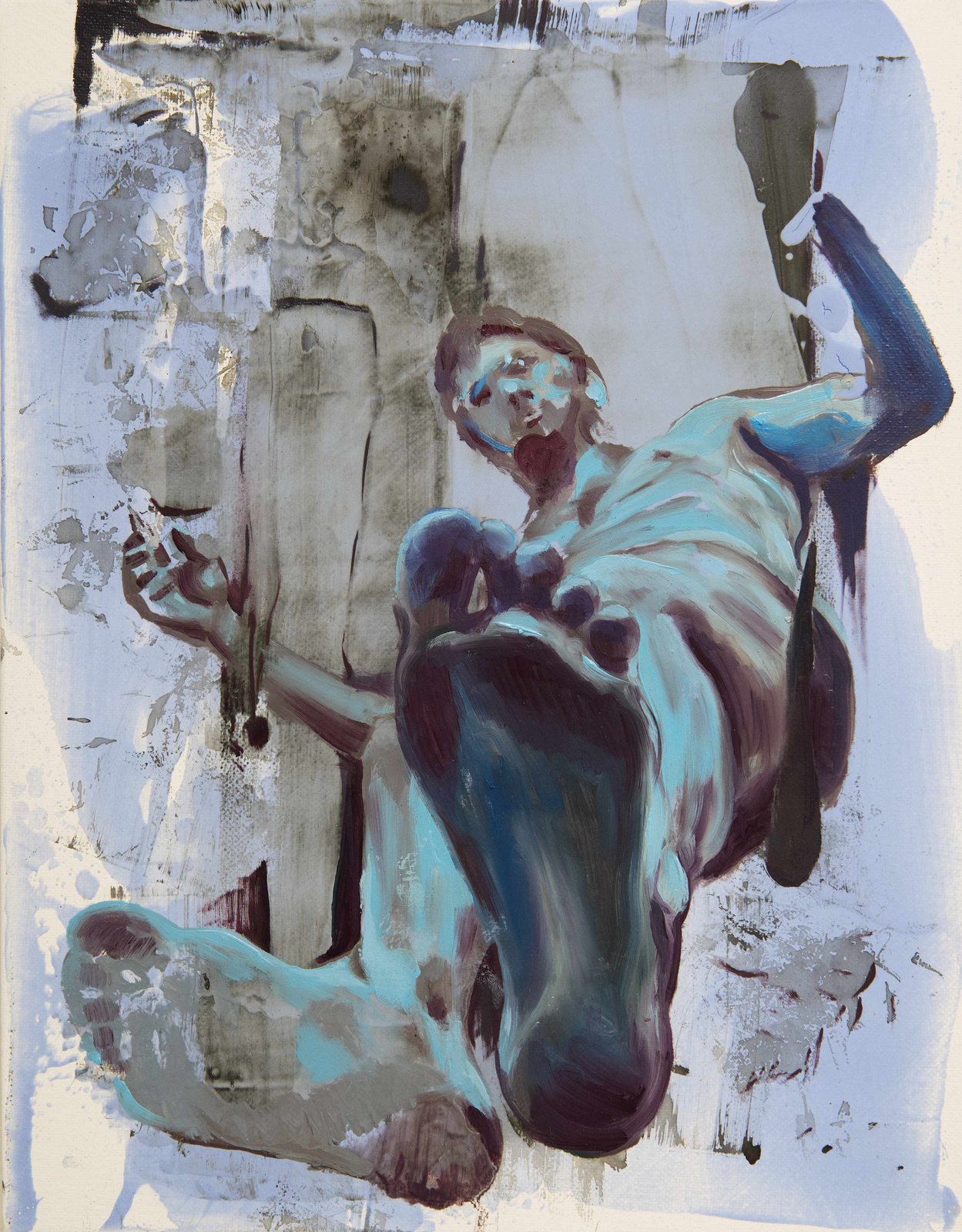
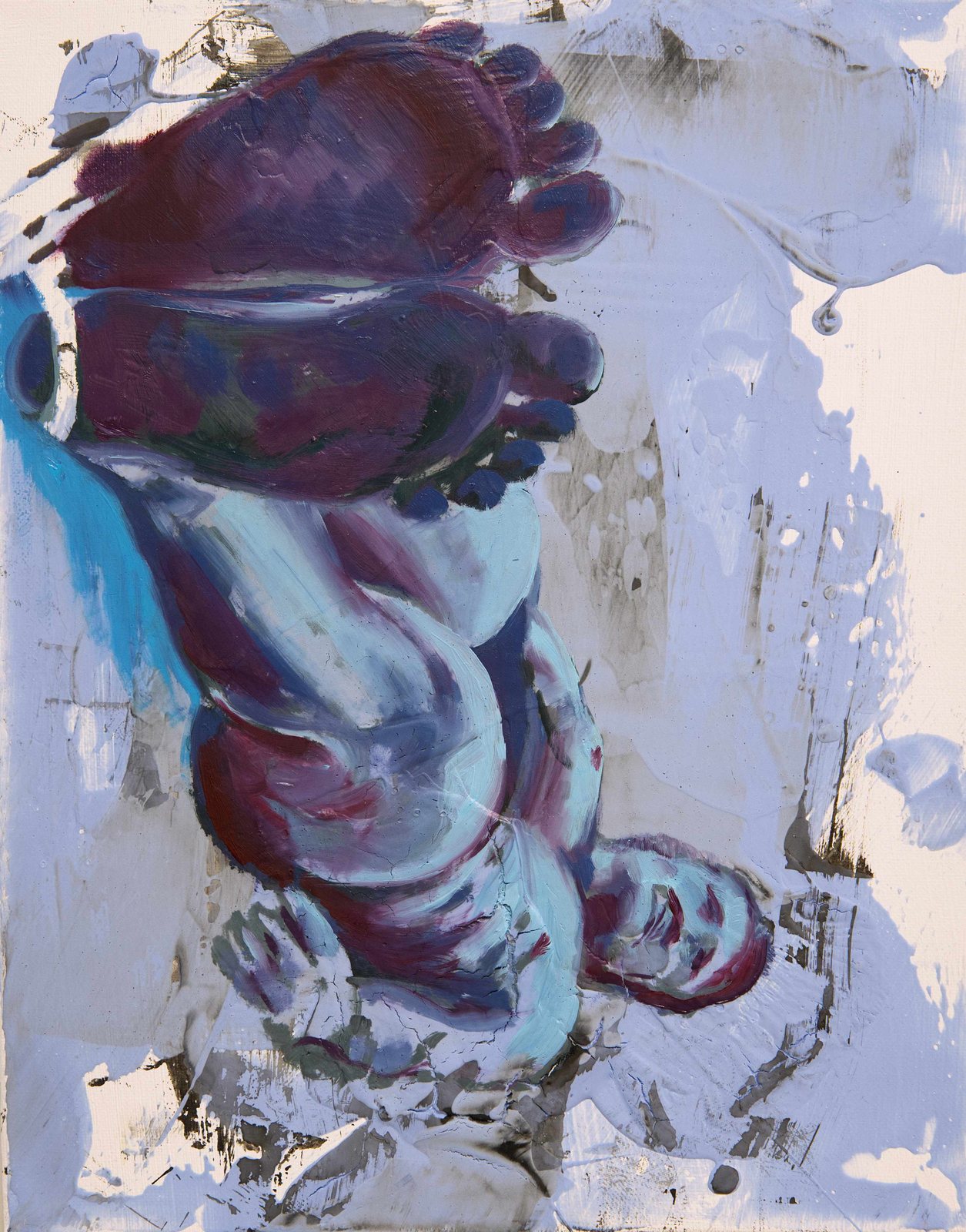
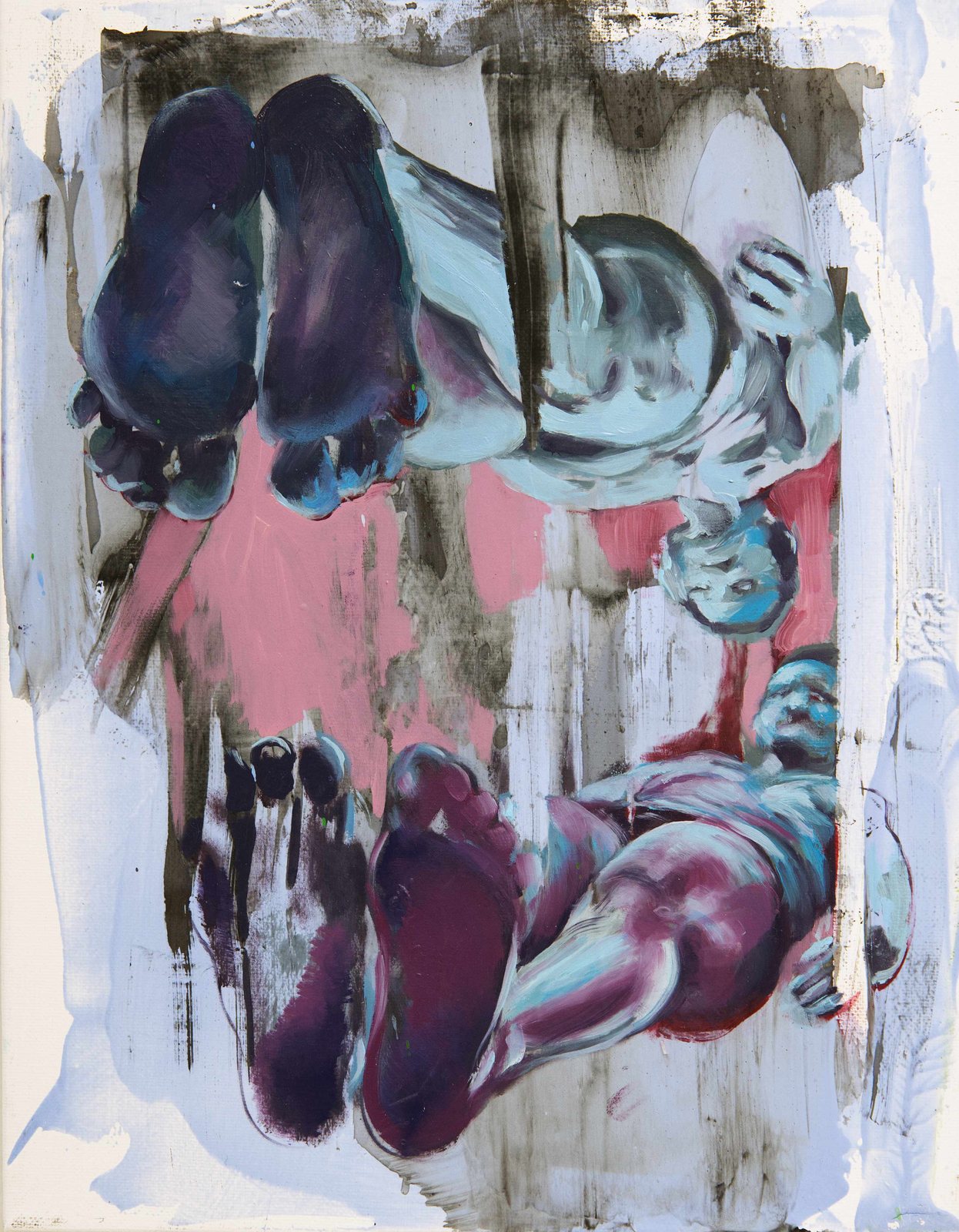
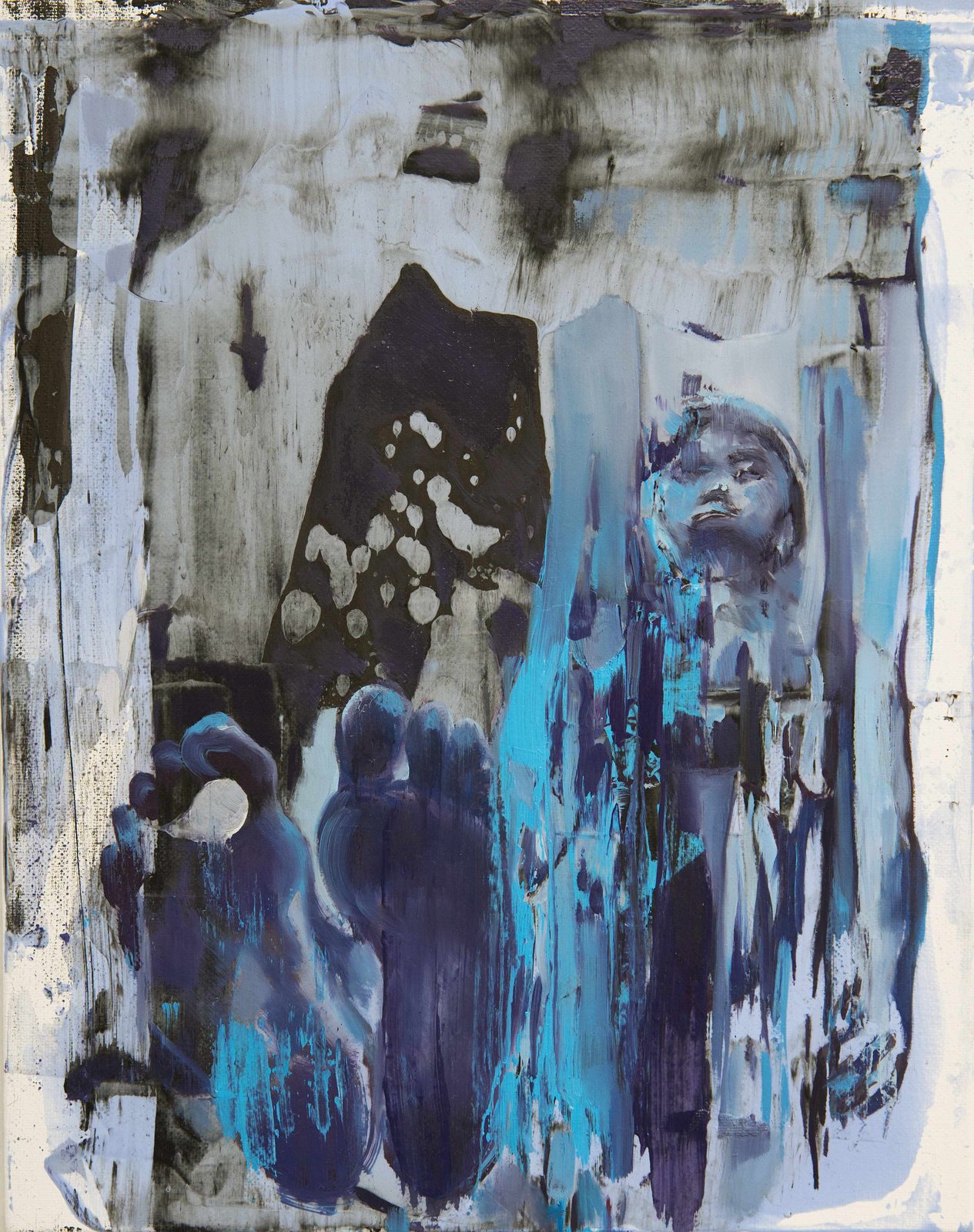
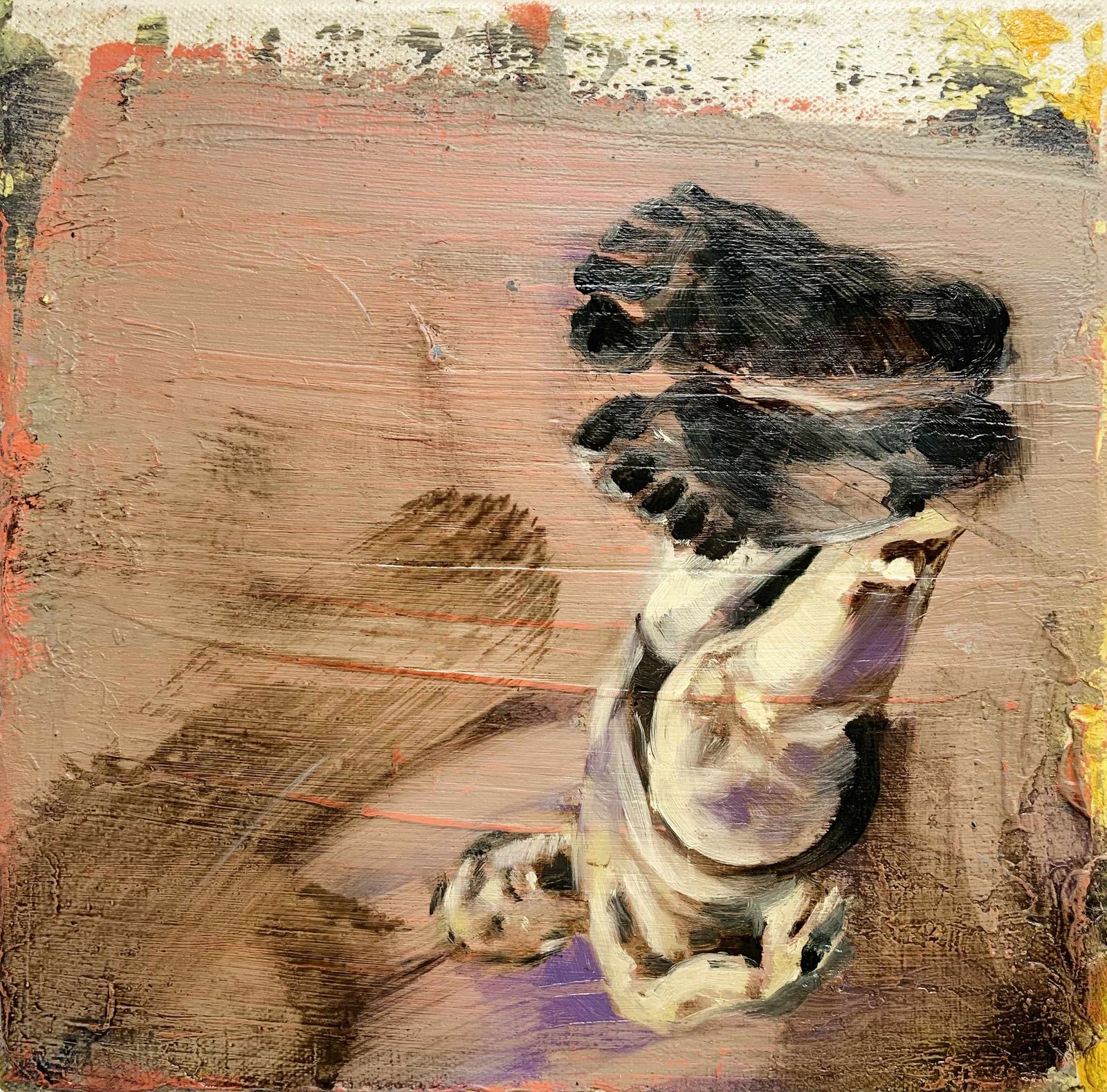
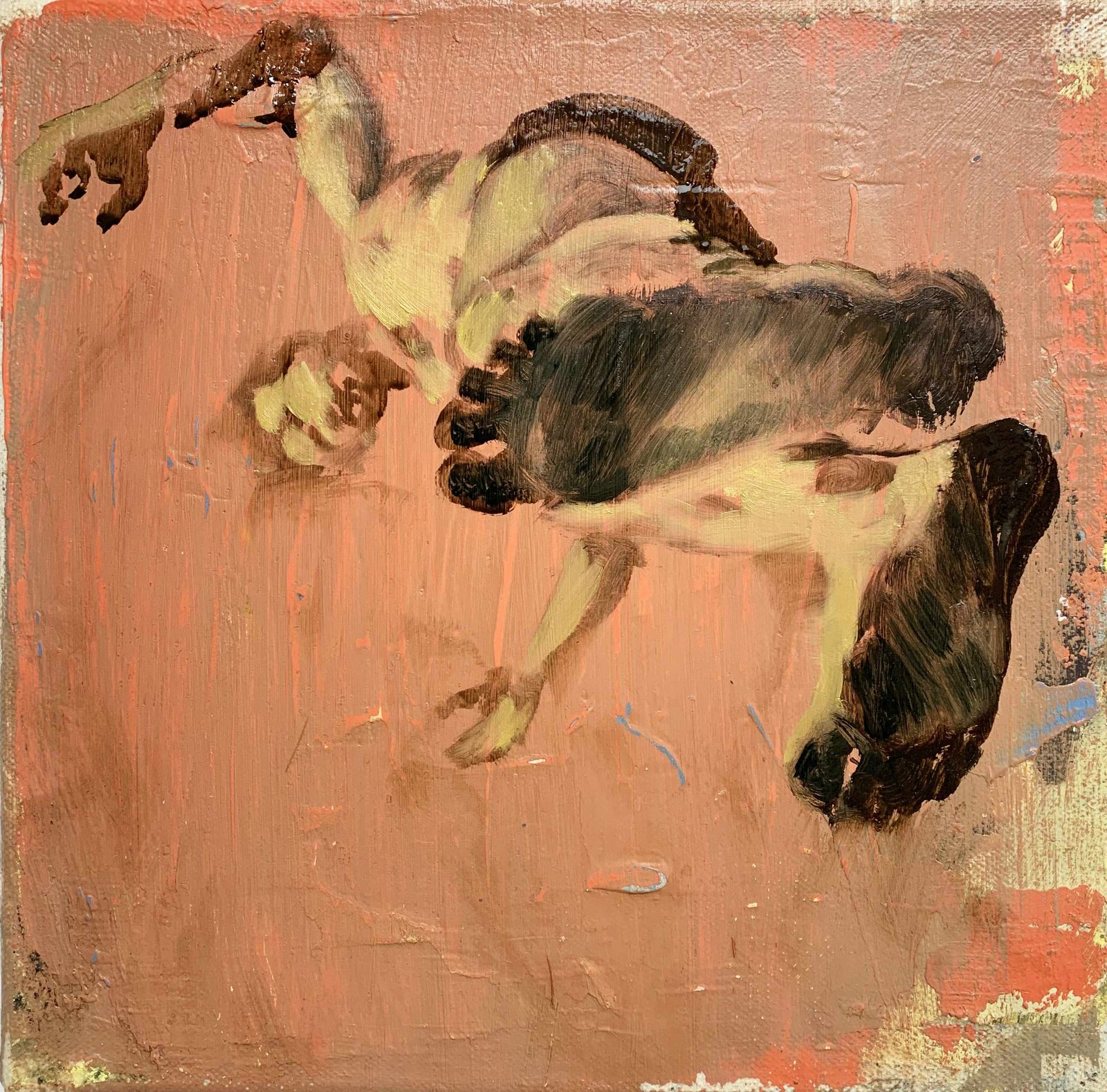
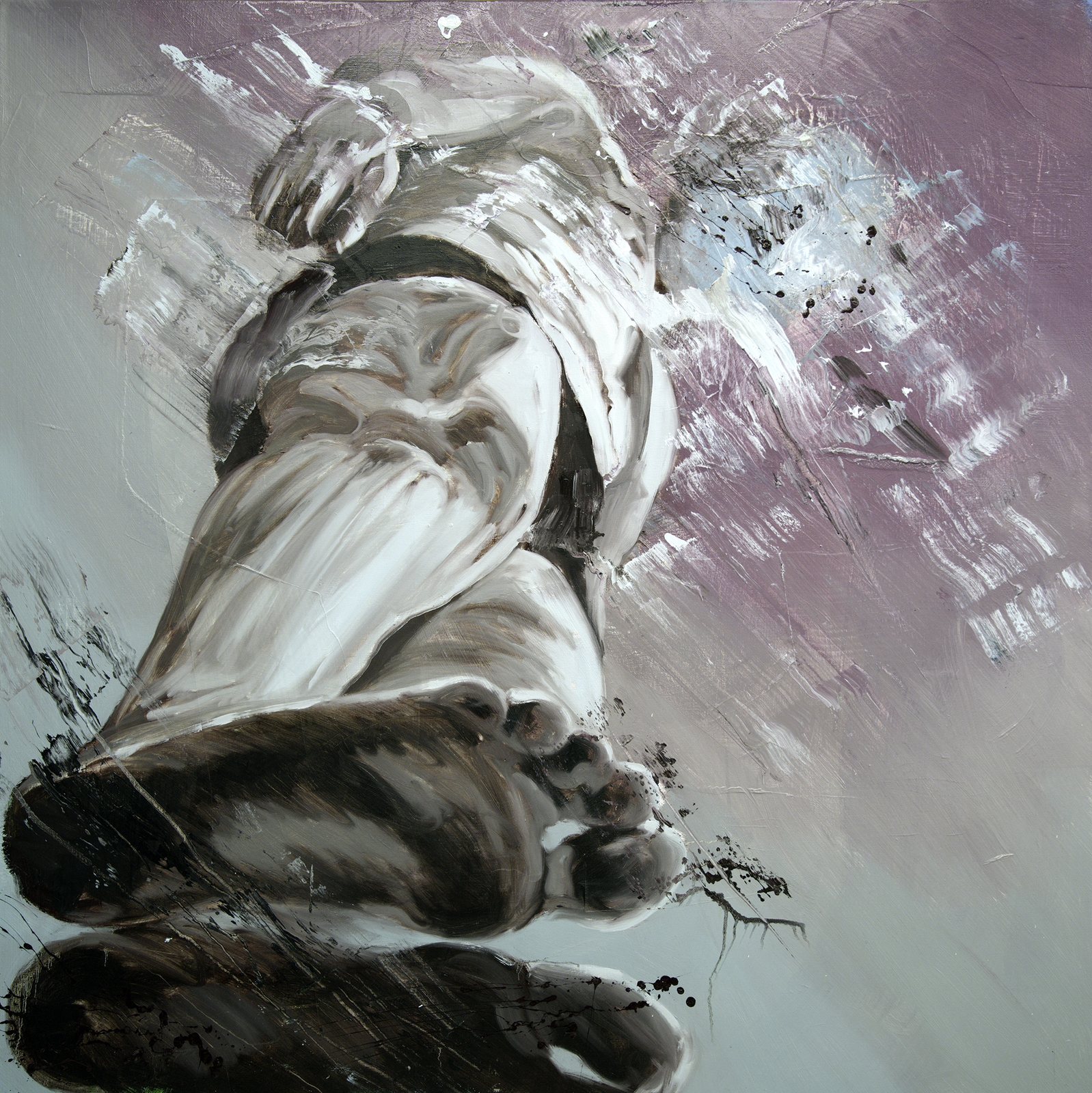
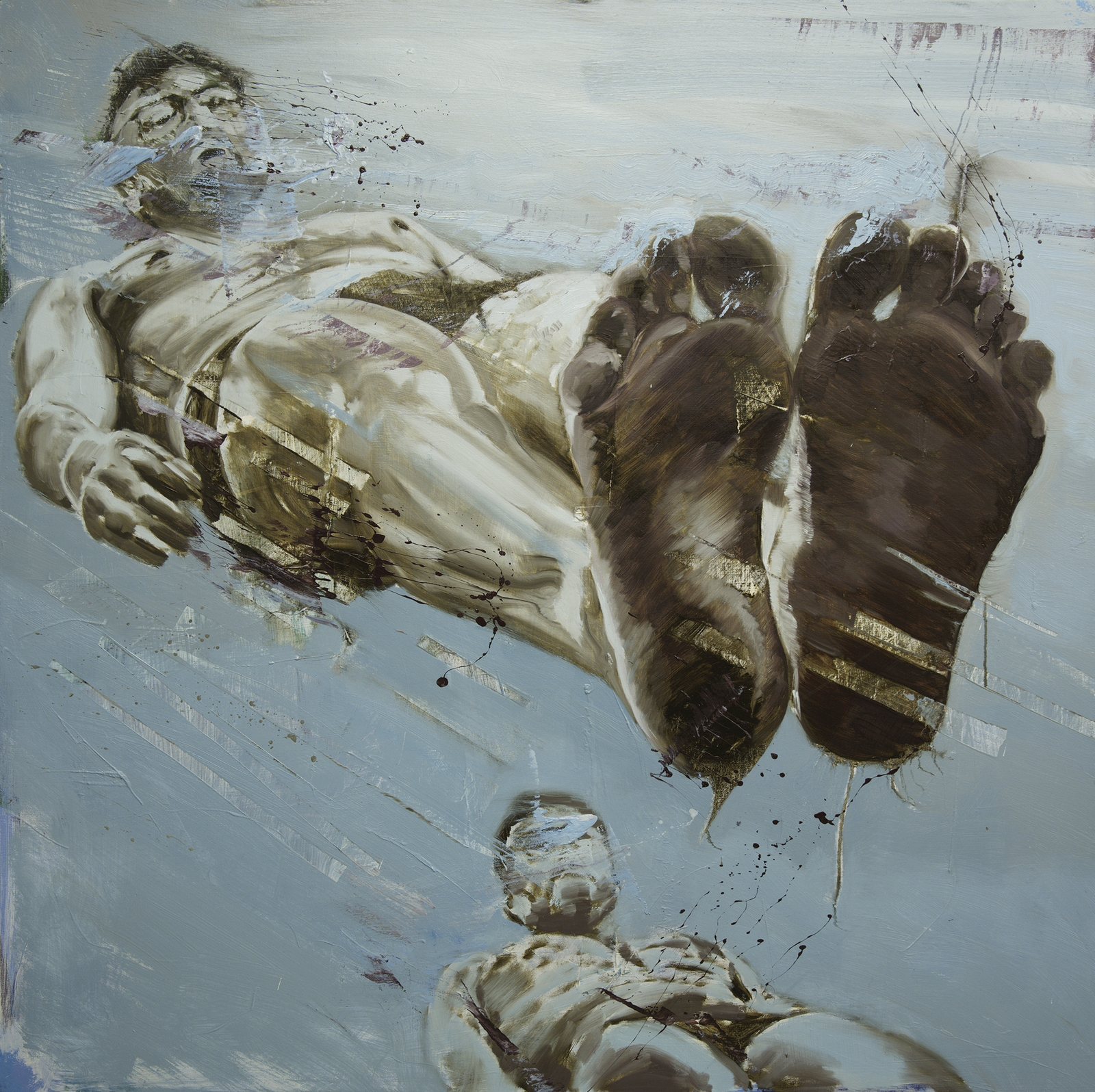
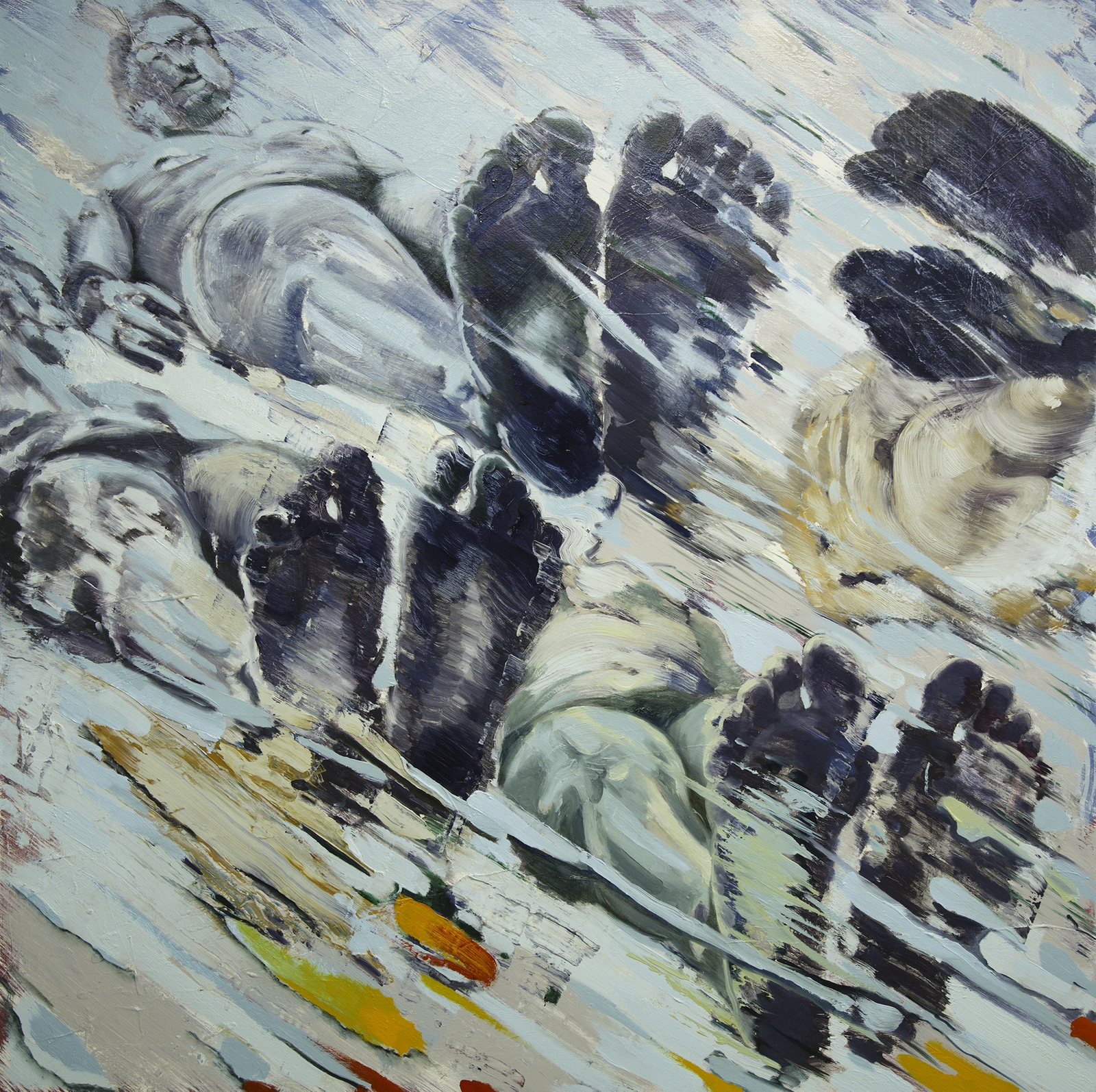
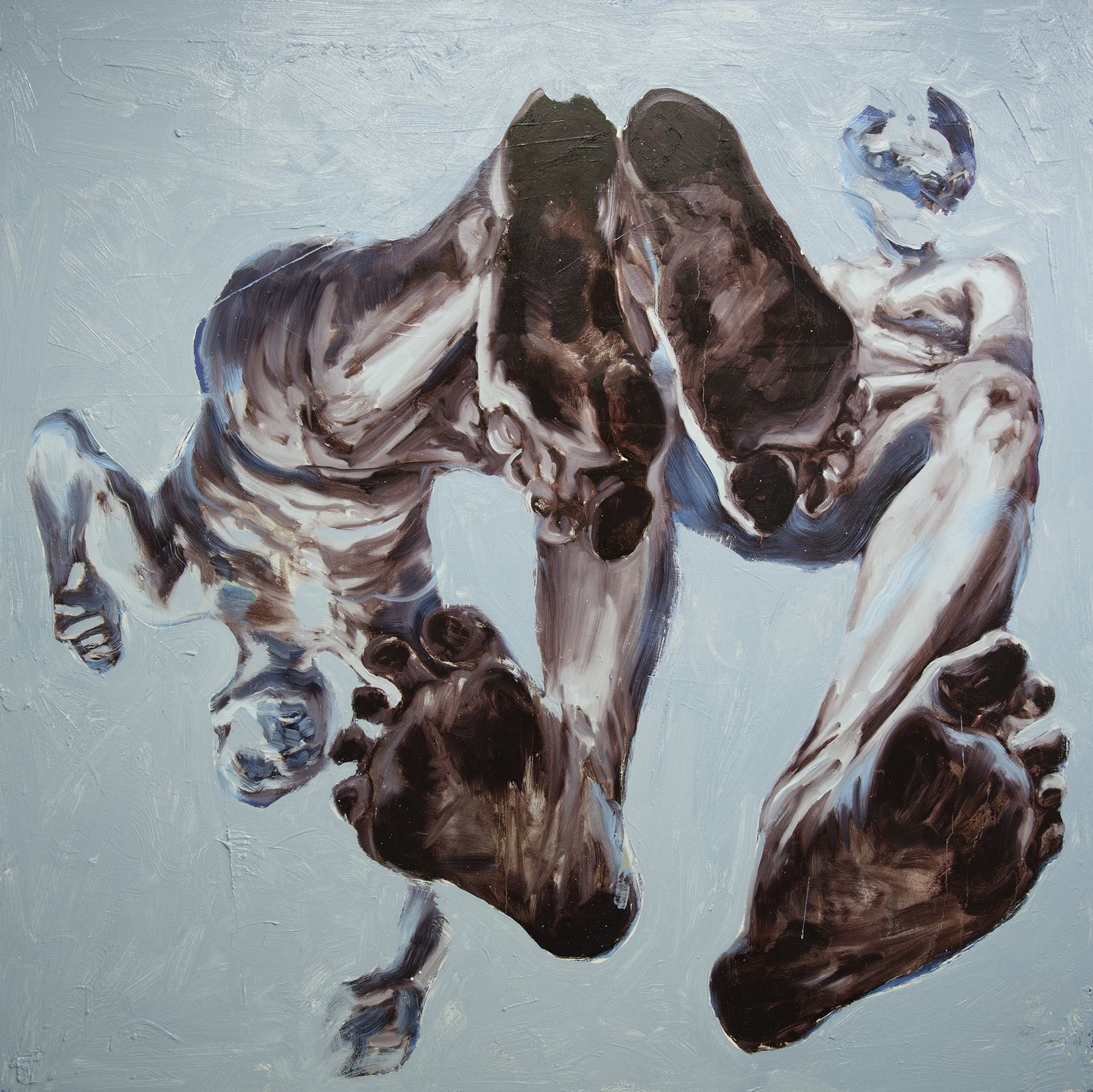
Apogee is my newest series of paintings. I began it in July 2026. The word apogee means the highest point of a movement, the climax of an arc. The paintings take that word literally. They show the human figure at the top of its reach, held for a moment at full stretch.
Each figure is seen from the feet. The body rises toward the viewer and falls away at the same time, foreshortened the way figures rise across the fresco ceilings of Italy. Those ceilings taught me the angle. I paint the figures directly on the studio wall, with fast, aggressive brushwork, so the wall itself sets the scale. Some works stay small and close. Others open to large square canvases. The series holds both ends of that range on purpose.
As an abstract figurative artist, I do not paint the body as anatomy. Abstract figurative art keeps the figure and lets the surface move. What I paint is pressure, weight, and reach. A body at the top of its arc tells the truth about effort in a way a resting body cannot. That subject belongs in Edinburg. A university city is full of people at the start of an arc, working toward a point they cannot see yet. Edinburg TX art, as this page frames it, should speak to beginnings as plainly as the museum speaks to records.
The series has already traveled. In October 2026 two small Apogee paintings hung in Belgrade, Serbia, in the group exhibition The Eight Art Encounters, at the House of King Peter I Cultural Center. The rest of the series is still growing in my Dallas studio, painting by painting. Readers looking for original paintings in Edinburg will find the whole series, fragment by fragment, on the Apogee series page. My current originals are carried in the online store. New work belongs where new readers are, and this city is full of them.
Visiting Edinburg and Finding the Paintings
Start on the courthouse square. Give the Museum of South Texas History a full morning, because its rooms hold the whole Valley in one building. Check hours and current exhibits on the museum site before you go. The Edinburg Chamber history page tells the town story in short form, and the City of Edinburg site carries city services and offices. Then drive west to the university, and walk the main campus that this city has been building since 1927.
The paintings live one click away. The Apogee series page shows the new work painting by painting. The online store carries my current original paintings and prints. The Brownsville page holds my 2019 Valley record in full, and the Texas page tells my statewide story. The Dallas page holds my home base record. My CV page lists exhibitions, collections, and residencies. The Market page gathers every town page in this set.
Frequently Asked Questions
Has Bartosz Beda exhibited in Edinburg, Texas?
I have no exhibition in Edinburg. No museum or gallery in this city has shown my work. My Rio Grande Valley record is real, and it sits down the road in Brownsville. In 2019 the Brownsville Museum of Fine Art presented Paramount of Eternity, my solo exhibition of more than thirty paintings. Works from that exhibition entered the museum permanent collection. That is the strongest museum record I hold in the Valley.
What two institutions give Edinburg its shape?
Edinburg is the county seat of Hidalgo County, so the courthouse square holds the county courts and offices. It is also home to the main campus of the University of Texas Rio Grande Valley, so thousands of students cross the city every term. Records on one side. Beginnings on the other. The city itself is young. It was founded in 1908, which makes it a newcomer among Valley towns. Yet the two anchors it holds are the oldest kind of anchors there are: a county’s memory and a region’s school.
What is the Museum of South Texas History in Edinburg?
The Museum of South Texas History stands at 200 North Closner Boulevard, on the Hidalgo County Courthouse square in downtown Edinburg. It is accredited by the American Alliance of Museums. Its subject is the borderland heritage of South Texas and northeastern Mexico, told as one connected story across the river. The museum began in 1967 as the Hidalgo County Historical Museum. Its first home was the old Hidalgo County Jail, built in 1910, and the restored jail still anchors the museum today. In 2003, after a 22,500 square foot expansion, it took its present name. The museum is open Tuesday to Saturday from 10 AM to 5 PM, and Sunday from 1 PM to 5 PM.
What is the Margaret H. McAllen Memorial Archives?
Inside the Museum of South Texas History, the Margaret H. McAllen Memorial Archives holds maps, newspapers, books, and photographs, including the largest collection of historical photographs in the lower Rio Grande Valley. The museum’s exhibits run from prehistory through the twentieth century: fossils and first peoples, then Spanish colonization, the ranching era, steamboats on the Rio Grande, and the border century. For a painter, that archive is the point. A region that keeps its photographs keeps its faces.
How did the University of Texas Rio Grande Valley begin?
Higher education in Edinburg began in 1927, with a junior college that grew into Edinburg College and then Pan American College. It became Pan American University, and then the University of Texas Pan American. In December 2012 the University of Texas System regents approved a plan to merge the university in Edinburg with the University of Texas at Brownsville and to add a new medical school. The Texas Legislature created the combined university in 2013. On August 31, 2015, the University of Texas Rio Grande Valley opened its doors. Its main campus is the Edinburg campus, at 1201 West University Drive, and its School of Medicine stands in Edinburg as well. Its teams carry the name Vaqueros.
How did Edinburg become the Hidalgo County seat?
Hidalgo County was created in 1852 from part of Cameron County. The first county seat stood on the Rio Grande, in the town that is now called Hidalgo. The river made that seat hard to keep. Floods threatened the town, and it sat at the county’s edge rather than its center. In 1908 five developers, John Closner, William Briggs, Argyle McAllen, Plutarco de la Viña, and Dennis B. Chapin, laid out a new town on brush land known as Rancho Edinburgo. They named the town Chapin, after the county judge among them. On October 10, 1908, the county voted on the move. The count was 422 to 90 in favor. County officers then carried the records north to Chapin under armed guard, and the new seat opened for business within days. Edinburg has been the county seat since 1908, and it has never given the seat back.
Why was the town of Chapin renamed Edinburg?
The town kept the name Chapin for less than three years. In 1911, after Dennis Chapin shot a man in a San Antonio saloon, the town renamed itself Edinburg. The new name honored John Young, a businessman born in Edinburgh, Scotland. The town incorporated in 1919. The county jail, built in 1910, is the same building that later became the first home of the county museum.
Why does Edinburg’s name carry a personal note for Bartosz Beda?
As a young man I lived in Edinburgh, Scotland, for about six months. It was my first trip abroad, and I traveled there alone. It was my first real exposure to Europe. I was learning English in earnest for the first time. I loved the culture there. I loved the long walks, and the wind that never seemed to stop. From the top of the hill in Edinburgh you can see water on all sides, and that always amazed me. I brought my whole portfolio with me, everything I had made in my fine art high school, and I meant to apply to a university there. I was young and inexperienced, and I did not know how to go about it. So I worked in a food factory near the city, and I lived the simple life of a worker getting by. Scotland has stayed with me ever since. That first trip taught me resilience.
What is Hidalgo County named for?
Hidalgo County was created in 1852 from part of Cameron County. It was named for Miguel Hidalgo y Costilla, the priest whose call for independence began Mexico’s break from Spain. For its first decades the county seat town served ranches, then farms, and it grew steadily as the courthouse and trading center of the county’s middle ground.
Why does the Edinburg page present the Apogee paintings?
Apogee is my newest series of paintings. I began it in July 2026. The word apogee means the highest point of a movement, the climax of an arc. Each figure is seen from the feet. The body rises toward the viewer and falls away at the same time, foreshortened the way figures rise across the fresco ceilings of Italy. I paint the figures directly on the studio wall, with fast, aggressive brushwork, so the wall itself sets the scale. In October 2026 two small Apogee paintings hung in Belgrade, Serbia, in the group exhibition The Eight Art Encounters, at the House of King Peter I Cultural Center. A university city is full of people at the start of an arc, working toward a point they cannot see yet. New work belongs where new readers are, and this city is full of them.