
Fort Worth, Texas: The Museum District and the Western Side of My Metroplex
Fort Worth is the western half of my working world. My exhibitions, studio years, and teaching base sit in Dallas and its northern suburbs, about thirty miles east. Fort Worth is where I go to look. A few minutes west of downtown, in the city’s Cultural District, three major art museums stand within a short walk of one another: the Kimbell Art Museum, the Modern Art Museum of Fort Worth, and the Amon Carter Museum of American Art. Few American cities put that much serious painting in a single neighborhood. This page is a painter’s guide to that district, and an honest account of what Fort Worth holds in my record.
I have no Fort Worth exhibition to claim, and this page does not invent one. What I have is a working life that crosses the metroplex: painting workshops I lead for senior communities in both Dallas and Fort Worth, students and collectors who travel in both directions, and a museum district that sets the standard every North Texas painter measures his work against. What follows is the district through a painter’s eyes, and my own abstract figurative painting presented to readers on this side of the metroplex.
Fort Worth in my record
My Texas record is anchored in Dallas. Ro2 Art presented my solo exhibitions there. The Bath House Cultural Center showed my work in a group exhibition. My academy, Art Be You, teaches from a studio in Richardson, north of downtown Dallas. Fort Worth is the other end of that same field. The two cities share one metropolitan life, joined by a half hour of highway, and a Dallas painter who ignores Fort Worth is ignoring the stronger museum town of the pair.
My Fort Worth connection runs through people rather than walls. I lead painting workshops for senior communities across Dallas and Fort Worth. The format travels with me: materials brought to the room, a real painting taught step by step, and a finished canvas in every participant’s hands at the end of the session. Fort Worth collectors also hold my work. Paintings that began in my Dallas area studios reach Fort Worth homes through the online store, and Fort Worth students make the drive to Richardson for classes. That is the true shape of my Fort Worth record: teaching, looking, and paintings that cross the county line.
The Kimbell Art Museum
The Kimbell is the building painters make pilgrimages to. It opened in 1972, designed by Louis I. Kahn, and it is widely counted among the finest museum buildings of the modern era. Sixteen long concrete vaults run side by side, each cut by a narrow skylight, so daylight spreads softly across the travertine walls. Kahn understood what a painting needs from a room: calm, proportion, and natural light that never shouts. Standing in those galleries is a lesson in how much a wall can do for a picture.
The collection matches the building: deliberately small, a few hundred works, and almost every piece earns its place. The range runs from antiquity to the twentieth century: Fra Angelico, Michelangelo, Caravaggio, Velázquez, Monet, Cézanne, Picasso, and Matisse, alongside Egyptian and classical antiquities and the art of Asia, Africa, and the Ancient Americas. The museum owns Michelangelo’s earliest known painting and Caravaggio’s Cardsharps. Admission to the permanent collection is always free. A second building, the Renzo Piano Pavilion, opened in 2013 just west of the Kahn building, holds special exhibitions, classrooms, and an auditorium.
The Kimbell, at 3333 Camp Bowie Boulevard, is open Tuesday to Thursday and Saturday from 10 AM to 5 PM, Friday from noon to 8 PM, and Sunday from noon to 5 PM. It is closed on Mondays.
The Modern Art Museum of Fort Worth
The Modern is the oldest art museum in Texas, and its beginning tells you something about this city. In April 1892, in a cattle town barely forty years old, a group of twenty five women received a state charter for the Fort Worth Public Library and Art Gallery. The gallery’s first painting, a landscape by George Inness, was purchased in 1904 and remains in the collection today. The institution changed names several times, took its current name in 1987, and narrowed its mission to the art of its own time. Its collection now holds about 3,000 works, all made from the 1940s to the present.
Since December 2002 the Modern has stood in a building by the Japanese architect Tadao Ando, at 3200 Darnell Street, across from the Kimbell. Five pavilions of concrete, glass, and steel rise out of a broad reflecting pond, with some 53,000 square feet of gallery space inside. Where Kahn’s building turns inward toward its vaults, Ando’s opens outward to water and sky. Together they make a single argument in two languages: this city builds seriously for art. The Modern is open Tuesday to Sunday from 10 AM to 5 PM, with Friday hours extended to 8 PM, and it is closed on Mondays. Admission is free on Fridays.
The Amon Carter Museum of American Art
The third museum is the hometown one. The Amon Carter Museum of American Art opened in January 1961, founded on the collection and fortune of Amon G. Carter, the Fort Worth Star-Telegram publisher and the city’s great promoter. It began as a museum of Western art, built around Carter’s own paintings and bronzes by Frederic Remington and Charles M. Russell, the two artists who fixed the image of the American West. The Philip Johnson building, faced in warm shellstone, stands on a terrace at 3501 Camp Bowie Boulevard and looks back across the district toward downtown.
The museum has long outgrown its Western frame. Its galleries now cover the full run of American art: nineteenth and twentieth century painting, sculpture, and works on paper, including Winslow Homer and Georgia O’Keeffe, and one of the country’s major collections of American photography. The galleries were renovated and reinstalled in 2019. Admission is free, as it has been from the start, which suits a museum founded to give a city its own art. The Carter is open Tuesday, Wednesday, Friday, and Saturday from 10 AM to 5 PM, Thursday from 10 AM to 8 PM, and Sunday from noon to 5 PM. It is closed on Mondays.
A short history of Fort Worth
Fort Worth began as an army camp. On June 6, 1849, Major Ripley A. Arnold led a company of dragoons to the bank of the Trinity River, then moved the post to the bluff above the Clear Fork. The camp was named for General William Jenkins Worth, a hero of the war with Mexico who had died that spring. It was one of a line of posts guarding the frontier after that war. The army abandoned the fort in 1853, but the settlers stayed, and the town that grew around the empty post became the seat of Tarrant County.
Cattle made the city. After the Civil War, the Chisholm Trail drives came through Fort Worth on their way north to the Kansas railheads. From 1867 into the 1880s, millions of longhorns passed this way, and Fort Worth was the last real stop to buy supplies before the herds crossed the Red River. Drovers filled the saloons and gambling halls of the district remembered as Hell’s Half Acre, and the town took a nickname it has never given up: Cowtown. When the Texas and Pacific Railway reached Fort Worth in 1876, after a financial panic had stalled the tracks, the cattle trade stopped walking and started shipping.
In the 1890s the stockyards rose north of the river, and meatpacking followed, turning the trail stop into one of the country’s great livestock markets. The Fort Worth Stock Show, first held in 1896, still runs every winter. Today the Stockyards National Historic District keeps the brick streets, the pens, and a twice daily longhorn cattle drive down Exchange Avenue. The turn that matters for this page came later: the cattle town’s money and pride built, a few miles west of downtown, one of the finest museum districts in America.
My painting, presented to Fort Worth
A Fort Worth reader who knows the Kimbell, the Modern, and the Carter knows how to look at a painting slowly. That is the reader I paint for. I am an abstract figurative artist. My abstract figurative art keeps the human figure at the center of the canvas and lets abstraction work on it: the figure is drawn, layered, scraped back, and partly erased, so a finished painting holds a person and a field of paint at the same time. For collectors looking for original paintings in Fort Worth, or for Fort Worth art that comes from a living painter in the same metroplex, my work is a short drive and a shipping box away.
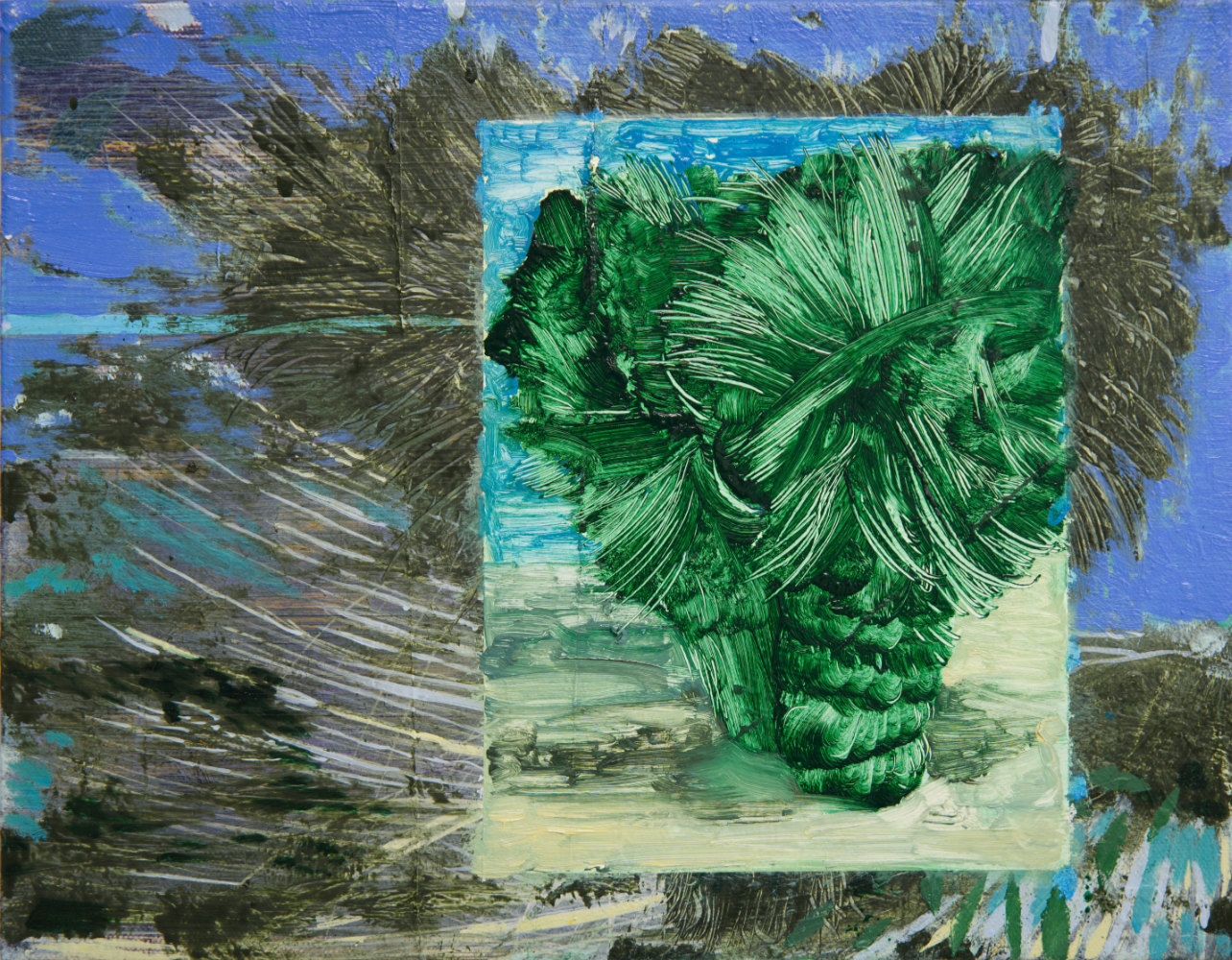
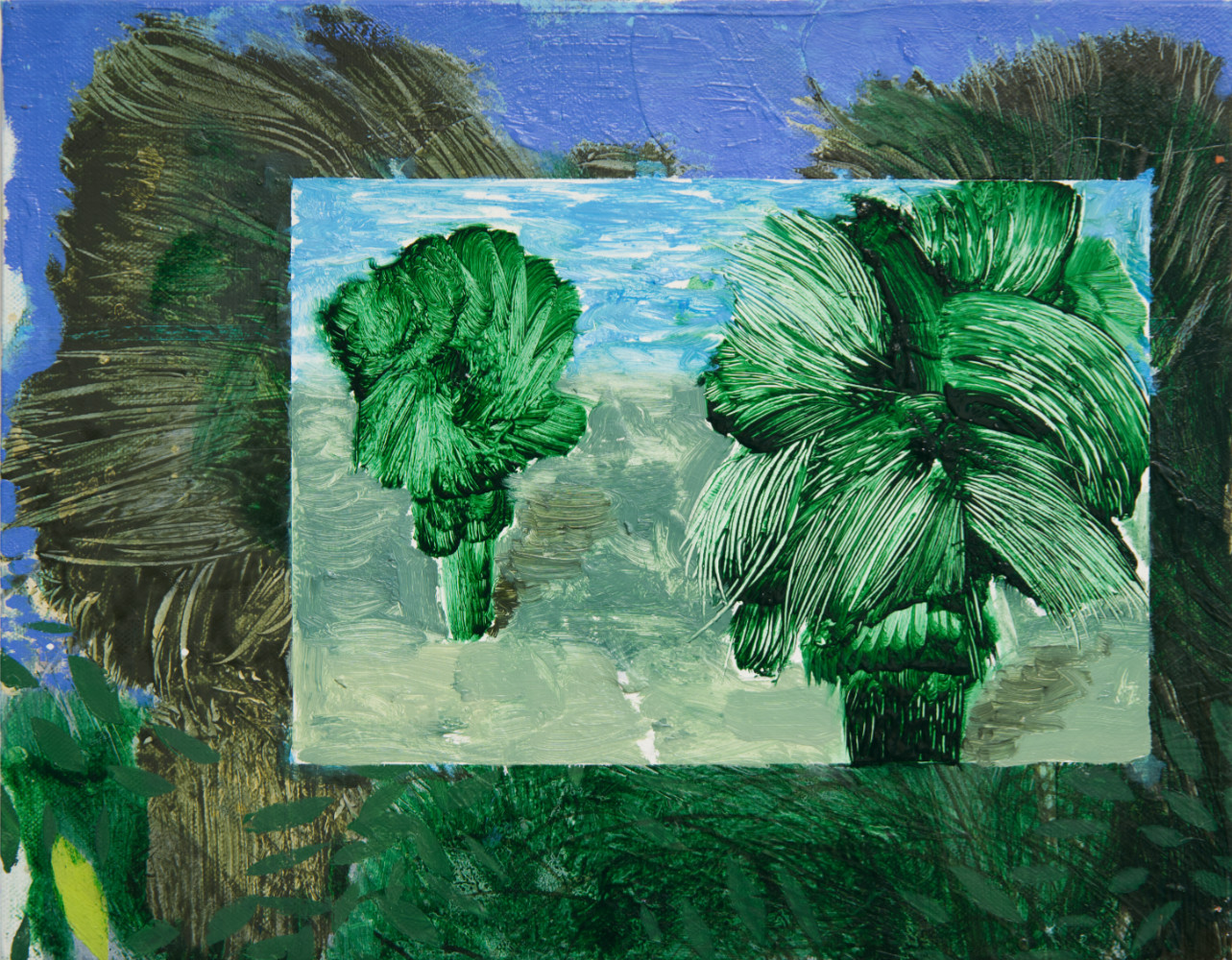
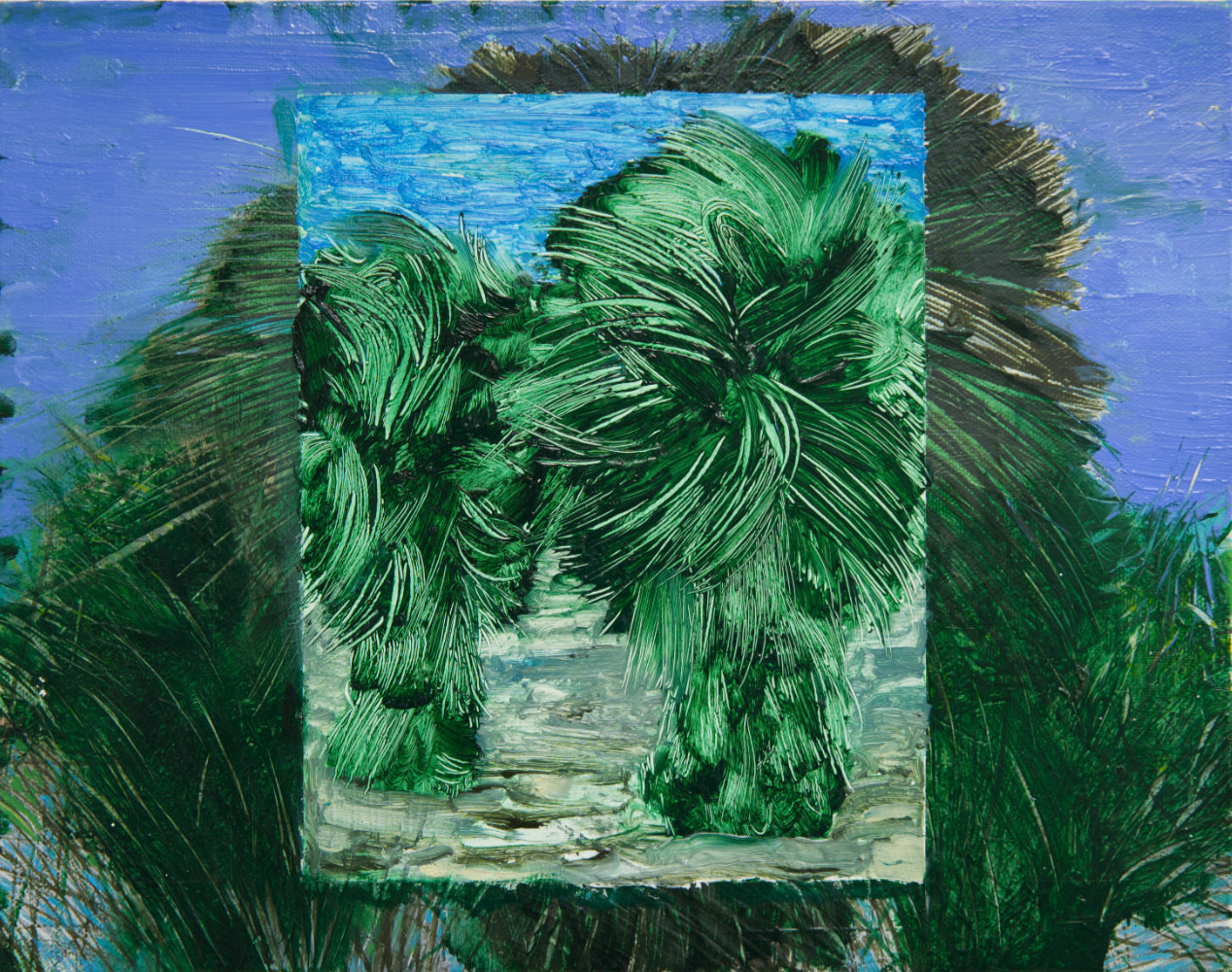
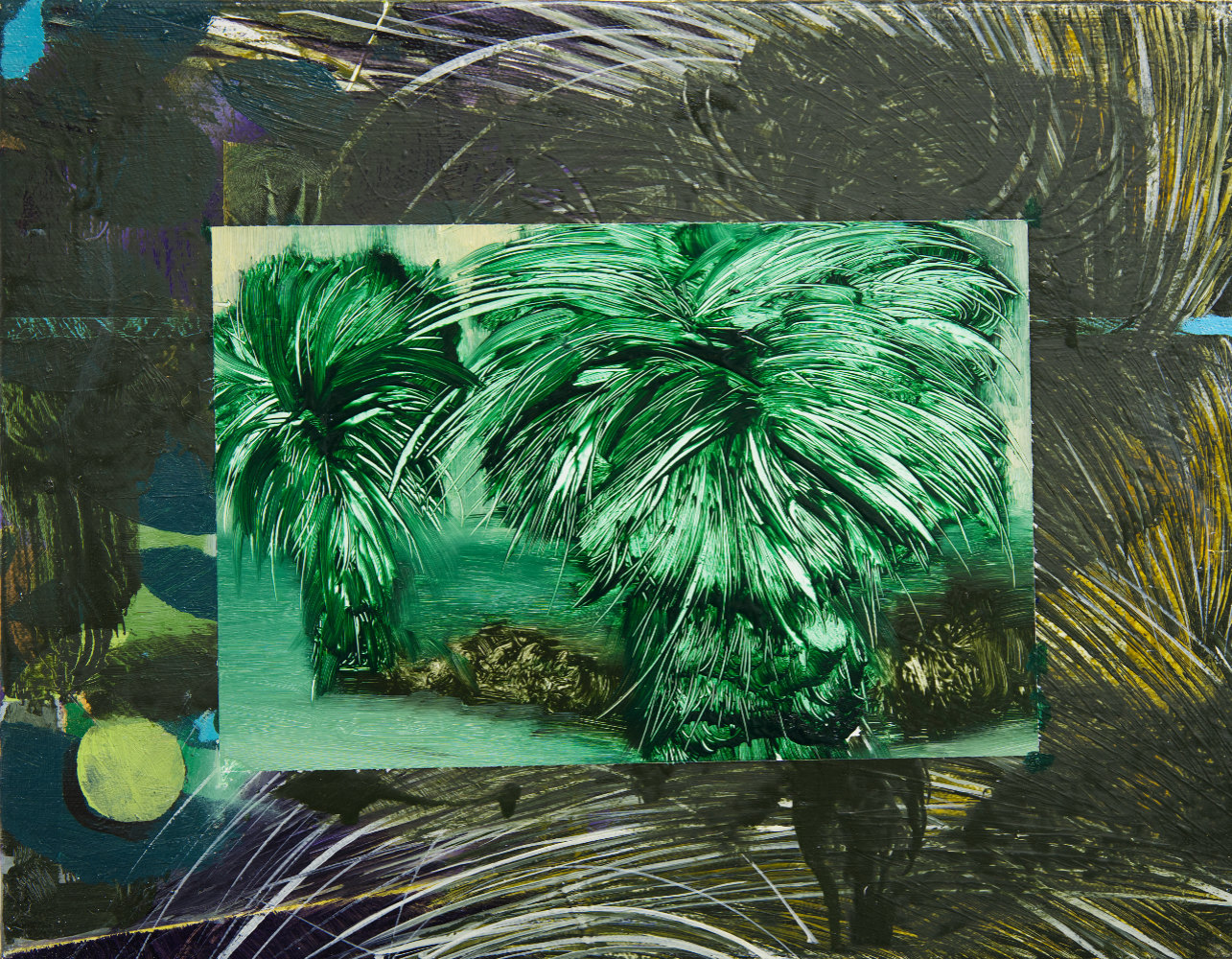
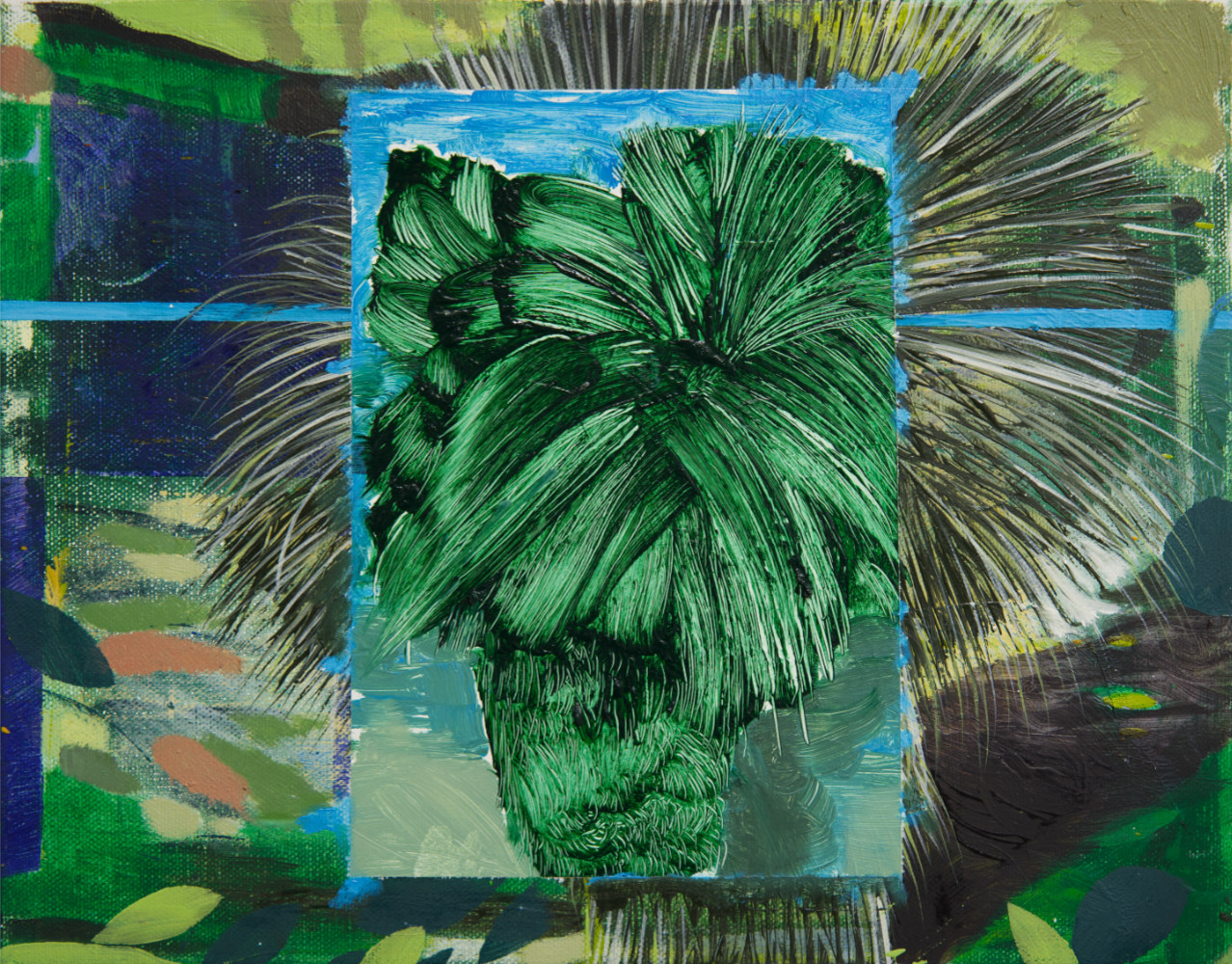
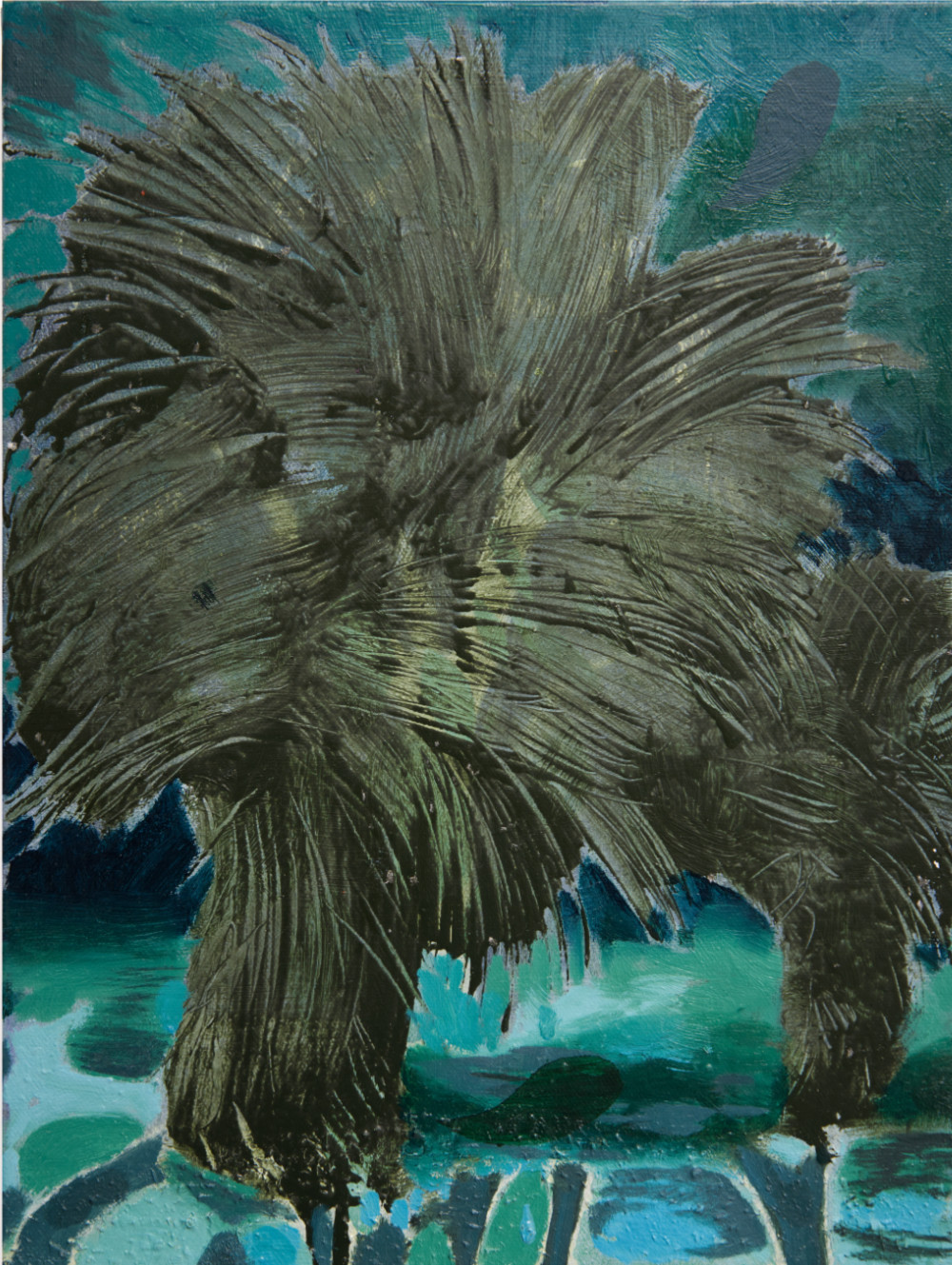
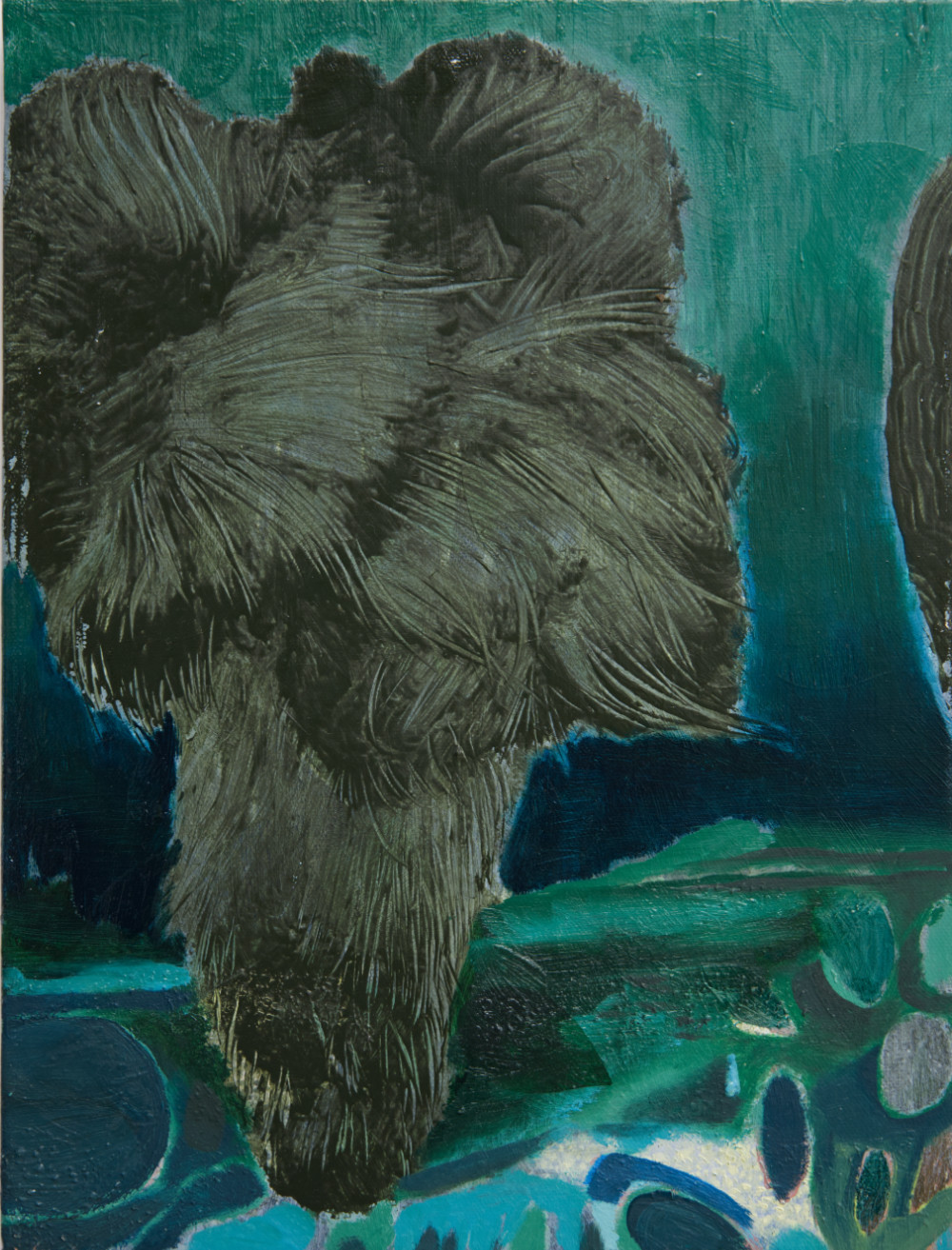
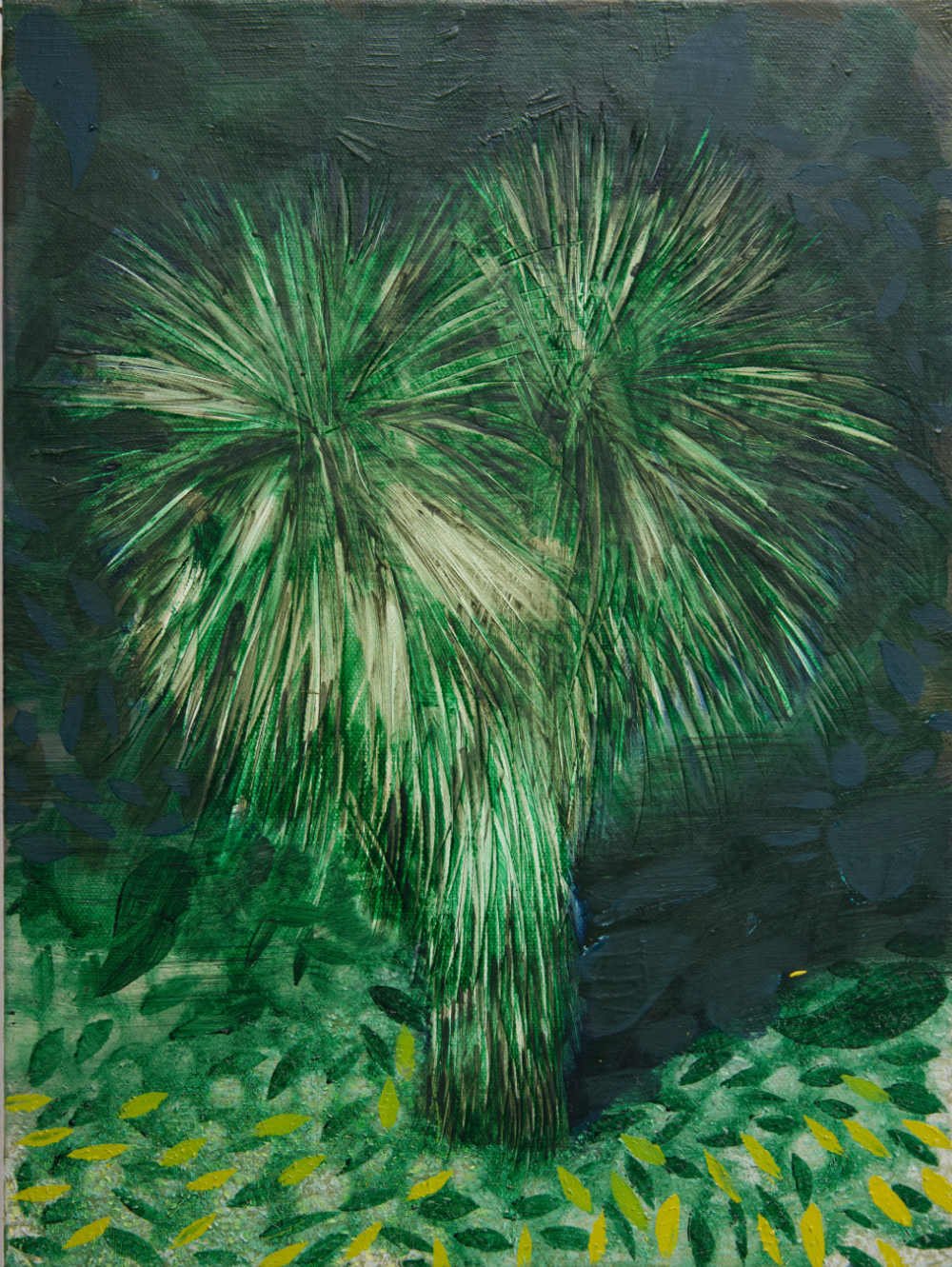
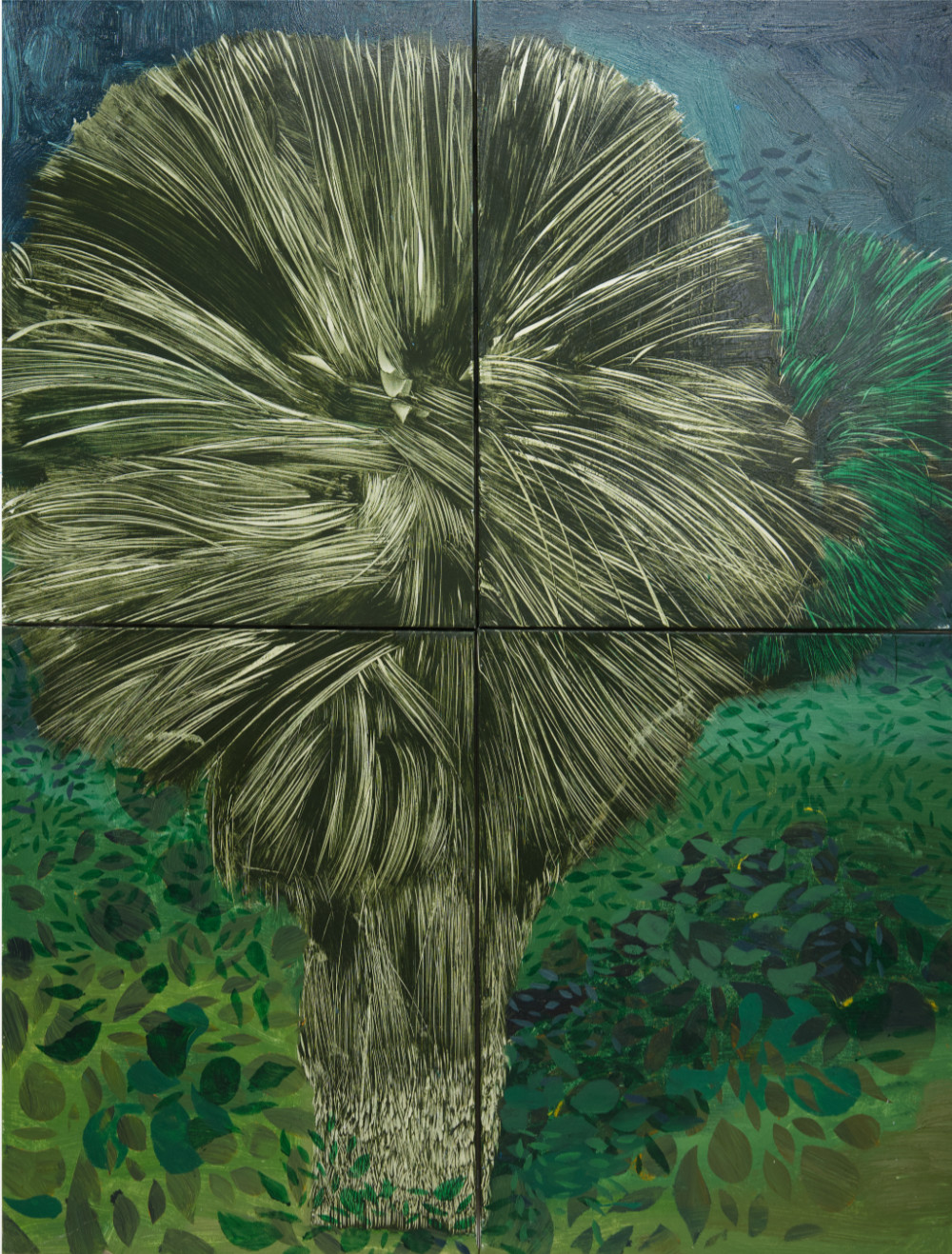
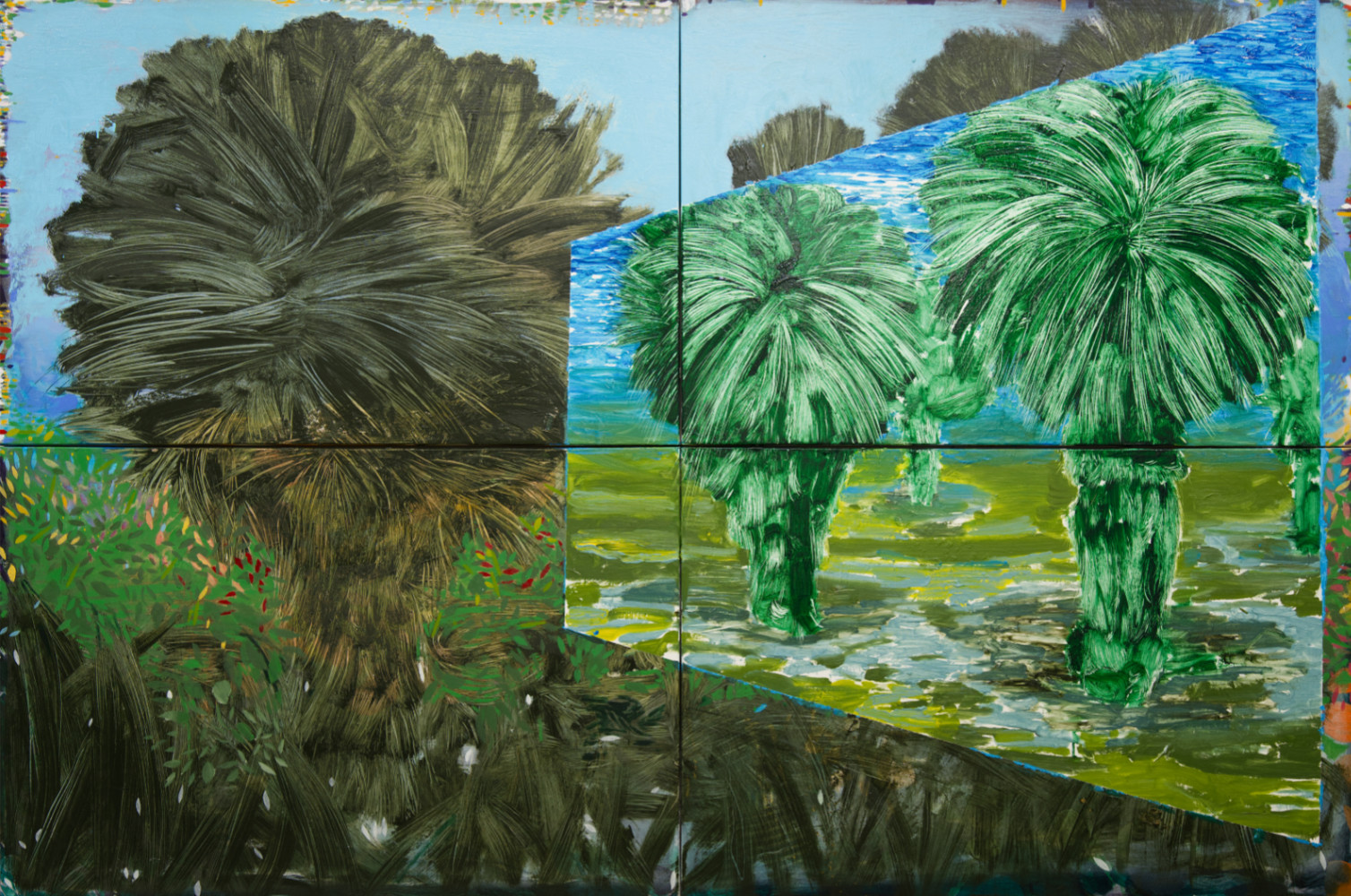
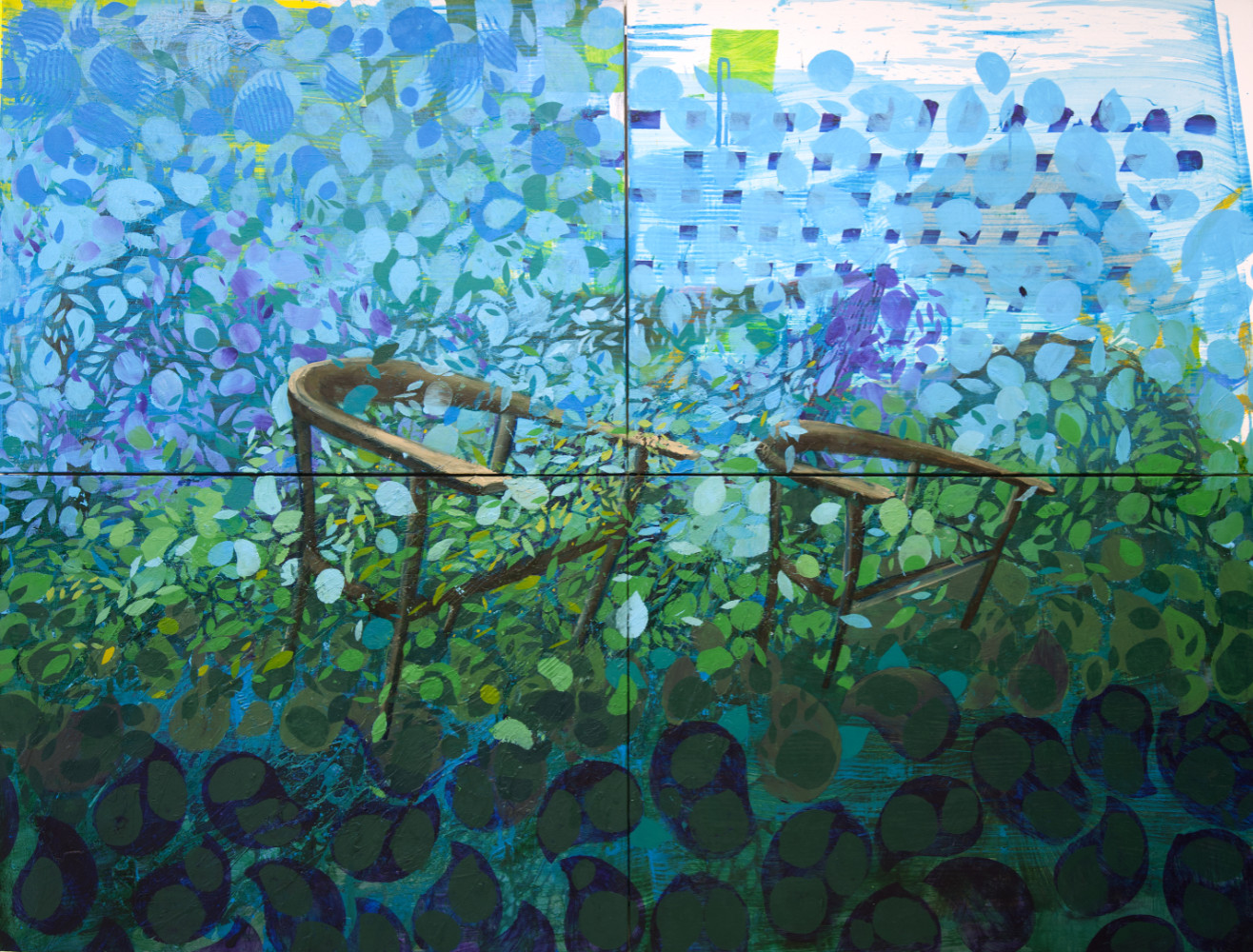
The series I offer this page is Mirage, my newest body of oil paintings, painted in 2026. It started during a residency in West Texas, with a desert plant: the beaked yucca, a stiff rosette of blades growing along the campus paths where I worked. Seen after dark under artificial light, the plant turned pale and theatrical, less a shrub than a figure standing in a spotlight. The paintings took their name from the other thing West Texas light does. A mirage is an image made entirely of light and distance. It shows you something that is not there, and the showing itself is real.
That double nature runs through the series. Landforms in these canvases rise and dissolve the way a figure does in my other work. Shapes hold for a moment, then thin out into glare and washed color. The sizes run from small canvases of 11 by 14 inches to one large painting of 60 by 80 inches, so the series holds both an intimate study scale and the wall filling scale Fort Worth rooms can carry. All eleven paintings are gathered on the Mirage series page, and the originals are in the online store, both linked below.
Art classes across the metroplex
My teaching reaches Fort Worth in two ways. My academy, Art Be You, is based in Richardson, and Fort Worth students are among those who make the drive for evening painting classes, private lessons, and portfolio reviews; the Art Academy page, linked below, explains how it works. Closer to home, my painting workshops for senior communities run in Fort Worth as they do across Dallas, bringing a full painting session to the residents where they live. If you are in Fort Worth and want to learn to paint with a working abstract figurative painter, the academy door is open to this side of the metroplex too.
Visiting the district, and where the record continues
Visiting: the three museums stand along Camp Bowie Boulevard and Darnell Street, a few minutes west of downtown, close enough to walk between in one day. A map of the Cultural District sits on this page. A painter’s order works well: the Kimbell in the morning for the free permanent collection, the Carter after lunch, and the Modern last, especially on a Friday, when it stays open into the evening and admission is free. City services sit with the City of Fort Worth, linked below.
My own record continues on the other pages of this site. The Mirage series page shows the paintings. The online store carries the current original paintings. The Texas page tells my state story, and the Dallas page carries the exhibition record in detail. The formal record is on my CV page, and all the town pages of this site hang together on the Market page. Fort Worth has no exhibition of mine to point to yet. It has something I use every month: three great museums, a teaching run that crosses the metroplex, and readers who know what a painting is for.
Frequently Asked Questions
Has Bartosz Beda exhibited in Fort Worth?
No, and this page does not invent one. My Texas record is anchored in Dallas, about thirty miles east. My Fort Worth connection runs through people rather than walls: painting workshops I lead for senior communities in Fort Worth, Fort Worth collectors who hold my work, and Fort Worth students who drive to Richardson for classes.
Which three museums stand in Fort Worth’s Cultural District?
Three major art museums stand within a short walk of one another a few minutes west of downtown: the Kimbell Art Museum, the Modern Art Museum of Fort Worth, and the Amon Carter Museum of American Art. Few American cities put that much serious painting in a single neighborhood.
What makes the Kimbell Art Museum building special?
The Kimbell opened in 1972, designed by Louis I. Kahn, and it is widely counted among the finest museum buildings of the modern era. Sixteen long concrete vaults run side by side, each cut by a narrow skylight, so daylight spreads softly across the travertine walls. Admission to the permanent collection is always free.
What is the oldest art museum in Texas?
The Modern Art Museum of Fort Worth is the oldest art museum in Texas. In April 1892, in a cattle town barely forty years old, a group of twenty five women received a state charter for the Fort Worth Public Library and Art Gallery. The gallery’s first painting, a landscape by George Inness, was purchased in 1904 and remains in the collection today.
What is the Modern Art Museum of Fort Worth building like?
Since December 2002 the Modern has stood in a building by the Japanese architect Tadao Ando, at 3200 Darnell Street, across from the Kimbell. Five pavilions of concrete, glass, and steel rise out of a broad reflecting pond, with some 53,000 square feet of gallery space inside. Admission is free on Fridays.
Who founded the Amon Carter Museum of American Art?
The museum opened in January 1961, founded on the collection and fortune of Amon G. Carter, the Fort Worth Star-Telegram publisher and the city’s great promoter. It began as a museum of Western art, built around paintings and bronzes by Frederic Remington and Charles M. Russell. Admission is free, as it has been from the start.
Why is Fort Worth called Cowtown?
After the Civil War, the Chisholm Trail drives came through Fort Worth on their way north to the Kansas railheads. From 1867 into the 1880s, millions of longhorns passed this way, and Fort Worth was the last real stop to buy supplies before the herds crossed the Red River. The town took the nickname Cowtown and has never given it up.
What can a visitor see at the Fort Worth Stockyards today?
The stockyards rose north of the river in the 1890s, and meatpacking followed. Today the Stockyards National Historic District keeps the brick streets and the pens, with a twice daily longhorn cattle drive down Exchange Avenue. The Fort Worth Stock Show, first held in 1896, still runs every winter.
How does Bartosz Beda’s teaching reach Fort Worth?
In two ways. My painting workshops for senior communities run in Fort Worth as they do across Dallas, bringing a full painting session to the residents where they live. And Fort Worth students are among those who make the drive to my academy, Art Be You, in Richardson, for evening painting classes, private lessons, and portfolio reviews.
Can Fort Worth collectors buy his paintings?
Yes. The originals are in the online store, linked on this page, and paintings that began in my Dallas area studios reach Fort Worth homes through it. The Mirage series shown on this page runs from small canvases of 11 by 14 inches to one large painting of 60 by 80 inches, and all eleven paintings are gathered on the Mirage series page.