
Garland, Texas: Handmade Paintings in a City That Makes Things
Garland is one of the largest cities in Dallas County, set fifteen miles northeast of downtown Dallas, with 246,018 residents counted in the 2020 census. It is a working city in the plain sense of the word. Cowboy hats have been made here since 1938. Factories across Garland turn out sour cream, coatings, metal detectors, and parts built for Mars rovers. I am Bartosz Beda, an abstract figurative artist based in Richardson, the city directly west of Garland. This page is a guide to Garland and an introduction to my painting for the Garland reader.
The record comes first, stated plainly. Then the city that makes things, its stages, its square, and its museum. Then the paintings, and the route to them.
Garland in my record
The plain version first. I have no Garland exhibition to report. No gallery here has shown my work, and no Garland room holds one of my paintings on public view. My Texas record stands nearby: solo exhibitions at Ro2 Art in Dallas, a solo exhibition of Echoes of Seasons at Collin College in Plano in 2023, a two person exhibition at the Mesquite Arts Center in 2020, a museum solo exhibition in Brownsville in 2019, and a residency with an exhibition at Angelo State University in San Angelo in 2025.
My base sits a few miles west of the Garland line. Richardson is where I paint and where I run Art Be You, my art academy, with evening painting classes in acrylic and watercolor. The Art Academy page, linked below, explains how the classes work. Garland readers reach the paintings the direct way: through the series pages on this site and through the online store, where the current original paintings are listed. There is no gallery between Garland and the work, and this page does not pretend there is one.
A city that makes things
Start with the hats. In 1927 a Dallas hat maker, Harry Rolnick, and his customer E. R. Byer founded the Byer-Rolnick company and created the Resistol brand, named for felt that could resist all weather. In 1938 the company moved to a larger factory in Garland. Resistol hats are made in Garland to this day. The company became Hatco, which also makes Stetson hats in the city, and in 2013 the Texas Legislature designated Garland the Cowboy Hat Capital of Texas.
The hats are made the slow way. A single felt hat passes through more than 200 processes on its way from raw fur to finished brim, and Garland turns out more than a million cowboy hats a year. The rest of the city works at the same scale. Its manufacturers produce sour cream, adhesives, shipping containers, industrial coatings, and metal detectors, and one local maker built parts for the Mars rovers. A city like this understands an object that is built in stages, by hand, over time. That understanding is the ground this page stands on.
The Granville Arts Center and the Plaza Theatre
Garland built its stage early for a suburb. The Garland Center for the Performing Arts opened in June 1982 at 300 North Fifth Street in downtown. The building holds two proscenium theatres, one seating 720 and one seating 200. In its first year the center drew more than 100,000 people and won two state awards. Its founding director was Patty Granville, who opened the building and ran it for decades. In 2003 the City Council renamed it the Patty Granville Arts Center in her honor. The center is home to the Garland Civic Theatre, founded in 1968, to the Garland Summer Musicals, founded in 1983, and to the Garland Symphony Orchestra. Voters approved a $25 million renovation of the center in the 2025 Grow Garland bond program.
A short walk away, at 521 West State Street, stands the Plaza Theatre. It opened on April 4, 1941, as an Art Deco movie house on the square. The city restored it in 2001, and it works today as a performance and event venue in the same family as the arts center. Between the two buildings, the square has kept a stage in every era: movies in the 1940s, community theatre through the century, and a renovated arts center ahead.
Downtown and the Landmark Museum
Downtown Garland holds its square. After the fire of 1899 destroyed the business district, the town rebuilt around the square on State Street, and those blocks are now a National Register historic district, listed in 2017. A DART light rail station opened downtown in 2002, tying the old square to the rest of the metroplex.
At 393 North Sixth Street, at Heritage Crossing, the Garland Landmark Museum keeps the record inside a building that is itself an artifact. The museum stands in the city’s 1901 Santa Fe depot, built by the Gulf, Colorado and Santa Fe Railroad. The city moved the depot a short distance in 1972 to save it, and the museum opened inside it in 1974. In 2013 the depot moved once more to its present site, where a 1910 Pullman coach stands beside it. The Garland Landmark Society, formed in 1972, runs the museum. Inside are early settler artifacts, old newspapers, farm tools, and quilts, a collection covering Garland from 1850 to the present. It is open Thursday to Saturday, from 10 AM to 2 PM.
A short history of Garland
Garland began as a compromise. Settlement started under the Peters Colony, and the community of Duck Creek had a post office by 1854. In 1886 two railroads laid their lines past the town, and two rival communities rose about a mile apart: Embree, on the Santa Fe line, and a new Duck Creek, on the line that soon became the Katy. In early 1887 fire gutted the old Duck Creek business district, and the post office moved to Embree. The fight between the towns reached the courts.
Late in 1887 Congressman Joseph Abbott settled the dispute. The post office moved to neutral ground midway between the two towns, on the ground the downtown square now occupies. The new town took the name Garland, honoring Augustus H. Garland, the United States Attorney General under President Grover Cleveland. Local legend holds that both sides accepted the name because the attorney general had never set foot in Texas, and nobody knew who he was. Garland incorporated in 1891.
Fire tested the town once more. In 1899 a fire destroyed twenty eight of the thirty businesses in Garland, including the office of the Garland Daily News, and the town rebuilt around its square. In May 1927 a tornado destroyed much of the city and killed seventeen people, including a former mayor. Garland rebuilt again. Remaking the place by hand is the oldest habit this city has.
The manufacturing century followed. A pickle works and the Byer-Rolnick hat factory arrived in the late 1930s. During the Second World War, aircraft plants worked in the Garland area, and after the war Kraft Foods took over one of them. In the 1940s the town was also a major onion shipping point on its two railroads. The population tells the rest: 10,571 people in 1950, and 246,018 in 2020. In 1983 the city opened Firewheel Golf Park, named for the firewheel, the red and yellow Texas wildflower also called Indian blanket. In October 2005 the Firewheel Town Center opened beside the Bush Turnpike, an open air mall built like a main street, and took its name from the golf park.
Mirage: a painting is a made thing
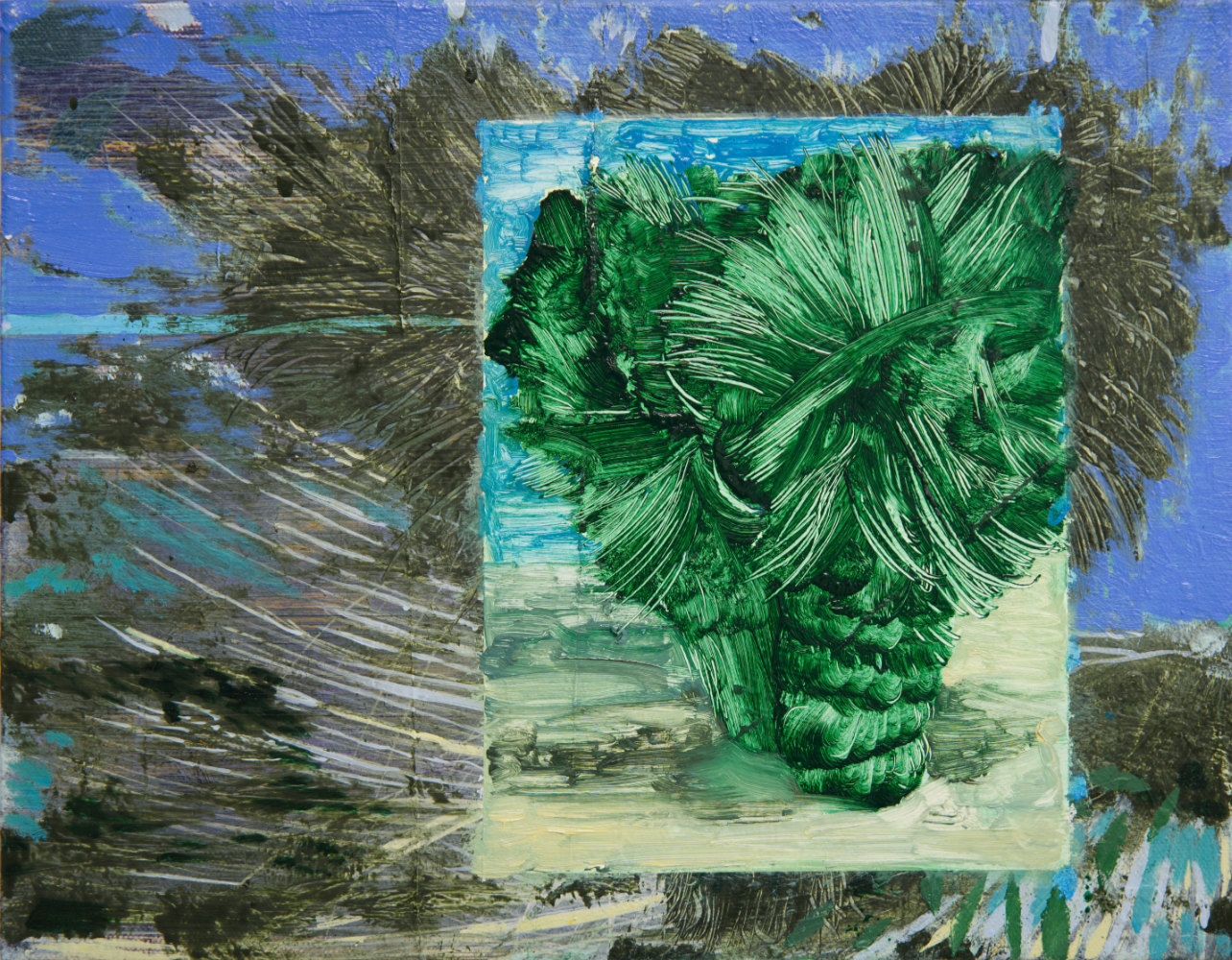
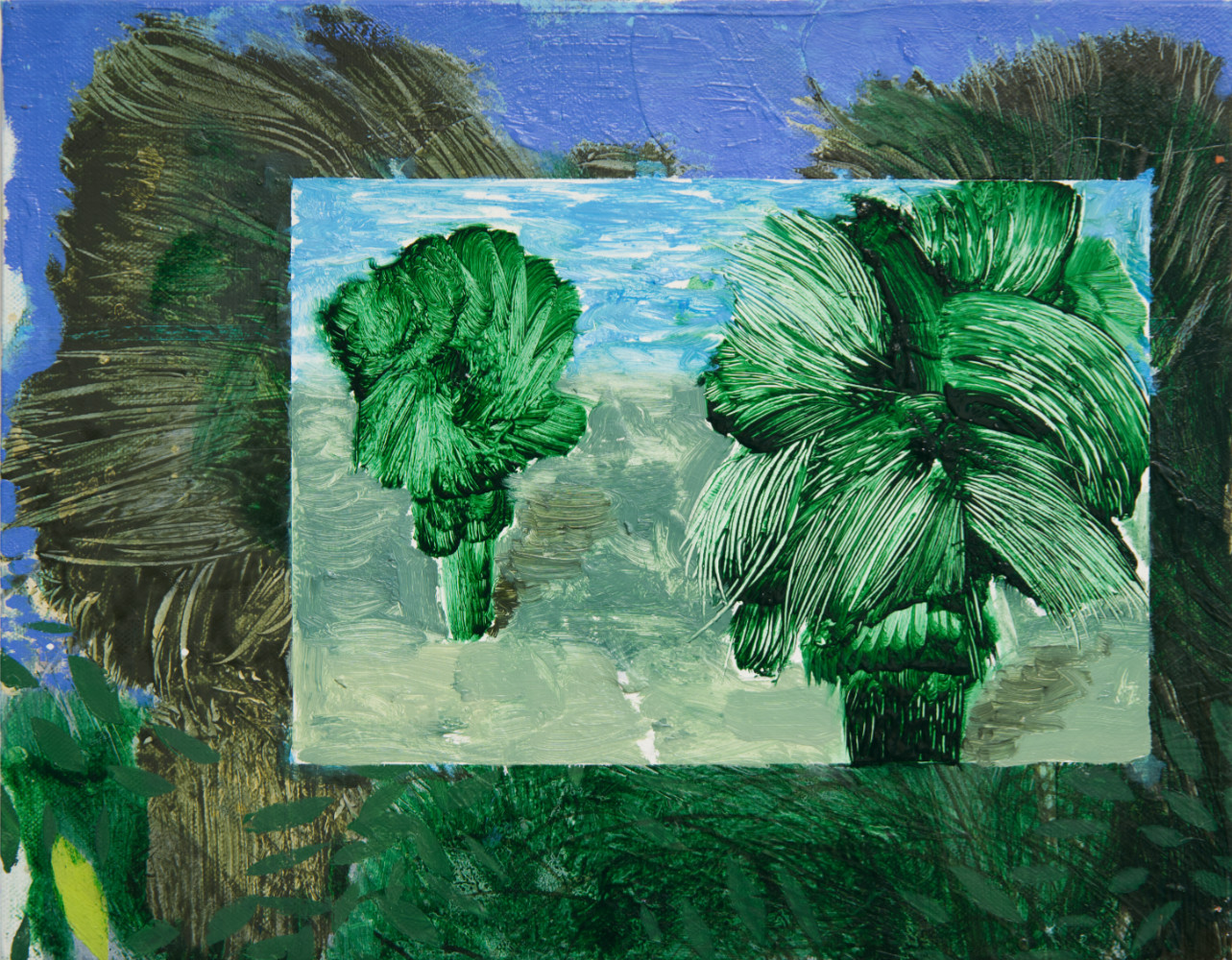
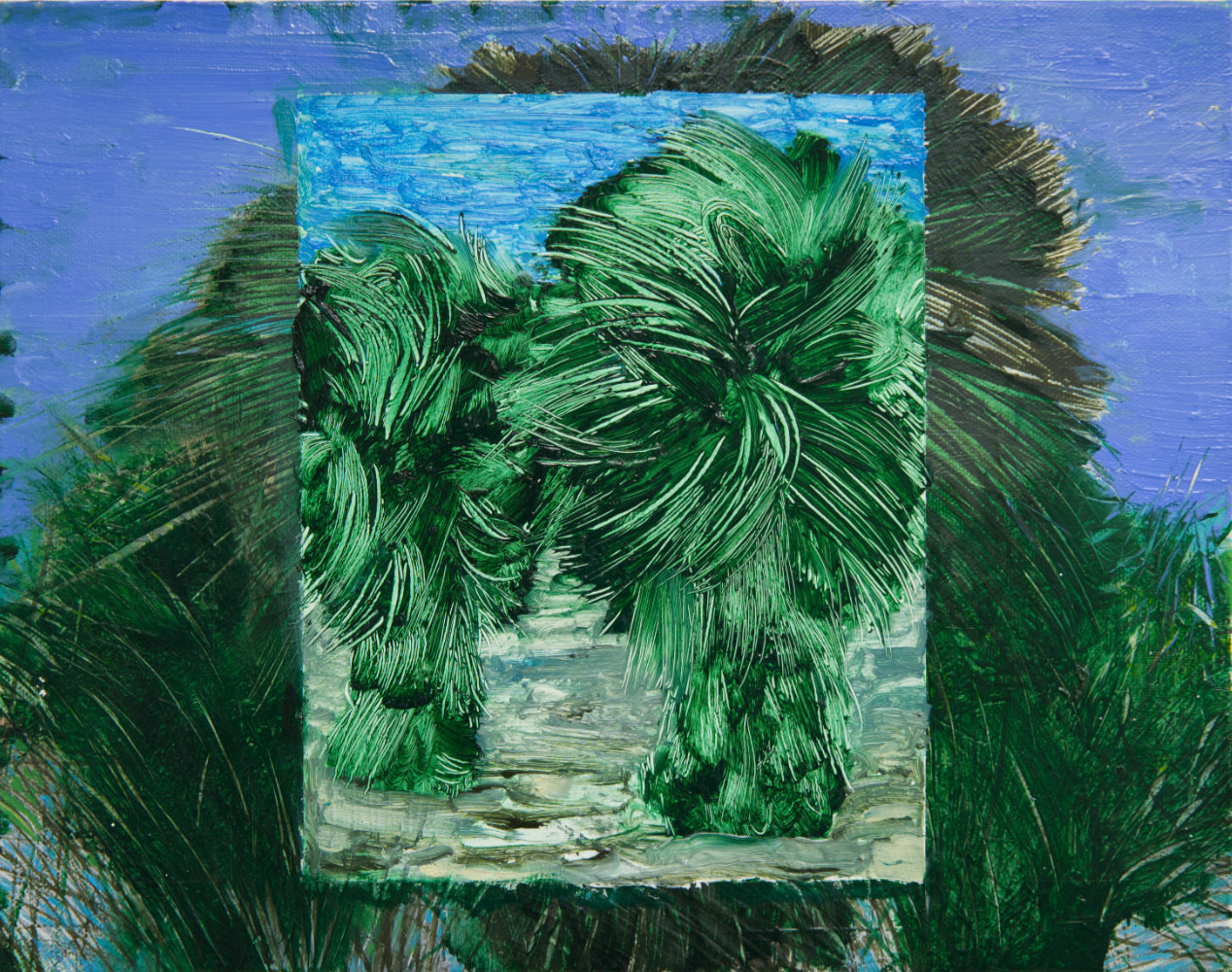
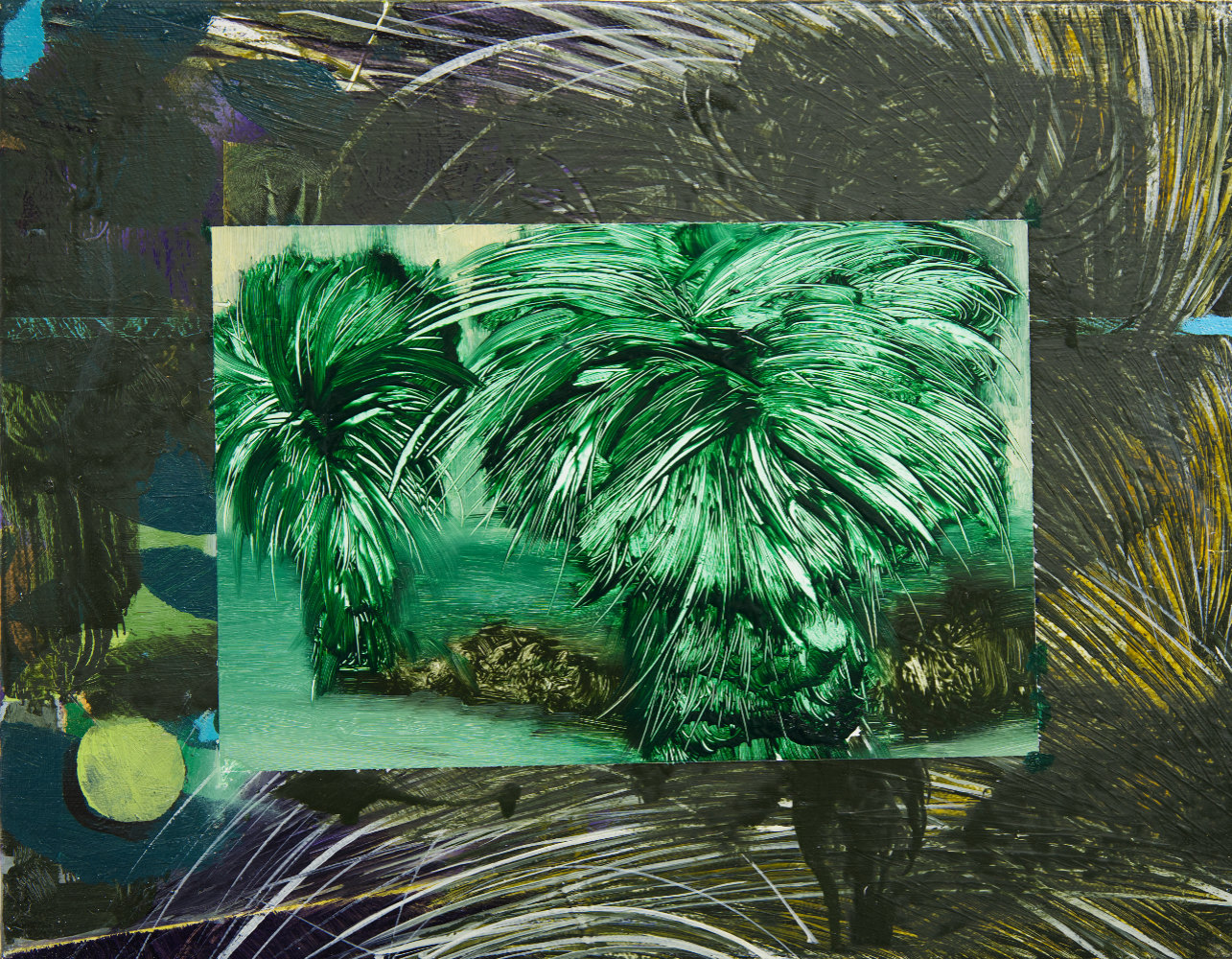
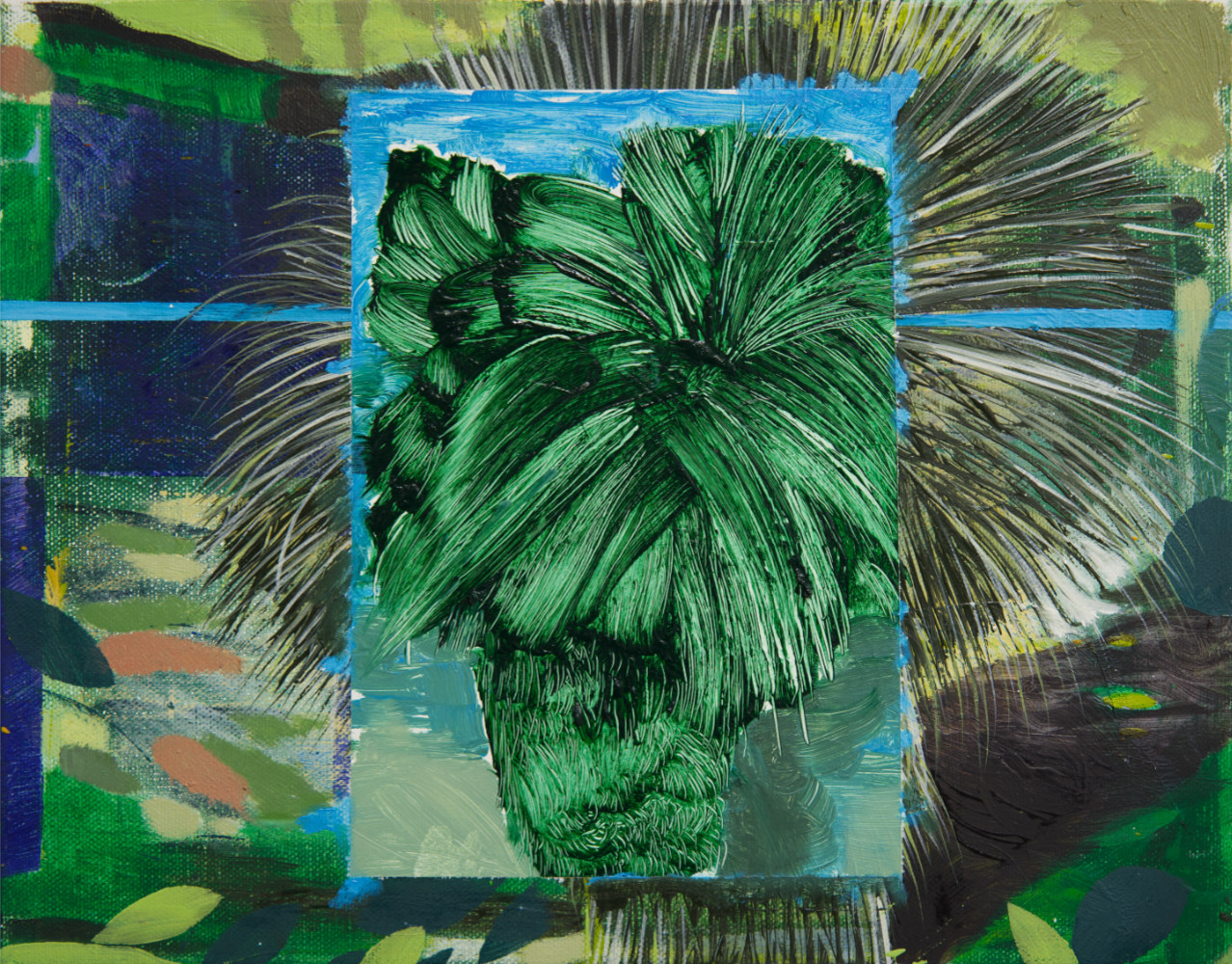
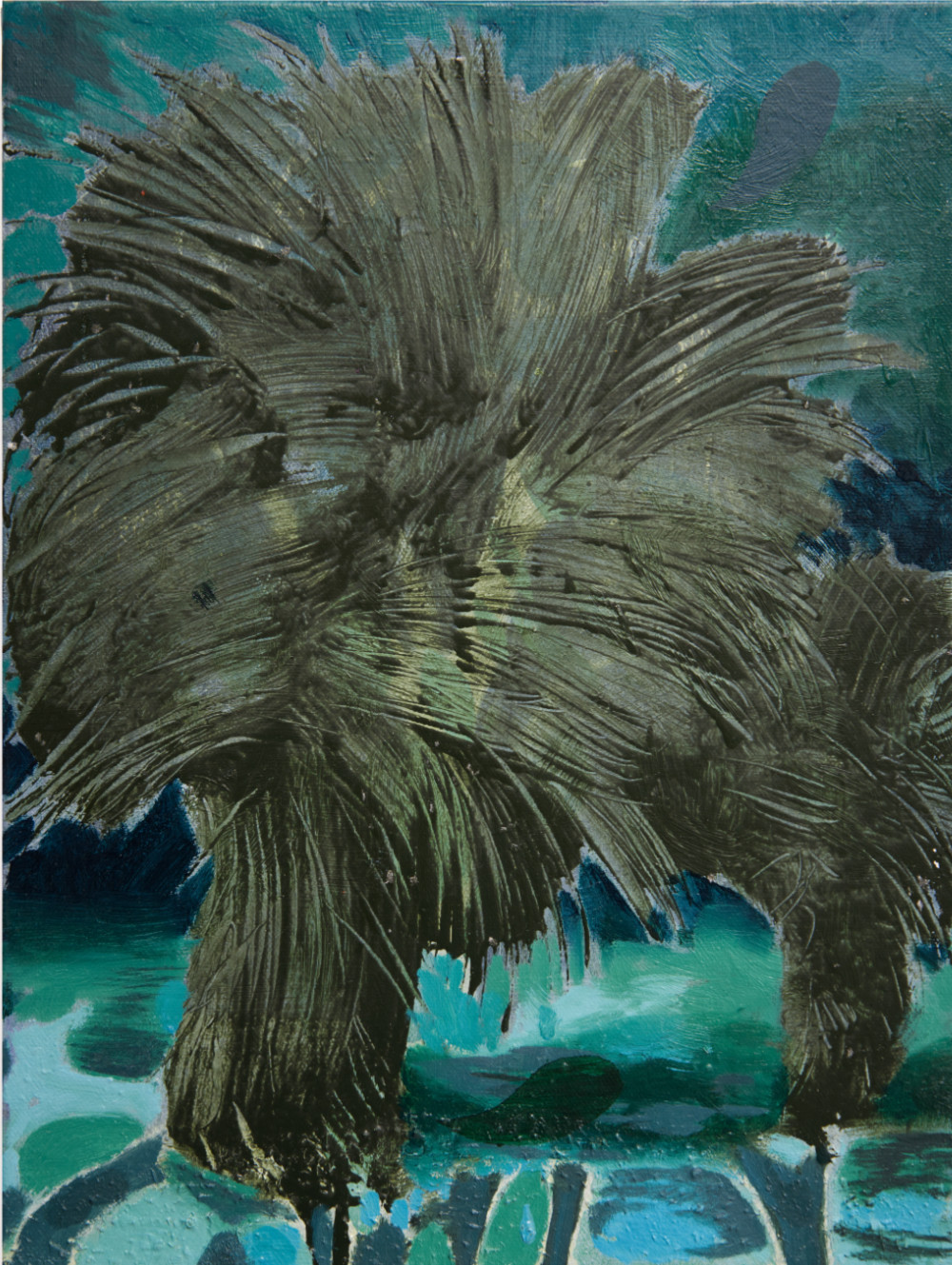
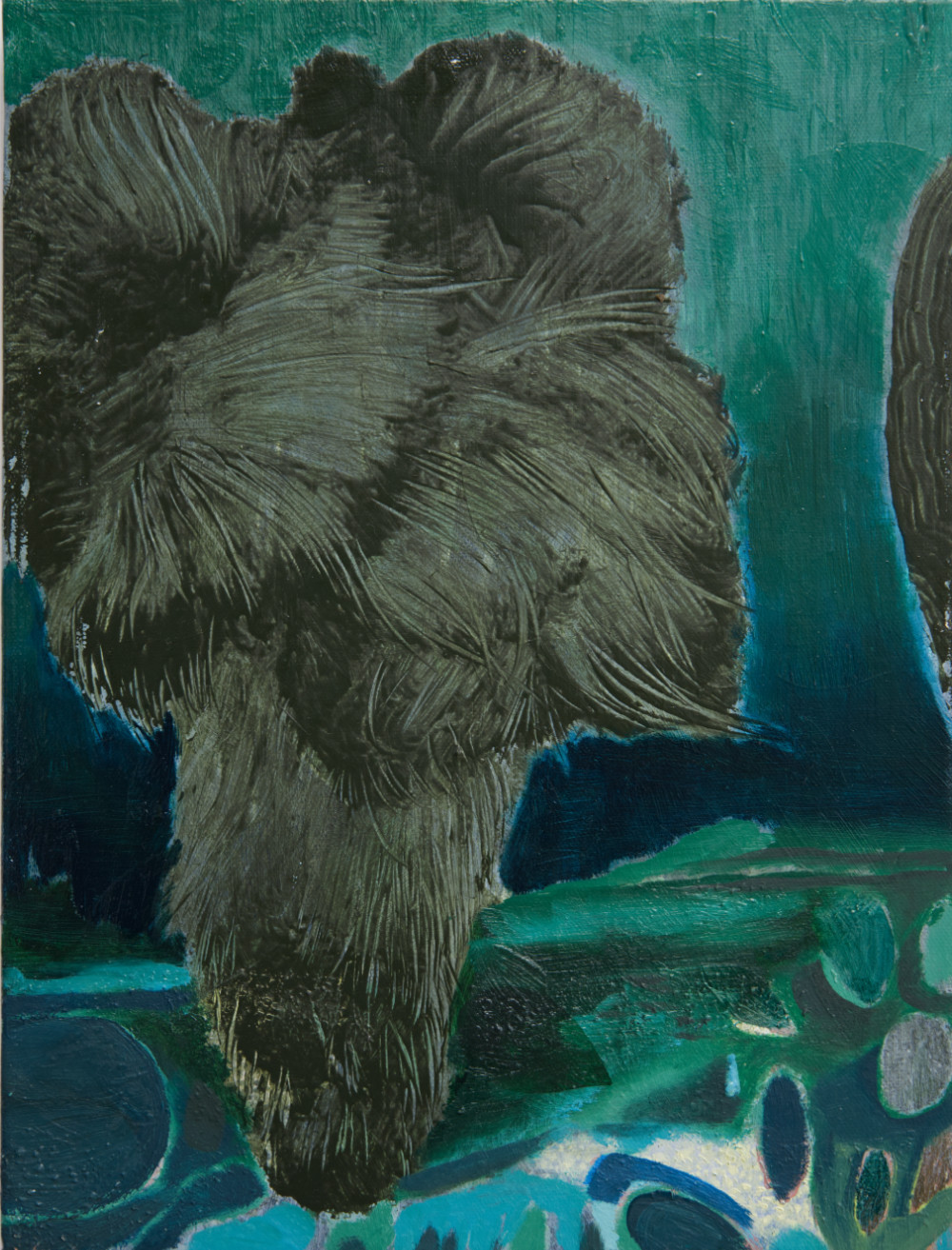
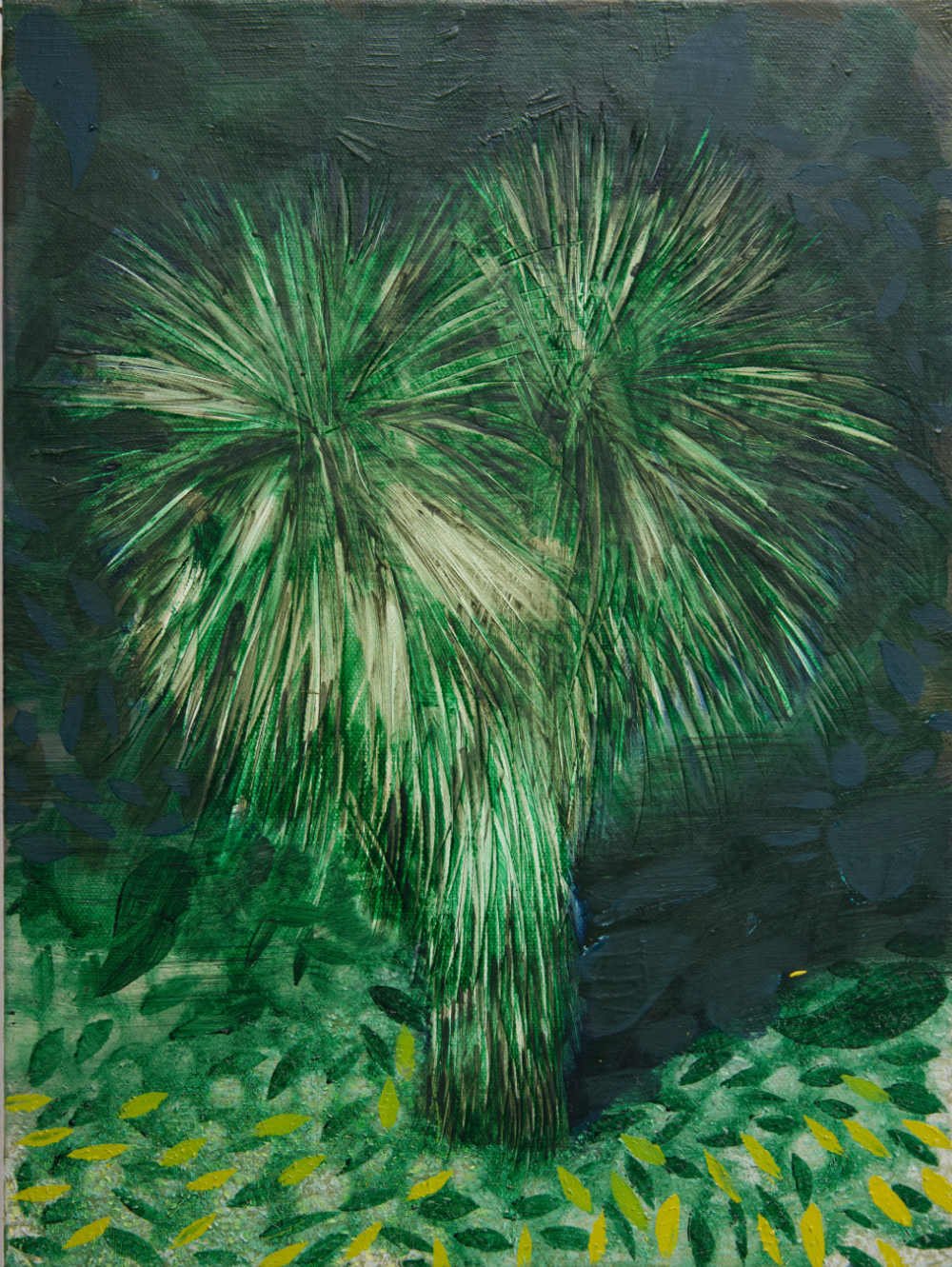
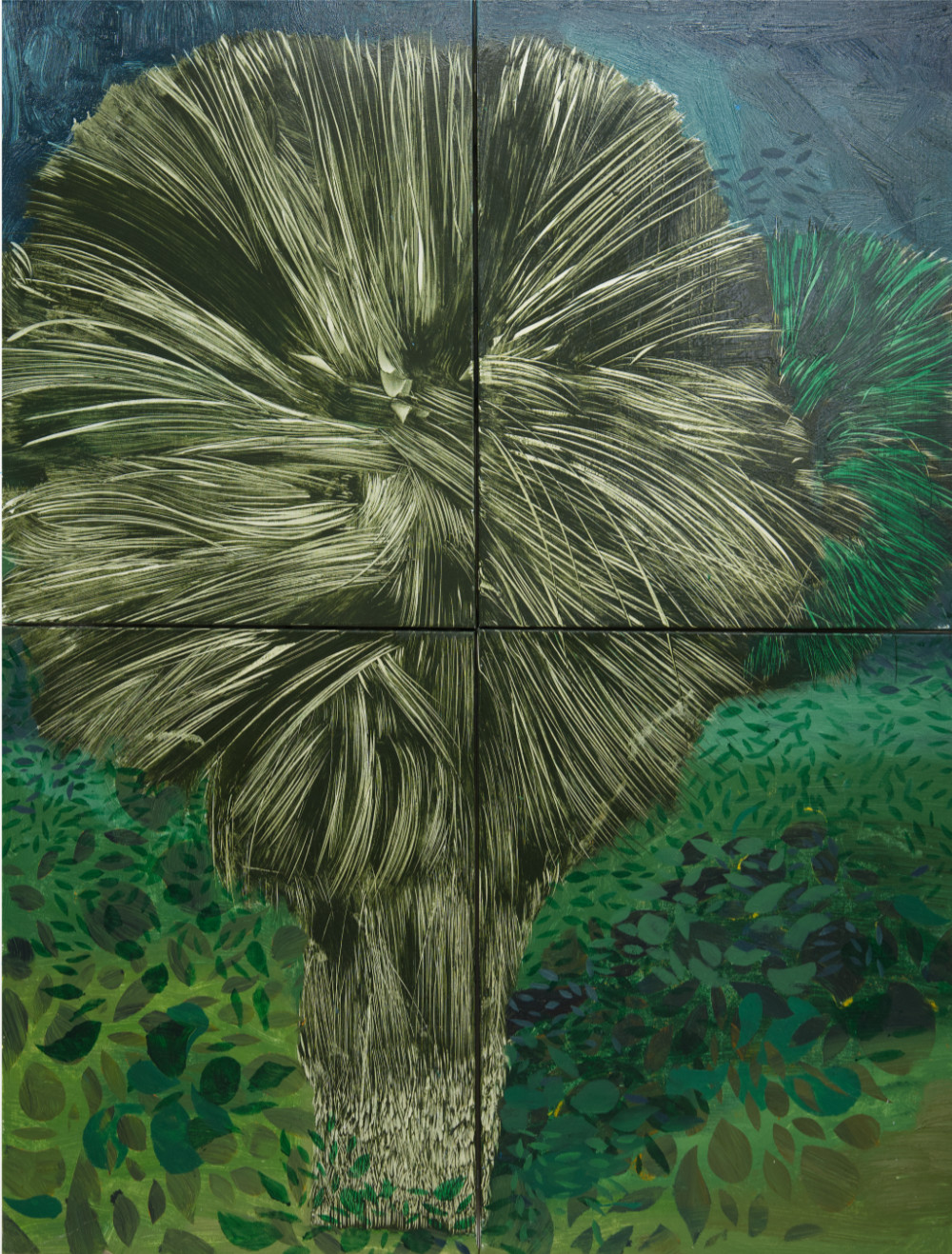
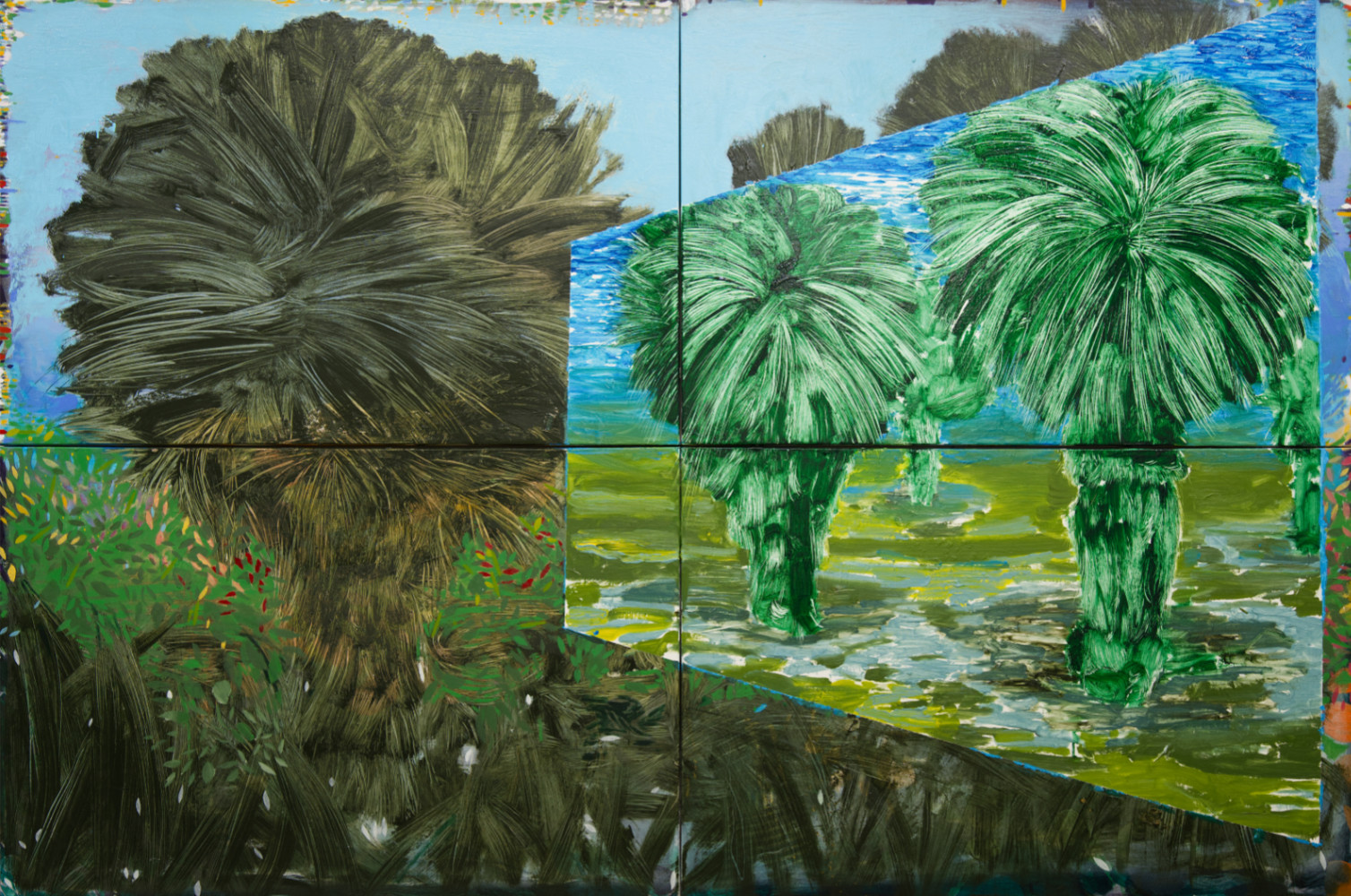
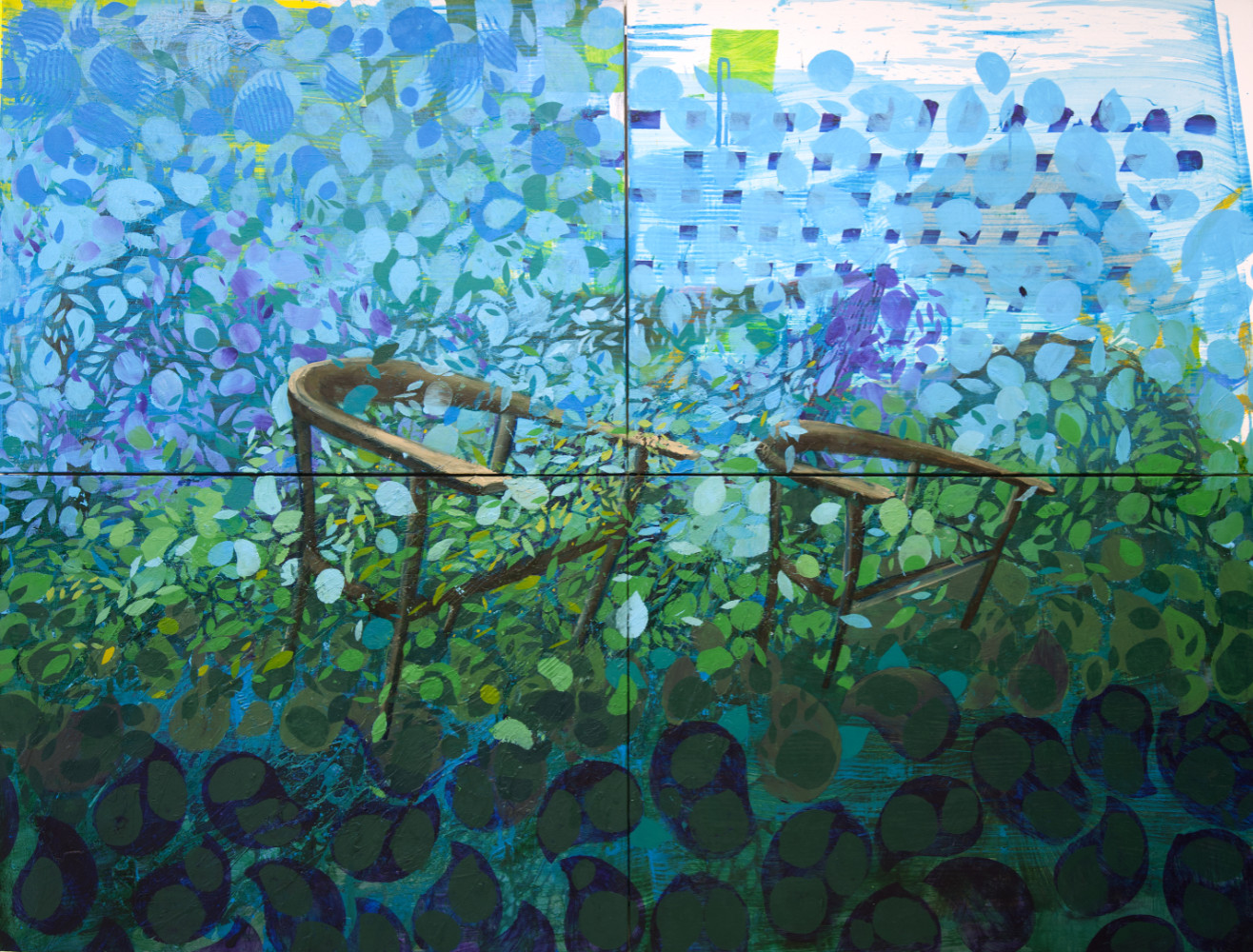
Mirage, my current series of oil paintings, began during my 2025 residency at Angelo State University in San Angelo, where I held the Edwards Trust fellowship. On night walks across the campus I kept meeting the beaked yuccas, desert plants native to the Chihuahuan Desert that line the paths there. Under the lamps their color washed out. The stiff rosettes went pale against the black and stood like figures caught in a spotlight. I photographed them, carried them into the studio, and abstracted them through handmade stencils until plant, ground, and figure began to trade places.
The title names the mechanism. A mirage is a longing given shape, something seen because it is wanted. These paintings hold that tension on purpose. I am an abstract figurative artist, and my abstract figurative art has always asked how much of a person can be removed before the person is gone. In Mirage the same question is asked of a landscape. The figure is not painted into the scene. The land itself takes the figure’s place, present and absent at once, the way the yucca stood in the lamplight: real, and already half an apparition.
That is why the series belongs on a page about Garland. A painting is a made object. Like a Garland felt hat, it is built in stages that no shortcut replaces: drawing, stencil, wash, layer, scrape, and layer again. Mirage runs to eleven paintings, from small canvases of 11 by 14 inches to Mirage 11, at 60 by 80 inches. For readers looking for original paintings in Garland, or for Garland art made by a working painter one city west, the route is direct: the Mirage series page shows every canvas, and the online store carries the originals themselves.
Visiting, and where the record continues
A Garland art day is compact. Walk the square in the morning, take the Landmark Museum in its short midday hours, and end with an evening performance at the Granville Arts Center or the Plaza Theatre. The map on this page centers on the Downtown Garland Square. The City of Garland tells its own story on its history page, and Visit Garland tells the hat story on its Cowboy Hat Capital page, both linked below.
My own record continues across this site. The Mirage series page shows the paintings in full. The online store carries the current original paintings. The Richardson page tells the story of my studio and academy a few miles west, and the Dallas page carries my exhibition record in the city. The Texas page gathers my state story in one arc. My CV page holds the formal record, and all the town pages of this site hang together on the Market page. Garland has no exhibition of mine to point to yet. It has the square, the depot, the stages, and a century of making. A painter who works by hand recognizes the company he is in.
Frequently Asked Questions
Has Bartosz Beda exhibited in Garland?
No gallery in Garland has shown my work, and no Garland room holds one of my paintings on public view. My base sits a few miles west of the Garland line, in Richardson, where I paint and run Art Be You, my art academy. My Texas record stands nearby: solo exhibitions at Ro2 Art in Dallas, a solo exhibition at Collin College in Plano in 2023, a two person exhibition at the Mesquite Arts Center in 2020, a museum solo exhibition in Brownsville in 2019, and a residency at Angelo State University in San Angelo in 2025.
Why is Garland called the Cowboy Hat Capital of Texas?
Cowboy hats have been made in Garland since 1938, when the Byer-Rolnick company moved its factory here. The company created the Resistol brand, named for felt that could resist all weather, and became Hatco, which also makes Stetson hats in the city. In 2013 the Texas Legislature designated Garland the Cowboy Hat Capital of Texas.
How is a Garland cowboy hat made?
The hats are made the slow way. A single felt hat passes through more than 200 processes on its way from raw fur to finished brim, and Garland turns out more than a million cowboy hats a year. A city like this understands an object that is built in stages, by hand, over time.
What else is made in Garland?
Garland’s manufacturers produce sour cream, adhesives, shipping containers, industrial coatings, and metal detectors, and one local maker built parts for the Mars rovers. The city counted 246,018 residents in the 2020 census, and it is a working city in the plain sense of the word.
What is the Patty Granville Arts Center?
The center opened in June 1982 at 300 North Fifth Street in downtown Garland, with two proscenium theatres, one seating 720 and one seating 200. Its founding director was Patty Granville, and in 2003 the City Council renamed the building the Patty Granville Arts Center in her honor. It is home to the Garland Civic Theatre, the Garland Summer Musicals, and the Garland Symphony Orchestra.
What is the Plaza Theatre in Garland?
The Plaza Theatre stands at 521 West State Street, on the square. It opened on April 4, 1941, as an Art Deco movie house. The city restored it in 2001, and it works today as a performance and event venue. Between the Plaza and the arts center, the square has kept a stage in every era.
Where is the Garland Landmark Museum?
The museum keeps the city’s record inside the 1901 Santa Fe depot at Heritage Crossing, 393 North Sixth Street, with a 1910 Pullman coach standing beside it. The city moved the depot twice to save it, in 1972 and again in 2013. Inside are early settler artifacts, old newspapers, farm tools, and quilts, covering Garland from 1850 to the present. It is open Thursday to Saturday, from 10 AM to 2 PM.
How did Garland get its name?
Garland began as a compromise between two rival railroad towns, Embree and Duck Creek, set about a mile apart. Late in 1887 Congressman Joseph Abbott settled the dispute: the post office moved to neutral ground midway between the two towns, where the downtown square now stands. The new town took the name Garland, honoring Augustus H. Garland, the United States Attorney General. Garland incorporated in 1891.
What disasters shaped Garland’s history?
Fire and storm tested the town twice. In 1899 a fire destroyed twenty eight of the thirty businesses in Garland, and the town rebuilt around its square. In May 1927 a tornado destroyed much of the city and killed seventeen people, including a former mayor. Garland rebuilt again. Remaking the place by hand is the oldest habit this city has.
How is a Mirage painting like a Garland hat?
A painting is a made object. Like a Garland felt hat, a Mirage painting is built in stages that no shortcut replaces: drawing, stencil, wash, layer, scrape, and layer again. The series began on night walks at Angelo State University, where beaked yuccas under the lamps went pale and stood like figures in a spotlight. Mirage runs to eleven paintings, from 11 by 14 inches to 60 by 80 inches.