
Grapevine, Texas: New Painting in the Town That Kept Its Main Street
Grapevine sits between Dallas and Fort Worth, minutes from the runways of Dallas Fort Worth International Airport. Most airport suburbs look the same. Grapevine does not. Its Main Street still runs the way it ran in 1900: brick storefronts, a restored movie palace, a working train depot, and wine poured a few steps from the tracks. This page is a guide to that street and the town behind it. It also presents my newest paintings to the people who live and collect here.
I am Bartosz Beda, an abstract figurative artist based in Dallas. My working life crosses the whole metroplex, and Grapevine is one of the towns inside that field. The town kept its Main Street when many towns let theirs go. My newest series, Apogee, looks at the human figure from an angle most painting avoids. An old street and a new way of seeing belong on the same page.
Grapevine in my record
The honest version comes first. I have no Grapevine exhibition to report. No gallery on Main Street has shown my work, and no room in this town holds one of my paintings on its wall. My Texas exhibitions stand in Dallas, Plano, Mesquite, Brownsville, and San Angelo. Grapevine is not on that list, and this page will not pretend otherwise.
What Grapevine is, in my working life, is a neighbor. It sits about twenty miles from my Dallas base, inside the same metropolitan field of students, collectors, and museum visitors who move between Dallas, Fort Worth, and the towns between them. Grapevine art, as this site records it, starts with what the town itself has kept. My paintings reach Grapevine readers the way they reach the rest of the metroplex: through the series pages on this site and through the online store, where the current original paintings are listed. This page gives the town its own place in that map, because a town that protects its past this carefully deserves a painter’s attention.
Main Street and the Palace Arts Center
Historic Main Street is the center of Grapevine, and the town has treated it as a trust. Much of the street is listed in the National Register of Historic Places. When the Cotton Belt Railroad arrived in 1888, the wooden storefronts gave way to buildings of locally made brick, and most of the commercial buildings a visitor sees today date from that period. Shops, restaurants, and winery tasting rooms now fill them. The street is walkable and busy, but its scale has not changed. It is still a small town main street that refused to become a parking lot.
Its anchor is the Palace Arts Center at 300 South Main Street. The Palace Theatre opened on November 21, 1940, built by Jerome Kirby Buckner for $25,000 and designed by theatre architect Raymond F. Smith, with a white stucco front and Art Deco lines. For decades it was the main movie house for this part of Tarrant County. A fire damaged the building during a remodel in 1986. By 1991 it stood threatened with demolition. The Grapevine Heritage Foundation acquired it to save it, the building was restored, and it reopened on May 21, 2001 as the Palace Arts Center.
Today the center holds two rooms under one roof. The 435 seat Palace Theatre shows classic films and hosts concerts and tribute shows. Beside it, the Lancaster Theatre fills the old 1930s Buckner Cash Grocery, restored in its Spanish Mediterranean style. A painter notices what this town did. It took its old picture palace, the room where generations watched faces forty feet tall, and turned it into a working arts center instead of a memory. That choice is the whole Grapevine story in one address.
The railroad and the museums
The railroad made Grapevine a town that mattered. The St. Louis Southwestern Railway, known everywhere as the Cotton Belt, reached Grapevine in 1888 and turned a farming settlement into a shipping point for cotton and produce. The depot that still stands at the foot of Main Street was built about 1901. It served passengers and freight until the Cotton Belt closed it in 1972. Volunteers saved the building from demolition and moved it to Heritage Park for safekeeping. Two decades later it came home. It reopened on its original ground on January 31, 1994, twenty two years after it closed.
The depot now houses the Grapevine Historical Museum and the ticket office of the Grapevine Vintage Railroad. The railroad runs excursion trains along the old Cotton Belt Route to the Fort Worth Stockyards, about an hour and a half each way, in authentic coaches from the 1920s. Its best loved locomotive is Puffy, a steam engine built in 1896, which the railroad describes as the oldest continuously operating steam locomotive in the South. A town that runs a steam train out of its own main street takes its past seriously enough to keep it working.
A short walk away, at 206 West Hudgins Street, the Settlement to City Museums tell the town’s story in two parts. The Keeling House, built in 1888 and the only building original to the site, holds the Settlement to City exhibit, a timeline that runs from the frontier settlement of 1844 to the present city. The second exhibit covers the Keeling family, who published the Grapevine Sun, one of the town’s earliest newspapers, and it centers on a working Chandler and Price printing press from 1881. A few blocks south, Nash Farm completes the picture. Thomas Jefferson Nash bought the land in 1859. Its surviving 5.2 acres were bought by the Grapevine Heritage Foundation in 1997 and listed in the National Register of Historic Places in 2010, and the farm is counted the oldest operating farmstead in Tarrant County. Together the depot, the museums, and the farm keep every layer of Grapevine in view: the railroad town, the printing town, and the farming town underneath both.
A short history of Grapevine
Grapevine begins with a peace council. In 1843, General Sam Houston and commissioners of the Republic of Texas camped at Grape Vine Springs to meet leaders of ten American Indian nations. The talks led to the Treaty of Bird’s Fort, which opened North Texas to settlement. The first settlers arrived on the Grape Vine Prairie in 1844, among them families from Platte County, Missouri, remembered as the Missouri Colony. Texas was still a republic. Grapevine is older than the state it stands in, and it is counted the oldest settlement in Tarrant County.
The name came from the land itself. Wild mustang grapes grew thick along the springs and creeks, and the prairie and the settlement took their name from the vines. The town was formally named Grape Vine in 1854. The post office made it one word, Grapevine, in 1914. For its first century the town farmed: cotton first, then cantaloupes across thousands of acres. The railroad gave the crops a way out. Grapevine Lake, completed by the Army Corps of Engineers in 1952, gave the town a shore and the start of a recreation economy.
The change that remade Grapevine arrived in 1974. Dallas Fort Worth International Airport opened that year at the town’s southeastern edge, and a large share of the airport’s ground falls inside Grapevine’s city limits. The population rose from about 7,000 in 1970 to more than 29,000 in 1990, and it keeps growing today. Many towns would have traded their old center for that growth. Grapevine did the opposite. It restored Main Street, protected its historic districts, and built a visitor economy on top of its own history. The airport made Grapevine rich in travelers. The town made itself worth stopping for.
The wine town: the Urban Wine Trail and GrapeFest
The grapes in the town’s name came back as an industry. Grapevine calls itself the home of the original Urban Wine Trail: a row of winery tasting rooms along Historic Main Street, all within walking distance of each other. Much of the fruit grows far west, in the Texas High Plains, but the pouring happens here, in restored storefronts a few steps from the depot. Each September the town closes Main Street for GrapeFest, which the city presents as the largest wine festival in the Southwest: four days of Texas wine, food, and live music on the same bricks the cotton wagons once crossed. For a painter, the fit is plain. A town named for a wild vine now pours wine under the signs of its old stores. The past here is not kept behind glass. It is in daily use.
Apogee: figures seen from the feet
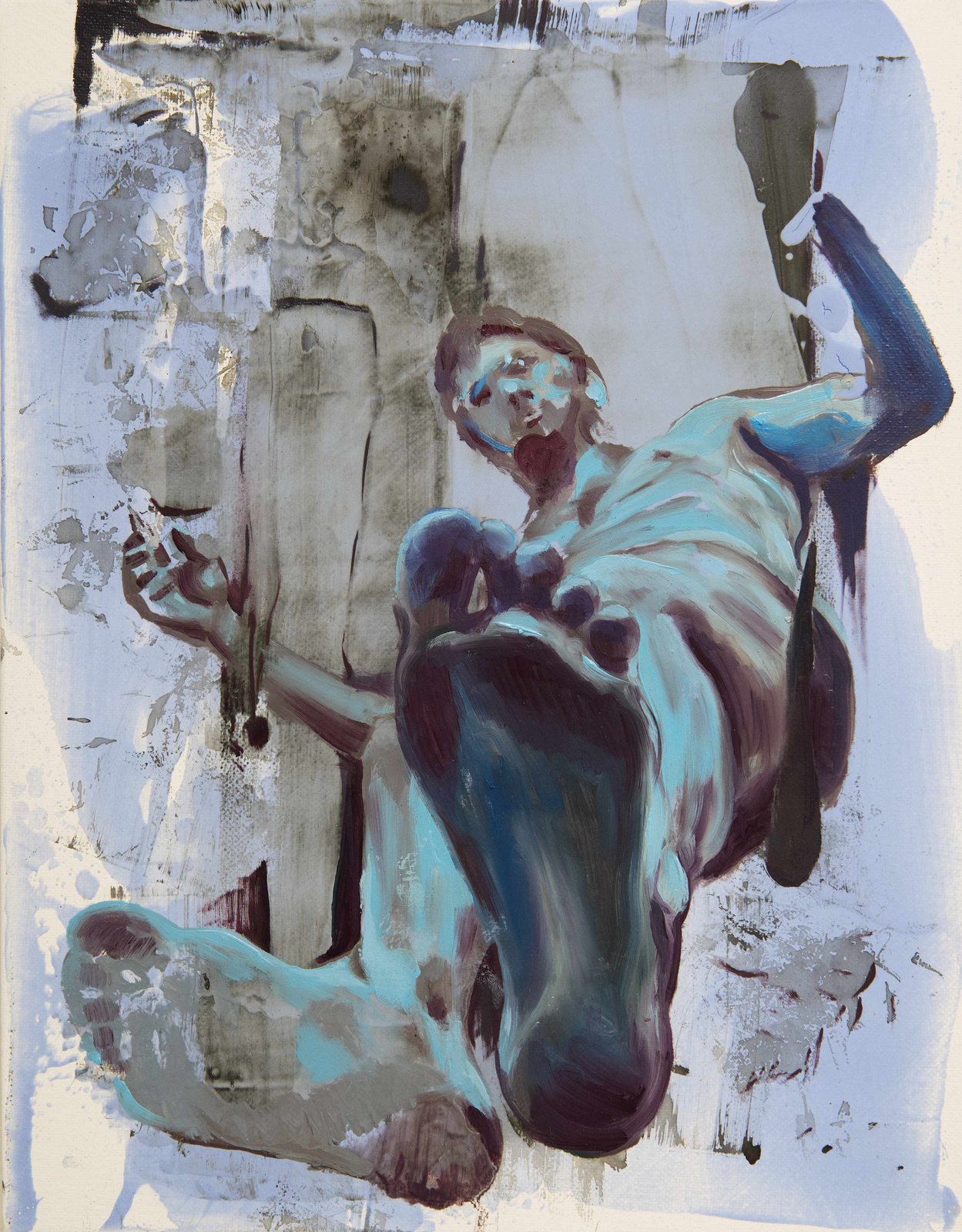
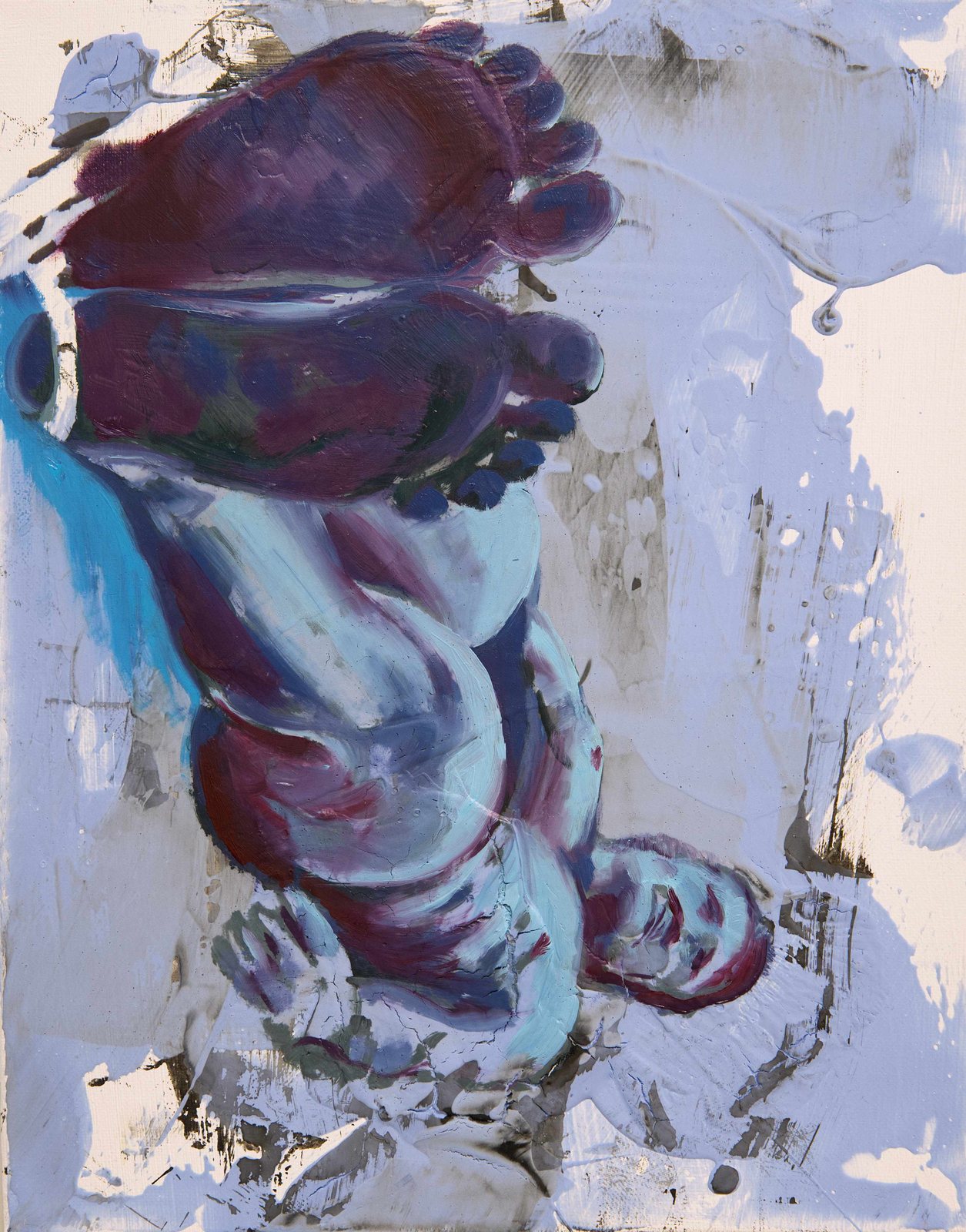
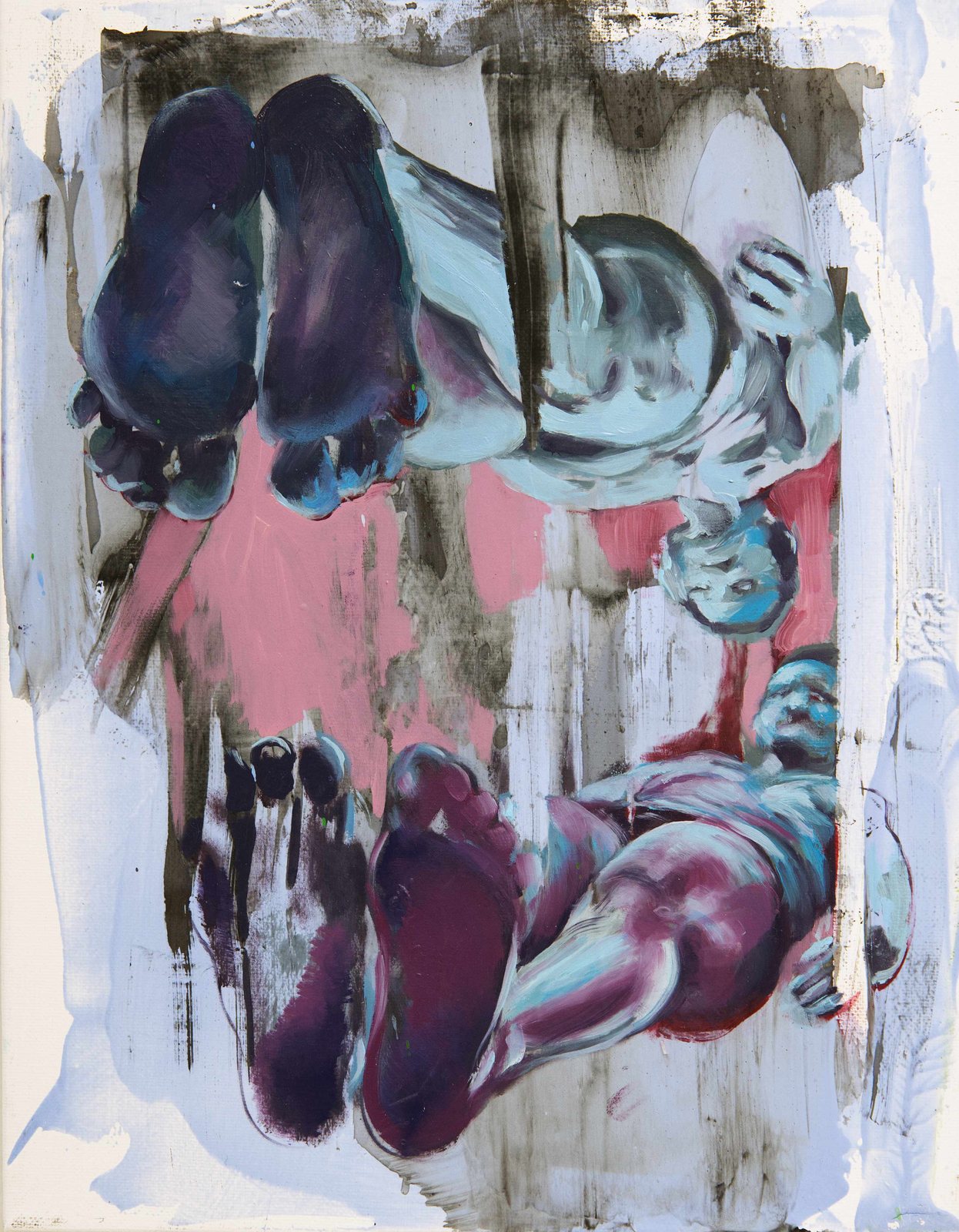
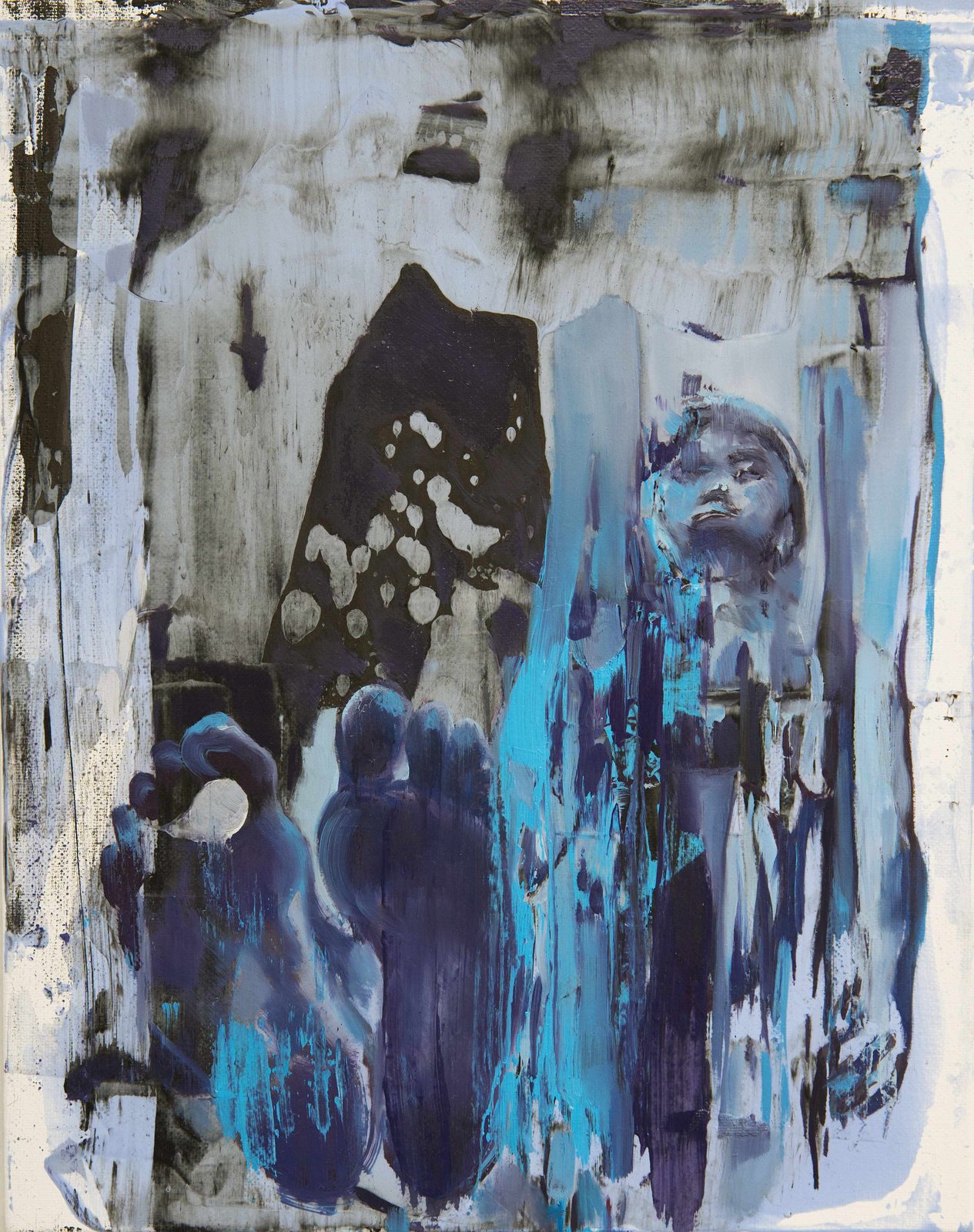
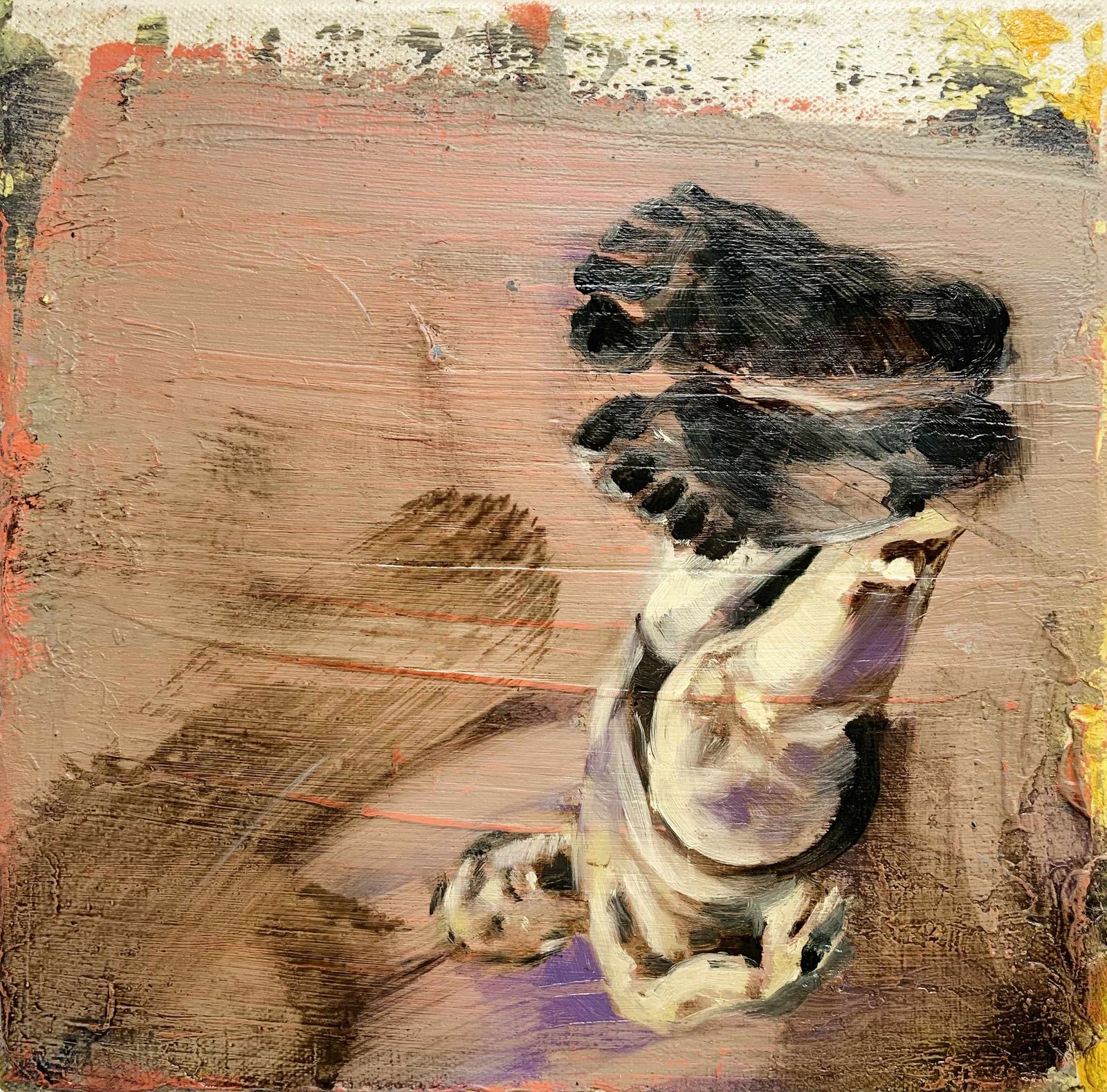
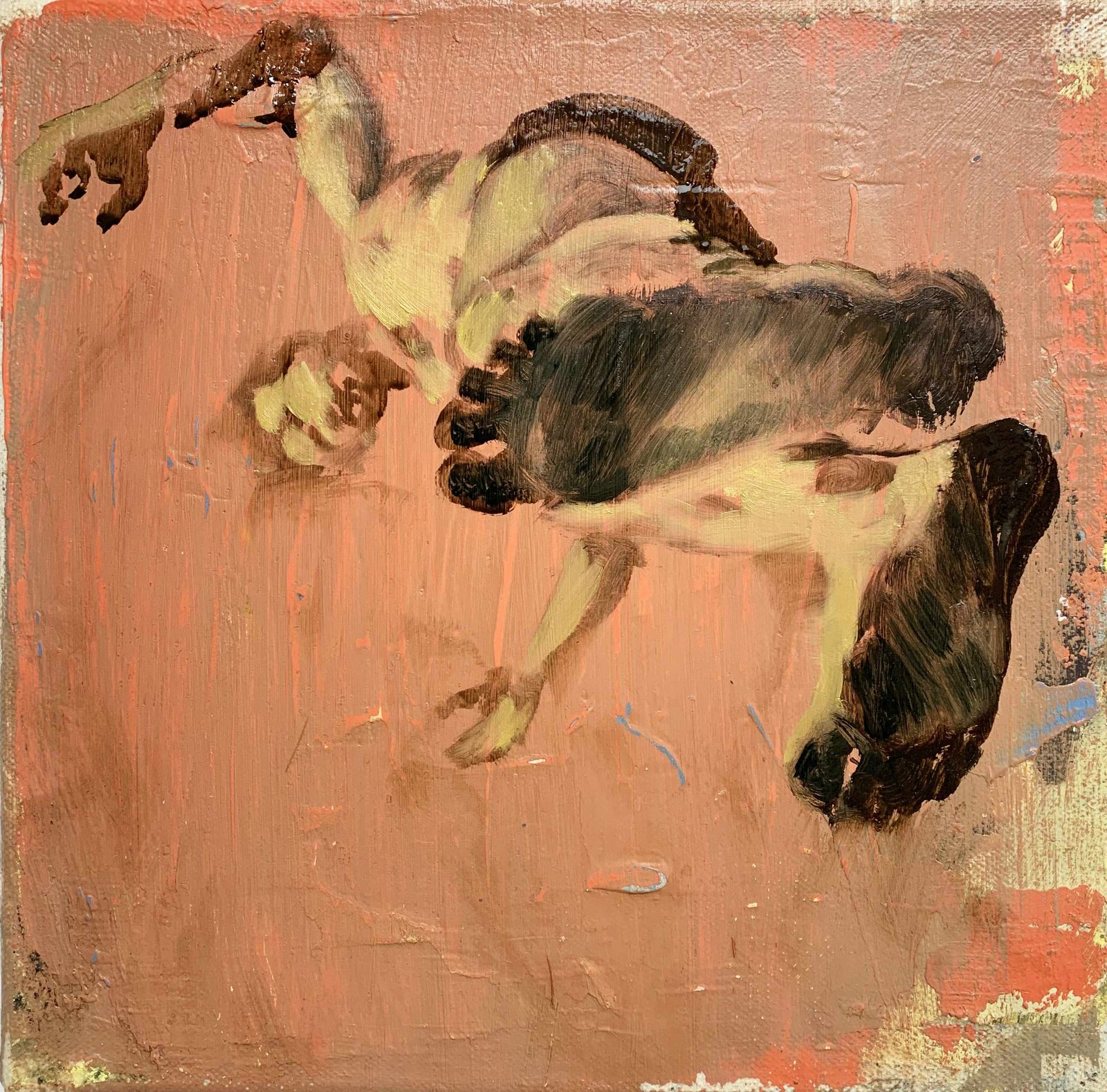
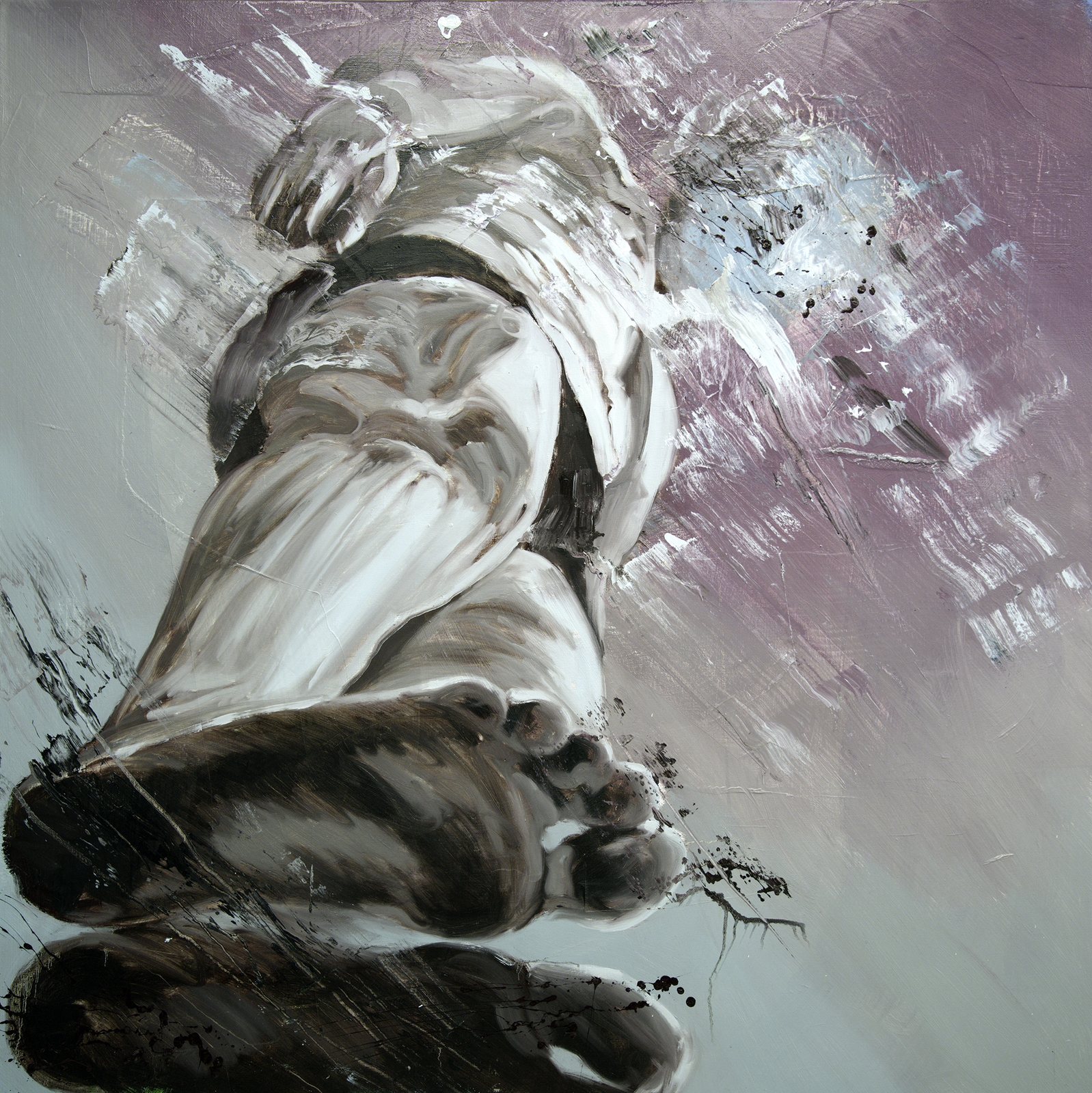
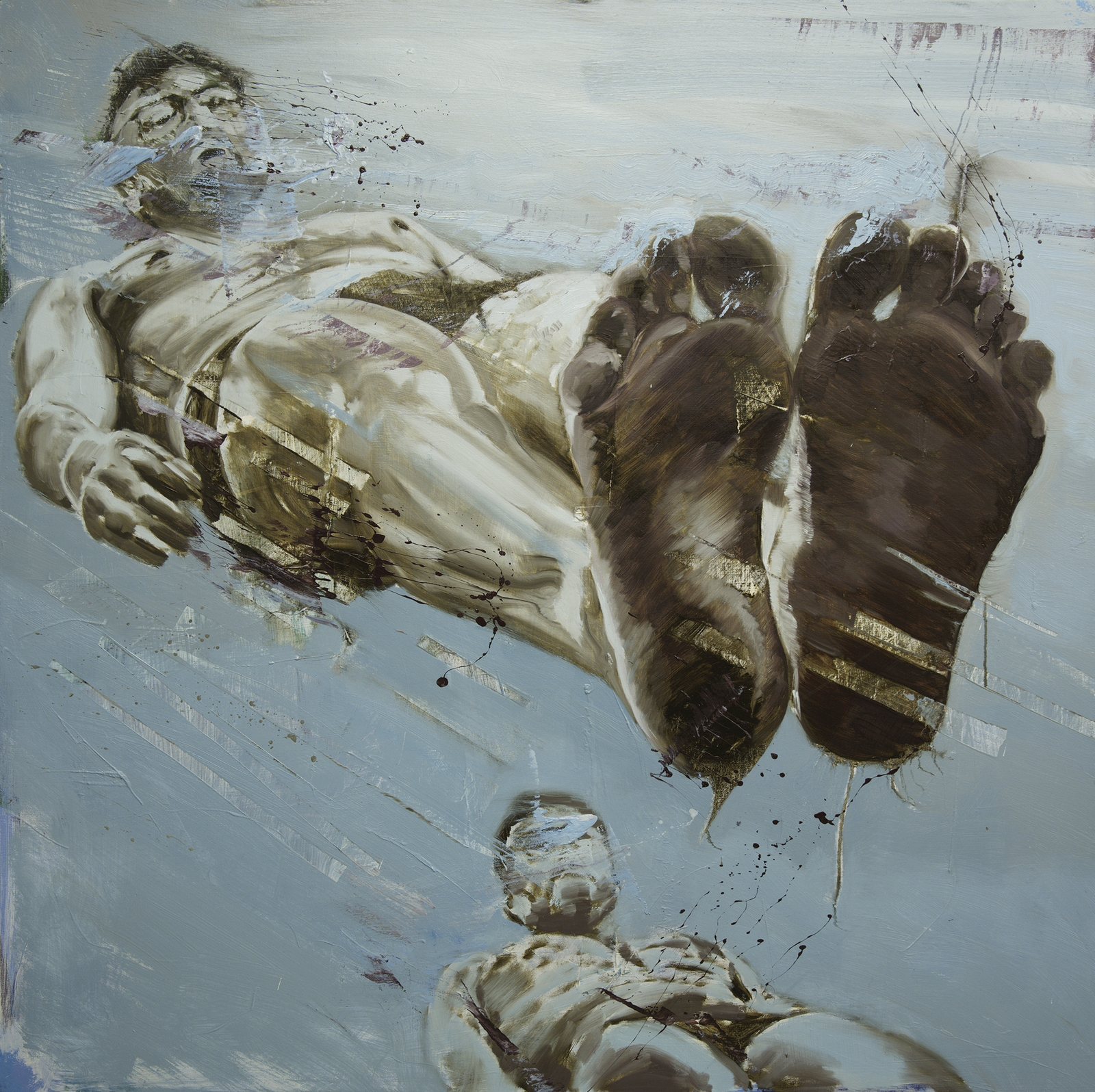
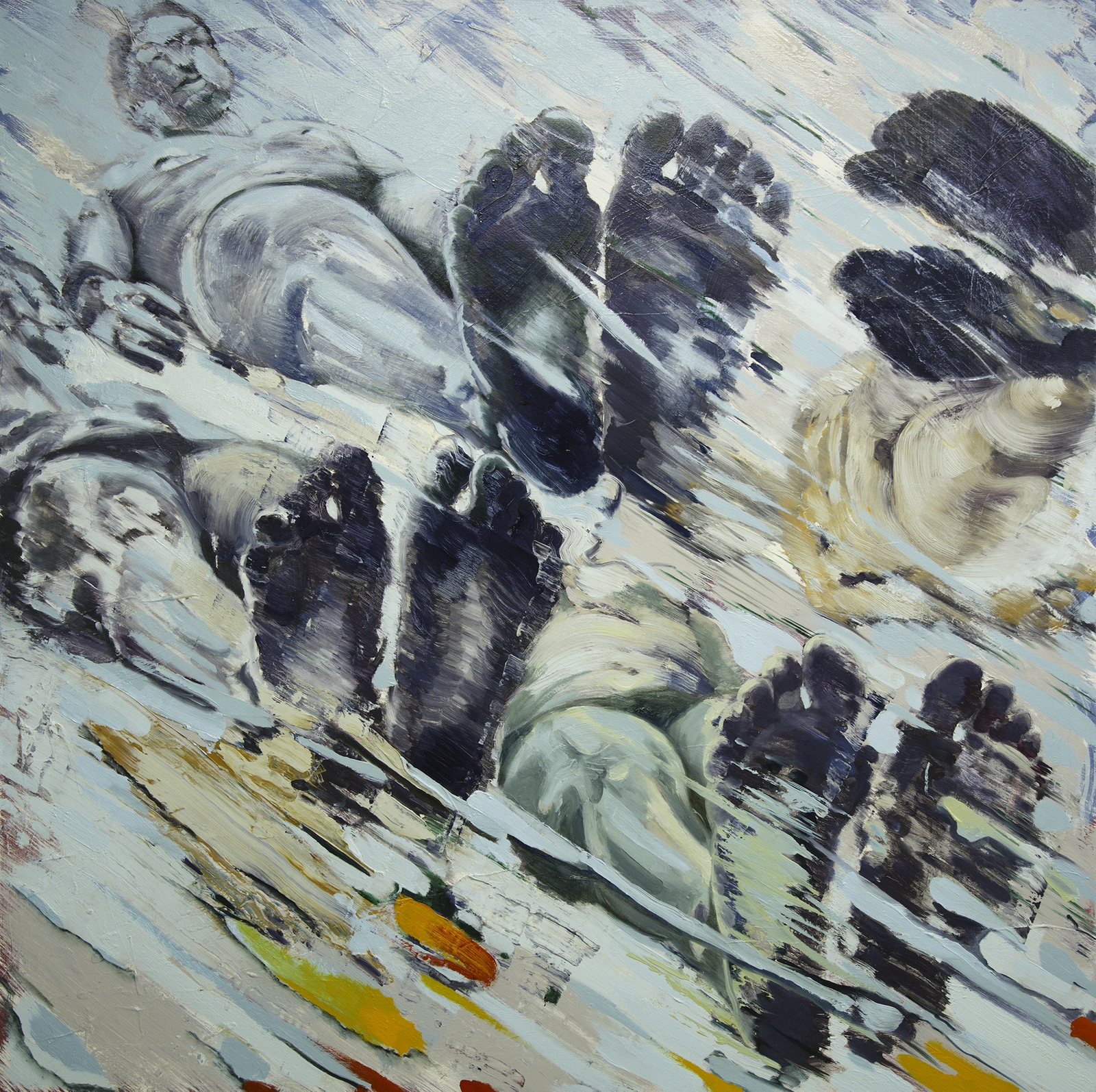
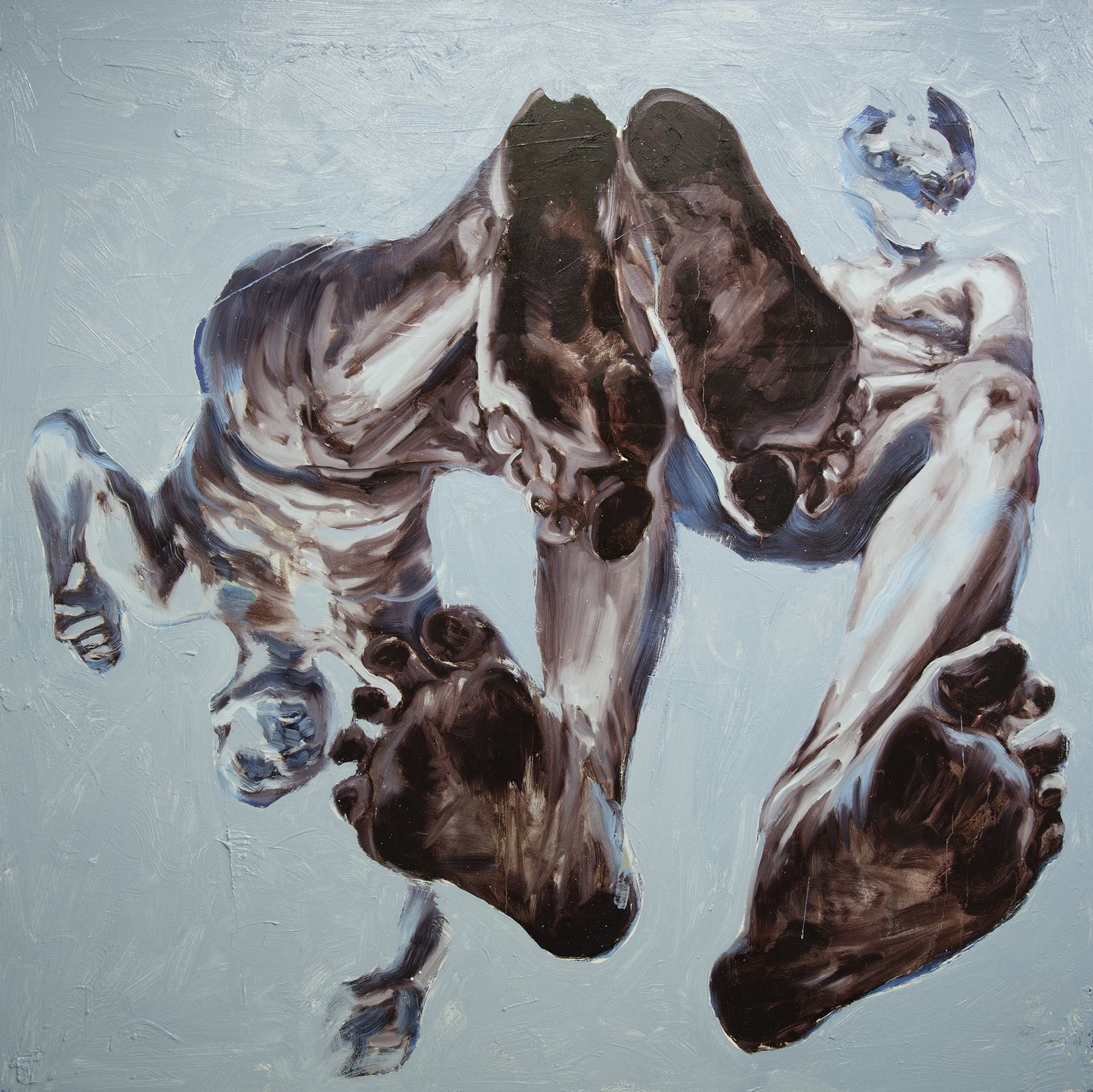
My newest body of work is called Apogee, and it began with looking up. On study trips to Italy I stood under frescoes and studied painted bodies high on walls and ceilings, figures built to be seen from far below. Apogee takes that viewpoint and pushes it further. Each figure is grounded at the feet. The viewer stands where the soles are, and the body rises away in steep foreshortening, legs first, the head last and smallest. It is a strange place to stand. That strangeness is the subject.
The word apogee means the highest point of a path, its climax. The old fresco painters earned that height through perspective. My figures reach for it from ground level. I work them with immediate, aggressive brushwork, some drawn and painted directly on the studio wall, so the paint keeps the speed of the looking. The figure stays readable. The paint stays rough and physical. These are abstract figurative paintings that hold a body and a field of paint in the same view, and they ask the viewer to finish the climb the perspective starts.
The series is built as Fragments. The early works are small and close, in ink, acrylic, and oil on canvas. Two small Fragments painted in oil on rabbit skin glue and canvas carried the series to Serbia in the fall of 2026, in the group exhibition The Eight Art Encounters in Belgrade. The newest Fragments are large canvases, 48 by 48 inches, where the foreshortened body fills the whole field. I am an abstract figurative artist, and Apogee is my most direct statement of abstract figurative art: the figure kept, the viewpoint changed, the paint left honest. For a reader looking for original paintings in Grapevine, the Apogee series page shows every Fragment, and the online store carries the current original paintings.
Visiting, and where the record continues
A Grapevine day builds itself along one street. Start at the Cotton Belt Depot, where the Historical Museum tells the town’s story and the Vintage Railroad boards for the Stockyards. Walk Main Street north: the Palace Arts Center, the tasting rooms of the Urban Wine Trail, and the Settlement to City Museums a block west on Hudgins Street. The map on this page centers on Historic Main Street.
My own record hangs together on this site. The Apogee series page shows the newest paintings. The Texas page tells my state story in one arc. The Dallas page carries my exhibition record in detail, and the Fort Worth page covers the western pole of the metroplex, the town at the other end of the Cotton Belt Route. My CV page holds the formal record, and all the town pages of this site meet on the Market page. Grapevine has no exhibition of mine to point to yet. It has the street, the depot, and the palace, kept working by a town that understands what old rooms are for. That is company my paintings are glad to keep.
Frequently Asked Questions
Has Bartosz Beda exhibited in Grapevine?
I have no Grapevine exhibition to report. No gallery on Main Street has shown my work, and no room in this town holds one of my paintings on its wall. My Texas exhibitions stand in Dallas, Plano, Mesquite, Brownsville, and San Angelo. Grapevine is a neighbor, about twenty miles from my Dallas base, inside the same metropolitan field of students, collectors, and museum visitors.
What is the Palace Arts Center in Grapevine?
The Palace Theatre opened on November 21, 1940, built by Jerome Kirby Buckner for $25,000, with a white stucco front and Art Deco lines. A fire damaged the building during a remodel in 1986, and by 1991 it stood threatened with demolition. The Grapevine Heritage Foundation acquired it to save it, and it reopened on May 21, 2001 as the Palace Arts Center. Today the 435 seat Palace Theatre shows classic films and hosts concerts, and beside it the Lancaster Theatre fills the old 1930s Buckner Cash Grocery.
What happened to Grapevine’s Cotton Belt depot?
The depot at the foot of Main Street was built about 1901 and served passengers and freight until the Cotton Belt closed it in 1972. Volunteers saved the building from demolition and moved it to Heritage Park for safekeeping. Two decades later it came home. It reopened on its original ground on January 31, 1994, twenty two years after it closed, and it now houses the Grapevine Historical Museum and the ticket office of the Grapevine Vintage Railroad.
What is Puffy the locomotive in Grapevine?
Puffy is a steam engine built in 1896, which the Grapevine Vintage Railroad describes as the oldest continuously operating steam locomotive in the South. The railroad runs excursion trains along the old Cotton Belt Route to the Fort Worth Stockyards, about an hour and a half each way, in authentic coaches from the 1920s. A town that runs a steam train out of its own main street takes its past seriously enough to keep it working.
What are the Settlement to City Museums in Grapevine?
At 206 West Hudgins Street, the Settlement to City Museums tell the town’s story in two parts. The Keeling House, built in 1888 and the only building original to the site, holds a timeline that runs from the frontier settlement of 1844 to the present city. The second exhibit covers the Keeling family, who published the Grapevine Sun, one of the town’s earliest newspapers, and it centers on a working Chandler and Price printing press from 1881.
What is Nash Farm in Grapevine?
Thomas Jefferson Nash bought the land in 1859. Its surviving 5.2 acres were bought by the Grapevine Heritage Foundation in 1997 and listed in the National Register of Historic Places in 2010. The farm is counted the oldest operating farmstead in Tarrant County, and it completes the town’s kept layers: the railroad town, the printing town, and the farming town underneath both.
How did Grapevine get its name?
The name came from the land itself. Wild mustang grapes grew thick along the springs and creeks, and the prairie and the settlement took their name from the vines. The town was formally named Grape Vine in 1854. The post office made it one word, Grapevine, in 1914.
Why is Grapevine older than the state of Texas?
In 1843, General Sam Houston and commissioners of the Republic of Texas camped at Grape Vine Springs to meet leaders of ten American Indian nations, in talks that led to the Treaty of Bird’s Fort. The first settlers arrived on the Grape Vine Prairie in 1844, while Texas was still a republic. Grapevine is counted the oldest settlement in Tarrant County.
What is GrapeFest in Grapevine?
Each September the town closes Main Street for GrapeFest, which the city presents as the largest wine festival in the Southwest: four days of Texas wine, food, and live music on the same bricks the cotton wagons once crossed. The festival belongs to the town’s wine life, the Urban Wine Trail of winery tasting rooms along Historic Main Street, all within walking distance of each other.
How did Dallas Fort Worth International Airport change Grapevine?
The airport opened in 1974 at the town’s southeastern edge, and a large share of its ground falls inside Grapevine’s city limits. The population rose from about 7,000 in 1970 to more than 29,000 in 1990. Many towns would have traded their old center for that growth. Grapevine did the opposite. It restored Main Street, protected its historic districts, and built a visitor economy on top of its own history.