
McAllen, Texas: The Valley's Front Room and the Mirage Paintings
McAllen is the front room of the Rio Grande Valley. It is the largest city in Hidalgo County. It is the Valley’s main address for shopping, for hospitals, and for business with Mexico. Shoppers cross the river from Reynosa to its stores. Patients travel to its medical district from both sides of the border. I am Bartosz Beda, an abstract figurative artist based in Dallas. This page is my guide to McAllen, its ground, its history, and its place next to my own record in the Valley. My exhibition record here sits downriver in Brownsville. McAllen is the city the whole Valley passes through, and this page treats it at that scale.
McAllen in My Record
I will state my record plainly. I have no exhibition in McAllen. No museum or gallery in this city has shown my work. This page does not claim a show that never happened. My Rio Grande Valley record is in Brownsville, about an hour east of McAllen at the mouth of the river.
In 2019 the Brownsville Museum of Fine Art presented Paramount of Eternity, my solo exhibition of more than 30 paintings. Paintings of mine also entered the permanent collection of that museum. That is the whole of my Valley exhibition record, and Brownsville is where it lives.
The Brownsville museum needs one honest update. It closed in December 2024. The building is being prepared for a new institution, The Mitte, which is expected to open in late 2026. The museum is not open today, and this page will not describe it as open. My Brownsville page carries that record in full.
What connects me to McAllen is the Valley itself. The 2019 exhibition drew visitors from across the region, and McAllen is the region’s center of gravity. Collectors and students from the Valley reach my studio through the online store and through the drive north to Dallas and Fort Worth. My McAllen connection is a working one. It runs through Brownsville, through the river road, and through the people of this valley who collect and study painting.
Quinta Mazatlan and the Flyway
South of the shopping avenues, at 600 Sunset Drive, a walled estate holds the city’s quietest ground. Quinta Mazatlan is a Spanish Revival adobe mansion set in 20 acres of Tamaulipan thornforest. Jason Chilton Matthews and his wife Marcia built the house in 1935. At the time it ranked among the largest adobe structures in Texas. Carved doors, Talavera tile, and thick sun dried brick walls gave McAllen a house unlike any other in the Valley.
The house passed through one more private owner, then faced demolition. The City of McAllen bought the property in 1998. In 2006 it opened to the public as a nature center, in its own words a mansion with a mission. The city’s Parks and Recreation Department runs it today. It is one of nine sites in the World Birding Center network. It opens Tuesday to Saturday from 8 AM to 5 PM, with longer hours on Thursday evenings.
The reason is the birds. The Rio Grande Valley is where the Central Flyway and the Mississippi Flyway converge, and migration funnels through this delta in spring and fall. More than 225 bird species have been documented on the Quinta Mazatlan grounds alone. Plain chachalacas walk the trails. Great kiskadees call from the anaqua trees. Green jays and hummingbirds move through the garden rooms. Birders travel from across the country for species that reach the United States only here, at its southern tip.
The grounds do as much work as the house. Trails cross the 20 acres under ebony, mesquite, and huisache, the native thornforest that once covered this delta. The estate works as a demonstration site. Its plantings show Valley homeowners how a yard can hold habitat, with native plants that feed birds and butterflies through the year. School groups, bird walks, and garden programs run through the calendar. It is a working piece of the old landscape, kept inside a city that has grown up on every side of it.
The Border City: Reynosa, Trade, and Care
McAllen faces Reynosa, Tamaulipas, across the Rio Grande. The city owns and runs its own bridge system, a rare thing on this border. The McAllen-Hidalgo International Bridge has carried traffic since 1926 and still takes pedestrians into downtown Reynosa on foot. The Anzalduas International Bridge, opened in 2009, links the west side of the metro area to Reynosa and to the express road toward Monterrey.
Industry here works in pairs. Assembly plants called maquiladoras stand in Reynosa. Their partner offices, warehouses, and distribution yards stand in McAllen. The city’s economic development corporation has recruited for both sides of the river since the late 1980s. Growth quickened after the North American Free Trade Agreement took effect in 1994. McAllen also holds Foreign Trade Zone No. 12, where imported goods can be held and processed while customs duties are deferred.
Retail is the second engine. Studies by the Federal Reserve Bank of Dallas have long tied McAllen sales to shoppers from Mexico, and the stores along Expressway 83 still draw families from Reynosa and Monterrey every weekend. Medicine is the third engine. McAllen is the Valley’s medical center, and its hospitals serve patients from South Texas and northern Mexico alike. Each winter the city also fills with Winter Texans, seasonal residents from the northern states and Canada who come for the mild months and stay through spring.
The front room has a hall to match. The McAllen Convention Center opened in 2007, set around Oval Park in the south of the city. It hosts conventions, expos, weddings, and quinceañeras from across the Valley and northern Mexico. The Performing Arts Center joined the same campus in 2016, and the two buildings form the Convention Center District. A city that receives this many guests needs rooms that can hold them. McAllen built those rooms on purpose, and the whole region uses them.
A Short History of McAllen
The city began as ranch land. The Santa Anita Ranch grew from a Spanish land grant of the late 1790s and passed through the Ballí family. John McAllen married into that family, and the ranch took his name. In March 1903 the Hidalgo Irrigation Company was organized to bring river water to the dry brush country. On August 20, 1904, the St. Louis, Brownsville and Mexico Railway reached the ranch. John McAllen and his son James had given land so the line would pass here. On December 5, 1904, the McAllen Townsite Company platted the town and named it for him. A post office under the McAllen name opened in 1907. McAllen incorporated in 1911.
Water changed everything. Canals spread across the delta, and brush gave way to fields. By 1911 about 5,000 acres near the town were under cultivation, growing cotton, alfalfa, citrus fruit, grapes, and figs. Packing sheds and canneries followed the crops. The town adopted a home rule charter in 1927. By 1940 McAllen counted 11,877 people and had taken the nickname it still uses, the City of Palms. Hard freezes, above all in 1983, cut the citrus groves back, and the farm economy slowly gave ground to trade, retail, and medicine. The palms stayed.
Mirage in the Border Light
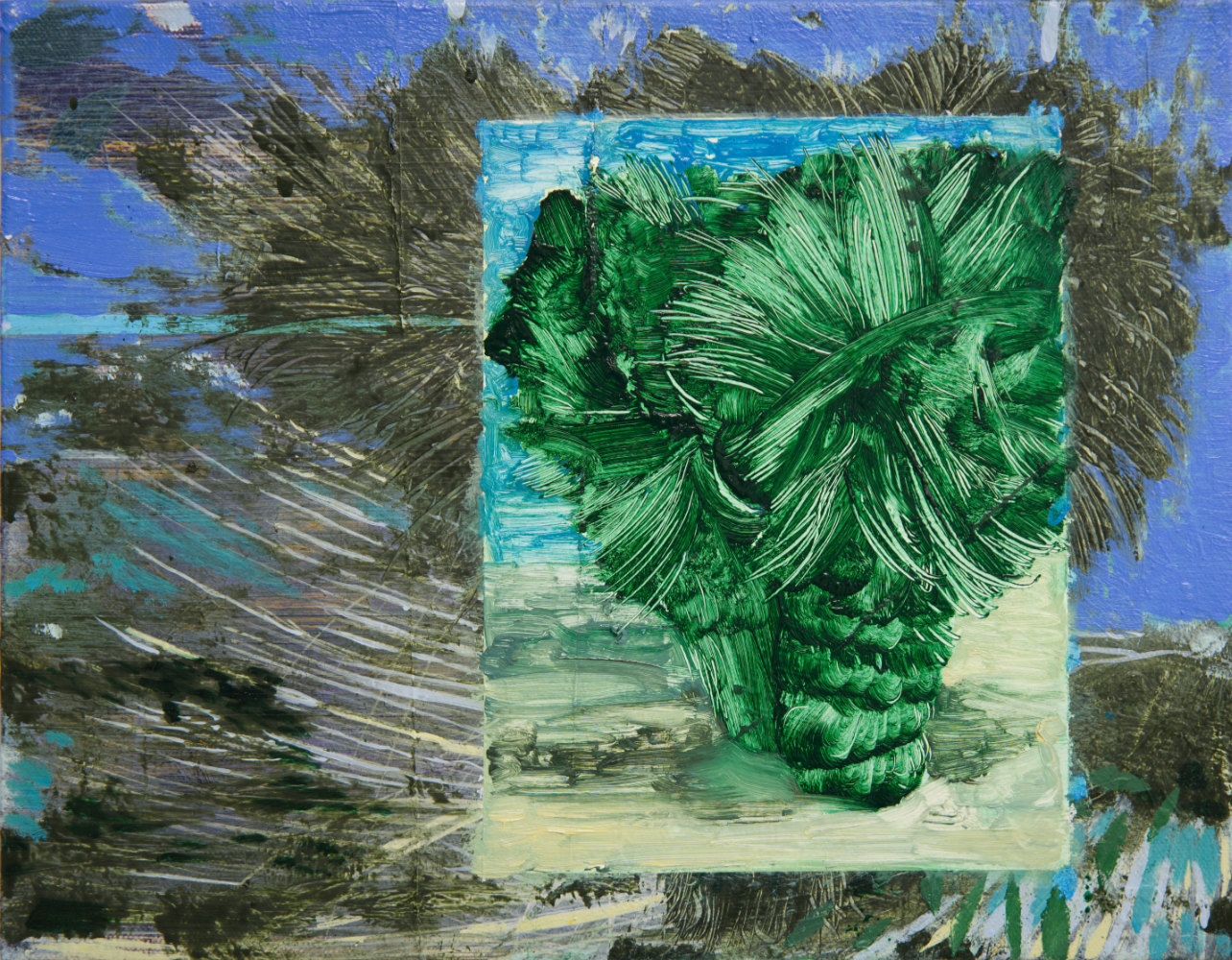
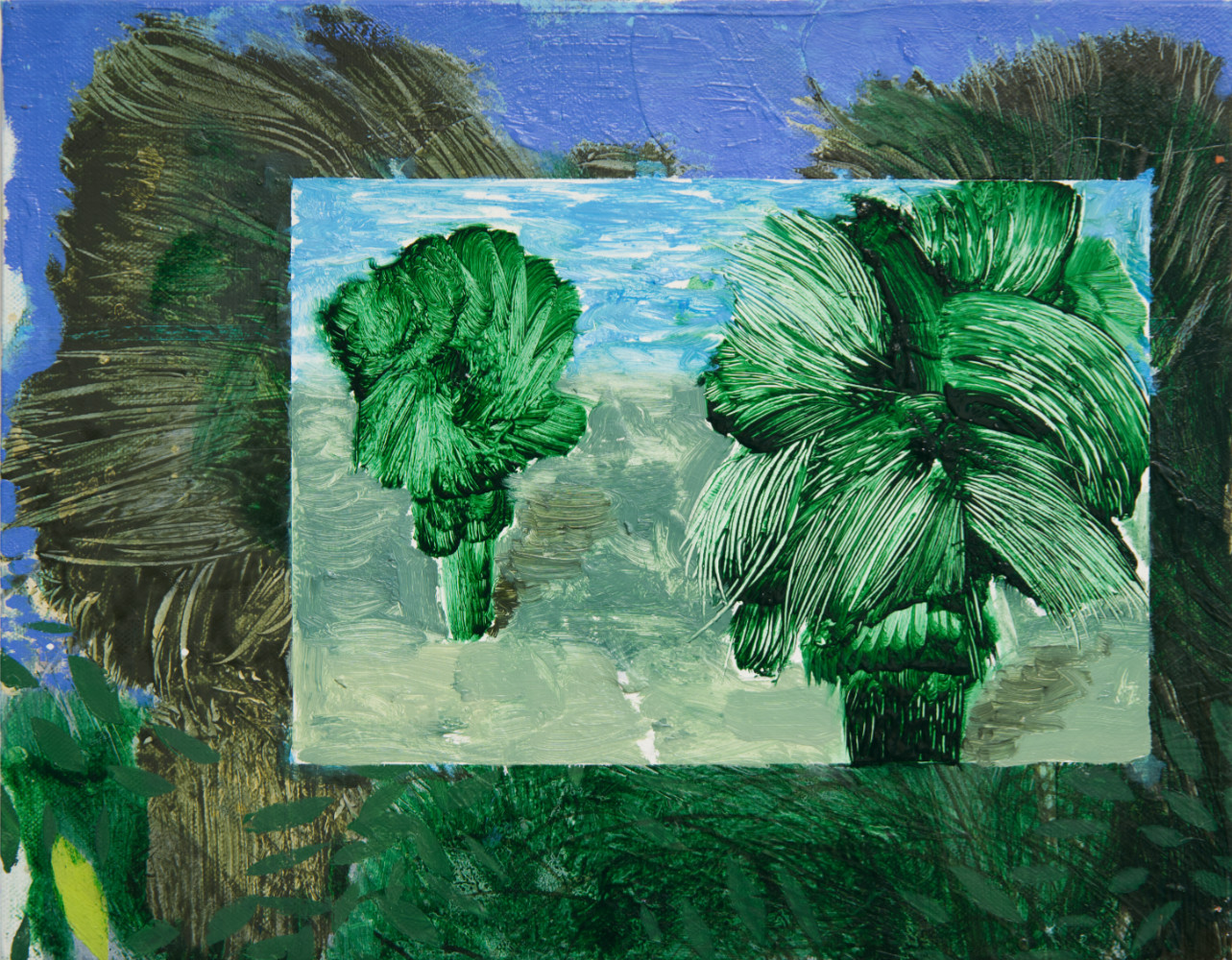
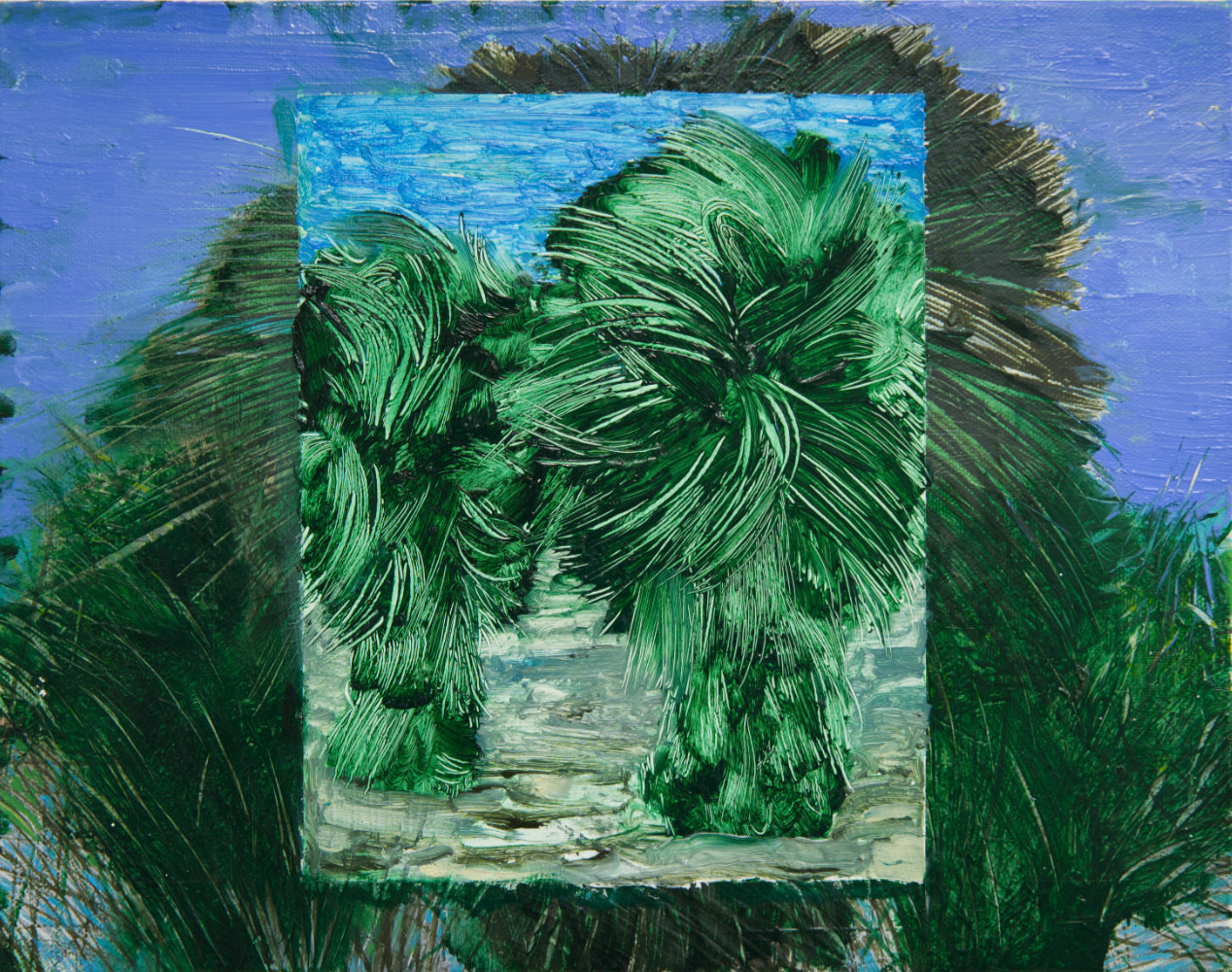
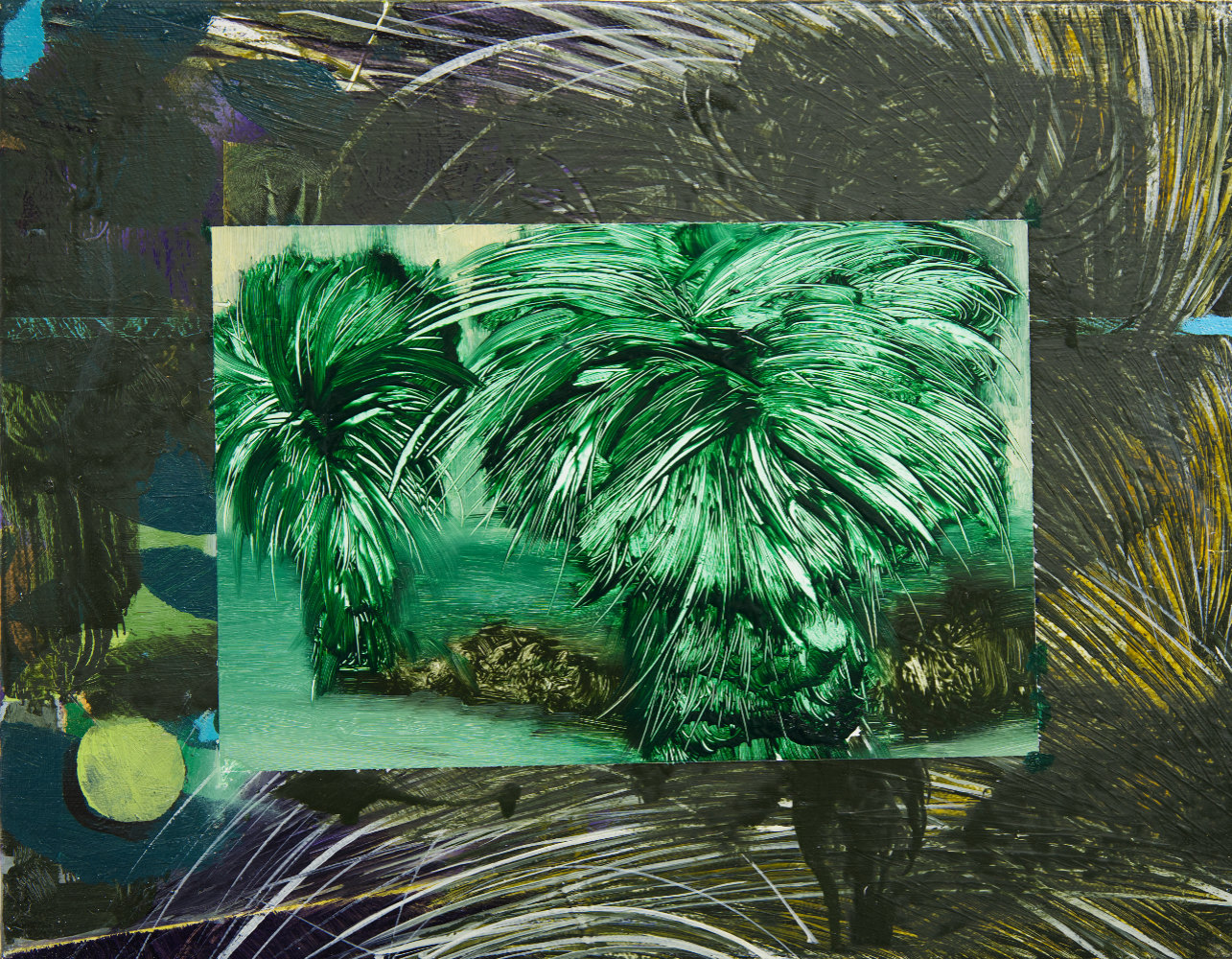
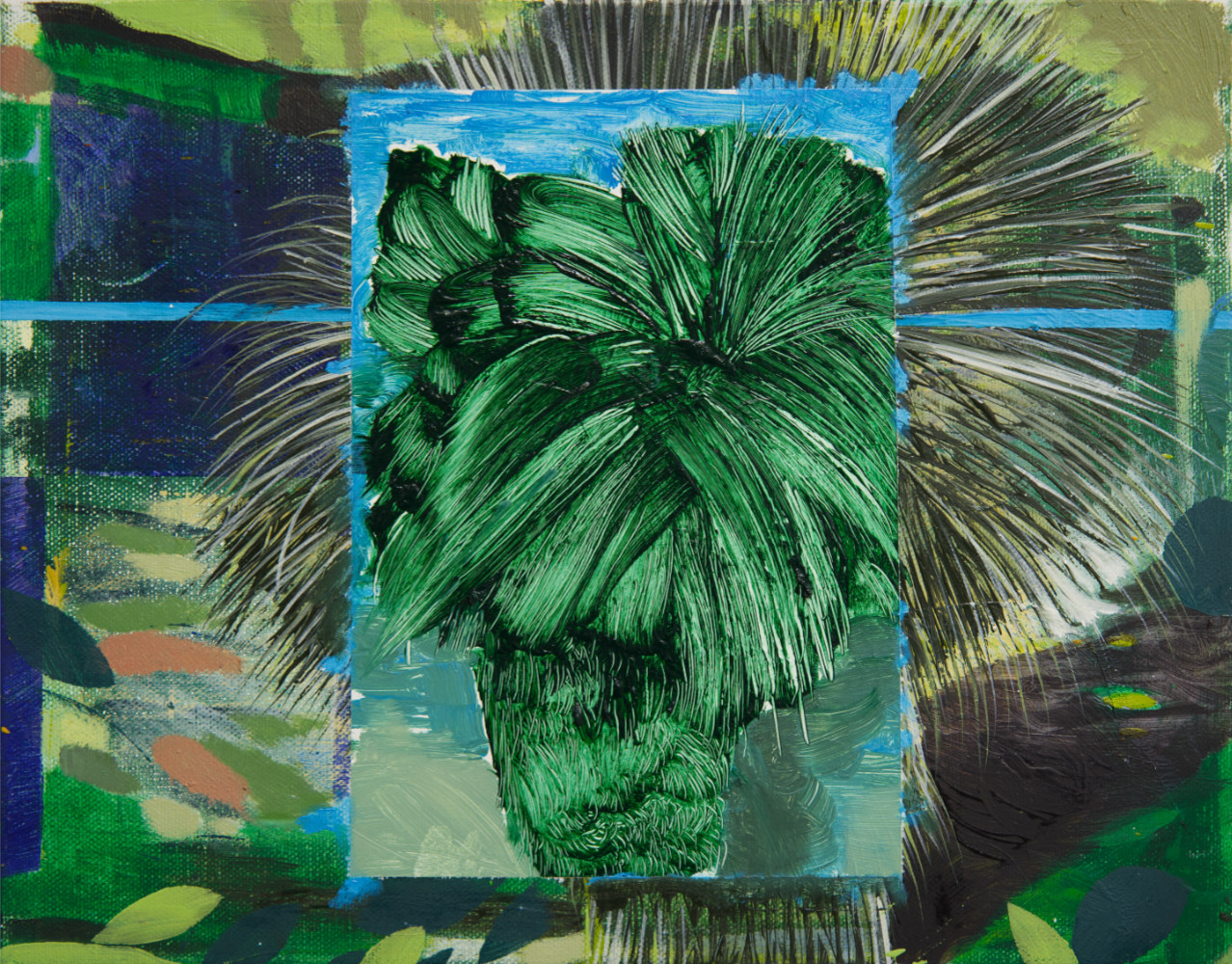
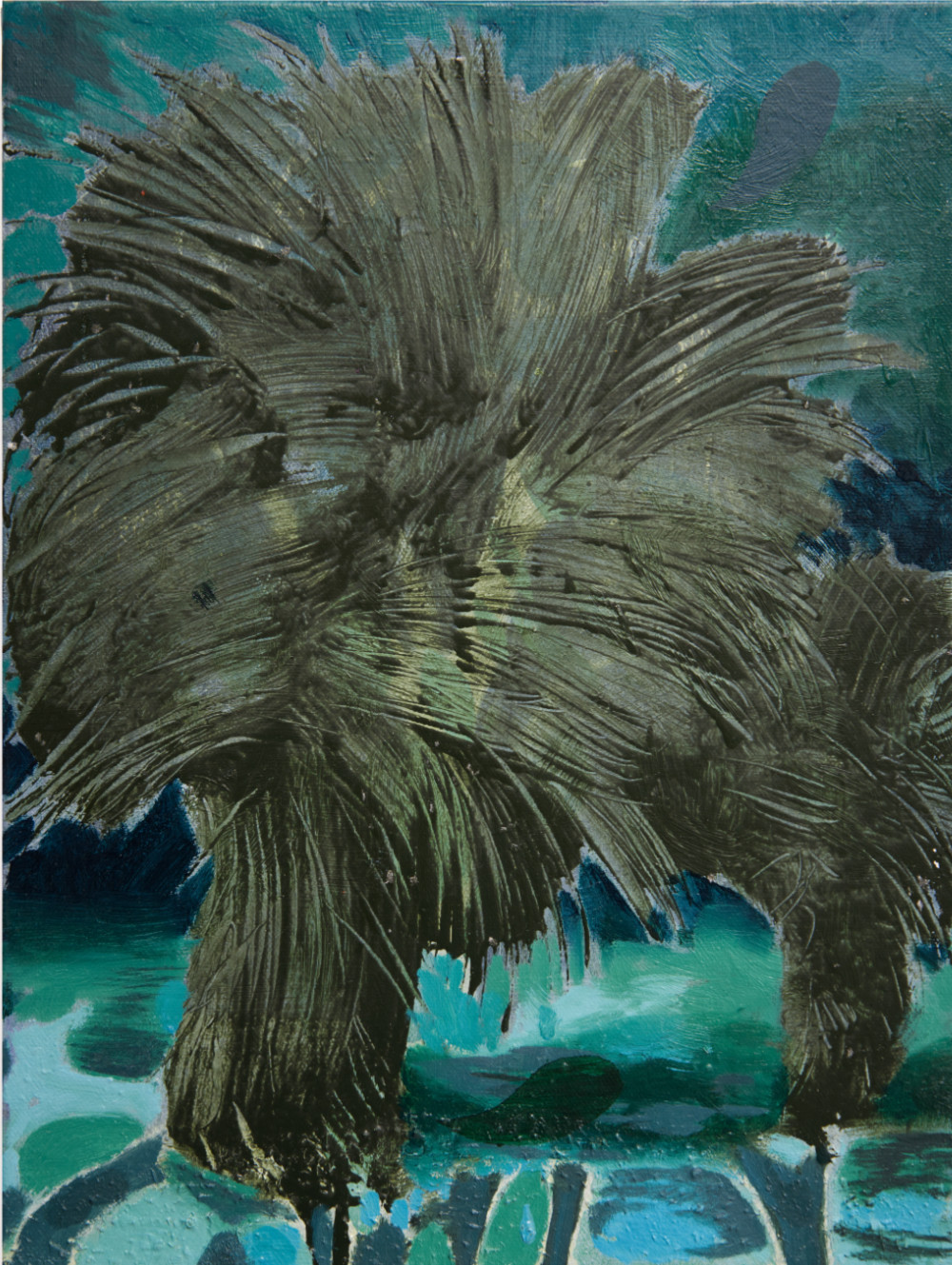
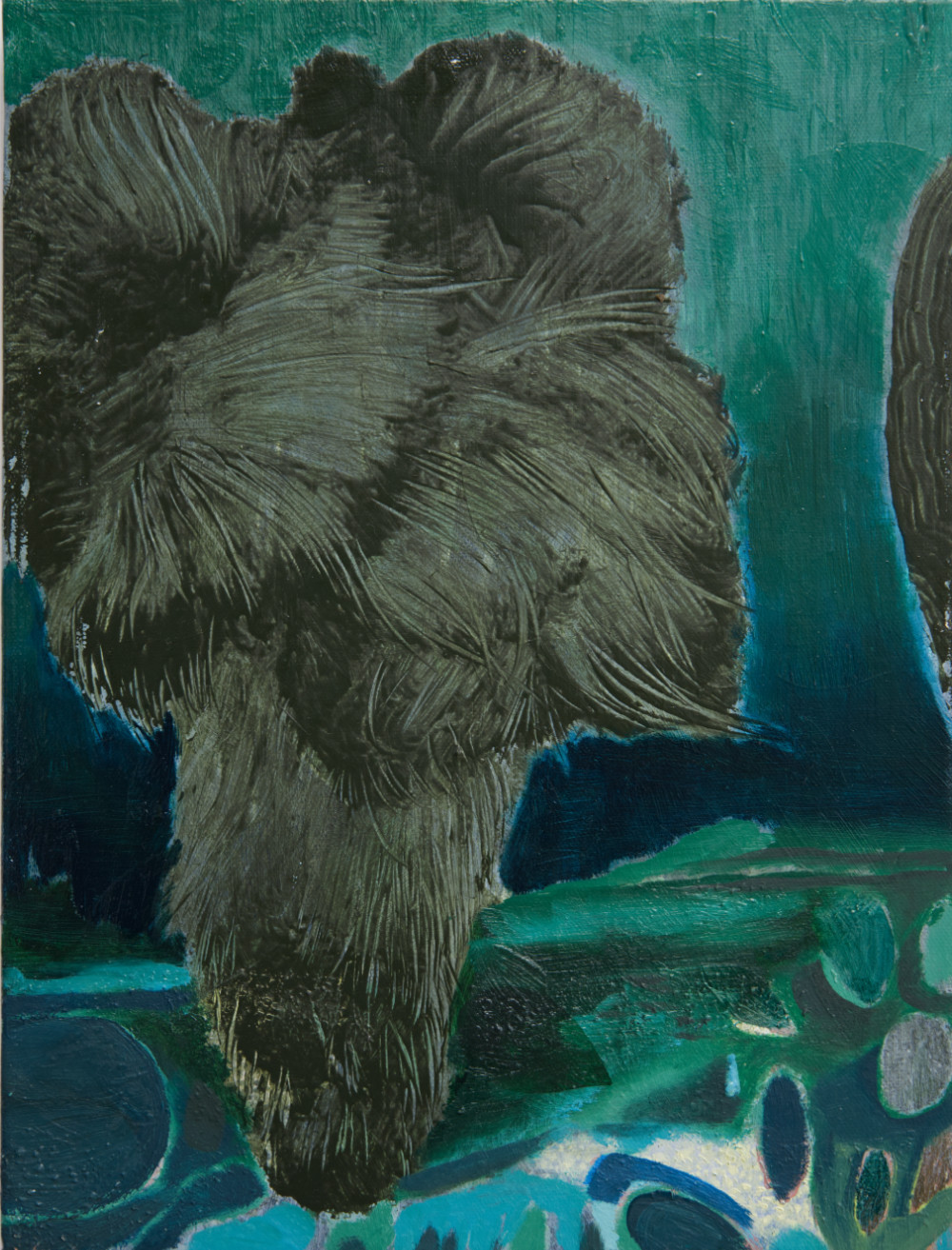
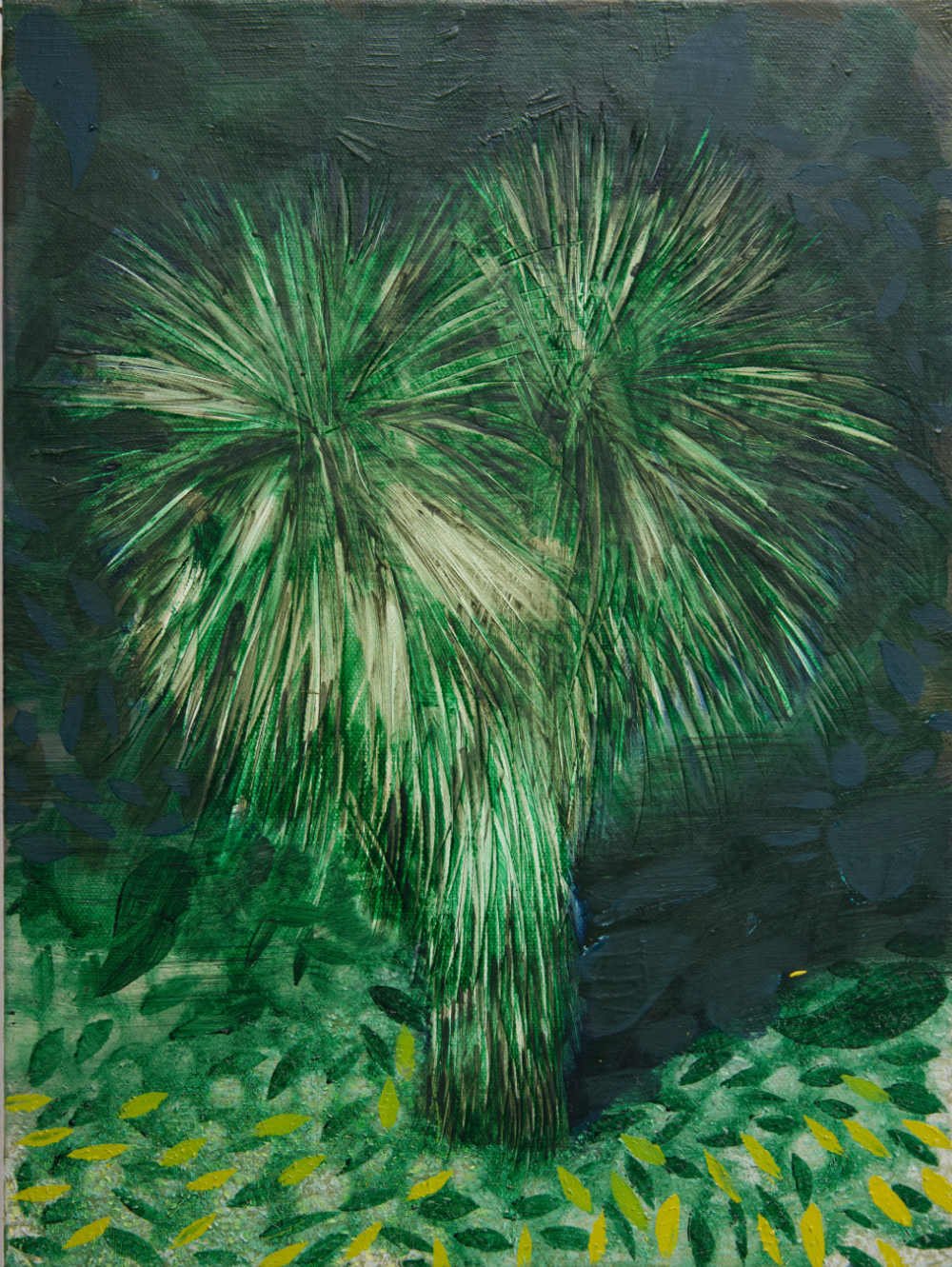
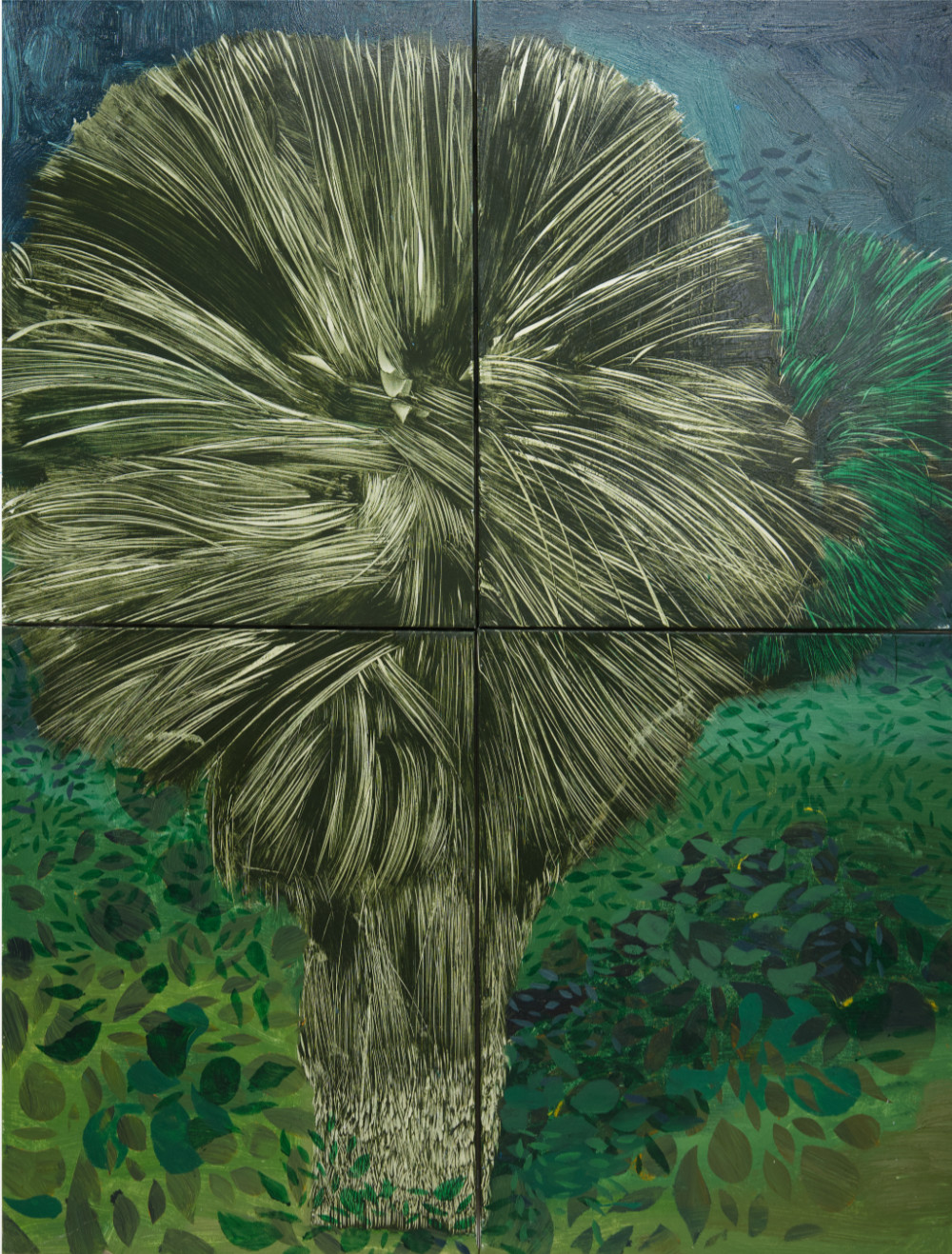
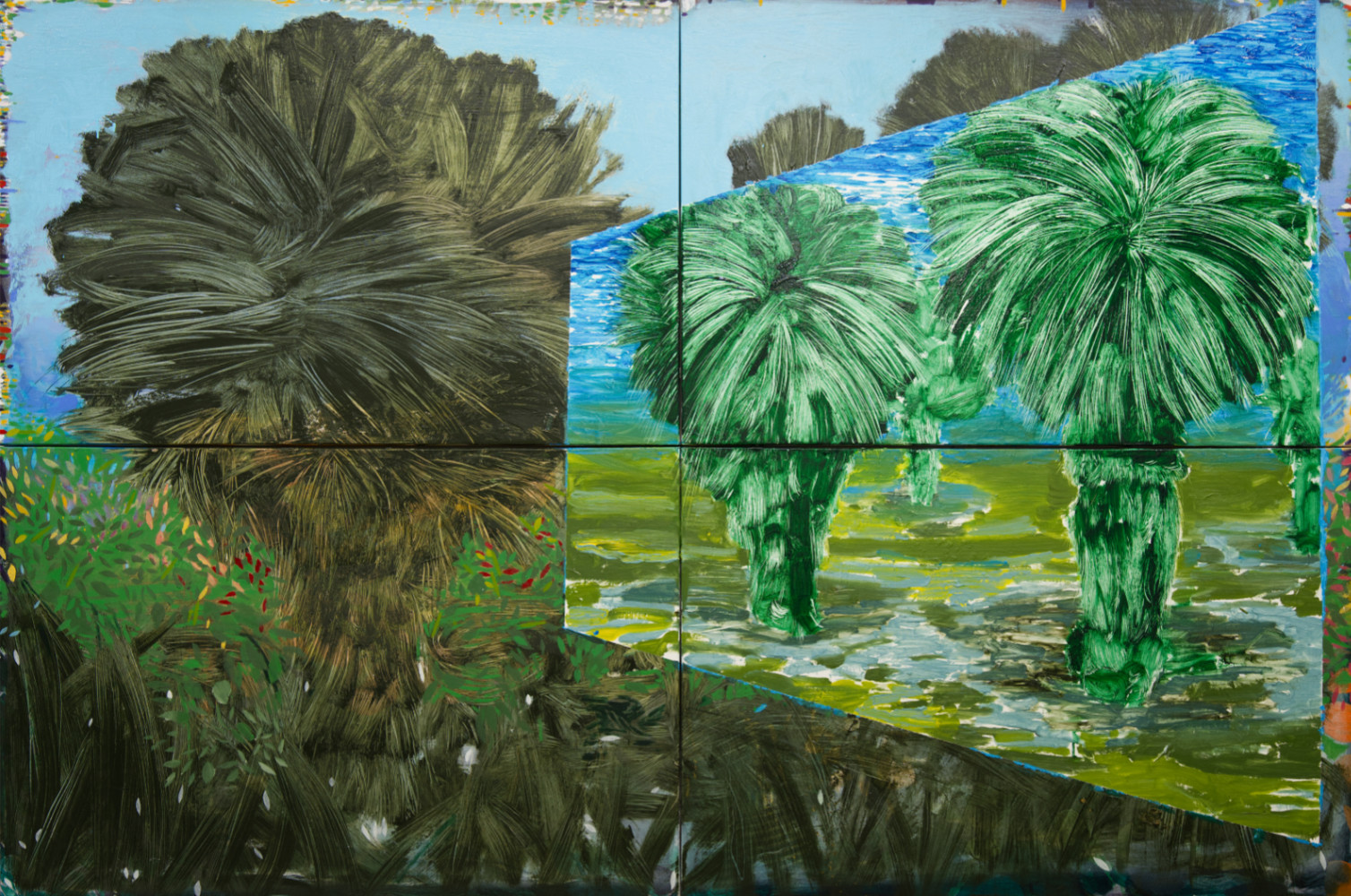
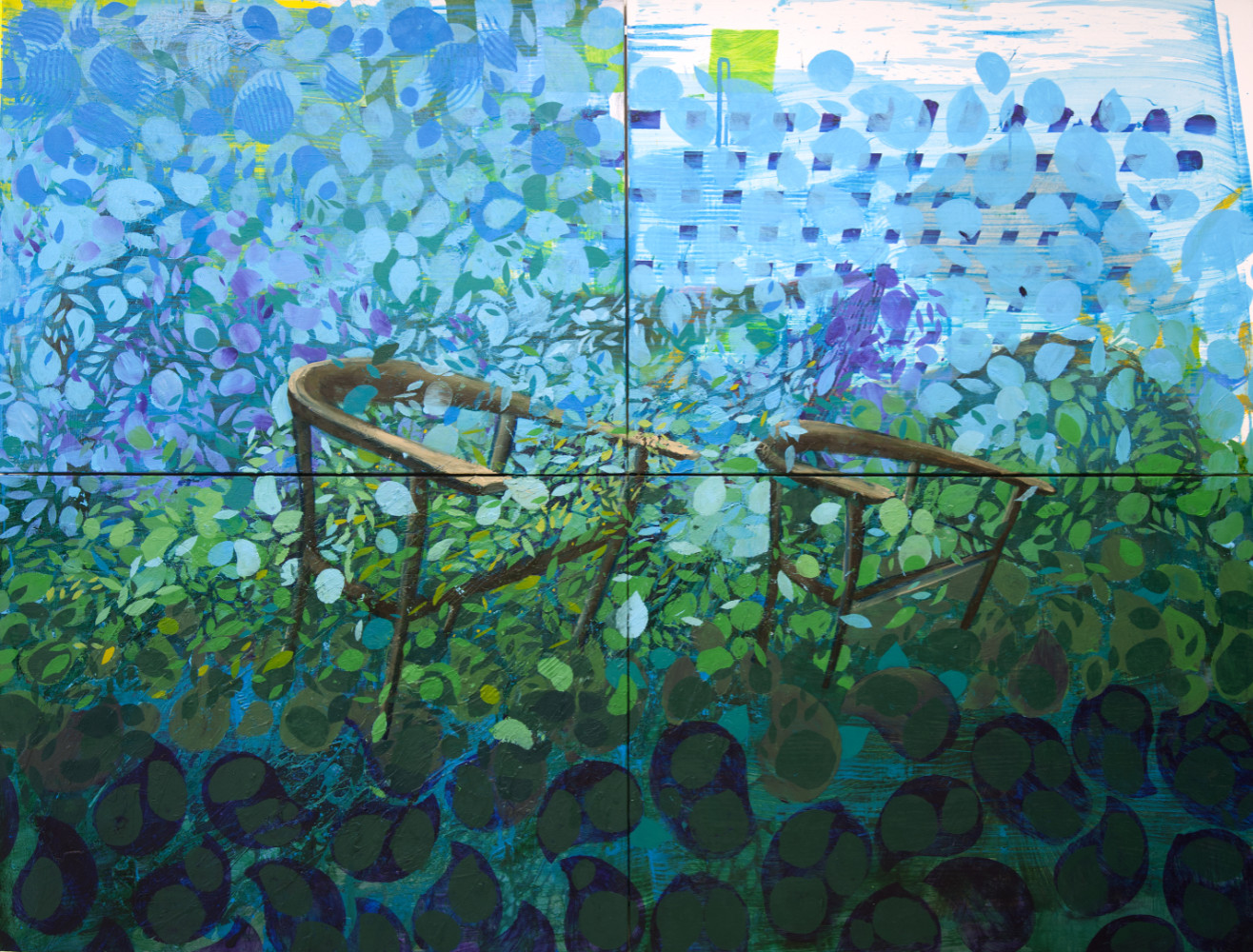
Mirage is my current series of oil paintings, and this valley is the right light for it. The work began during a residency at Angelo State University in San Angelo, where I watched beaked yucca plants under streetlamps at night. Stripped of color, the stiff rosettes stopped reading as plants and started reading as figures. I built the paintings from photographs through stencils I cut by hand, so each form is placed, not copied.
An abstract figurative artist keeps the figure and lets the ground move. In Mirage the figure stands in glare. Edges thin out. Forms rise out of bright air and sink back into it. That is the light of the lower Rio Grande delta at midday, when heat lifts off flat fields and the far tree line wavers. A mirage is an image made of distance and longing. These paintings hold a person the same way memory does, present and already changing.
The series runs from small canvases of 11 by 14 inches to one large canvas of 60 by 80 inches, so the work fits the rooms of real houses as well as gallery walls. Readers looking for McAllen TX art with the figure at its center, or for original paintings in McAllen homes, will find the series gathered in full on the Mirage series page, with current originals in the online store. Abstract figurative art asks something of a room. In a city of strong sun and deep shade, these paintings ask it in the local language.
Visiting McAllen, and Where the Record Continues
A first visit should pair the estate with the museum. The International Museum of Art and Science stands at 1900 West Nolana Avenue. The McAllen Junior League founded it, and it opened in 1969. It is an Affiliate of the Smithsonian Institution, and its permanent collection holds about 1,500 works of fine art beside its science halls. For performance, the McAllen Performing Arts Center opened in November 2016 in the Convention Center District. Its hall seats about 1,800 people and brings touring Broadway productions, concerts, and the Valley Symphony Orchestra to the border.
The record continues across this site. The Brownsville page tells the 2019 exhibition story in full. The Texas page traces my work across the state. The Dallas page holds my home base record, and my CV page lists exhibitions and collections. The Mirage series page shows the paintings one by one. The Market page is the index of every town and neighborhood in this gallery. Thank you for reading about McAllen, the city where the Valley receives the world.
Frequently Asked Questions
Has Bartosz Beda exhibited in McAllen, Texas?
I have no exhibition in McAllen. No museum or gallery in this city has shown my work. This page does not claim a show that never happened. My Rio Grande Valley record is in Brownsville, about an hour east of McAllen at the mouth of the river. In 2019 the Brownsville Museum of Fine Art presented Paramount of Eternity, my solo exhibition of more than 30 paintings. Paintings of mine also entered the permanent collection of that museum. That is the whole of my Valley exhibition record, and Brownsville is where it lives.
How do Valley collectors reach Bartosz Beda’s studio?
The 2019 Brownsville exhibition drew visitors from across the region, and McAllen is the region’s center of gravity. Collectors and students from the Valley reach my studio through the online store and through the drive north to Dallas and Fort Worth. My McAllen connection is a working one. It runs through Brownsville, through the river road, and through the people of this valley who collect and study painting.
What is Quinta Mazatlan in McAllen?
Quinta Mazatlan is a Spanish Revival adobe mansion set in 20 acres of Tamaulipan thornforest, at 600 Sunset Drive. Jason Chilton Matthews and his wife Marcia built the house in 1935. At the time it ranked among the largest adobe structures in Texas. Carved doors, Talavera tile, and thick sun dried brick walls gave McAllen a house unlike any other in the Valley. The City of McAllen bought the property in 1998. In 2006 it opened to the public as a nature center, in its own words a mansion with a mission. It is one of nine sites in the World Birding Center network. It opens Tuesday to Saturday from 8 AM to 5 PM, with longer hours on Thursday evenings.
Why do birders travel to McAllen, Texas?
The Rio Grande Valley is where the Central Flyway and the Mississippi Flyway converge, and migration funnels through this delta in spring and fall. More than 225 bird species have been documented on the Quinta Mazatlan grounds alone. Plain chachalacas walk the trails. Great kiskadees call from the anaqua trees. Green jays and hummingbirds move through the garden rooms. Birders travel from across the country for species that reach the United States only here, at its southern tip.
What bridges connect McAllen and Reynosa?
McAllen faces Reynosa, Tamaulipas, across the Rio Grande. The city owns and runs its own bridge system, a rare thing on this border. The McAllen-Hidalgo International Bridge has carried traffic since 1926 and still takes pedestrians into downtown Reynosa on foot. The Anzalduas International Bridge, opened in 2009, links the west side of the metro area to Reynosa and to the express road toward Monterrey.
How does McAllen’s economy work with Reynosa?
Industry here works in pairs. Assembly plants called maquiladoras stand in Reynosa. Their partner offices, warehouses, and distribution yards stand in McAllen. Growth quickened after the North American Free Trade Agreement took effect in 1994. McAllen also holds Foreign Trade Zone No. 12, where imported goods can be held and processed while customs duties are deferred. Retail is the second engine: studies by the Federal Reserve Bank of Dallas have long tied McAllen sales to shoppers from Mexico. Medicine is the third engine. McAllen is the Valley’s medical center, and its hospitals serve patients from South Texas and northern Mexico alike. Each winter the city also fills with Winter Texans, seasonal residents from the northern states and Canada.
When was McAllen, Texas founded?
The city began as ranch land. The Santa Anita Ranch grew from a Spanish land grant of the late 1790s and passed through the Ballí family. John McAllen married into that family, and the ranch took his name. In March 1903 the Hidalgo Irrigation Company was organized to bring river water to the dry brush country. On August 20, 1904, the St. Louis, Brownsville and Mexico Railway reached the ranch. On December 5, 1904, the McAllen Townsite Company platted the town and named it for him. A post office under the McAllen name opened in 1907. McAllen incorporated in 1911. The town adopted a home rule charter in 1927. By 1940 McAllen counted 11,877 people and had taken the nickname it still uses, the City of Palms.
What is the International Museum of Art and Science in McAllen?
The International Museum of Art and Science stands at 1900 West Nolana Avenue. The McAllen Junior League founded it, and it opened in 1969. It is an Affiliate of the Smithsonian Institution, and its permanent collection holds about 1,500 works of fine art beside its science halls.
What is the McAllen Convention Center District?
The McAllen Convention Center opened in 2007, set around Oval Park in the south of the city. It hosts conventions, expos, weddings, and quinceañeras from across the Valley and northern Mexico. The Performing Arts Center joined the same campus in 2016, and the two buildings form the Convention Center District. The Performing Arts Center hall seats about 1,800 people and brings touring Broadway productions, concerts, and the Valley Symphony Orchestra to the border.
Why does McAllen suit the Mirage paintings?
Mirage began during a residency at Angelo State University in San Angelo, where I watched beaked yucca plants under streetlamps at night. Stripped of color, the stiff rosettes stopped reading as plants and started reading as figures. I built the paintings from photographs through stencils I cut by hand, so each form is placed, not copied. In Mirage the figure stands in glare. Edges thin out. Forms rise out of bright air and sink back into it. That is the light of the lower Rio Grande delta at midday, when heat lifts off flat fields and the far tree line wavers. The series runs from small canvases of 11 by 14 inches to one large canvas of 60 by 80 inches.