
Port Mansfield, Texas: The Fishing Port and Paintings of Water and Glare
Port Mansfield is a small port and fishing community in northeastern Willacy County, Texas. It stands on the western shore of the Laguna Madre, at the end of the road, facing Padre Island across shallow water. A dredged channel, the Mansfield Cut, runs from its harbor through the island to the Gulf of Mexico. A few hundred people live here year round. Boats, birds, and weather set the pace of the place. I am Bartosz Beda, a painter based in Dallas. This page gives Port Mansfield its own entry in my Market gallery. It tells the story of the cut, the port, and the lagoon, and it connects that ground to my Mirage paintings, a series built on heat, glare, and figures that appear and dissolve in strong light.
This is the quiet end of the Texas coast. South Padre Island, down the shore, is a resort. Port Mansfield is not. It stayed a working fishing village, and that is its character. The guide below covers the harbor and the channel, the strange salty lagoon in front of the town, and the short history of a port that was planned on paper and then cut through an island. The painting section explains why this light belongs in my work.
Port Mansfield in My Record
I will state my record here plainly. I have no exhibition in Port Mansfield. I have not shown work here, and I have not taught or run a workshop here. The town has no gallery and no museum where a painting could hang, so there is no local record to claim. This page does not invent one.
My Rio Grande Valley record sits about sixty miles south, in Brownsville. In 2019 I showed Paramount of Eternity, a solo exhibition of more than thirty paintings, at the Brownsville Museum of Fine Art. Works of mine from that period are held in the museum permanent collection. The museum closed in December 2024. It is expected to reopen as The Mitte in late 2026. My Brownsville page tells that story in full, and it is the anchor of my work in the Valley.
What I can offer Port Mansfield is attention of the same kind I give Brownsville, at the scale this place asks for. The Valley is part of my Texas record because of the Brownsville exhibition. Port Mansfield is the far, quiet end of that same coast. A painter who works with figures in harsh light reads this shore closely. The rest of this page is that reading.
The Cut and the Port
Port Mansfield exists because of a channel. The settlement began as Red Fish Landing, an isolated fish camp on the Laguna Madre. In 1950 the port opened, built under a United States Army Corps of Engineers effort to give this coast a harbor between Corpus Christi and Brownsville. The Willacy County Navigation District was created in the same period to develop and run the port, and it took in the land around the old landing. The community was named for United States Representative Joseph J. Mansfield, who introduced the Mansfield Bill, the measure that authorized extending the Gulf Intracoastal Waterway from Corpus Christi to the Rio Grande.
A harbor on the lagoon was only half the answer. The Laguna Madre is shallow, and Padre Island walls it off from the Gulf. The port needed a pass. A private channel with protecting jetties was cut through the island and completed in September 1957. Storms destroyed it within two months, in November 1957. The Army Corps of Engineers then built the present channel and its protecting jetties, completed in 1962. That channel, the Port Mansfield Channel, is the one boats use today.
The cut split Padre Island in two. North of the channel, the island runs up into Padre Island National Seashore, and the channel forms the southern boundary of the seashore. South of the channel, the island runs down toward South Padre Island and the Rio Grande. From the harbor, boats follow the dredged channel east, pass between the jetties, and reach open Gulf water. The channel also ties the port into the Gulf Intracoastal Waterway, the sheltered route that runs the length of the Texas coast.
The cut changed the water, and the water made the town. Tidal exchange between the Gulf and the Laguna Madre, the Handbook of Texas records, produced abundant redfish, brown shrimp, and flounder, and it greatly expanded the sport and commercial fish economy of Port Mansfield. Shrimping and commercial fishing gave the port its working decades. Sport fishing followed the same fish. Redfish and speckled trout on the flats are the town name now, and the Port Mansfield Fishing Tournament sits on the Willacy County calendar. The fleet today is small boats, guides, and wade fishermen rather than great docks of trawlers, but the port still works the water it was cut to reach.
The Laguna Madre
The water in front of Port Mansfield is like no other water in Texas. The Laguna Madre is a long, shallow, hypersaline lagoon. It runs about 130 miles along the coast, between the mainland and Padre Island, from Corpus Christi down to the Rio Grande. It is one of only a handful of hypersaline lagoons in the world. Its water is saltier than the Gulf of Mexico itself, because almost no river flows into it, rain is scarce, and the hot climate pulls water off its surface by evaporation.
It is also remarkably shallow. Most of it is four feet deep or less. Around Port Mansfield lies the Lower Laguna Madre, the saltier half of the system, where salinity averages about 45 parts per thousand, well above seawater. The Saltillo Flats, a long land bridge of sand and mud, divide the lower lagoon from the upper one. The dredged Intracoastal Waterway joins the two halves. A boat crossing this water sees bottom grass through clear shallows for mile after mile.
That grass is the engine of the place. Seagrass meadows cover much of the lagoon floor, and the Laguna Madre holds about 80 percent of all the seagrass on the Texas coast, a figure the Texas Parks and Wildlife Department reports for this system. The meadows shelter young shrimp, crabs, and fish, and they feed the redfish and spotted seatrout that built the town fishing. In winter the lagoon fills with birds. More than three quarters of North America redhead ducks winter here, feeding on the seagrass. For a painter, the lagoon is first a field of light: pale water over pale sand, a white sky at midday, and a horizon that shimmers and will not hold still.
A Short History of Port Mansfield
The deep history of this shore is a wreck. In April 1554, a storm drove three Spanish treasure ships onto Padre Island near the present day channel. The wrecks slept in the sand for four centuries. The ground near the cut is now protected as the Mansfield Cut Underwater Archeological District. Long after the wrecks, the coast stayed remote. Ranch country ran inland. Fish camps dotted the shore. Red Fish Landing was one of them, a few cabins and boats at the edge of the lagoon.
The modern town is a planned port. The navigation district era began in 1950, the year the port opened. The district consolidated about 1,760 acres around Red Fish Landing for the harbor and the townsite. Streets, a harbor basin, and lots followed the survey lines. When the first pass was cut in 1957, the settlement still held only a few residences, some port buildings, a motel and store, and a few fishing cabins. The finished channel of 1962 made it a true Gulf port, counted among the thirteen major Texas ports of that era.
Growth stayed modest. The Handbook of Texas reports 525 residents in 1966 and 731 through the years from 1968 to 1990. The 2000 census counted 415, and the 2020 census counted 319. Storms have tested the place from the start. The first jetties lasted two months in 1957. Storm surge has damaged the town waterfront park in later years, and the county has rebuilt it in stages. Port Mansfield never grew a high rise corridor or a resort strip. It remained what the cut made it: a small fishing port, with retirees and fishing families, at the end of the road.
Mirage: Heat, Glare, and the Water Horizon
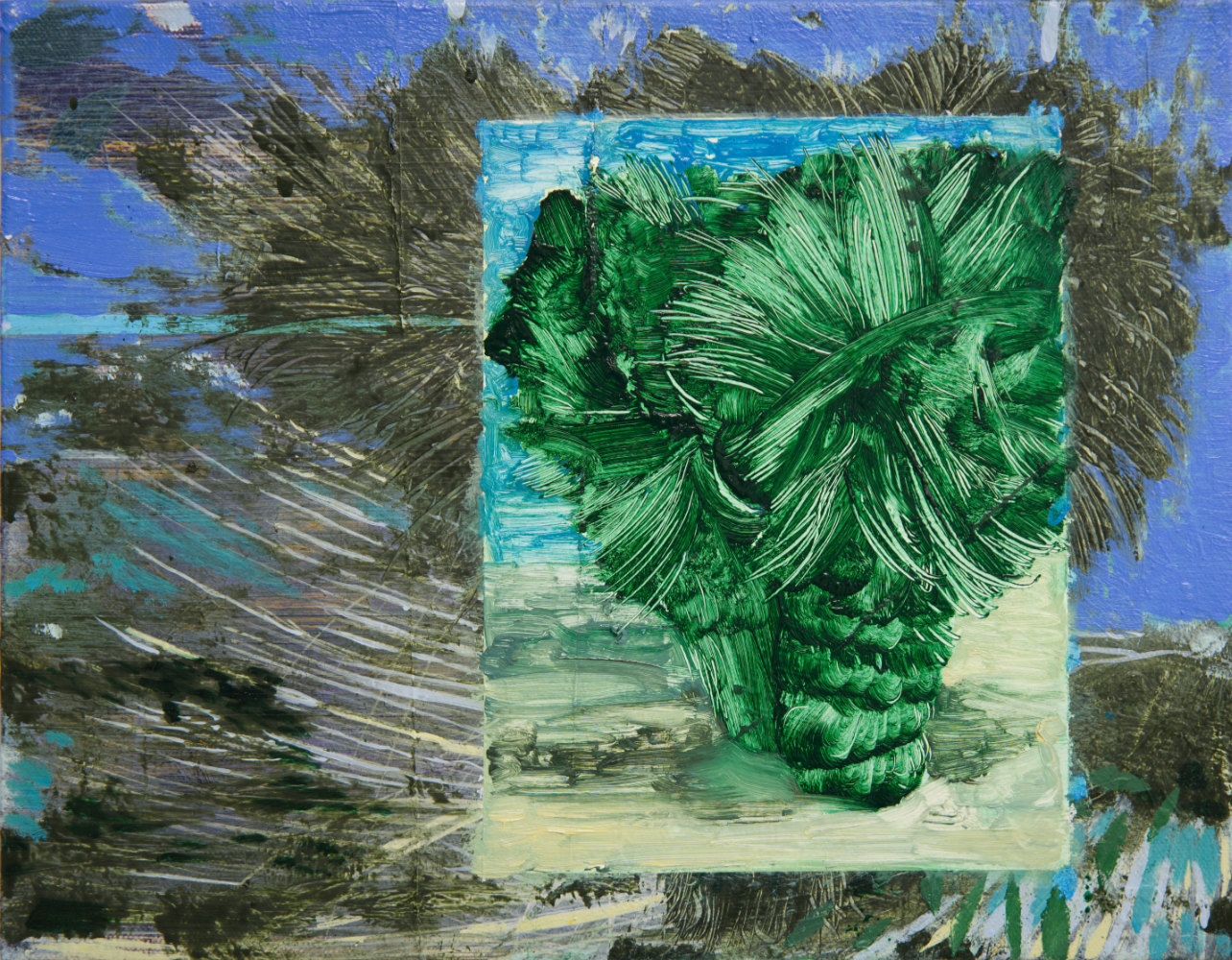
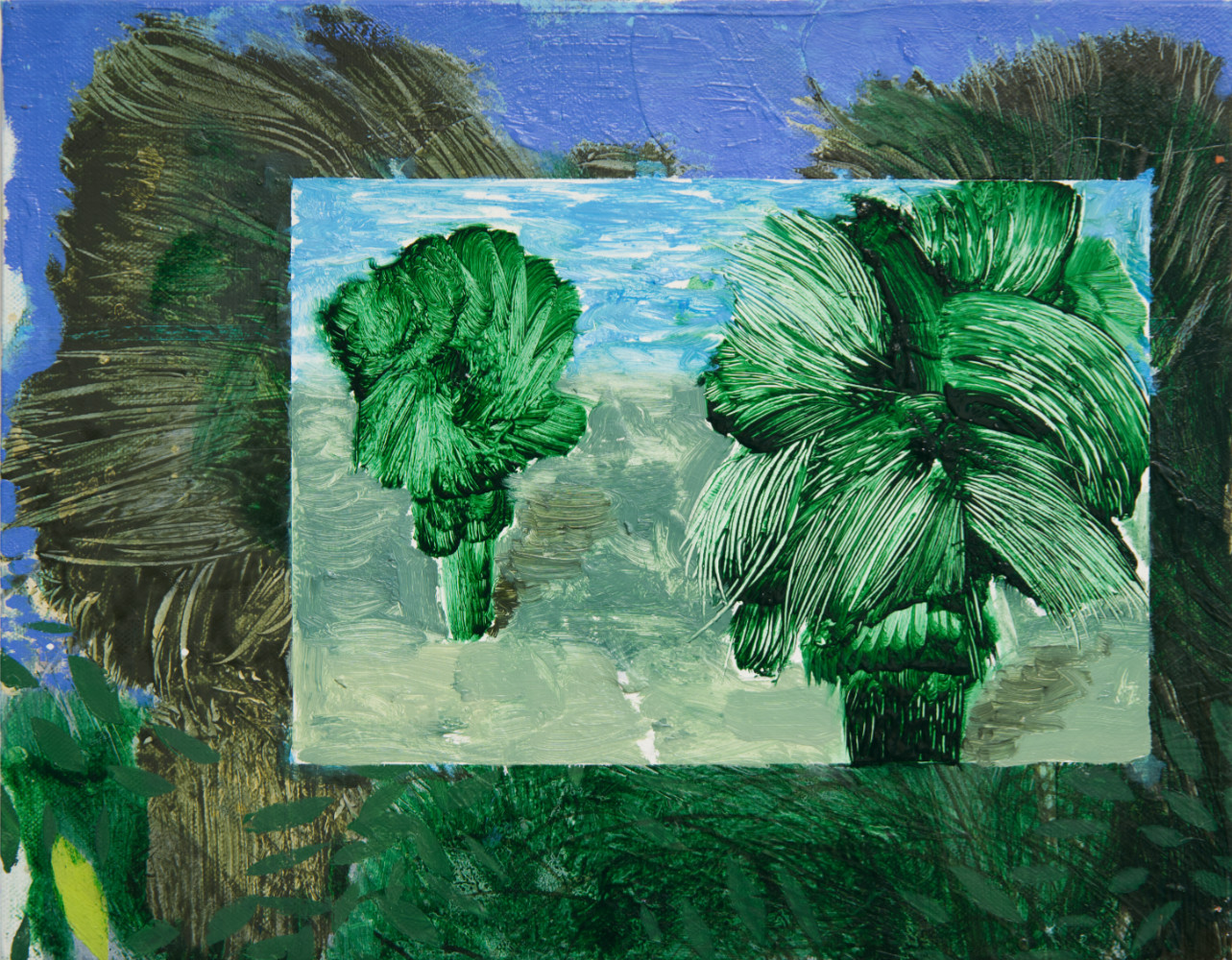
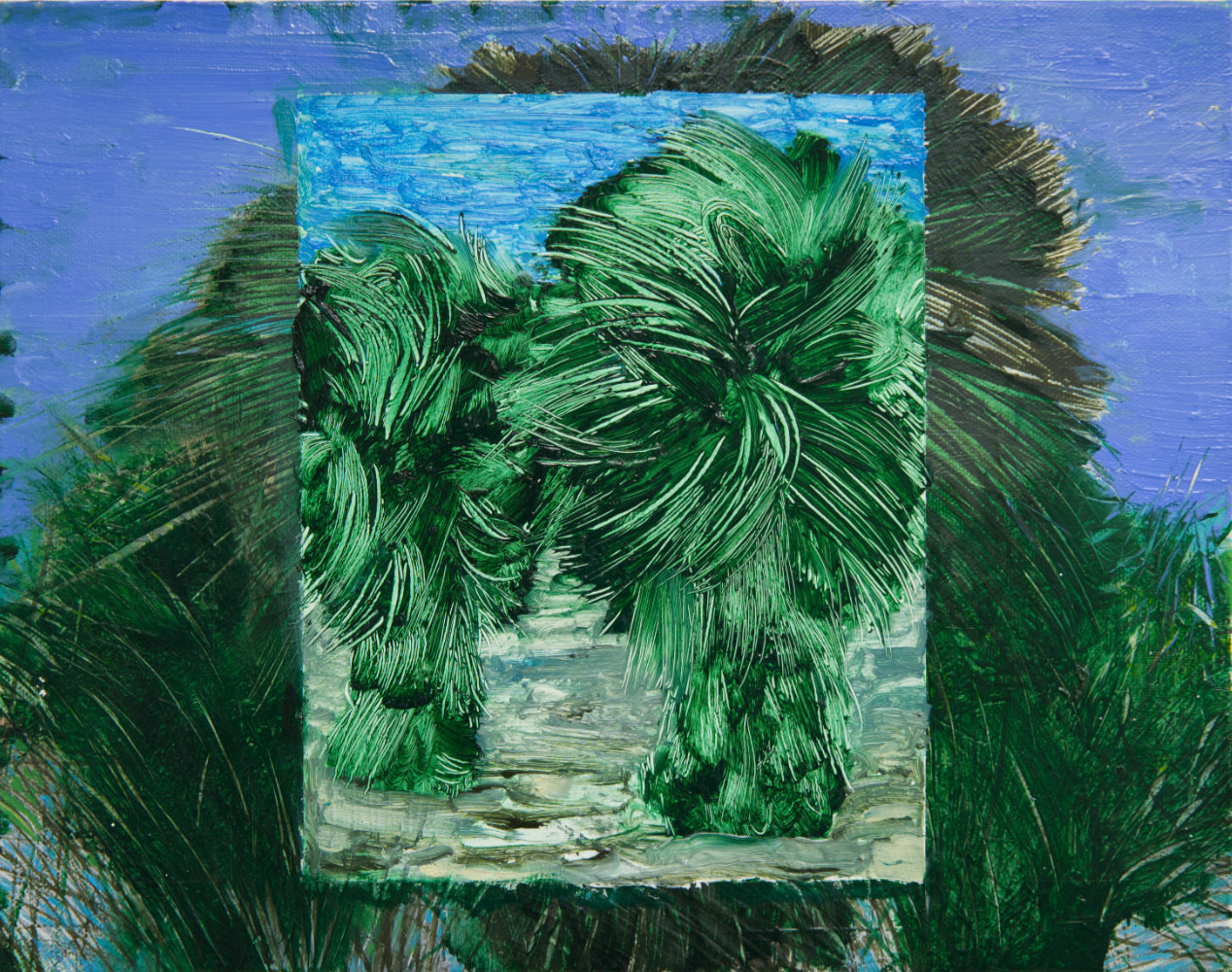
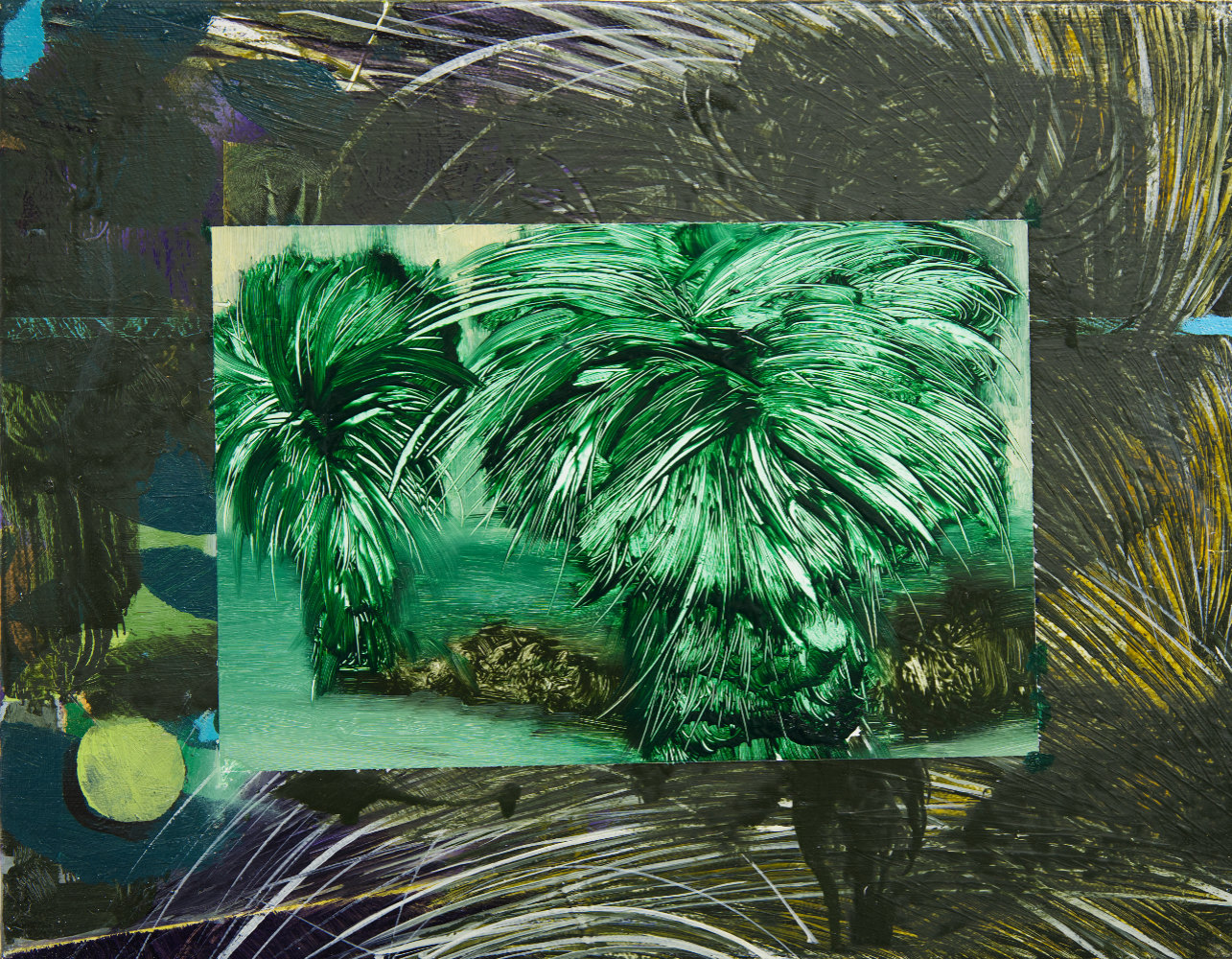
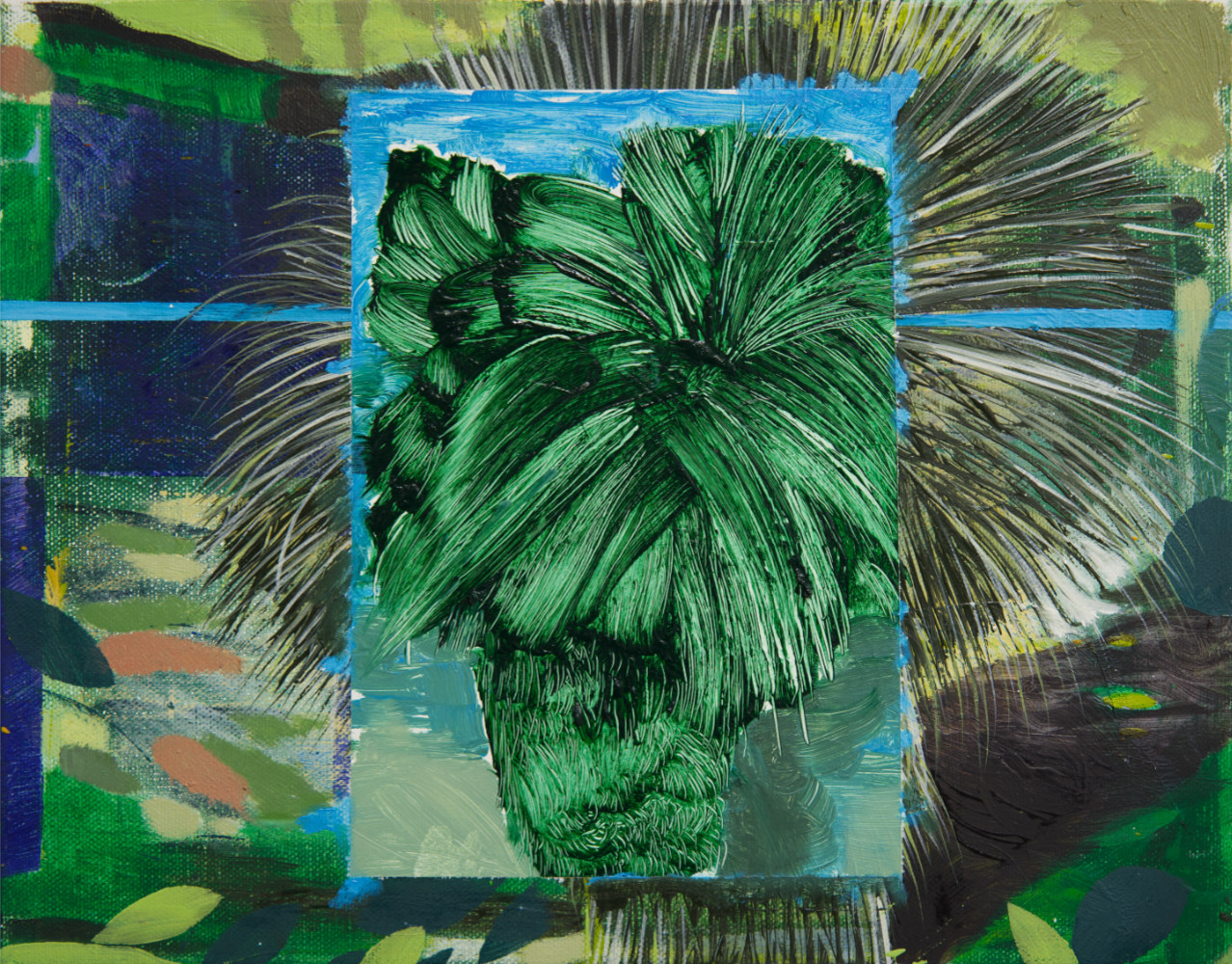
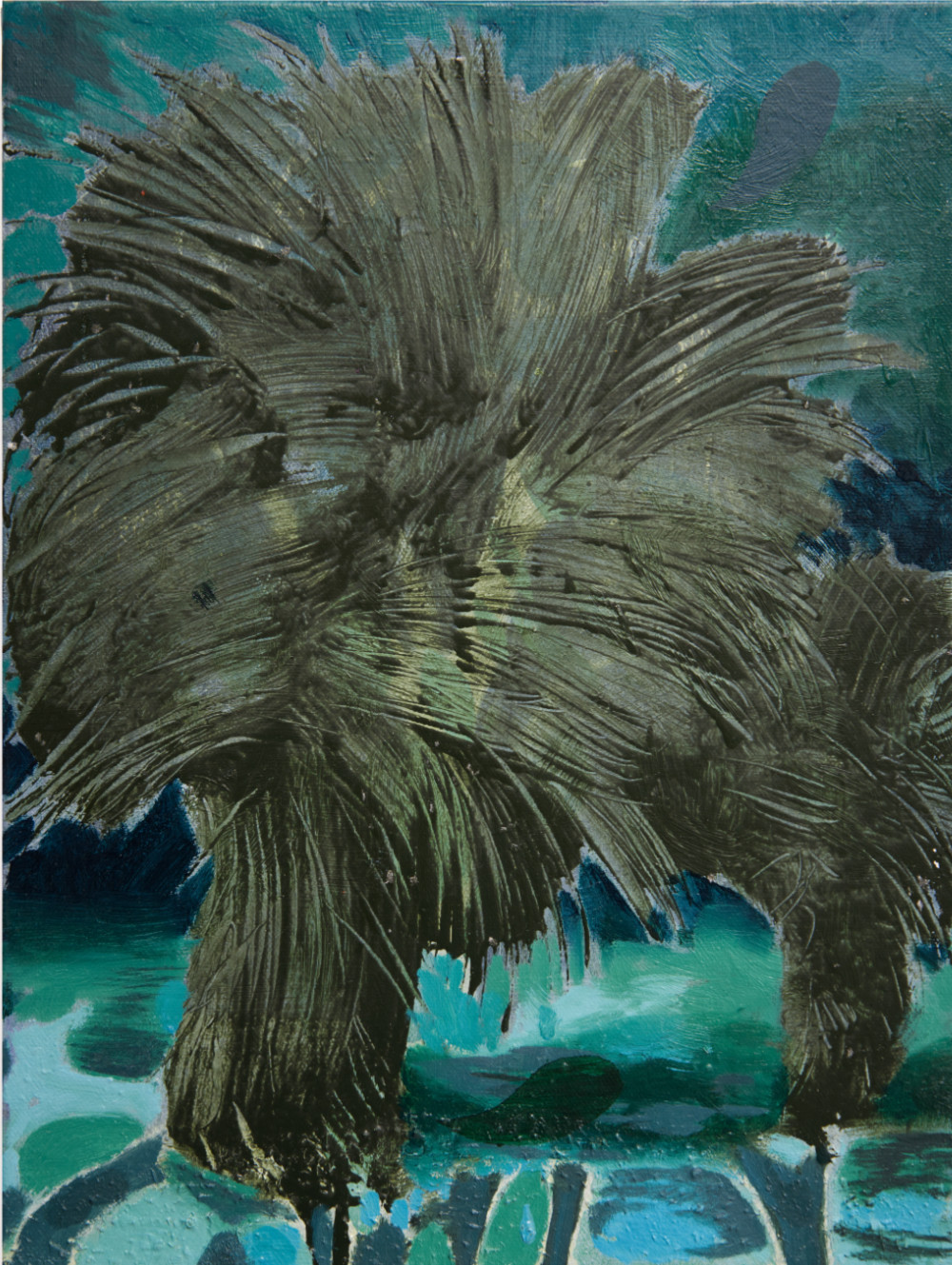
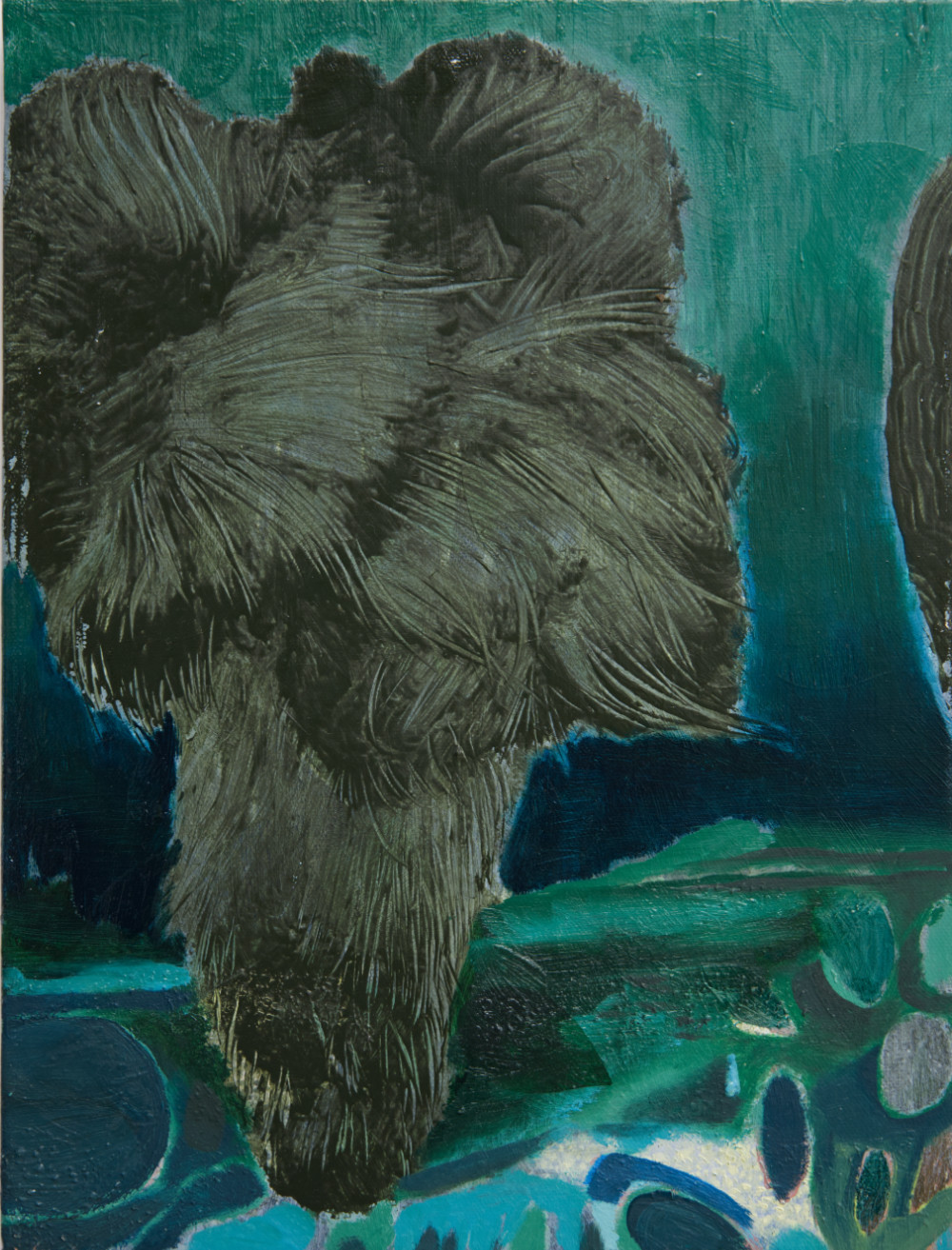
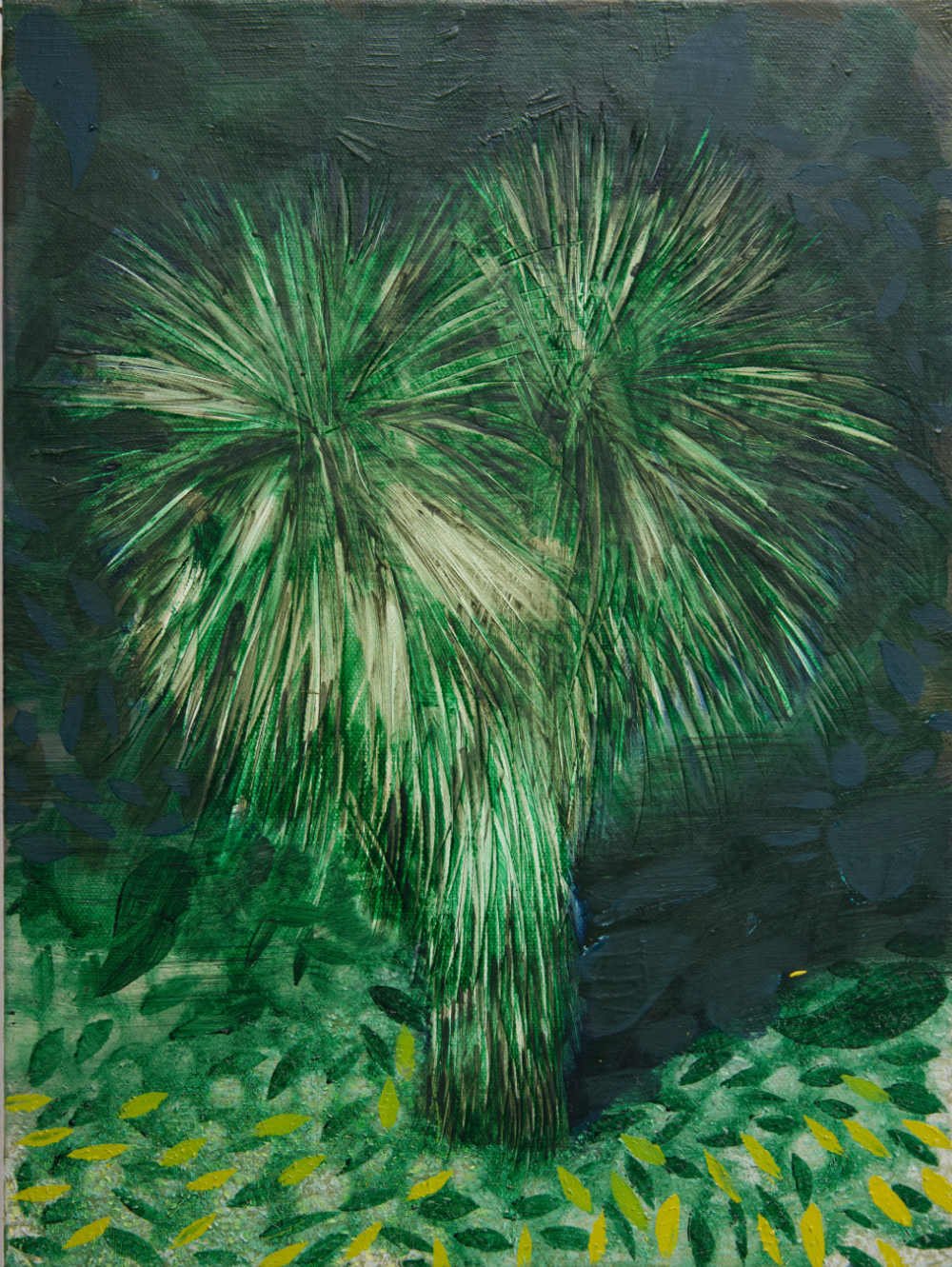
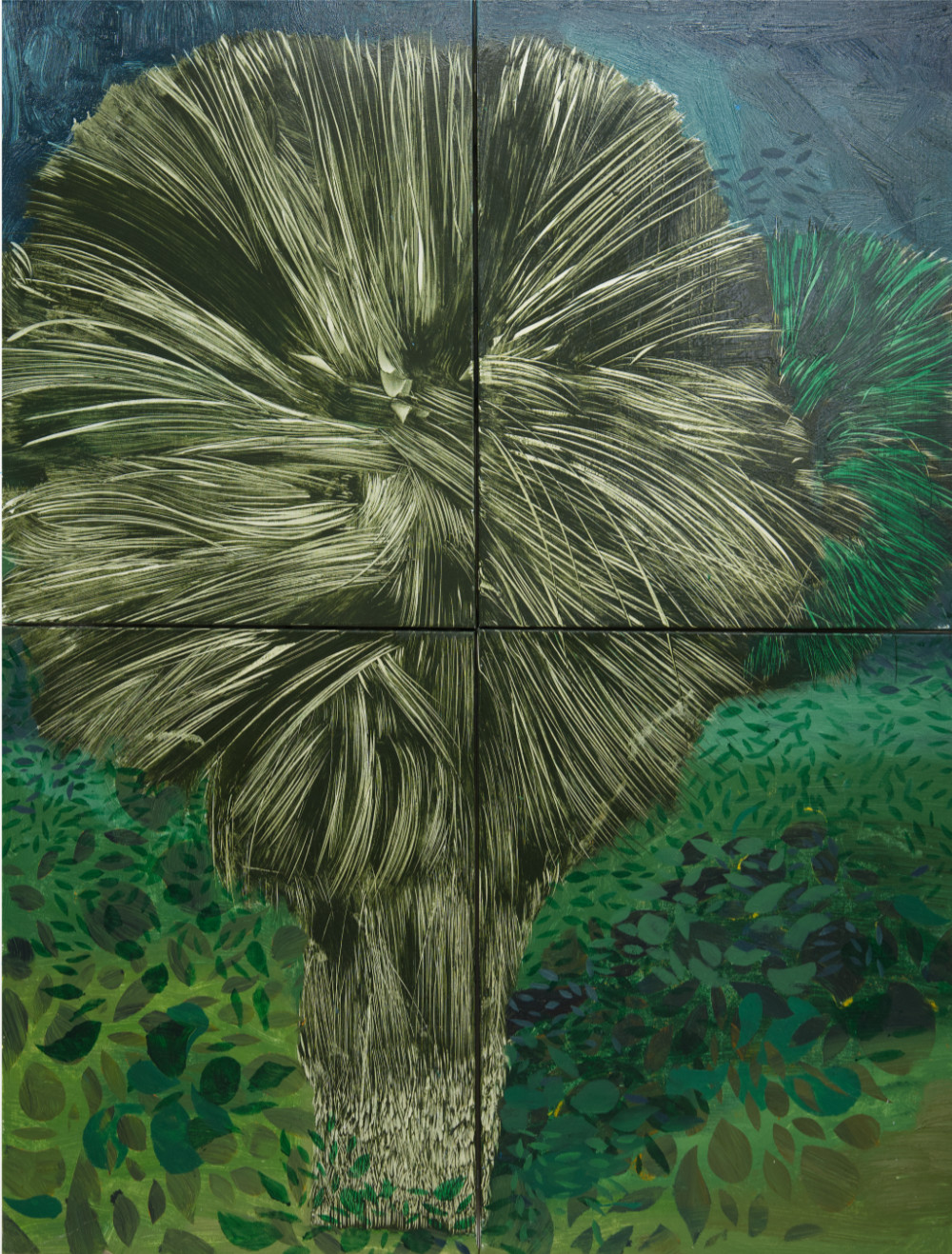
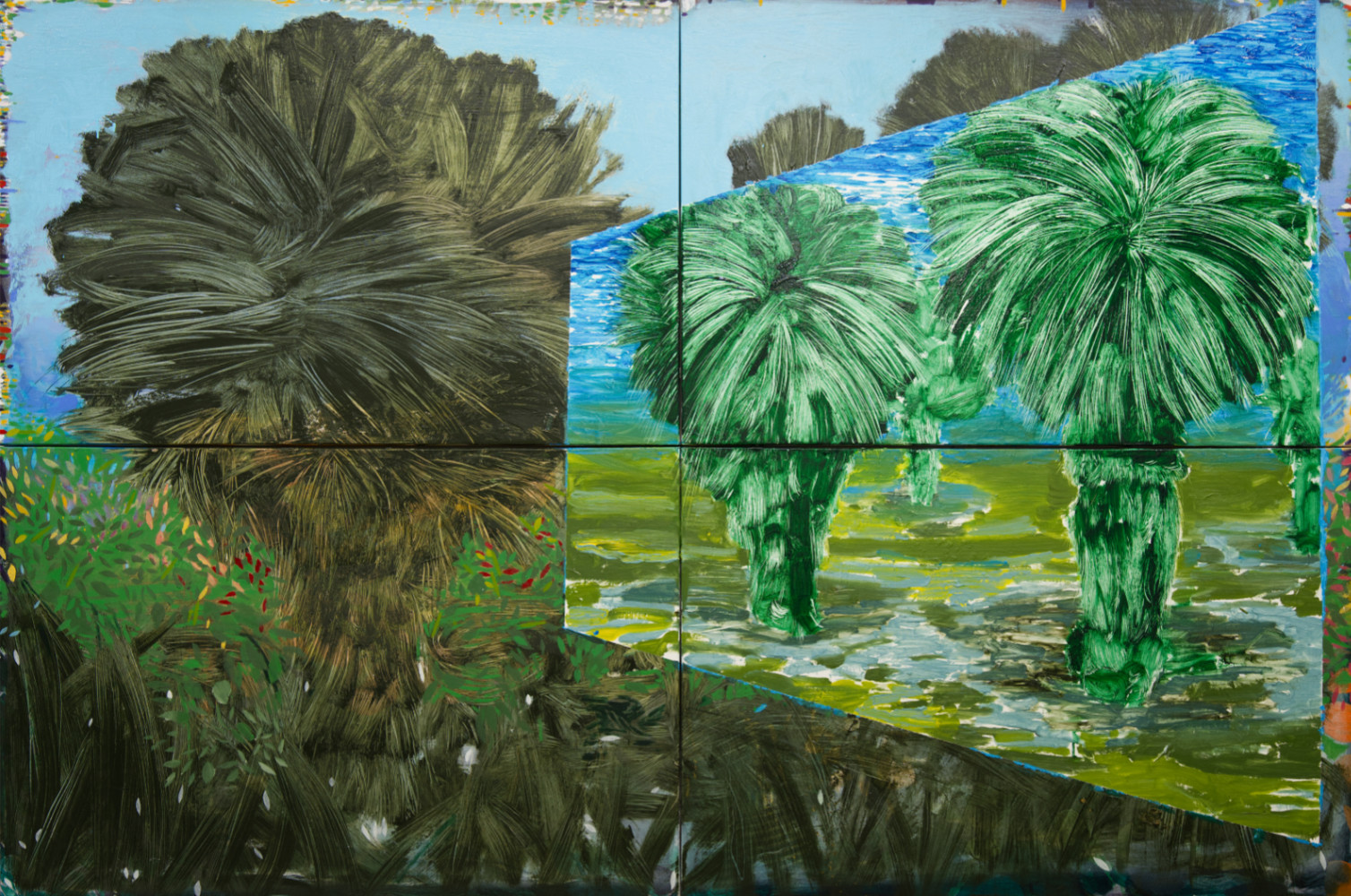
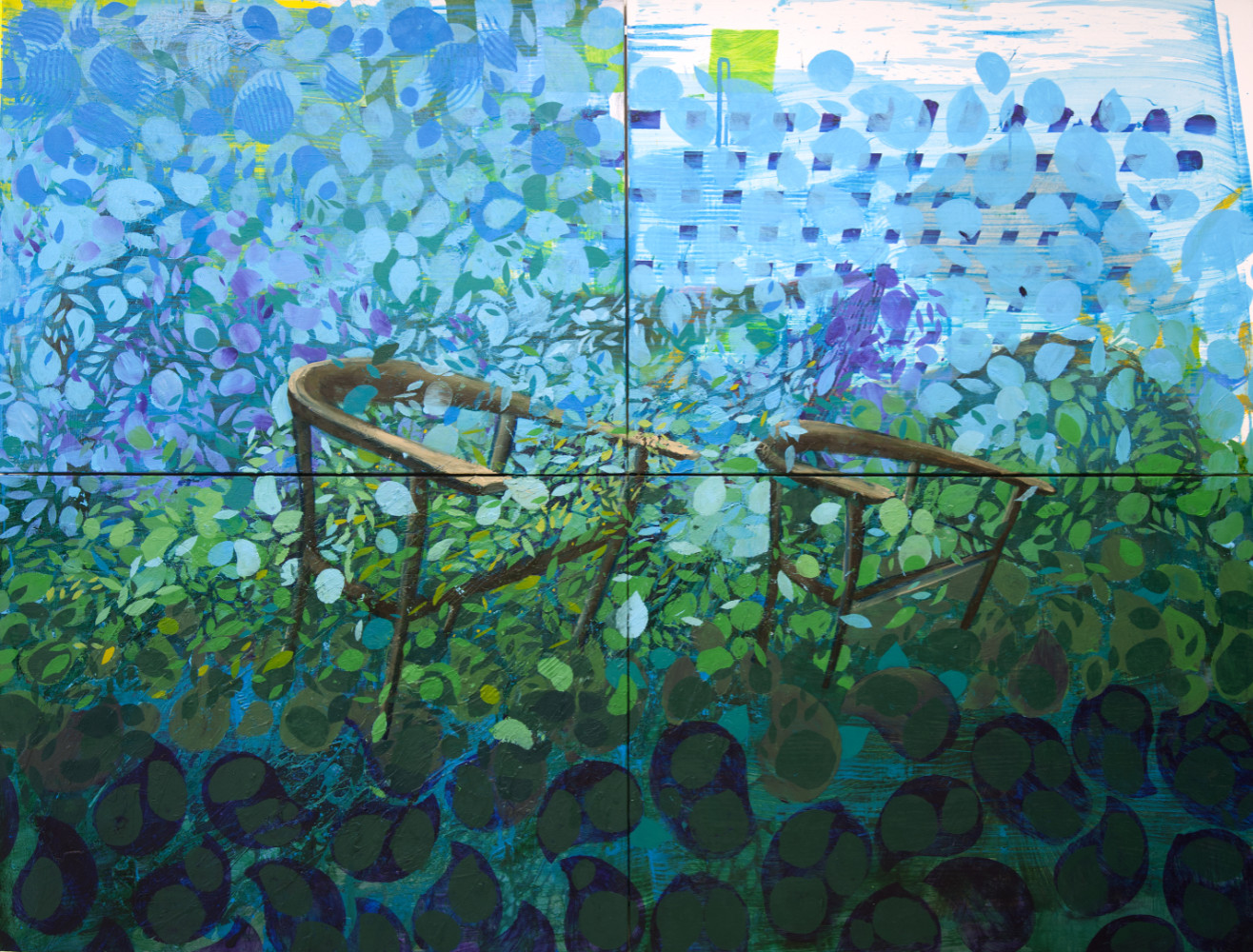
I am an abstract figurative artist. Abstract figurative art keeps the human figure at the center of the canvas and lets abstraction work on it, so a finished painting holds a person and a field of paint at the same time. Mirage is my current series of oil paintings, and it is a series about glare. It began during a residency in West Texas, where I watched beaked yucca plants at night under streetlamps. Washed pale by the light, the plants stopped reading as shrubs. They read as figures standing in a light that was not made for them. I built the paintings through handmade stencils, cutting and placing each shape rather than copying it.
Port Mansfield holds the daylight version of that same sight. At midday on the Laguna Madre, heat rises off the flats and bends the horizon. A wading angler far out on the grass flats is a dark figure inside a field of white light, there and not there at once. A boat on the channel thins into glare before it reaches the jetties. That is the exact condition Mirage is painted from: a shape given by light and distance, held for a moment, then dissolved. A mirage is a longing given shape. These paintings keep that tension on purpose.
The series runs from small canvases of 11 by 14 inches to a large painting of 60 by 80 inches. For readers searching Port Mansfield TX art, the honest answer is that this village has no gallery, and my work reaches it the way it reaches most small towns in Texas, through the series pages and the online store. Collectors looking for original paintings in the Rio Grande Valley will find my Valley record in Brownsville and my current paintings in the store. A small Mirage carries the lagoon light onto a wall at desk scale. A large one holds a whole room the way the lagoon holds the sky.
Visiting Port Mansfield and Finding the Paintings
A visit here is simple and slow. Drive in on the road from Raymondville and the town ends at the water. Fred Stone County Park, on the north side of town, gives Port Mansfield a public fishing pier on the Lower Laguna Madre, one of the few public piers on this part of the coast. Wade fishing, birding, and watching weather cross the flats are the town real attractions. Services are few, so come prepared, and watch the sky in storm season.
The paintings live one click away. The Mirage series page gathers all eleven paintings of the series. The online store carries my current original paintings and prints. The Brownsville page tells the story of my Valley exhibition and the museum collection there. The Texas page traces my exhibitions and teaching across the state. The Dallas page covers my home base. My CV page holds the full exhibition record, and the Market page gathers every town and neighborhood page in this gallery. Port Mansfield gets its page at the scale its record supports: a real port, a rare lagoon, and the light that runs through my painting.