
North Side Fort Worth, Texas: The Stockyards and Paintings of Work
North of downtown Fort Worth, across the Trinity River, the city changes character. Towers give way to brick streets, rail lines, and low industrial ground. This is the North Side. It is the part of Fort Worth built by physical work. Cattle arrived here by trail and by train. Workers sorted, priced, loaded, and processed livestock here for generations. My name is Bartosz Beda. I am a painter based in the Dallas Fort Worth metroplex. This page is my guide to the North Side and to the paintings of work that this ground brings to mind.
The center of the North Side is the Fort Worth Stockyards National Historic District. It sits about three miles north of downtown, on the north bank of the West Fork of the Trinity River. East Exchange Avenue is its main street. The district covers roughly 98 acres and holds 46 contributing buildings. It was added to the National Register of Historic Places on June 29, 1976. A painter who works with the human figure reads this ground as a record of labor first and a visitor district second.
North Side in My Record
I will state my connection plainly. I have no exhibition in the North Side. No gallery here has shown my work. No museum in the Stockyards district holds my paintings. This page does not claim a show that never happened. The Fort Worth page on this site holds the museum district story. It names the Kimbell Art Museum, the Modern Art Museum of Fort Worth, and the Amon Carter Museum of American Art, and it places my work in that wider regional conversation.
My Fort Worth record is looking and teaching across the metroplex. I paint in my studio. I teach painting. I run workshops for senior communities across Dallas and Fort Worth. Those workshops bring materials to residents and end with a finished painting in the hands of each person who takes part. The drive west to Fort Worth is part of my working week. The North Side sits on that map as ground I cross, study, and respect.
There is also a quieter resonance. The packing plants drew workers from many countries. Published histories of North Fort Worth describe families arriving from Austria, Greece, Russia, Mexico, and Poland. I was born in Poland in 1984. I came to the United States as an immigrant painter. Immigrant labor built this neighborhood, and immigrant hands still do much of the hard work in this region. That fact shapes how I look at these streets.
The Stockyards District: Exchange Avenue Today
Start at the Livestock Exchange Building, at 131 East Exchange Avenue. Workers built it in 1902 to 1903. People called it the Wall Street of the West. Deals made in its rooms set prices for cattle across the Southwest. The building stands in the Mission Revival style, with two stories, a U shaped plan, roughcast stucco, and a tiled roof. It was named a Recorded Texas Historic Landmark in 1968. Today it holds professional offices and the Stockyards Museum, run by the North Fort Worth Historical Society.
Twice each day, the Fort Worth Herd walks East Exchange Avenue in front of the Exchange Building. Drovers in period dress drive a small herd of Texas Longhorns down the brick street. The drives run at 11:30 AM and 4:00 PM, weather permitting. The district presents the drive as the only twice daily cattle drive in the world. Watching costs nothing. Arrive early, because the street fills fast.
Walk west and the district opens into its commercial blocks. Shops, restaurants, and music rooms line Exchange Avenue and North Main Street. Most shops keep hours from about 10 AM to 7 PM. Just south of Exchange Avenue stands Cowtown Coliseum, at 121 East Exchange Avenue. Builders finished it in 1908. It was the first indoor rodeo arena built in the United States. The Stockyards Championship Rodeo runs there on Friday and Saturday nights. The building still does the job it was built for.
The Packinghouse Era and Marine Creek
The Stockyards alone did not make the North Side. The packing plants did. In 1902 the Stock Yards Company reached an agreement with Armour and Company and Swift and Company, the two largest meatpackers in the country. Construction began in 1902. The plants opened for business in 1903. From that moment the North Side held the full system in one place. Cattle arrived by rail. Buyers priced them in the Exchange Building. Packers processed them a short walk away. By 1907 the yards sold about one million cattle in a single year.
The plants employed thousands. A Texas historical account reports that 4,000 men and women worked for Swift and Armour at one time. The work was hard, hot, and dangerous. Workers needed homes near the plants. Builders put up small rental houses fast to hold the influx. Many of those modest houses still stand on North Side streets.
Marine Creek runs through the middle of this story. The creek flows through the Stockyards district and joins the West Fork of the Trinity River just southeast of the yards. The livestock pens once stretched from Marine Creek in the south to 28th Street in the north. At their largest the pens covered about 100 acres. About 40 acres remain in use today. In 1910 the Stock Yards Company built a bridge to carry Exchange Avenue across the creek, with a large Stock Yards sign above it. The sign still marks the entrance to the district.
The packing era ended in stages. Trucking replaced rail for moving livestock after the Second World War. Packing moved toward smaller plants near the feedlots. Armour closed its Fort Worth plant in 1962. Swift kept working for almost one more decade. Swift closed the Fort Worth plant in 1971. Fires in the mid 1970s destroyed much of the empty complex. The Swift office building survived and still stands on Exchange Avenue.
A Short History of the North Side
The North Side begins with the cattle trails. Between 1866 and 1890, drovers pushed more than four million cattle north through Texas on the Chisholm Trail. Fort Worth stood near a crossing of the Trinity River. It became the last major supply stop before herds entered Indian Territory to the north. The town earned its Cowtown name in those years. When the Texas and Pacific Railway reached Fort Worth in 1876, cattle could move by rail.
The permanent stockyards opened on January 19, 1890. Local businessmen had raised money for permanent stockyards on rural land about three miles north of downtown, where rail lines crossed. In 1893 Boston investors led by Greenlief W. Simpson bought the operation and organized the Fort Worth Stock Yards Company. The first livestock show took place near Marine Creek in March 1896.
Success created a town inside the story. An area of about one square mile around the plants and yards was laid out as Niles City. It took its name from Louville Veranus Niles of Boston, a stockholder who helped bring Swift and Armour to Fort Worth. Niles City incorporated in February 1911. Its stockyards, exchange building, and packing plants were valued at more than 12 million dollars that year. Its population was only 508 people. Writers of the time called it the richest little city in Texas. Niles City fought annexation in court and lost. On August 1, 1923, it became part of Fort Worth.
The twentieth century tested the neighborhood. The market peaked in its first half. Receipts fell through the 1950s as country auctions drew trade away. The plant closings of 1962 and 1971 removed the payroll that had fed North Main Street. Preservation answered in the 1970s. The National Register listing came in 1976. The Exchange Building was renovated in 1977 to 1978. The North Fort Worth Historical Society opened its museum in 1989. The North Side today holds both truths at once. It is a working class neighborhood with deep roots. It is also one of the most visited historic districts in Texas.
Echoes of Seasons: Work, Livestock, and the Turning Year
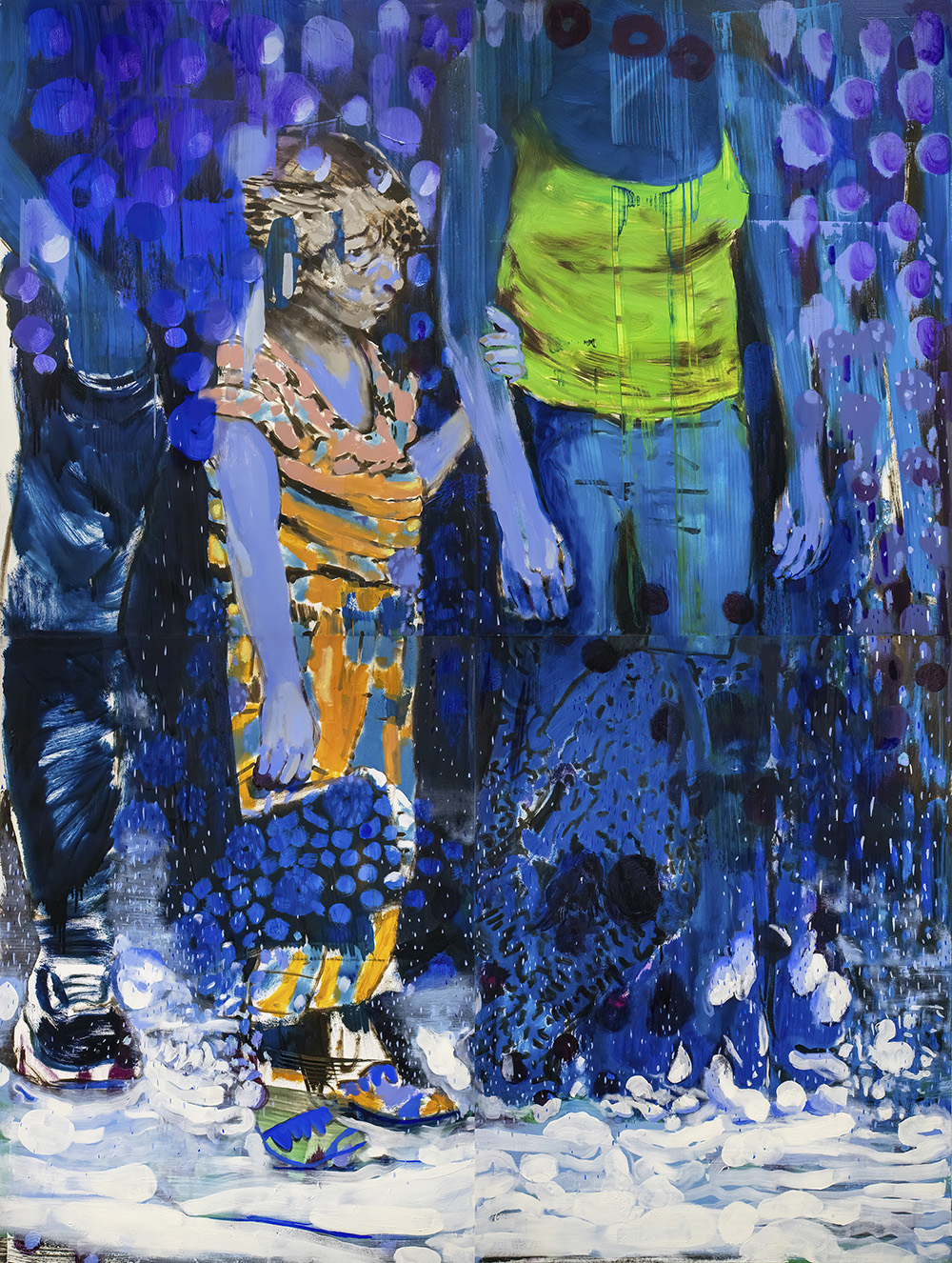
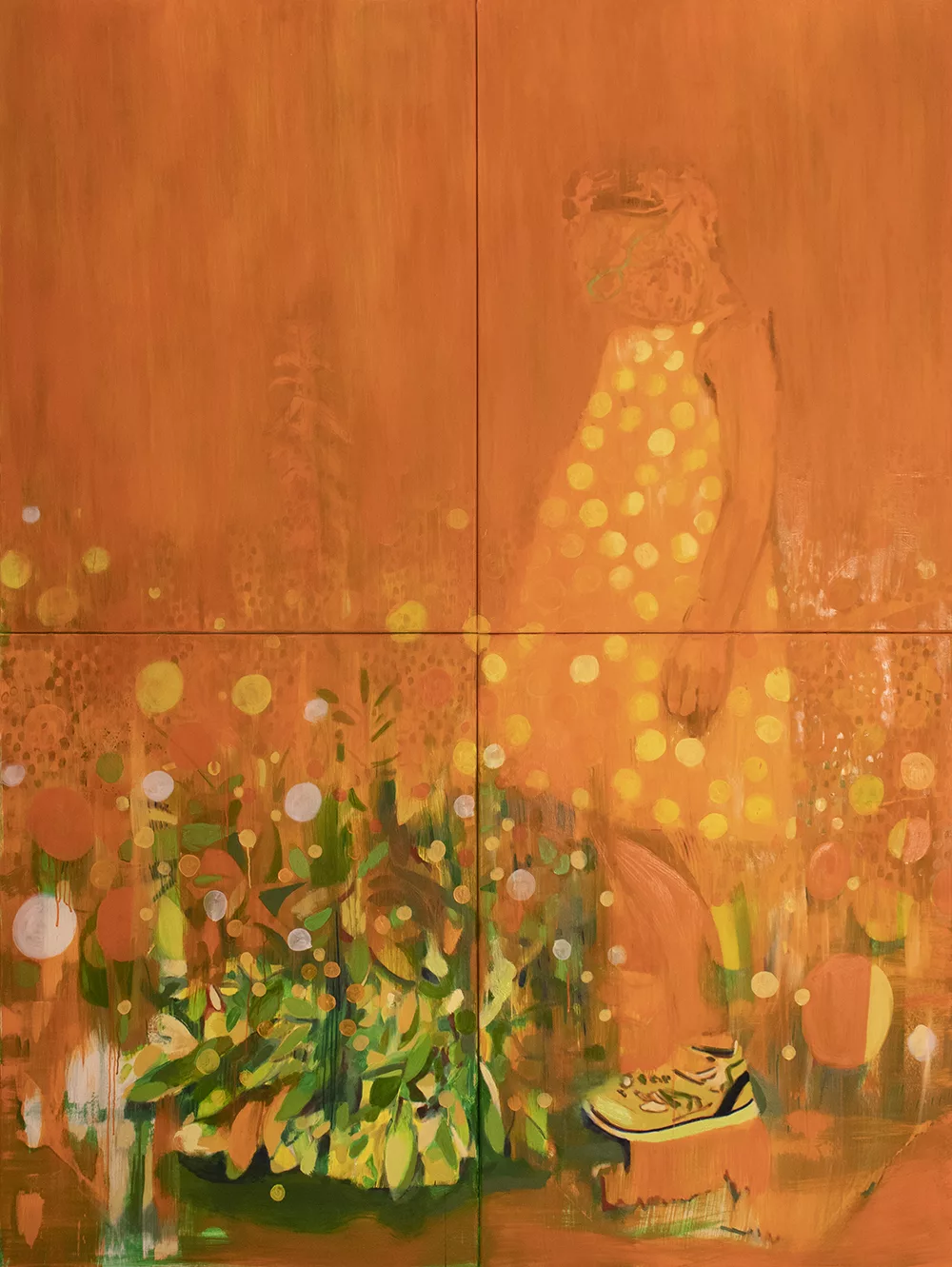
My series Echoes of Seasons is the reason this page pairs the North Side with painting. I built the series as large joined canvases. The full cycle had its solo exhibition at Collin College in Plano in 2023. The paintings hold figures inside fields of color that turn like weather. Spring, summer, autumn, and winter are not illustrations in these works. They are pressures on the body.
Stock work has a calendar. Calving, branding, driving, feeding, and selling follow the seasons. The packing plants added an industrial calendar on top of the ranch calendar. That double rhythm sits close to my painting. As an abstract figurative artist, I look for the moment where a body shows its season. Shoulders carry summer. Hands carry winter. Paint can hold that record without telling a literal story.
This is what abstract figurative art can do on working ground. The figure stays present. The description falls away. What remains is weight, reach, strain, and rest. A drover behind longhorns, a sorter at a gate, a worker on a plant floor: each is a posture before each is a portrait. My paintings chase posture. Readers searching for original paintings in Fort Worth with the figure at the center will find that search answered in this series.
North Side Fort Worth art, as I understand it from this ground, should begin with respect for work. My contribution is different in kind. It is painting made slowly by hand, at large scale, about bodies that endure seasons of labor and change. Collectors who live with Echoes of Seasons live with that subject daily.


Visiting the North Side and Finding the Paintings
A good North Side visit needs half a day. Arrive before the 11:30 AM cattle drive. If your visit falls on a Friday or Saturday, stay for the night rodeo at Cowtown Coliseum. Check current drive times and event listings on the Stockyards site before you go, because weather can change the schedule. For city services and history, the City of Fort Worth site is the official door.
The paintings live one click away. The Echoes of Seasons series page shows the full cycle, painting by painting. The online store carries my current original paintings and prints. The Fort Worth page gives the museum district side of this city. The Texas page tells my statewide story, from Brownsville to San Angelo. The Dallas page holds my home base record. My CV page lists exhibitions, collections, and residencies in full. The Market page gathers every town page in this set.
Frequently Asked Questions
Has Bartosz Beda exhibited in the North Side of Fort Worth?
I have no exhibition in the North Side. No gallery here has shown my work. No museum in the Stockyards district holds my paintings. This page does not claim a show that never happened. My Fort Worth record is looking and teaching across the metroplex. I paint in my studio, I teach painting, and I run workshops for senior communities across Dallas and Fort Worth. The drive west to Fort Worth is part of my working week. The North Side sits on that map as ground I cross, study, and respect.
What is the Fort Worth Herd cattle drive?
Twice each day, the Fort Worth Herd walks East Exchange Avenue in front of the Livestock Exchange Building. Drovers in period dress drive a small herd of Texas Longhorns down the brick street. The drives run at 11:30 AM and 4:00 PM, weather permitting. The district presents the drive as the only twice daily cattle drive in the world. Watching costs nothing. Arrive early, because the street fills fast.
What is Cowtown Coliseum in the Stockyards?
Just south of Exchange Avenue stands Cowtown Coliseum, at 121 East Exchange Avenue. Builders finished it in 1908. It was the first indoor rodeo arena built in the United States. The Stockyards Championship Rodeo runs there on Friday and Saturday nights. The building still does the job it was built for, more than a century after it opened.
How many people worked in the Fort Worth packing plants?
The plants employed thousands. A Texas historical account reports that 4,000 men and women worked for Swift and Armour at one time. The work was hard, hot, and dangerous. Workers needed homes near the plants, so builders put up small rental houses fast to hold the influx. Many of those modest houses still stand on North Side streets. By 1907 the yards sold about one million cattle in a single year.
What is Marine Creek’s role in the Stockyards story?
Marine Creek runs through the middle of this story. The creek flows through the Stockyards district and joins the West Fork of the Trinity River just southeast of the yards. The livestock pens once stretched from Marine Creek in the south to 28th Street in the north. At their largest the pens covered about 100 acres, and about 40 acres remain in use today. In 1910 the Stock Yards Company built a bridge to carry Exchange Avenue across the creek, with a large Stock Yards sign above it. The sign still marks the entrance to the district.
What was Niles City, Texas?
Success created a town inside the story. An area of about one square mile around the plants and yards was laid out as Niles City. It took its name from Louville Veranus Niles of Boston, a stockholder who helped bring Swift and Armour to Fort Worth. Niles City incorporated in February 1911. Its stockyards, exchange building, and packing plants were valued at more than 12 million dollars that year, and its population was only 508 people. Writers of the time called it the richest little city in Texas. Niles City fought annexation in court and lost, and on August 1, 1923, it became part of Fort Worth.
How did the Chisholm Trail shape Fort Worth?
Between 1866 and 1890, drovers pushed more than four million cattle north through Texas on the Chisholm Trail. Fort Worth stood near a crossing of the Trinity River. It became the last major supply stop before herds entered Indian Territory to the north. The town earned its Cowtown name in those years. When the Texas and Pacific Railway reached Fort Worth in 1876, cattle could move by rail, and the permanent stockyards opened on January 19, 1890.
When was the Livestock Exchange Building named a Texas landmark?
Workers built the Livestock Exchange Building in 1902 to 1903, at 131 East Exchange Avenue. People called it the Wall Street of the West, because deals made in its rooms set prices for cattle across the Southwest. The building stands in the Mission Revival style, with two stories, a U shaped plan, roughcast stucco, and a tiled roof. It was named a Recorded Texas Historic Landmark in 1968, renovated in 1977 to 1978, and today it holds professional offices and the Stockyards Museum, run by the North Fort Worth Historical Society.
What happened to the Swift plant after it closed in 1971?
The packing era ended in stages. Trucking replaced rail for moving livestock after the Second World War, and packing moved toward smaller plants near the feedlots. Armour closed its Fort Worth plant in 1962. Swift kept working for almost one more decade and closed the Fort Worth plant in 1971. Fires in the mid 1970s destroyed much of the empty complex. The Swift office building survived and still stands on Exchange Avenue.
Why does he pair Echoes of Seasons with the North Side?
Stock work has a calendar. Calving, branding, driving, feeding, and selling follow the seasons. The packing plants added an industrial calendar on top of the ranch calendar. That double rhythm sits close to my painting. As an abstract figurative artist, I look for the moment where a body shows its season. A drover behind longhorns, a sorter at a gate, a worker on a plant floor: each is a posture before each is a portrait. My paintings chase posture: weight, reach, strain, and rest.