
Diamond Hill, Fort Worth, Texas: Works on Paper in a Hill Neighborhood
Diamond Hill is a historic neighborhood in north Fort Worth. It stands north of the Trinity River, above the Fort Worth Stockyards ground, in the part of the city that grew up around cattle, rail lines, and packinghouse work. I am Bartosz Beda, an abstract figurative artist based in the Dallas and Fort Worth area. This page is a neighborhood page in my Market gallery. It gives Diamond Hill a careful guide entry of its own, and it connects the neighborhood to my watercolors and works on paper. Those smaller works suit a neighborhood of houses. They live at the scale of daily rooms, hallways, and quiet walls.
Diamond Hill in My Record
I will state my record here plainly. I have no exhibition record in Diamond Hill. I have no teaching record in Diamond Hill. No gallery in the neighborhood has shown my work, and I have not run a workshop in its schools or its community center. This page does not invent a tie that does not exist.
My Fort Worth record sits nearby, at city level. I work across Dallas and Fort Worth as a painter and a teacher. I have run senior workshops in both cities, described in general terms on my Fort Worth page, with no venues named. The Stockyards side of that Fort Worth story belongs to the north side of the city. My North Side Fort Worth page holds that ground in detail, and this page points to it rather than repeating it.
What I can offer Diamond Hill honestly is attention. The neighborhood has a long working history and a strong local identity. My work on paper is built from the human figure, and it is made slowly, by hand, one sheet at a time. A page like this one is a fair way to introduce that work to a neighborhood I respect, without claiming a history there that I do not have.
The Neighborhood on the Hill
Diamond Hill takes its name from its ground. It is a hill neighborhood, and the hill shows up even in the school record. The first school mascot here was the Hilltopper, before the eagle replaced it in 1927. The City of Fort Worth describes Diamond Hill as a historic north side community, and the city park history notes that the community was annexed into Fort Worth in 1922. It has been part of the city for more than a century, while keeping its own name and its own center of gravity.
The neighborhood anchor is Diamond Hill-Jarvis High School, at 1411 Maydell Road. It serves grades 9 to 12 in the Fort Worth Independent School District. The school opened in 1904 as Diamond Hill School, and its first graduating class had three students, in 1913. It joined the Fort Worth public school system in 1924. The school motto is We are Diamond Hill. Its colors are scarlet and black, and its teams are the Eagles. In 2021 the boys soccer team reached the state tournament for the first time in school history. W. A. Meacham Middle School and Diamond Hill Elementary feed into it, so the school sits at the end of a local path that many neighborhood children walk from their first classroom to graduation.
The Diamond Hill/Jarvis branch of the Fort Worth Public Library stands at 1300 NE 35th Street. It is a true community library. The city lists Spanish speaking staff and a large collection of Spanish books and DVDs. It has public computers, a children reading area, a teen hub, and 3D printing. It is open on Monday from noon to 8 pm, Tuesday to Thursday from 10 am to 8 pm, and Friday and Saturday from 10 am to 6 pm. It is closed on Sunday. For a neighborhood with a long Latino character, a library that stocks Spanish language books as a core service is not a detail. It is a sign of who the branch serves.
Diamond Hill Park, at 3709 Weber Street, covers about ten acres and was dedicated in 1968. The city lists a playground, a skate park, a baseball and softball field, a basketball court, a volleyball court, trails, shelters, and grills. The park is open daily from 5 am to 10 pm. Inside the park stands the Diamond Hill Community Center, at 1701 NE 36th Street. The city describes a popular after school program, a teen program, community events, and fitness classes that include karate and boxing. A replacement center of 25,000 square feet was built in the park under the 2018 bond program, with a gymnasium, a fitness center, a boxing gym, a teaching kitchen, meeting spaces, a game room, and a computer lab. A public art work titled Rising Strong, by Elizabeth Akamatsu, was selected for the new building with community input. The architecture firm behind the project describes Diamond Hill as a close knit, multi generational, and largely Hispanic neighborhood, and that description matches the library, the school, and the center alike.
A Short History of Diamond Hill
Diamond Hill grew with the north side of Fort Worth. The cattle trade came first. By 1886 four stockyards had been built near the railroads north of the Trinity River, and the Union Stock Yards opened their 258 acre facility there in 1889. In 1893 a Boston investor, Greenleif W. Simpson, bought the yards and formed the Fort Worth Stock Yards Company. The yards made this side of the river the working edge of the city.
The packinghouses changed everything. In 1902 Simpson reached an agreement with Armour and Swift, two of the largest meatpackers in the country. Each company built a modern plant beside the stockyards and took a one third interest in the stockyards company. Boom years followed. The Texas State Historical Association records that immigrants came from Central Europe to work in the plants and settled in a community incorporated in 1902 under the name North Fort Worth. Fort Worth population tripled in the first decade after the two packers arrived. Work of that scale needs houses, schools, and streets. The neighborhoods on the high ground north of the yards, Diamond Hill among them, grew in that world of plant shifts, rail work, and livestock.
The school record shows a settled community early. A school was open on the hill by 1904, with a graduating class by 1913. Annexation into Fort Worth followed in 1922, and the school joined the city system in 1924. The packing era did not last forever. Armour closed its Fort Worth plant in 1962, and Swift closed in 1971. The Stockyards later became a historic district and a visitor destination. Diamond Hill stayed what it had become in the plant years, a residential neighborhood of working families, with its own school, its own park, and a name that still says where it stands.
Fort Worth North Side from the Hill
From Diamond Hill, the north side reads as one connected ground. The Stockyards historic district lies below and to the south, with the Livestock Exchange Building, the coliseum, and the daily cattle drive on Exchange Avenue. North Side High School, where Diamond Hill students studied from 1931 to 1933 while their own school was renovated, is part of the same story. Marine Creek, the Trinity River trails, and the old rail lines tie the area together on the map.
I keep this section short on purpose. My North Side Fort Worth page carries the Stockyards detail, the packinghouse history, and the neighborhood anchors at full length. This Diamond Hill page adds the view from the hill itself. The point of the two pages together is simple. The north side is not one attraction. It is a set of neighborhoods with their own schools and parks, and Diamond Hill is one of the oldest of them.
My Fort Worth page covers the city as a whole, including the museum district, the Kimbell Art Museum, the Modern Art Museum of Fort Worth, and the Amon Carter Museum of American Art. My Texas page traces my work across the state, from Dallas and Fort Worth to Brownsville and San Angelo. Diamond Hill belongs in that map as a neighborhood entry, written at the level the record supports.
Works on Paper for Diamond Hill Homes
My main body of work is painting, and paper is where much of it begins. I am an abstract figurative artist. The figure is my subject, and it returns in every medium I use. In oil on canvas the figure can fill a wall. On paper the same figure comes close. A head, a shoulder, a pair of hands. The marks stay visible, and nothing is hidden behind finish.
The Owing to the Absence series is my largest body of work on paper. These are ink drawings of foreshortened figures, seen from an unusual angle, so the body seems to fall toward the viewer or away from them. The series grew into a solo exhibition of 32 works in Dayton, Ohio, in November 2026, and an earlier residency showing in Dallas in 2023. The ink work is direct. One pass of the brush can set a whole posture, and a mistake cannot be painted over. That honesty suits paper, and it suits houses where art is seen up close every day.
Alongside the ink work I paint watercolors. In November 2026, during breaks in a substitute teaching assignment in Addison, I painted a run of loose watercolor heads and figures instead of looking at my phone. That habit is typical of the paper work. It is made in real time, in ordinary rooms, and it keeps the speed of the hand. Watercolor paintings hold light well. The white of the sheet does part of the work, so a small piece can feel open and calm on a wall that a heavy canvas would crowd.


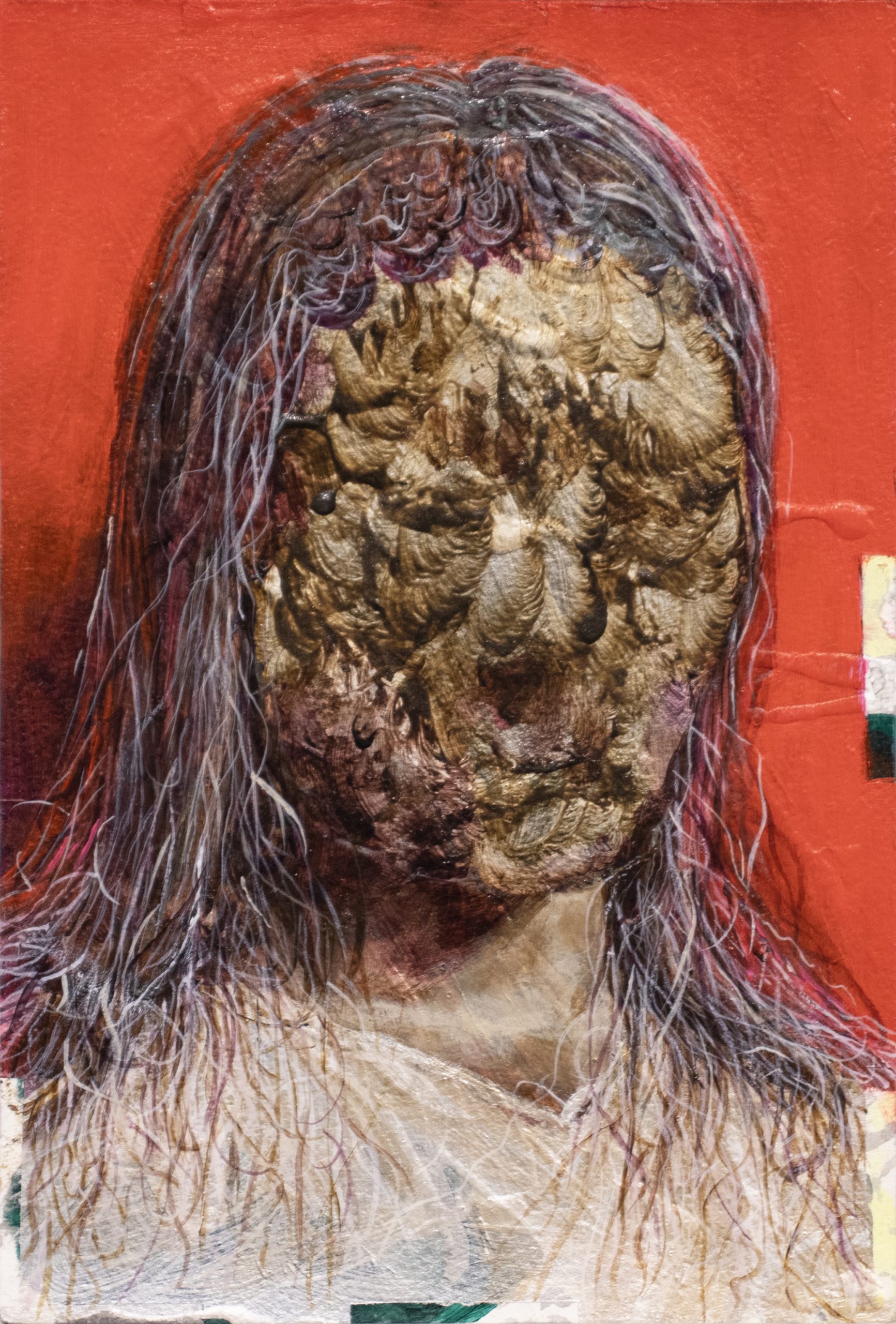
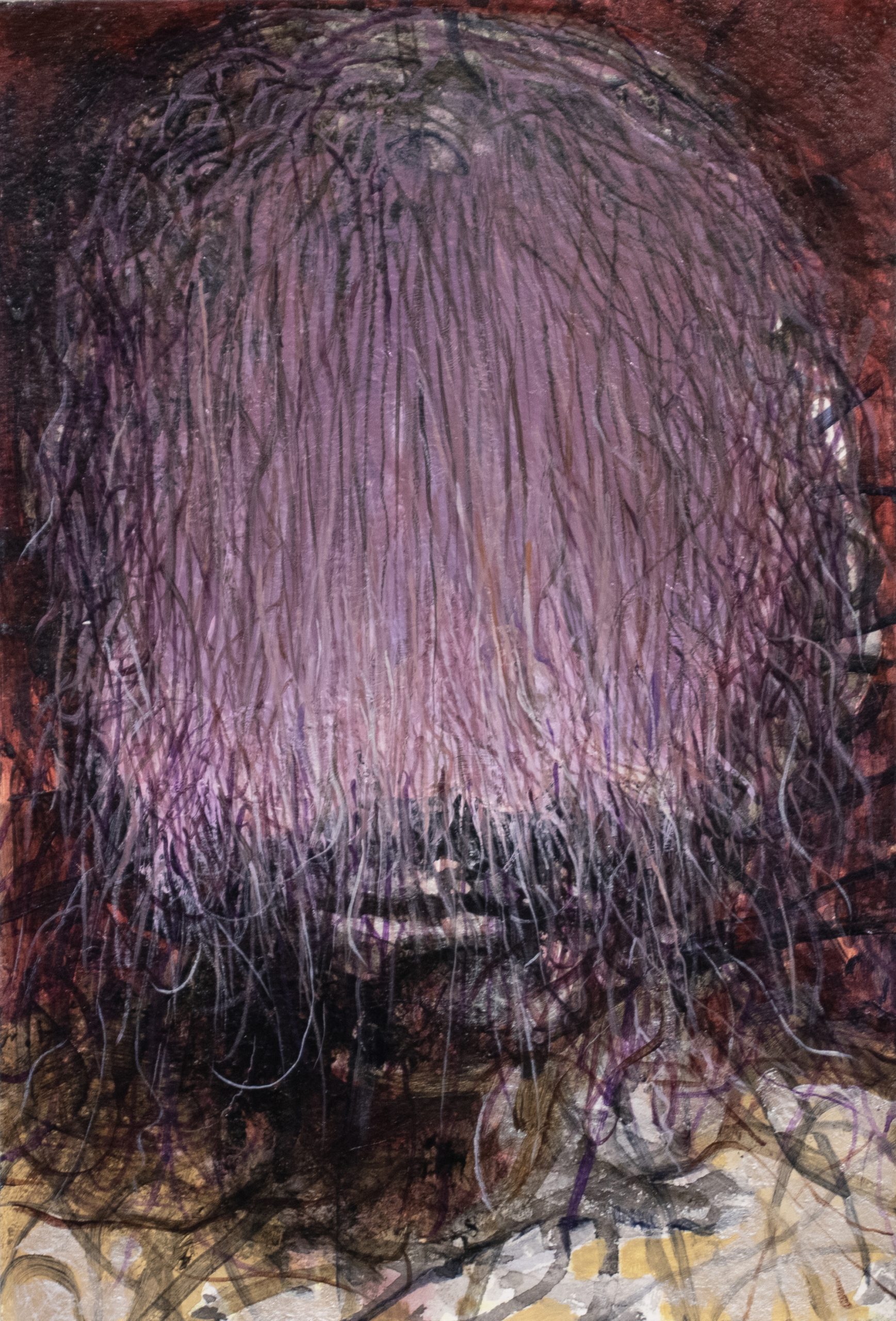
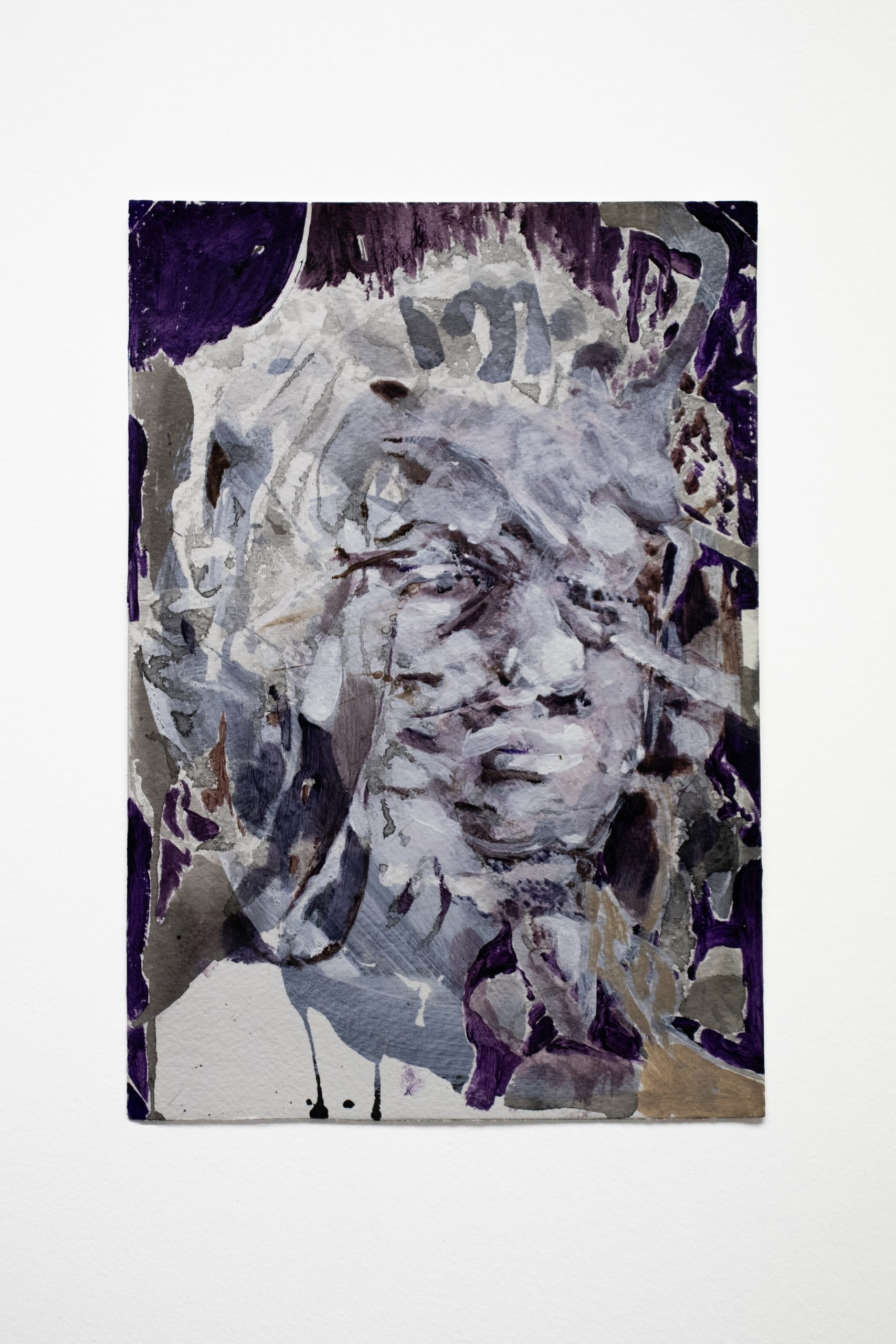
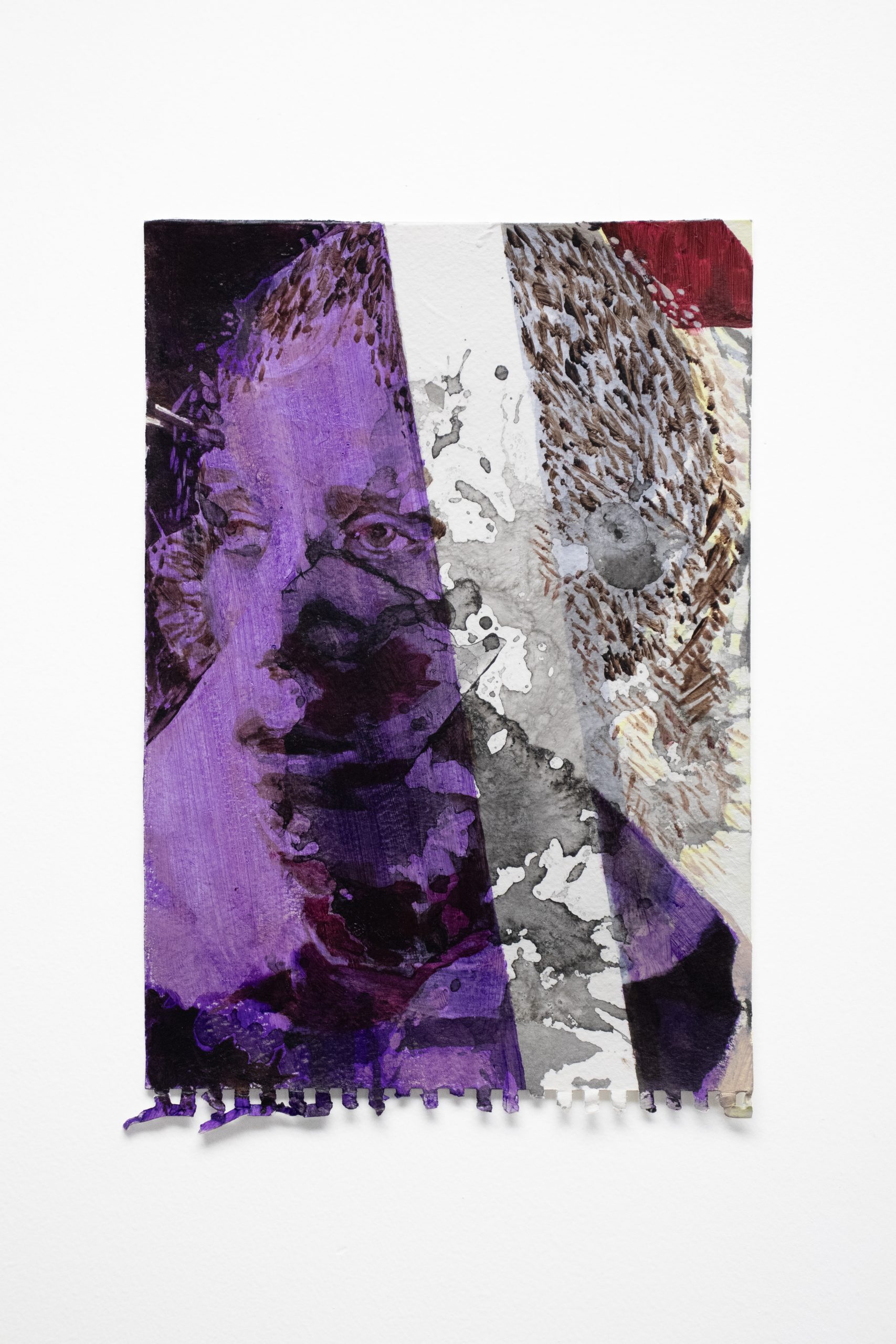
For Diamond Hill, that scale matters. This is a neighborhood of houses, many of them modest in size, with long family histories inside them. Original paintings in Fort Worth collections often start exactly here, with a work on paper that fits a real room and a real budget of wall space. A framed ink drawing over a desk, a watercolor in a hallway, a small figure study in a living room. Diamond Hill Fort Worth art does not need a gallery on the avenue to matter. It needs work that respects the houses it enters.
If you collect or you are buying original art for the first time, the paper work is a sound place to start with my practice. Each sheet is an original, not a reproduction. The full record of the series, with images and exhibition history, is on the Owing to the Absence series page and the Apogee series page. Apogee is my newest series of figure paintings, begun in 2026, and its small fragments on canvas share the close figure focus of the paper work. Available originals are listed in my online store, which serves buyers in Fort Worth, Dallas, and beyond.
Continue Exploring
Start with the two pages closest to this one. The North Side Fort Worth page holds the Stockyards ground in detail, and the Fort Worth page covers the whole city. The Texas page shows how my exhibitions and teaching run across the state, and the Dallas page covers the city where my Texas record began in 2018. My full exhibition record is on my CV page. The Market page is the index of every place in this gallery, and it links each town and neighborhood page as it is completed. Thank you for reading about Diamond Hill, a hill neighborhood that has kept its name, its school, and its character for more than a hundred years.
Frequently Asked Questions
Has Bartosz Beda exhibited in Diamond Hill, Fort Worth?
I have no exhibition record in Diamond Hill. I have no teaching record in Diamond Hill. No gallery in the neighborhood has shown my work, and I have not run a workshop in its schools or its community center. My Fort Worth record sits nearby, at city level. I work across Dallas and Fort Worth as a painter and a teacher, and I have run senior workshops in both cities. What I can offer Diamond Hill honestly is attention: a neighborhood with a long working history, and work on paper built from the human figure, made slowly, by hand, one sheet at a time.
Why is the neighborhood called Diamond Hill?
Diamond Hill takes its name from its ground. It is a hill neighborhood, standing north of the Trinity River above the Fort Worth Stockyards ground, and the hill shows up even in the school record. The first school mascot here was the Hilltopper, before the eagle replaced it in 1927. The City of Fort Worth describes Diamond Hill as a historic north side community, and it has kept its own name and its own center of gravity for more than a century.
When was Diamond Hill annexed into Fort Worth?
The city park history notes that the community was annexed into Fort Worth in 1922. It has been part of the city for more than a century, while keeping its own name. The school record follows the same path: a school was open on the hill by 1904, and Diamond Hill School joined the Fort Worth public school system in 1924.
What is Diamond Hill-Jarvis High School?
Diamond Hill-Jarvis High School stands at 1411 Maydell Road and serves grades 9 to 12 in the Fort Worth Independent School District. It opened in 1904 as Diamond Hill School, and its first graduating class had three students, in 1913. The school motto is We are Diamond Hill. Its colors are scarlet and black, and its teams are the Eagles. In 2021 the boys soccer team reached the state tournament for the first time in school history. W. A. Meacham Middle School and Diamond Hill Elementary feed into it.
Where did Diamond Hill students study in the early 1930s?
From 1931 to 1933, while their own school was renovated, Diamond Hill students studied at North Side High School. The two schools are part of the same north side story. The Stockyards historic district lies below and to the south of the hill, and Marine Creek, the Trinity River trails, and the old rail lines tie the area together on the map.
What does the Diamond Hill Jarvis library branch offer?
The Diamond Hill/Jarvis branch of the Fort Worth Public Library stands at 1300 NE 35th Street. It is a true community library. The city lists Spanish speaking staff and a large collection of Spanish books and DVDs. It has public computers, a children reading area, a teen hub, and 3D printing. It is open on Monday from noon to 8 pm, Tuesday to Thursday from 10 am to 8 pm, and Friday and Saturday from 10 am to 6 pm. It is closed on Sunday.
What is Diamond Hill Park in Fort Worth?
Diamond Hill Park, at 3709 Weber Street, covers about ten acres and was dedicated in 1968. The city lists a playground, a skate park, a baseball and softball field, a basketball court, a volleyball court, trails, shelters, and grills. The park is open daily from 5 am to 10 pm. Inside the park stands the Diamond Hill Community Center, at 1701 NE 36th Street. A replacement center of 25,000 square feet was built in the park under the 2018 bond program, with a gymnasium, a fitness center, a boxing gym, and a teaching kitchen. A public art work titled Rising Strong, by Elizabeth Akamatsu, was selected for the new building with community input.
How did the packinghouses shape Diamond Hill?
In 1902 Greenleif W. Simpson reached an agreement with Armour and Swift, two of the largest meatpackers in the country. Each company built a modern plant beside the stockyards and took a one third interest in the stockyards company. Boom years followed. Immigrants came from Central Europe to work in the plants and settled in a community incorporated in 1902 under the name North Fort Worth. Fort Worth population tripled in the first decade after the two packers arrived. The neighborhoods on the high ground north of the yards, Diamond Hill among them, grew in that world of plant shifts, rail work, and livestock.
When did the packing era end in Fort Worth?
The packing era did not last forever. Armour closed its Fort Worth plant in 1962, and Swift closed in 1971. The Stockyards later became a historic district and a visitor destination. Diamond Hill stayed what it had become in the plant years: a residential neighborhood of working families, with its own school, its own park, and a name that still says where it stands.
Why do works on paper suit Diamond Hill homes?
Diamond Hill is a neighborhood of houses, many of them modest in size, with long family histories inside them. Works on paper live at the scale of daily rooms, hallways, and quiet walls. A framed ink drawing over a desk, a watercolor in a hallway, a small figure study in a living room. Each sheet is an original, not a reproduction, and paper work is a sound place to start with my practice. Watercolor paintings hold light well, because the white of the sheet does part of the work, so a small piece can feel open and calm on a wall that a heavy canvas would crowd.